
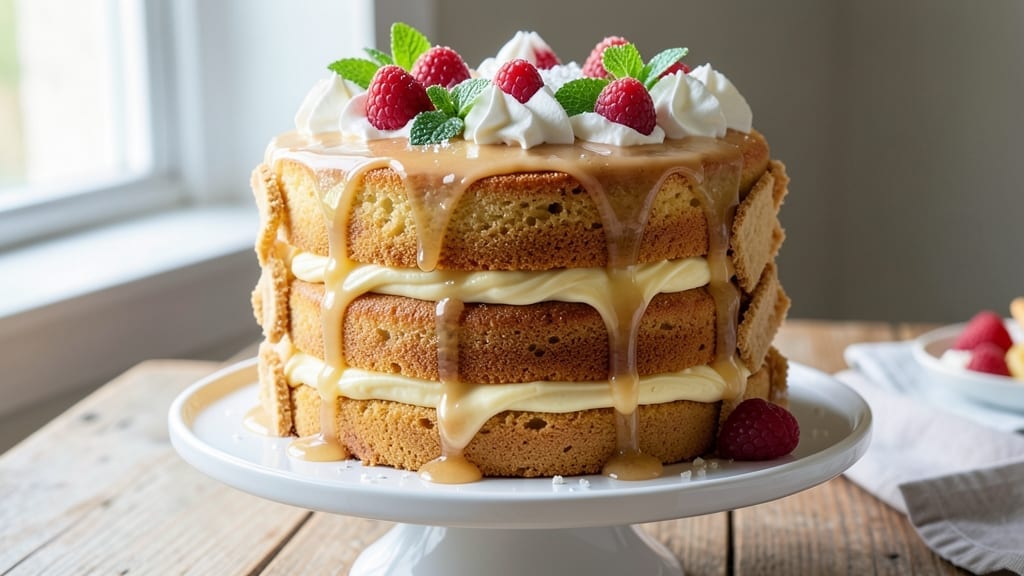
This 3-layer tres leches cake recipe delivers the perfect balance of light, airy vanilla sponge, rich tres leches soaking, and delicate frosting—every bite is pure comfort in cake form.
The secret lies in baking layers just tender enough to absorb the creamy milk mixture without turning soggy, a technique I perfected after testing countless variations. What makes this version stand out is the vanilla-soaked layers, where each slice reveals that signature tres leches flavor without overwhelming sweetness.
The process starts with baking three foolproof vanilla sponge layers, then comes the critical step: pouring the warm tres leches mixture (evaporated milk, condensed milk, and cream) over the stacked cake.
This requires patience—letting the cake rest for at least 4 hours (or overnight) ensures the layers soak evenly while maintaining structure. The result? A cake that’s moist, not mushy, with a light, fluffy texture that melts in your mouth.
Once chilled, the cake is topped with a simple light frosting that complements rather than competes with the tres leches flavor.
The final touch is a dusting of powdered sugar for elegance, but the real star is the perfectly balanced sweetness—creamy, milky, and just sweet enough to satisfy any craving. This recipe is ideal for celebrations, potlucks, or simply treating yourself to a slice of nostalgia.
For best results, use room-temperature eggs and butter to ensure even baking, and don’t skip the 4-hour chilling time—it’s non-negotiable for that ideal texture. Serve with whipped cream or fresh berries for extra flair, and prepare to be asked for seconds (or thirds). Let’s get baking!
Ingredients for 3 layer tres leches cake
Twelve essential ingredients transform into the ultimate tres leches cake—vanilla sponge layers soaked in creamy milk perfection.
| Ingredient | Amount | Notes |
|---|---|---|
| All-Purpose Flour 🌾 | 3 ½ cups | Sifted for light texture |
| Granulated Sugar 🍚 | 2 ½ cups | Divided for batter and frosting |
| Unsalted Butter 🧈 | 1 ½ cups | Room temperature, cubed |
| Large Eggs 🥚 | 6 whole | Room temperature, separated |
| Vanilla Extract 🌿 | 2 tbsp | Pure, high-quality preferred |
| Baking Powder 🧂 | 2 tsp | Fine grain preferred |
| Salt 🧂 | ½ tsp | Fine sea salt preferred |
| Evaporated Milk 🥛 | 1 ½ cups | Full-fat for creaminess |
| Sweetened Condensed Milk 🥛 | 14 oz | High-quality brand recommended |
| Heavy Cream 🥛 | 1 cup | Cold for best texture |
| Powdered Sugar 🍚 | 3 cups | Sifted for smooth frosting |
| Vanilla Bean Paste 🌿 | 1 tbsp | For enhanced vanilla flavor |
| Lemon Juice 🍋 | 1 tbsp | Freshly squeezed |
The flour and butter are your foundation—King Arthur flour and Plugrá butter ensure that signature light, airy texture. Room-temperature butter is non-negotiable; it emulsifies better for a tender crumb. For the vanilla extract, Nielsen-Massey or McCormick Pure deliver consistent flavor without artificial aftertaste. The baking powder must be fresh; if it’s older than six months, the rise will suffer. Evaporated milk and condensed milk should be top-shelf brands like Carnation—the fat content is critical for that signature richness.
No vanilla bean paste? Double the vanilla extract works in a pinch, though it lacks the depth. Short on evaporated milk? Whole milk reduced by half replicates the consistency, though the flavor won’t be identical. The heavy cream must be cold when added to the tres leches mixture—never room temperature, or it won’t whip properly later. Powdered sugar should be 10X for smooth frosting; anything finer creates a gritty texture. Lemon juice brightens the flavor, but if you’re avoiding acidity, 1 tsp cream of tartar is a subtle alternative.
Store the dry ingredients (flour, sugar, baking powder) in airtight containers for up to 6 months, while butter and eggs should be used within 3 months of purchase. The tres leches mixture can be prepped 1 day ahead and refrigerated; the cake itself keeps for 4 days in the fridge, though it’s best enjoyed within 2 days. For make-ahead convenience, assemble the cake layers and refrigerate overnight—the flavor actually improves with time as the milk mixture infuses deeper.
Why You’ll Love This Recipe
- No-Fuss Layers: Mixing the batter is just folding flour, butter, and eggs—no creaming, no folding eggshells into the bowl. The sponge comes together faster than you can boil water for the milk mixture.
- Velvet-Milk Magic: That first sip of tres leches soaking into the cake? The evaporated milk, condensed milk, and heavy cream turn it into something dangerously addictive—like dessert hugging your taste buds.
- Party in a Box: Slice it for a crowd or pack individual portions for potlucks. The layers stay intact, and the flavor only gets better the next day—no sad, dry cake here.
- Budget Buster: Uses pantry staples you already own (flour, sugar, butter) and stretches into seconds. Honestly, the only splurge is the vanilla extract—and trust me, it’s worth every drop.
Step-by-step instructions for vanilla-soaked tres leches cake
Master this classic Latin American dessert with perfectly baked layers, creamy milk soak, and delicate frosting.
Prepare the Cake Batter for Three Layers
Preheat your oven to 350°F and grease three 8-inch round cake pans with butter, then line the bottoms with parchment paper. In a stand mixer fitted with the paddle attachment, cream the 1.5 cups unsalted butter and 1.25 cups granulated sugar (half of the total) on medium speed until light and fluffy, about 3-4 minutes. Scrape down the sides of the bowl as needed.
Add the 6 whole large eggs, one at a time, beating well after each addition. Mix in the 2 tbsp vanilla extract and 1 tbsp vanilla bean paste until fully combined. In a separate bowl, whisk together the 3.5 cups all-purpose flour, 2 tsp baking powder, and 0.5 tsp salt. Gradually add the dry ingredients to the wet mixture on low speed, mixing just until combined. The batter should be smooth but not overly thick.
Bake the Layers to Perfect Doneness
Divide the batter evenly among the prepared pans. Bake for 20-25 minutes or until a toothpick inserted into the center comes out clean. The cakes should be golden brown on top and slightly domed in the center. Let them cool in the pans for 10 minutes before transferring to a wire rack to cool completely.
Here’s the thing—don’t skip the cooling step. Warm layers will absorb the milk mixture unevenly, leading to a soggy bottom and dry top. Once fully cooled, use a long serrated knife to level the tops of the cakes if needed, ensuring they’re even for stacking.
Create the Tres Leches Soaking Syrup
In a large bowl, whisk together the 14 oz sweetened condensed milk, 1.5 cups evaporated milk, and 1 cup heavy cream until smooth. Add the 1 tbsp lemon juice and mix well. This acidity brightens the flavors and prevents the milk mixture from curdling when combined with the cake layers.
Place the first cake layer on a serving plate and gently pour about one-third of the milk mixture over it, allowing it to soak through completely. Repeat with the remaining two layers, ensuring each layer is fully saturated. Let the cake absorb the mixture for 30 minutes at room temperature, or refrigerate for 1 hour if you prefer a firmer texture.
Prepare the Light Vanilla Frosting
In a medium bowl, beat the remaining 1.25 cups granulated sugar (the other half) and the 3 cups powdered sugar together until well combined. Add the 1 cup heavy cream and beat on medium speed until smooth and fluffy, about 2-3 minutes. The frosting should be thick enough to hold its shape but still spreadable.
Spread the frosting evenly over the top and sides of the soaked cake, creating a smooth finish. For a polished look, use a long offset spatula or bench scraper. Chill the cake in the refrigerator for at least 2 hours before serving to allow the frosting to set and the flavors to meld.
Serve and Enjoy
Slice the cake with a warm, clean knife for clean cuts. Serve each piece with a dollop of additional frosting on top if desired. The ideal tres leches cake has a moist, tender crumb with a delicate balance of sweetness from the milk mixture and the subtle vanilla notes from the frosting.
This cake keeps well in the refrigerator for up to 3 days, though it’s best enjoyed within the first 48 hours. The longer it sits, the more the flavors develop, but the texture may become slightly denser. Store any leftovers covered with plastic wrap pressed directly onto the frosting to prevent drying.
Pro Tips For Making 3 Layer Tres Leches Cake
- Bake Until Slightly Under: I learned this the hard way—overbaking dries out the sponge layers before the syrup soaks in. Pull the cake out when the center still jiggles just a little (about 25-30 minutes for a 9×13 pan), then let it cool completely before piercing. The syrup needs room to work its magic.
- Use Room-Temp Eggs: Cold eggs mix unevenly and can leave lumps in the batter, which ruins the light texture of the sponge. Take them out 30 minutes before whipping and let them sit in warm water if your kitchen’s chilly. Trust me, your cake’s layers will thank you—smooth and airy, not dense.
- Don’t Rush the Syrup: Pouring the tres leches mixture too soon means it pools at the bottom instead of soaking evenly. Wait until the cooled cake is completely at room temp, then poke holes in a grid pattern with a skewer. Let it sit 10 minutes before adding syrup—this guarantees every bite is moist, not soggy-bottomed.
- Upgrade with Brown Sugar: Swap half the granulated sugar in the sponge for light brown sugar. The molasses notes deepen the flavor and keep the cake tender longer, especially after the milk bath. I was skeptical until I tried it—the difference is subtle but noticeable, like the upgrade from a good latte to an extra-shot caramel one.
Common mistakes when making this recipe
Overbaking the Layers
I’ve seen so many well-intentioned bakers turn their tres leches cake into a brick by overbaking the layers. Those golden-brown tops? They’re not just for looks—they’re a sign of perfect doneness. Once your toothpick comes out clean, remove the cakes immediately.
Overbaking by even 2-3 minutes dries out the crumb, making it impossible to absorb the tres leches mixture properly. The result? A cake that’s dense and dry instead of light and moist. Trust the toothpick test and set a timer for 20-25 minutes max at 350°F. 💡
Skipping the Cooling Step
Here’s a rookie mistake I see all the time: stacking warm cake layers right after baking. The heat from the layers will turn your tres leches mixture into a lukewarm puddle, and the cake will absorb it unevenly—soggy bottom, dry top.
Always let the layers cool completely in the pans for 10 minutes, then transfer to a wire rack. Patience here is key; it ensures every bite has that perfect balance of moisture and structure. I’ve ruined more cakes by rushing this step than I care to admit! ⏳
Uneven Layering
The secret to a tres leches cake that holds its shape is level layers. If one layer is thicker or domed, the milk mixture won’t distribute evenly, leading to a lopsided cake that’s harder to slice.
Use a long serrated knife to level the tops of your cooled layers if needed. Pro tip: Place a ruler or the back of a knife on top of each layer and slice off any excess.
This might seem tedious, but it’s worth it for clean, even slices that look (and taste) restaurant-quality. 🗺️
Pouring Too Much Milk Mixture
It’s tempting to drown your cake in that creamy tres leches goodness, but too much liquid will turn your cake into a soggy mess. The rule of thumb is to pour the mixture in thirds, letting each layer absorb fully before adding the next.
If you pour it all at once, the bottom layer will turn to mush while the top stays dry. Trust the process—your cake will soak up just the right amount over time, especially during the 4-hour chilling period. 🥛
Rushing the Chilling Time
This is the most common mistake I see, and it’s a dealbreaker for texture. Tres leches cake needs time—at least 4 hours, ideally overnight—to let the milk mixture fully infuse the layers.
Skipping this step means your cake will be under-soaked, with a dry exterior and a wet center. The frosting won’t adhere properly either, leading to a sloppy, uneven finish. I know it’s hard to wait, but resist the urge to slice into it early.
The longer it chills, the better the flavors meld together. ✨
Using Cold Heavy Cream
The frosting is where many home bakers stumble, and the biggest mistake is using cold heavy cream. Cold cream won’t whip properly, leading to a grainy, lumpy frosting that’s impossible to spread smoothly.
Always use cold cream (straight from the fridge) for the tres leches mixture, but let the 1 cup of cream for the frosting sit at room temperature for 30 minutes before whipping. This ensures your frosting is light, fluffy, and perfectly spreadable. A little prep goes a long way! 🥄
Nutrition facts
Frequently asked questions
Can I make this cake with fewer layers?
While the traditional recipe calls for three layers, you can easily adapt it for a single-layer or two-layer version. For a single layer, use a 9-inch pan and reduce the tres leches mixture by one-third. The soaking time remains the same (4 hours minimum), but the texture will be slightly denser. Two layers work beautifully for smaller gatherings—just halve the batter and milk mixture proportions.
Why does my tres leches cake turn out too sweet?
The sweetness comes from both the cake batter and the tres leches mixture. To balance it, reduce the granulated sugar in the batter by 0.25 cups and use 12 oz condensed milk instead of 14 oz in the soaking syrup. The vanilla frosting also adds sweetness, so you can lighten it by replacing 0.5 cups powdered sugar with 0.5 cups sifted cake crumbs for texture. Taste as you go!
How can I make this cake gluten-free?
Replace the all-purpose flour with a 1:1 gluten-free baking flour blend (like Bob’s Red Mill or King Arthur) and add 1 tsp xanthan gum to improve structure. For the tres leches mixture, use gluten-free vanilla pudding mix (like Jell-O) as a thickener if needed—it helps stabilize the texture. Chill the cake for 6 hours instead of 4 to ensure proper soaking.
Can I use store-bought vanilla cake layers?
Yes, but with adjustments! Choose a light, tender vanilla cake (like Betty Crocker Super Moist) and bake it according to package instructions. Let the layers cool completely, then level them as directed. The key difference is that store-bought layers may absorb the tres leches mixture faster—reduce the soaking time to 2 hours and add an extra 0.5 cups of heavy cream to the milk mixture for extra richness.
What’s the best way to decorate this cake for special occasions?
For a festive touch, pipe whipped cream rosettes on top and garnish with fresh berries, toasted coconut flakes, or edible flowers. For a rustic look, dust with colored powdered sugar or drizzle with caramel or chocolate sauce. Pro tip: Use a stencil and powdered sugar to create intricate designs, or arrange mini cake stands around the base for an elegant tiered effect.

- Pea Soup Instant Pot Recipe: Velvety Green Smoothness in 20 Minutes - November 1, 2026
- Pork Loin Pulled Pork Crock Pot Recipe: Slow-Smoked Tenderness With Zero Dryness - November 1, 2026
- Baked Potatoes in Crock Pot Recipe: Buttery Interiors and Crispy Top Magic - November 1, 2026