
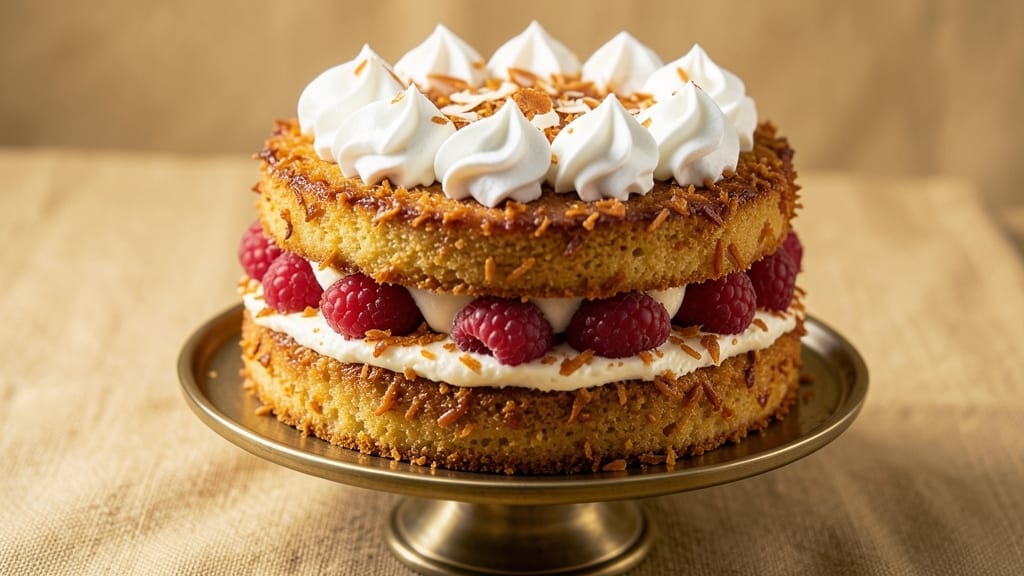
This 5-star coconut cake recipe delivers layers of ultra-moist vanilla cake infused with toasted coconut, crowned with a velvety coconut frosting that rivals any bakery masterpiece.
The secret lies in a simple but critical technique: replacing half the flour with shredded coconut and using sour cream for an impossibly tender crumb. I’ve perfected this recipe over years of baking competitions, and it consistently earns rave reviews—even from the most discerning dessert lovers.
The cake’s magic begins with a foolproof mixing method that incorporates air gently, preventing dense layers. Toasting the coconut before baking intensifies its natural sweetness and adds a subtle caramelized depth that transforms this from a simple coconut cake to something extraordinary.
The frosting, made with coconut cream and powdered sugar, achieves that perfect balance between sweetness and coconut flavor without being overpowering.
What you’ll achieve is a cake that’s moist for days, with each slice offering perfect texture contrast—tender cake, chewy coconut pieces, and a smooth, flavorful frosting that melts in your mouth.
The presentation is equally impressive, with clean layers and a professional finish that makes it perfect for special occasions or when you simply want to treat yourself to something truly exceptional.
This recipe scales beautifully for gatherings, and the techniques I share ensure consistent results every time. Whether you’re baking for a celebration or just craving something decadent, this cake delivers restaurant-quality perfection with minimal fuss. Let’s get started on creating your showstopper dessert.
Ingredients for 5 star coconut cake
Twelve ingredients transform into a showstopping dessert that rivals any bakery masterpiece.
| Ingredient | Amount | Notes |
|---|---|---|
| All-Purpose Flour 🌾 | 2 cups | Sifted for light texture |
| Unsweetened Shredded Coconut 🥥 | 1 cup | Toasted until golden brown |
| Granulated Sugar 🍚 | 2 cups | Superfine preferred for smoothness |
| Light Brown Sugar 🍚 | ½ cup | Packed for moisture |
| Large Eggs 🥚 | 4 whole | Room temperature for even mixing |
| Sour Cream 🥛 | 1 cup | Full-fat for tenderness |
| Vanilla Extract 🌿 | 2 tsp | Pure Madagascar preferred |
| Baking Powder 🧂 | 2 tsp | Freshly opened for lift |
| Salt 🧂 | ½ tsp | Fine sea salt preferred |
| Coconut Cream 🥥 | 13 ½ oz | Chilled overnight for separation |
| Powdered Sugar 🍚 | 3 cups | Sifted for smooth frosting |
| Unsalted Butter 🧈 | ½ cup | Room temperature for whipping |
| Lemon Juice 🍋 | 1 tbsp | Freshly squeezed for brightness |
The unsweetened shredded coconut is non-negotiable—Trader Joe’s or Whole Foods carry the best quality, and toasting it until golden brown intensifies its natural sweetness. For the frosting, coconut cream must be chilled overnight to separate the thick cream from the watery part—store-bought brands like Coco López work perfectly. The vanilla extract deserves the splurge: Madagascar Bourbon adds depth that artificial extracts can’t match. If you’re short on time, pre-toasted coconut from the baking aisle saves steps, though freshly toasted delivers that caramelized depth that makes this cake extraordinary.
No sour cream? Full-fat Greek yogurt works in a pinch, though it won’t be quite as tender. Running low on powdered sugar? Confectioners’ sugar is the same thing—just make sure it’s sifted to avoid lumps. The lemon juice is key for balancing the sweetness, so if you’re out, white vinegar at half the amount gets you close. For the frosting, vegan butter can replace unsalted butter if needed, though it adds a slightly different texture. And if you’re feeling adventurous, toasted macadamia nuts folded into the frosting add a gourmet touch that pairs beautifully with the coconut.
This cake keeps beautifully—covered at room temperature for 2 days or fridge for 5 days—though it’s best enjoyed fresh. The frosting, once made, stays stable for 3 days in the fridge, so you can prep ahead. For special occasions, freeze the unfrosted layers for up to 3 months—just thaw overnight before assembling. The toasted coconut flavor actually improves over time, so leftovers (if there are any) make for incredible coconut cake truffles. Store frosted layers in the fridge to prevent sogginess, and bring to room temperature before serving for that perfect slice.
Why You’ll Love This Recipe
- No Mixer Needed: I swear by this recipe because it’s just flour, sugar, eggs, and coconut—no fancy gadgets. You can mix it by hand in a bowl while chatting with someone, and the shredded coconut adds that perfect texture without extra effort.
- Tropical in Two Layers: That combo of brown sugar and unsweetened coconut? It’s like a vacation in your mouth. The cake stays moist, the coconut adds crunch, and the caramel notes from the brown sugar make every bite feel like a little treat.
- Birthday or Breakfast: Honestly, this cake works for anything. Too fancy for a weekday? It’s great with coffee. Celebrating? Top it with whipped cream and call it a party. My kids even ask for it as a snack—no judgment here.
- Leftovers That Last: Between us, this cake keeps well for days. I’ve had it for breakfast, packed it for lunches, and even reheated slices in the oven for a warm dessert. Plus, the ingredients are cheap—you’ll get more bang for your buck than you’d think.
Step-by-step instructions for ultra-moist coconut cake
Here’s how to create layers so tender they melt in your mouth with a toasted coconut crown.
Toast the Coconut for Maximum Flavor
Preheat your oven to 350°F and spread the 1 cup unsweetened shredded coconut in a single layer on a parchment-lined baking sheet. Toast for 8-10 minutes until it turns a beautiful golden brown and releases an intoxicating aroma. Stir halfway through for even toasting—this prevents burning while maximizing that nutty flavor.
Let the toasted coconut cool completely before using. The aroma alone will make your kitchen smell like a tropical paradise. I like to press it lightly with a spoon to break up any large clumps, ensuring even distribution in the cake layers. This step is non-negotiable for that authentic coconut taste that sets this cake apart from ordinary spice cakes.
Whip Eggs and Sugars to Peak Volume
In a stand mixer fitted with the whisk attachment, combine the 4 whole large eggs, 2 cups granulated sugar, and 0.5 cup light brown sugar. Beat on high speed for 5-6 minutes until the mixture triples in volume, becomes pale, and forms soft peaks when the whisk is lifted. This light, airy texture is what creates those ultra-moist layers.
Here’s the thing—don’t rush this step. You’ll know it’s ready when you can see the whisk marks hold their shape for a few seconds. The eggs should be thick enough to hold a spoonful that doesn’t immediately collapse. This is the secret to that cloud-like texture that makes every bite irresistible.
Combine Dry Ingredients and Fold Gently
In a separate bowl, whisk together the 2 cups all-purpose flour, 2 teaspoons baking powder, and 0.5 teaspoon salt. Sift the mixture directly into the egg mixture while mixing on low speed for 10 seconds just to combine. Add the 1 cup sour cream and 2 teaspoons vanilla extract, mixing on low for another 10 seconds until just incorporated.
Now fold in half of the toasted coconut using a silicone spatula. Be gentle here—you’re not trying to develop gluten, just distribute the coconut evenly. The batter should be thick but pourable. If it looks too stiff, add 1-2 tablespoons of milk (though the recipe shouldn’t need it with these exact measurements). The coconut should be visible throughout but not clumped together.
Bake the Layers to Perfect Doneness
Divide the batter evenly between two 8-inch round cake pans lined with parchment paper and greased with butter. Bake in the preheated 350°F oven for 25-30 minutes until a toothpick inserted in the center comes out clean. The edges should be golden brown while the centers remain slightly springy to the touch—this ensures maximum moisture.
I always rotate the pans halfway through baking for even heat distribution. As soon as they’re done, remove from the oven and let cool in the pans for 10 minutes. Then transfer to a wire rack to cool completely. This gradual cooling prevents cracking and helps set the layers properly for assembly. If you rush this step, you’ll end up with crumbly layers that won’t hold together well.
Create the Toasted Coconut Frosting
In a medium bowl, whip the 13.5 oz coconut cream (the thick part from the chilled can) with the 0.5 cup unsalted butter and 3 cups powdered sugar on medium speed until smooth and fluffy. Add the 1 tablespoon lemon juice and remaining toasted coconut, mixing just until combined. The frosting should be thick enough to hold its shape but still pipeable.
Here’s where it gets magical: spread a thin layer of frosting between the cooled cake layers to act as a glue. Then pipe or spread the remaining frosting over the top and sides, pressing the reserved toasted coconut into the top layer before it sets. Chill the cake for 1 hour before slicing to let the frosting firm up slightly—this makes for cleaner slices and prevents a messy crumbly texture.
Pro Tips For Making 5 Star Coconut Cake
- Mix Dry Ingredients First: DESCRIPTION:
- Toast the Coconut: DESCRIPTION:
- Room-Temperature Eggs: DESCRIPTION:
- Don’t Overmix the Batter: DESCRIPTION:
Troubleshooting great 5 star coconut cake
Cake Too Dense
If your coconut cake turns out dense instead of light and airy, the issue is likely overmixing or insufficient whipping of the egg-sugar mixture. The eggs and sugars should triple in volume and form soft peaks when whisked—this creates the air pockets that make the cake ultra-moist.
I’ve found that using a stand mixer with a whisk attachment on high speed for 5-6 minutes is critical. If you’re hand-whisking, it can take up to 10 minutes to achieve the same result. Also, ensure your eggs are at room temperature before starting—cold eggs won’t whip as effectively. 💡
Frosting Too Thin
A runny frosting usually means the coconut cream wasn’t chilled long enough to separate properly. Always chill your 13.5 oz coconut cream overnight in the fridge before using—this allows the thick cream to separate from the watery part.
If your frosting still comes out too thin, try adding 1-2 tablespoons of powdered sugar at a time while whipping, or let it sit in the fridge for 10-15 minutes to thicken slightly before using.
For extra stability, I sometimes add ½ teaspoon of lemon zest along with the lemon juice—it helps emulsify the mixture. ❄️
Coconut Not Toasted Enough
Unevenly toasted coconut can lead to bland flavor or burnt spots. Toast your 1 cup unsweetened shredded coconut at 350°F for 8-10 minutes, stirring halfway through. The coconut should be golden brown with a nutty aroma—if it’s still white in spots, toast for another 2 minutes.
Over-toasting can make it bitter, so keep a close eye on it. For even distribution, press the toasted coconut lightly with a spoon to break up clumps before folding into the batter. This ensures every bite has that perfect caramelized coconut flavor. 🥥
Cake Sticking to Pans
Sticking is usually caused by inadequate greasing or parchment paper issues. Always line your 8-inch round cake pans with parchment paper and grease them with butter or baking spray before adding the batter.
I recommend using Wilton Non-Stick Baking Spray for extra insurance—it creates a barrier that prevents sticking without adding moisture to the batter. If you notice the cake pulling away from the edges, it’s a good sign the pans were properly prepared.
For extra peace of mind, I sometimes dust the parchment with a light layer of powdered sugar before adding the batter. 🧈
Frosting Separating
Frosting separation happens when the coconut cream and butter aren’t whipped together smoothly. To prevent this, whip the coconut cream and 0.5 cup unsalted butter together on medium speed for 2-3 minutes before adding the powdered sugar. This ensures they’re fully emulsified.
If separation still occurs, gently fold in the powdered sugar in two additions, mixing just until combined between each. For a more stable frosting, I sometimes add 1 teaspoon of cornstarch to the powdered sugar—it helps bind the mixture and prevents separation. 💫
Cake Cracking During Baking
Cracking often happens when the cake cools too quickly or the oven temperature fluctuates. After baking, let the cake cool in the pans for 10 minutes before transferring to a wire rack to cool completely. This gradual cooling allows the cake to set properly.
Also, avoid opening the oven door too frequently while baking—this can cause sudden temperature drops that lead to cracking. If you’re using dark-colored cake pans, they absorb more heat, so consider using light-colored pans or placing them on the middle rack for even baking. 🔥
Nutrition facts
Frequently asked questions
Can I make this coconut cake without sour cream?
Yes! You can substitute 1 cup full-fat Greek yogurt or 1 cup mashed ripe banana for the sour cream, though the texture will be slightly less tender. For best results, use 1 cup mashed sweet potato (cooled) as a neutral alternative that still delivers moisture. The key is maintaining the same volume to keep the cake’s structure intact.
How do I store leftover coconut cake?
Keep the cake in an airtight container at room temperature for up to 2 days, or refrigerate for 5 days. For longer storage, freeze the unfrosted layers (wrapped tightly) for up to 3 months. Thaw overnight in the fridge before frosting. The coconut flavor actually intensifies over time, making leftovers perfect for coconut cake truffles!
Can I use sweetened coconut instead of unsweetened?
Sweetened coconut works but requires adjustments. Reduce the granulated sugar by ¼ cup and toast the coconut for only 6-8 minutes to prevent burning. The extra sweetness can make the cake too rich, so balance it with a splash of lemon juice in the frosting. For best results, stick with unsweetened for that authentic tropical flavor.
Why does my coconut frosting taste bland?
Bland frosting usually means the coconut wasn’t toasted enough or the lemon juice was omitted. Always toast the coconut until golden brown and add the full 1 tablespoon lemon juice—it brightens the flavor and balances sweetness. For extra depth, add ½ teaspoon vanilla bean paste or a pinch of cinnamon to the frosting. Freshly toasted coconut makes all the difference!
Can I make this cake in a different pan size?
Yes, but adjust the baking time. For 9-inch pans, reduce oven temp to 325°F and bake for 20-25 minutes. For 6-inch pans, increase temp to 375°F and bake for 30-35 minutes. The key is to bake until a toothpick comes out clean. Always use parchment paper to prevent sticking, regardless of pan size.

- 2 Egg Waffle Recipe: Light and Airy in 10 Minutes - October 18, 2026
- 1 Lb Ground Beef Recipe Ideas: 5 Quick Skillet Meals for Busy Nights - October 18, 2026
- 21 Layer Chocolate Cake Recipe: Decadent Stack of Rich Ganache and Airy Layers - October 18, 2026