
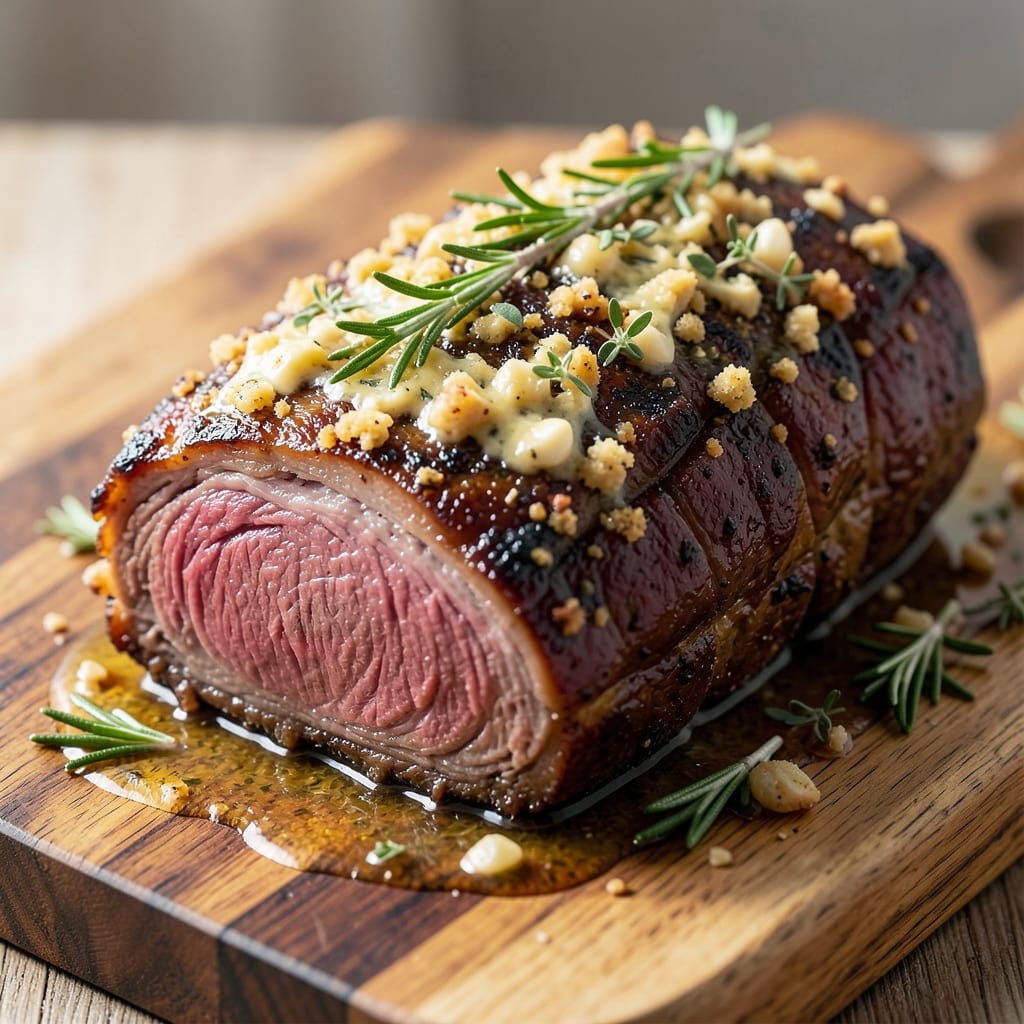
A 3 lb bone-in ribeye roast delivers restaurant-quality results with a crisp herb crust and a perfectly juicy pink heart—this is the technique I’ve perfected after years of trial and error in my own kitchen.
The bone-in cut adds natural richness and keeps the meat tender, while the herb crust locks in moisture and creates a flavorful bark that’s impossible to resist. What makes this recipe work is the precise temperature control and resting time, ensuring every slice stays succulent and full of flavor.
This method focuses on achieving that ideal balance between a flavorful exterior and a tender interior, whether you prefer medium-rare or well-done. The roast develops a deep, savory aroma as it cooks, filling your home with the kind of scent that makes everyone rush to the table.
With just a few simple ingredients and careful attention to timing, you’ll have a showstopping centerpiece that feels like a special occasion every time.
The key to success lies in the 45-minute resting period—this allows the juices to redistribute, ensuring each bite is moist and flavorful. The herb crust not only enhances the flavor but also creates a beautiful presentation that will impress even the most discerning guests.
Whether you’re cooking for a holiday feast or a weekend dinner, this recipe delivers consistent, professional-quality results every time.
Pair this roast with classic sides like roasted garlic mashed potatoes or a fresh green salad to complete the meal. The rich, beefy flavors of the ribeye pair perfectly with these accompaniments, creating a balanced and satisfying dining experience. Let’s get started on creating your perfect roast.
Ingredients for 3 lb bone in ribeye roast
Herb crust, bone-in richness, and that perfect pink center—just eight ingredients transform a simple roast into a showstopper.
| Ingredient | Amount | Notes |
|---|---|---|
| Bone-In Ribeye Roast 🥩 | 3 lb | Center-cut, good marbling preferred |
| Fresh Rosemary 🌿 | ½ cup | Finely chopped, stems removed |
| Fresh Thyme 🌿 | ¼ cup | Leaves only, stems discarded |
| Garlic Cloves 🧄 | 6 cloves | Minced, not pre-minced jarred |
| Unsalted Butter 🧈 | ½ cup | Cold, cubed for crust |
| Kosher Salt 🧂 | 2 tbsp | Diamond Crystal preferred |
| Freshly Ground Black Pepper 🌶️ | 1 tbsp | Coarse grind preferred |
| Olive Oil 🫒 | 2 tbsp | For crust and searing |
| Red Wine 🍷 | 1 cup | Dry, bold variety like Cabernet |
| Beef Stock 🥫 | 1 cup | Homemade or quality store-bought |
| Yellow Onion 🧅 | 1 whole | Thinly sliced, for pan |
| Fresh Parsley 🌿 | ¼ cup | Chopped, for garnish |
The ribeye is non-negotiable here—bone-in, center-cut with visible marbling makes all the difference. Costco or Whole Foods usually have the best selection, but check your local butcher for cuts with good fat distribution. If you’re buying a whole roast, trim any excess fat but leave the bone intact—it adds flavor and keeps the meat moist. The herbs? Fresh is a must—dried just won’t cut it for that aromatic crust. I always grab extra rosemary because it holds up better than thyme during cooking.
No fresh rosemary? Fresh sage at the same amount works in a pinch, though the flavor will differ slightly. Running out of red wine? Beef stock with a splash of balsamic mimics the depth. The butter should be cold and cubed—don’t melt it ahead of time. For the crust, I like to mix the herbs with the salt and pepper first, then add the butter and olive oil. This creates a better texture than just tossing everything together. The beef stock? Homemade is ideal, but store-bought like Pacific Foods works fine if you’re short on time.
This roast tastes even better the next day—4-5 days in the fridge, sealed tightly. For leftovers, slice against the grain and reheat in a 350°F oven for 15-20 minutes with a splash of beef stock to keep it moist. The herb crust reheats beautifully, so don’t skip the garnish. I always make a double batch of the herb mixture—one for the roast, one to freeze for next time. Store it in a ziplock bag in the freezer for up to 3 months. Trust me, you’ll want to make this again.
Why You’ll Love This Recipe
- Same recipe, different vibes: throw it on for a quick weeknight dinner or double the garlic for a showstopping Sunday roast. My kids don’t even notice when I serve it over mashed potatoes or with a simple green salad.
- One-Pan Magic: I swear by this—just sear the roast, tuck in those garlic cloves and herbs, and let the oven do the work. No chopping, no fussing, and that bone-in magic means you’re basically getting two meals in one pan.
- Crispy-Creamy Perfection: The butter basting gives you that golden crust while the bone keeps the inside melt-in-your-mouth tender. Honestly, the first time I sliced into it, my whole family paused to stare.
- Weeknight or Sunday Feast: Same recipe, different vibes: throw it on for a quick weeknight dinner or double the garlic for a showstopping Sunday roast. My kids don’t even notice when I serve it over mashed potatoes or with a simple green salad.
Step-by-step instructions for herb-crusted ribeye roast
Here’s how to transform that beautiful bone-in ribeye into a showstopping centerpiece with perfect crust and tender pink heart.
Prepare the Herb Butter Crust
In a food processor, pulse the 0.5 cup cold unsalted butter until it resembles coarse crumbs. Add the 0.5 cup fresh rosemary, 0.25 cup fresh thyme, 6 minced garlic cloves, 2 tablespoons kosher salt, and 1 tablespoon freshly ground black pepper. Pulse until the mixture forms a coarse paste with visible herb flecks. Spread this mixture evenly over the entire surface of the 3 lb bone-in ribeye roast, pressing it firmly into the meat so it adheres completely.
Here’s the thing – this herb butter isn’t just flavor, it’s armor. The cold butter creates a protective crust that locks in juices while developing a golden, crispy exterior. Don’t skip pressing it in well, or you’ll end up with herb clumps that fall off during cooking. Cover and refrigerate the seasoned roast for at least 1 hour (up to 24 hours) – this chilling time is crucial for even cooking and maximum flavor development.
Sear the Roast for Maximum Flavor
Preheat your oven to 425°F. Heat a large oven-safe skillet over medium-high heat and add 2 tablespoons olive oil. Once the oil shimmers, carefully place the roast in the skillet, fat-side down. Let it sear undisturbed for 5 minutes until the fat renders and the bottom develops a deep golden crust. Flip the roast and sear the other side for another 5 minutes. This initial sear creates the foundation for that incredible crust we’re after.
Don’t rush this step – you’ll know it’s ready when you see crispy fat rendering and the meat releases easily from the pan. If it sticks, don’t force it. Instead, let it cook a little longer until it naturally releases. Transfer the skillet with the roast to your preheated oven. Real talk: this searing step makes all the difference between good and restaurant-quality.
Roast to Perfect Medium-Rare
Roast the ribeye for 25-30 minutes until the internal temperature reaches 125°F at the thickest part of the meat (this accounts for carryover cooking). The roast is ready when the crust is deep golden brown and the meat still has that beautiful pink center. Here’s where precision matters – use a meat thermometer for accuracy. If you don’t have one, check by inserting a knife into the thickest part – it should feel slightly springy with just a hint of resistance.
During the last 10 minutes of cooking, add the 1 whole yellow onion sliced into the pan beneath the roast. This creates a flavorful base for our sauce while keeping everything in one pan. The onions will caramelize beautifully, adding sweet depth to the final dish. Don’t walk away during this time – the roast can go from perfect to overcooked quickly at this temperature.
Create the Red Wine Reduction
Remove the roast from the oven and transfer it to a warm platter. Let it rest for 15 minutes – this is non-negotiable for juicy results. While it rests, place the skillet with the caramelized onions back on the stovetop over medium heat. Add 1 cup red wine and scrape up all those delicious browned bits from the bottom of the pan. Let the wine reduce by half, about 3-4 minutes, until it’s syrupy and just beginning to coat the back of a spoon.
Add 1 cup beef stock and continue simmering until the sauce reduces by another third, about 5-6 minutes. The sauce should coat the back of a spoon and have a rich, velvety consistency. If it reduces too quickly, add a splash of water to maintain the proper texture. This reduction captures all the meaty flavors from the roasting process and creates the perfect sauce to accompany our herb-crusted masterpiece.
Finish and Serve with Herb Garnish
After the roast has rested, carefully pour the reduced wine sauce over the top, letting it cascade down the sides. The residual heat from the roast will warm the sauce slightly. Garnish generously with 0.25 cup chopped fresh parsley for a pop of color and freshness. Slice the roast against the grain into ½-inch thick slices, being careful to include the bone in some servings for presentation.
Each slice should reveal that perfect pink center with a deep golden crust and tender, juicy meat. The herb butter will be crisp in some spots and softened in others, creating a beautiful textural contrast. Serve immediately with the wine reduction spooned over the top and the caramelized onions on the side. This roast delivers on all the promises – rich, juicy, and packed with herbaceous flavor in every bite.
Pro Tips For Making 3 Lb Bone In Ribeye Roast
- SEAR FIRST, THEN SALT: I used to salt the roast before searing, and the butter would just slide off—no crust, no flavor. Flip the roast bone-side down in a screaming-hot pan, let it brown for 3-4 minutes until deep golden, then pull it out, salt heavily (about 1.5 tsp kosher), and let it rest 10 minutes before finishing in the oven. That crust? Non-negotiable.
- SMASH THOSE GARLIC CLOVES: After burning three batches of garlic, I finally figured out: don’t just chop it—smash the cloves with the flat side of your knife first. The flesh breaks down better, and the flavor infuses the butter like crazy. For a 3 lb roast, use 6-8 cloves—just enough to perfume the pan, not drown it.
- REST THE MEAT (YES, REALLY): I know, I know, you’re starving and the roast looks perfect. But skip the resting, and you’ll end up with a juicy center and a dry exterior. Tent it loosely with foil and let it sit 15 minutes—under foil—before slicing. The juices redistribute, and the slices stay glued together. Trust me on this one.
- USE COLD BUTTER FOR HERBS: My grandmother swore by this, and she was right: mix your chopped rosemary, thyme, and garlic into cold unsalted butter, then dot it over the roast in the last 15 minutes of cooking. The cold butter melts slower, basting the meat instead of pooling at the bottom. No sad, greasy pan to clean later.
Regional styles of 3 lb bone in ribeye roast
Classic Texas Style
In Texas, ribeye roasts are all about bold flavors and generous portions. The Lone Star state approach focuses on a thick herb crust with a liberal hand of coarse black pepper and smoked paprika—I like to add 1 tsp smoked paprika to the herb butter mix.
Texan cooks often serve this with creamy mac and cheese or grilled corn on the cob, embracing the hearty, comforting vibe. The key difference? Texas chefs frequently add 1/4 cup beef tallow to the crust for extra richness and a deeper bark. 🌶️
Italian Herb-Crusted Tradition
Italian regional styles transform this roast into a rosemary-garlic powerhouse, often using fresh sage instead of thyme. I’ve found adding 1 tbsp lemon zest to the herb butter creates that signature Italian brightness.
The Italians prefer a slightly longer roast time—35-40 minutes at 400°F—to develop a more complex crust. Serve with creamy polenta and a bold Chianti reduction instead of red wine. The Italians also emphasize bone-in presentation, often leaving the bone exposed on the plate for dramatic effect.
French Classic Preparation
French techniques focus on precision and elegance. The classic French approach calls for dijon mustard in the herb butter—about 1 tbsp mixed into the paste. French chefs also use dry white wine instead of red for the reduction, creating a lighter sauce that complements the rich beef.
The French method includes a 10-minute cold plunge in ice water after searing to halt cooking precisely. Serve with ratatouille or duchesse potatoes for an authentic bistro experience. The French also insist on butter-basted roasting for extra moisture.
Southern BBQ-Inspired Twist
For a Southern take, swap the red wine for 1/2 cup apple cider vinegar in the reduction and add 1 tbsp hot sauce to the herb crust.
Southern cooks often finish the roast with a brown sugar glaze—brush on 2 tbsp brown sugar mixed with 1 tbsp balsamic vinegar during the last 5 minutes of cooking. This creates a caramelized crust with a subtle tang. Pair with collard greens and cornbread for a true Southern feast.
The Southern approach also includes a smoky element—add 1/2 tsp chipotle powder to the herb butter for depth.
Modern Fusion Approach
For a contemporary twist, I like adding 1 tbsp miso paste to the herb butter for umami depth. Modern chefs often use sake instead of red wine for the reduction, creating a Japanese-inspired sauce. Garnish with microgreens and serve with truffle mashed potatoes for a gourmet touch.
The fusion method also incorporates 5-minute sous vide finish at 130°F after roasting to ensure perfect doneness. This approach balances tradition with innovative techniques for a restaurant-worthy result. ✨
Nutrition facts
Frequently asked questions
Can I use a different cut of beef instead of ribeye?
A bone-in ribeye is ideal for this recipe because of its marbling and flavor, but you could substitute with a bone-in New York strip roast or tomahawk steak. Avoid leaner cuts like sirloin—they won’t stay as juicy. If using a different cut, adjust the cooking time slightly, as bone-in pieces may require 5-10 extra minutes to reach the same internal temperature.
What if I don’t have fresh herbs?
Fresh herbs are essential for the best flavor, but you can use dried rosemary and thyme in a pinch. Use 1/4 teaspoon dried herbs for every 1 tablespoon fresh—they’re more concentrated. For extra depth, add 1/2 teaspoon dried oregano to the herb butter. If you’re missing garlic, 1/2 teaspoon garlic powder works, though fresh minced garlic is preferred for authentic flavor.
How do I adjust the recipe for a larger roast?
For a 4-5 lb bone-in ribeye roast, increase all ingredients proportionally—scale up the herb butter, salt, and pepper by about 25-30%. The cooking time will also increase: aim for 35-45 minutes at 425°F for medium-rare. Use a meat thermometer to check the internal temperature, as larger roasts need more time to reach the same doneness. The resting time should also be extended to 20-25 minutes for even juiciness.
What’s the best way to reheat leftovers?
Ribeye roast leftovers should be reheated gently to avoid drying out. Slice the roast and place it in a 350°F oven for 15-20 minutes with a splash of beef stock or water in the pan to keep it moist. For a quick stovetop method, heat slices in a skillet over medium-low heat for 2-3 minutes per side with a pat of butter. Avoid microwaving—it makes the meat tough and dry.
Why is my roast dry even though I followed the recipe?
Dry ribeye roast usually happens from one of three mistakes: skipping the resting time, overcooking, or cutting into the meat too soon. Always let the roast rest for the full 15-20 minutes before slicing—this allows juices to redistribute. Use a meat thermometer to avoid overcooking, and slice against the grain for tender bites. If the roast is still dry, try adding a splash of beef stock to the pan when reheating to restore moisture.
