
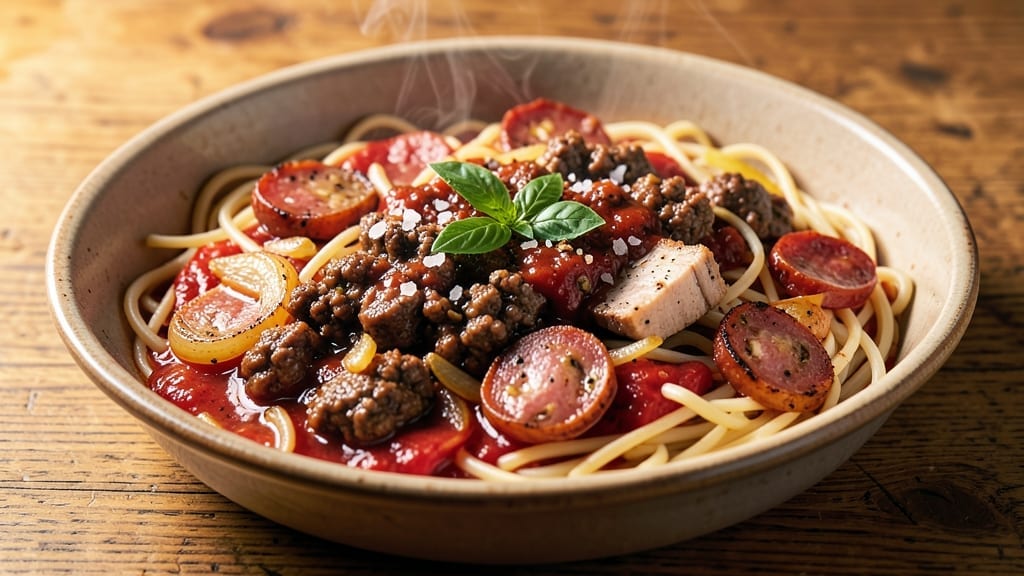
This 3-meat spaghetti sauce delivers restaurant-quality depth with layers of slow-simmered beef, pork, and Italian sausage—each meat adding its own rich dimension to the sauce. The secret lies in proper browning and a long, slow simmer that melds flavors into something truly extraordinary.
I’ve perfected this technique over years of testing, and it never fails to impress even the most discerning palates.
The recipe begins with a classic Italian base of onions, garlic, and canned tomatoes, then builds complexity through three distinct meats: ground beef for heartiness, pork shoulder for fat and tenderness, and spicy Italian sausage for a kick.
A splash of red wine and a blend of fresh herbs elevate the sauce to new heights, while a final reduction creates that perfect balance of thickness and silkiness.
What you’ll end up with is a sauce so rich and flavorful it transforms simple spaghetti into a gourmet meal. The slow cooking process develops deep, caramelized notes that make this sauce worth every minute of preparation time.
It works just as beautifully as a pasta topping or served alongside roasted vegetables and crusty bread.
This sauce keeps well in the refrigerator for up to 5 days or can be frozen for months, making it perfect for meal prep. The versatility means you can adjust the heat level to suit your preferences or add different vegetables depending on what’s in season.
Let’s create this sauce that will become your new weeknight staple.
Ingredients for 3 meat spaghetti sauce
Restaurant-quality depth starts with these carefully chosen ingredients for your 3-meat masterpiece.
| Ingredient | Amount | Notes |
|---|---|---|
| Ground Beef (80% lean) 🥩 | 1 lb | Finely ground for even cooking |
| Pork Shoulder 🐖 | 1 lb | Cut into small cubes |
| Italian Sweet Sausage 🌭 | 1 lb | Casings removed, sliced |
| Yellow Onions 🧅 | 2 medium | Finely diced, about 2 cups |
| Garlic Cloves 🧄 | 4 cloves | Minced for aromatic depth |
| Canned San Marzano Tomatoes 🍅 | 28 oz | Crushed by hand, no salt added |
| Dry Red Wine 🍷 | ½ cup | Bold variety like Cabernet |
| Fresh Basil Leaves 🌿 | ½ cup | Chopped, stems removed |
| Fresh Oregano 🍃 | ¼ cup | Chopped, not dried |
| Extra-Virgin Olive Oil 🫒 | ¼ cup | For sautéing and finishing |
| Tomato Paste 🍅 | 2 tbsp | For concentrated flavor |
| Kosher Salt 🧂 | 1 ½ tsp | Diamond Crystal preferred |
| Freshly Ground Black Pepper 🌶️ | ½ tsp | Freshly cracked preferred |
| Bay Leaves 🌿 | 2 whole | Removed before serving |
The meats are non-negotiable for that deep, layered flavor. Ground beef (80% lean) provides heartiness, while pork shoulder adds fat and tenderness—look for well-marbled cuts at Whole Foods or your local butcher. Italian sweet sausage brings the heat, but if you prefer mild, swap for spicy. For the tomatoes, San Marzano is worth the splurge—they’re sweeter and less acidic. Fresh herbs? Grow your own or grab from the farmers market—they make a world of difference over dried. The red wine should be bold enough to stand up to the meats—think Cabernet or Merlot.
No pork shoulder? Pork butt or even ground pork works in a pinch. Running low on sausage? Italian sausage crumbles or even chorizo add a different but delicious twist. Fresh herbs not an option? Dried oregano at one-third the amount gets you close, but fresh basil is irreplaceable here. The tomato paste can be swapped for extra crushed tomatoes if you’re avoiding cans, though I don’t recommend it—it’s the flavor bomb in this sauce. For the wine, beef broth with a splash of balsamic mimics the acidity and depth perfectly if you’re avoiding alcohol.
This sauce tastes even better the next day as flavors meld. Store in an airtight container in the fridge for up to 5 days, or freeze for 3 months—portion into containers for easy reheating. To save time, chop all veggies and measure spices the night before. The meats can be prepped ahead too—just store them separately until ready to brown. For reheating, add a splash of water or broth to loosen the sauce. Leftovers make amazing pizza sauce or lasagna filling too.
Why You’ll Love This Recipe
- No Chopping Chaos: I swear by this—just dice one onion and mince four garlic cloves. The pork shoulder and sausage handle themselves while they slow-cook, so I’m not stuck at the board while dinner burns. (Yes, even on a Tuesday night.)
- Three-Meat Magic: That crispy pork shoulder crumbles into flaky perfection, the sausage adds a sweet, herby punch, and the beef keeps it rich and hearty. Honestly? The first bite makes me forget I’m not at my nonna’s table.
- Leftovers That Win: This sauce actually improves the next day—deeper, more complex, and still packed with flavor. I freeze half in portions and pull it out for lazy nights or when company drops by. (They always ask for the recipe.)
- Budget Feast: A pound of pork shoulder, a pack of sausage, and ground beef stretch this into four full meals for my family. Between us, I’ve fed six adults and a picky teenager with what costs less than takeout for two. Solid math.
Step-by-step instructions for 3-Meat spaghetti sauce
This rich, layered sauce builds flavor through slow cooking—patience pays off with deep meaty taste.
Brown the Meats Separately for Maximum Flavor
Start by heating a large Dutch oven over medium-high heat. Add the 1 lb ground beef (80% lean) and cook, breaking it apart with a wooden spoon, until it loses its raw color and becomes deep brown—about 5-6 minutes. This step is crucial for developing the meaty base flavor. Transfer the beef to a plate and set aside.
In the same pot, add 1 tablespoon of the extra-virgin olive oil and increase heat to medium-high. Add the 1 lb pork shoulder in small batches, letting each batch brown slightly before adding more. You’ll know it’s ready when it develops a crispy, caramelized crust—about 6-8 minutes total. Remove and set aside with the beef.
Finally, add another 1 tablespoon of olive oil to the pot. Add the 1 lb Italian sweet sausage and cook until it releases its fat and becomes golden brown, about 5 minutes. Remove all meats and set aside, leaving the rendered fats in the pot. This three-stage browning creates complex flavors that will infuse the entire sauce.
Sauté Aromatics Until Deeply Fragrant
Reduce heat to medium and add the remaining 1 tablespoon of extra-virgin olive oil to the Dutch oven. Add the 2 medium yellow onions and cook, stirring occasionally, until they soften and turn golden brown—about 8-10 minutes. This slow cooking caramelizes the onions, adding sweet depth to the sauce.
Add the 4 minced garlic cloves and cook for 30 seconds until fragrant—don’t let it burn, or it will turn bitter. Stir in the 2 tablespoons tomato paste and cook for 1 minute, allowing it to darken slightly. This step builds the sauce’s foundation, creating a rich umami base that will carry through the entire cooking process.
Deglaze and Simmer with Wine and Tomatoes
Pour in the 0.5 cup dry red wine and scrape up any browned bits from the bottom of the pot with a wooden spoon. This deglazing step captures all the concentrated meaty flavors. Let the wine simmer for 3-4 minutes until it reduces by half, intensifying its flavor profile.
Add the 28 oz canned San Marzano tomatoes, breaking them up with your hands as you pour. Stir in the 1.5 teaspoons kosher salt, 0.5 teaspoon freshly ground black pepper, and 2 whole bay leaves. Bring to a gentle simmer, then reduce heat to low. Let the sauce cook uncovered for 45-60 minutes, stirring occasionally, until it thickens slightly and the flavors meld together.
Finish with Herbs and Rest for Maximum Flavor
Stir in the 0.5 cup chopped fresh basil leaves and 0.25 cup chopped fresh oregano. Simmer for an additional 5 minutes—just enough time to warm through the herbs without cooking them to oblivion, which would turn them bitter. Remove the bay leaves before serving.
The sauce will continue to improve as it rests. Let it sit at room temperature for 15-20 minutes before serving. This resting period allows the flavors to fully develop and the sauce to thicken slightly, ensuring each strand of spaghetti is perfectly coated. Serve immediately over freshly cooked spaghetti, reserving some pasta water to adjust the consistency if needed.
Pro Tips For Making 3 Meat Spaghetti Sauce
- CRUSH THE MEAT FIRST: Brown the pork shoulder in chunks before dicing—it renders fat better and adds depth. I used to dice first and ended up with greasy, undercooked bits that turned to mush. (Yes, even if you’re impatient like me.)
- SAUTE ONIONS LOW AND SLOW: Cook the yellow onions at medium-low heat until they’re deep golden, not caramelized. After burning three batches, I finally figured out: patience here means no bitter taste later. (Your future self will thank you.)
- DON’T OVERCROWD THE PAN: Work in batches if needed—packing all three meats in at once steams them instead of browning. I skip this when I’m lazy, but the sauce is noticeably better when the meat gets that crispy crust.
- SALT THE SAUSAGE CASINGS: Prick the Italian sweet sausage links and sprinkle them with salt before browning. Sounds weird, but it works: the seasoning sticks to the meat instead of pooling in the pan. (And it keeps the casings from bursting.)
Best sauces and condiments for these flavors
Classic Tomato Sauce Base
This sauce starts with a tomato base that’s the heart of Italian cooking—San Marzano tomatoes provide natural sweetness and acidity without canned aftertaste. I always crush them by hand to release juices and break down skins, creating a smoother texture.
The tomato paste at the start deepens the umami flavor, while the red wine deglaze adds complexity. For an extra boost, I sometimes add 1 tsp balsamic vinegar with the wine to enhance depth. 🍷
Herb Finishing Touches
Fresh herbs are non-negotiable here—basil and oregano bring bright, aromatic notes that dried herbs can’t match. I add them at the very end to preserve their vibrant flavors. For a twist, try fresh rosemary (½ tsp) or thyme (1 sprig) during the simmer for earthy depth.
If you’re short on time, dried basil works in a pinch (use 1 tbsp), but fresh is always better. 🌿
Umami Boosters
For an extra layer of richness, I often stir in 1 tbsp soy sauce or 1 tsp fish sauce during the final simmer—just enough to enhance the meaty flavors without overpowering. Anchovy paste (½ tsp) is another secret weapon for umami depth, though it’s optional.
If you love mushrooms, sauté ½ cup finely chopped cremini mushrooms with the onions for an earthy twist. 🍄
Spice Variations
Adjust the heat to your taste! For mild, skip the spicy sausage and add ½ tsp red pepper flakes at the end. For medium heat, use spicy Italian sausage and add 1 tsp crushed fennel seeds with the onions.
For fiery, stir in 1 tbsp hot honey or 1 chopped chipotle pepper in adobo during the final simmer. 🌶️
Wine & Broth Substitutes
No red wine? Use ½ cup beef broth with 1 tbsp balsamic vinegar to mimic the acidity and depth. For a non-alcoholic version, ½ cup tomato juice plus 1 tbsp apple cider vinegar works surprisingly well.
If you prefer white wine, use ½ cup dry white wine—it’ll add brightness but won’t overpower the meat flavors. 🍷
Texture Adjustments
Need a smoother sauce? Blend ½ cup of the finished sauce with an immersion blender for a velvety texture. For chunkier sauce, leave it as-is or stir in ½ cup diced roasted peppers at the end.
If the sauce is too thick after simmering, add ¼ cup pasta water or beef broth to loosen it. 🥄
Nutrition facts
Frequently asked questions
Can I use ground turkey instead of beef?
Yes! Ground turkey works beautifully and keeps the sauce lighter. Use 1 lb 93% lean ground turkey and brown it thoroughly for 5-6 minutes to develop flavor. For extra richness, add 1 tablespoon olive oil when browning. The texture will be slightly different but still delicious.
How do I make this sauce less acidic?
If the sauce tastes too tangy, add 1-2 tablespoons of sugar or 1 teaspoon honey during the final 5 minutes of simmering. You can also reduce the amount of crushed tomatoes slightly (try 24 oz instead of 28 oz) or add ½ cup tomato paste to balance acidity. Taste as you go!
Can I make this sauce in a slow cooker?
Brown the meats separately in a skillet first, then transfer everything to the slow cooker. Cook on low for 6-8 hours or high for 3-4 hours, stirring occasionally. The slow cooker method actually enhances the meaty flavors even more. Just add the fresh herbs at the very end to preserve their freshness.
Why does my sauce look too thin?
Sauce thickness comes from the long simmer time. If yours is too thin, simmer uncovered for 10-15 extra minutes to reduce. For immediate thickening, mix 1 tablespoon cornstarch with 2 tablespoons cold water, stir into the sauce, and simmer for 2-3 minutes. Avoid adding too much tomato paste at once—it can make the sauce taste heavy.
What’s the best way to store leftovers?
Let the sauce cool completely, then transfer to an airtight container. It keeps in the fridge for 5 days or freezes for up to 3 months. For freezing, portion into 1-cup containers for easy reheating. Thaw overnight in the fridge—never microwave directly from frozen. Reheat gently on the stove with a splash of water or broth.

- 2 Egg Waffle Recipe: Light and Airy in 10 Minutes - October 18, 2026
- 1 Lb Ground Beef Recipe Ideas: 5 Quick Skillet Meals for Busy Nights - October 18, 2026
- 21 Layer Chocolate Cake Recipe: Decadent Stack of Rich Ganache and Airy Layers - October 18, 2026