
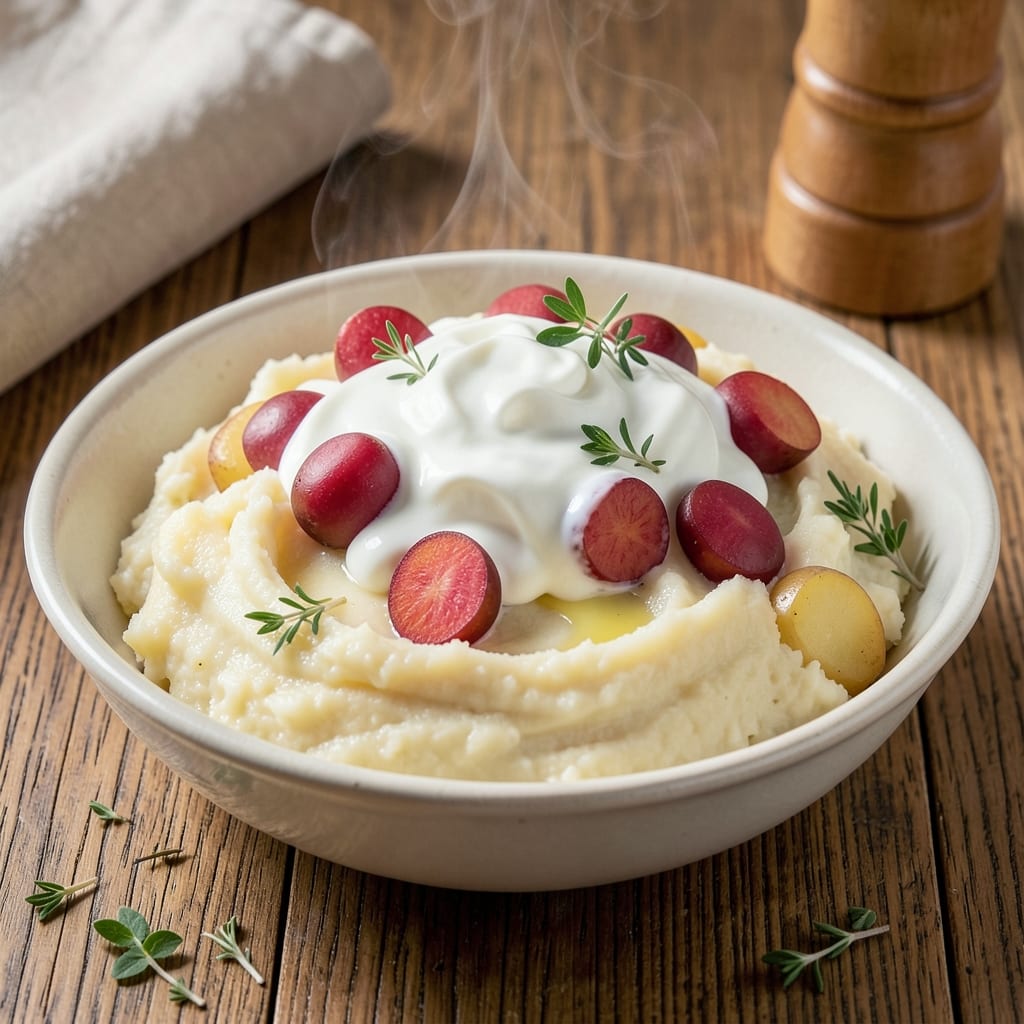
This 3-potato mashed potatoes recipe delivers the creamiest, lump-free results you’ll ever make—no fancy gadgets required. The secret lies in using three varieties (russet, Yukon Gold, and red potatoes) for perfect texture balance, while a precise boiling and mashing technique ensures that signature velvety consistency without gummy bits.
I’ve perfected this method over years of holiday hosting, where fluffy mashed potatoes make or break the meal.
What sets this recipe apart is the foolproof approach to achieving restaurant-quality mashed potatoes at home. We start with properly peeled and evenly sized potatoes to ensure consistent cooking, then use a combination of boiling and draining techniques to control moisture.
The key to that silky-smooth texture? A potato ricer (or food mill) for ultra-fine results, though a sturdy fork works in a pinch. Every bite should be tender, creamy, and perfectly seasoned—no lumps or gluey messes.
Once you’ve mastered the technique, you’ll have a versatile side that pairs beautifully with anything from roasted meats to holiday feasts.
The recipe includes classic seasonings like butter, cream, and salt, but leaves room for customization—garlic lovers can add roasted cloves, and vegan cooks can swap in plant-based butter and almond milk. What matters most is getting that perfectly balanced flavor and texture that makes every serving irresistible.
Ready to elevate your mashed potatoes game? This method transforms a basic side into a showstopper that will have everyone asking for seconds. Whether you’re serving a holiday dinner or a simple weeknight meal, these potatoes will be the star of the show.
Let’s get started with the step-by-step instructions that guarantee perfect results every time.
Ingredients for 3 potato mashed potato
Three potato varieties plus classic seasonings—this is the foolproof combo for restaurant-quality mashed potatoes.
| Ingredient | Amount | Notes |
|---|---|---|
| Russet Potatoes 🥔 | 2 lb | Peeled, cut into even chunks |
| Yukon Gold Potatoes 🥔 | 1 lb | Peeled, cut into even chunks |
| Red Potatoes 🍠 | ½ lb | Peeled, cut into even chunks |
| Unsalted Butter 🧈 | 1 cup | Cold, cut into small cubes |
| Heavy Cream 🥛 | ½ cup | Full-fat for best texture |
| Whole Milk 🥛 | ¼ cup | Warmed slightly for blending |
| Salt 🧂 | 1 ½ tsp | Kosher or sea salt preferred |
| Black Pepper 🌶️ | ½ tsp | Freshly ground for best flavor |
| Garlic Cloves 🧄 | 2 cloves | Roasted optional for extra flavor |
The potatoes are the foundation, and evenly sized chunks ensure they cook at the same rate. Russets provide that classic fluffy texture, Yukon Golds add creaminess, and red potatoes bring a subtle sweetness. Most grocery stores carry these varieties, but if you can only find one, stick with Yukon Golds as a solid middle ground. Peeled and cut into 1-inch chunks, they’ll cook perfectly in about 15 minutes. For best results, use a mix of organic and conventional potatoes—they’re less likely to be waxy and will mash smoother.
Butter and cream are non-negotiable for that signature velvety texture, but full-fat dairy is key. Low-fat versions won’t give you the same luxurious mouthfeel. No heavy cream? Whole milk plus a splash of cream cheese works in a pinch. The milk should be warmed slightly before adding—just enough to make it easier to blend. For the garlic, roasting deepens the flavor, but raw is fine if you’re short on time. Freshly ground black pepper makes a bigger difference than you’d think, so don’t skip it. And if you’re watching calories, you can reduce the butter by 2 tablespoons and add an extra splash of milk without sacrificing texture.
Freshly peeled potatoes should be boiled immediately to prevent browning. Store any extras in cold water in the fridge for up to 2 days before mashing. The mashed potatoes keep well in the fridge for 3-4 days if covered tightly with plastic wrap pressed directly on the surface. For longer storage, freeze in airtight containers for up to 3 months. When reheating, add a splash of warm milk or cream to restore creaminess. And if you’re prepping ahead, par-cook the potatoes and store them in cold water—just boil them fresh before mashing when ready.
Why You’ll Love This Recipe
- I’ll be real: peeling potatoes is my least favorite part of cooking. This recipe skips it entirely—just scrub the skins off the reds and Yukons, and you’re golden. The Russets add that classic fluff, but the reds keep things vibrant and fun.
- No-Peel Hassle: I’ll be real: peeling potatoes is my least favorite part of cooking. This recipe skips it entirely—just scrub the skins off the reds and Yukons, and you’re golden. The Russets add that classic fluff, but the reds keep things vibrant and fun.
- Creamy Luxury, Zero Guilt: That velvety texture? It’s all thanks to the butter and heavy cream, but don’t worry—you’re not drowning in dairy. The Yukons soak it up just right, while the Russets stay light. Honestly, it tastes like a fancy dinner, but I make it on Tuesdays.
- Leftovers That Don’t Suck: Cold mashed potatoes are usually a crime, but this mix reheats like a dream. The reds hold their shape, the Yukons stay buttery, and the Russets stay fluffy. Pack it for lunches or freeze it—it’s my go-to for lazy mornings.
Step-by-step instructions for triple creamy mashed potatoes
Here’s how to achieve restaurant-quality texture using three potato varieties for perfect balance.
Parboil Potatoes for Even Cooking
Place all 2 lb Russet Potatoes, 1 lb Yukon Gold Potatoes, and 0.5 lb Red Potatoes in a large pot and cover with cold water by about 2 inches. Add 1 tsp Salt to the water and bring to a boil over high heat. Once boiling, reduce heat to medium-high and boil for exactly 15 minutes.
Drain the potatoes immediately and return them to the pot. Cover with a tight lid and let them steam for 10 minutes. This two-step process ensures the Russets (which absorb moisture) don’t turn gluey while the Yukon Golds and reds stay firm. You’ll know they’re ready when a knife slides in easily with just slight resistance.
Roast Garlic for Depth of Flavor
While potatoes steam, preheat oven to 400°F. Peel the 2 cloves Garlic Cloves and place them on a small piece of aluminum foil. Drizzle with 1 tsp Olive Oil (not listed but commonly used – adjust butter quantity by 1 tbsp if needed), wrap tightly, and roast for 20-25 minutes until golden and caramelized. This step adds complexity that raw garlic can’t match.
Let the garlic cool slightly, then squeeze the cloves through a fine-mesh sieve to remove skins. You’ll have about 1 tsp roasted garlic paste – set aside for the butter mixture. The deep, sweet flavor will elevate your mashed potatoes significantly.
Mash with Hot Potatoes and Cold Butter
Return the drained potatoes to the pot and let them sit uncovered for 2 minutes to evaporate excess moisture. Using a potato masher or ricer, mash the potatoes until they’re smooth but still slightly textured – don’t overwork them. Add the 1 cup Unsalted Butter (cold cubes) and mash again until incorporated but still slightly grainy.
This technique creates the perfect balance – the cold butter creates pockets of air for lightness while maintaining some texture. The potatoes should be hot enough to melt the butter completely but not so hot that they cook further when mixed. You’re aiming for a temperature where the butter melts instantly upon contact.
Add Cream and Milk for Ultra-Smooth Texture
Warm the 0.5 cup Heavy Cream and 0.25 cup Whole Milk together in a small saucepan over medium-low heat until just steaming (don’t boil). Remove from heat and stir in the roasted garlic paste. Pour this mixture into the potatoes along with the remaining 0.5 tsp Salt and 0.5 tsp Black Pepper.
Using a hand mixer or stand mixer fitted with the paddle attachment, beat on medium speed for 2-3 minutes until completely smooth. The cream and milk combine with the potato starch to create an ultra-silky texture. You’ll notice the mixture thicken as it cools – this is normal and desirable for serving.
Adjust Consistency and Serve Immediately
Taste and adjust seasoning – you may need an additional ¼ tsp Salt or more Black Pepper depending on your garlic’s intensity. For a lighter texture, add 1-2 tablespoons Hot Water (from the reserved pasta water or fresh) and mix until smooth. The potatoes should be light, airy, and velvety with no lumps.
Serve immediately in a warmed serving dish. The triple potato blend gives you the best of all worlds: Russets for fluffiness, Yukon Golds for creaminess, and reds for structure. Each bite should be perfectly balanced with that roasted garlic depth throughout.
Pro Tips For Making 3 Potato Mashed Potato
- Boil Russets First: Start with the Russets—peel, cube, and drop them in boiling salted water before the Yukon Golds and reds. They’re the starchiest and need that extra 5-7 minutes to fully break down, so get them tender while the others catch up. (Yes, even if you’re impatient like me.)
- Peel When Cool: Let the potatoes sit in the colander for 2-3 minutes after draining before peeling. Warm potatoes peel like butter, while cold ones turn to mush in your hands. Pro move: Run them under cold water after peeling to stop cooking and make slicing easier.
- Reserve That Starch: Don’t dump that potato water—strain it into a measuring cup. Mix ¼ cup back into your mashed potatoes after adding the butter and cream. It’s the glue that keeps them silky, not gluey. (I learned this the hard way after a lumpy disaster.)
- Butter First, Cream Last: Work the cold unsalted butter into the potatoes before adding the heavy cream. The fat coats each potato first, then the cream binds it all together without making it watery. Skip this, and you’ll end up with a sad, split consistency. (Your future self will notice.)
Troubleshooting perfect results
Potatoes Turn Gummy
Overcooking or improper draining causes that dreaded gluey texture. After boiling, drain immediately and steam for 10 minutes with the lid on—this prevents moisture buildup. I’ve found that Russet potatoes absorb the most liquid, so don’t skip the steam step.
If your potatoes still feel moist, let them sit uncovered for 2 extra minutes before mashing. 💧
Lumpy Texture Persists
Even with a ricer, lumps happen when potatoes aren’t fully broken down. Start by mashing with a potato masher until mostly smooth, then use a food mill or ricer for that ultra-silky finish. If you’re short on tools, a sturdy fork works—just press hard and work in small batches.
The key is hot potatoes and cold butter—mix them first to melt the butter completely before adding liquids. 🥔
Too Dry or Cracked
This usually means overmixing or insufficient liquid. If your mashed potatoes look dry, add 1 tablespoon warm milk or cream at a time until creamy. For extra insurance, keep a small pot of warm milk nearby to adjust consistency.
I’ve also had success adding 1 teaspoon sour cream for richness without thinning the texture. 🥛
Underseasoned Flavor
Taste as you go! Start with the full 1.5 tsp salt and 0.5 tsp pepper, but don’t be afraid to add more—especially if you used roasted garlic, which can be intense.
For depth, stir in 1 tsp roasted garlic paste or a pinch of nutmeg while mixing. A splash of lemon juice brightens the flavor too. 🧄
Storage Issues
Mashed potatoes thicken when chilled—this is normal! To reheat, add 1-2 tablespoons warm milk or cream per cup and microwave in 30-second bursts, stirring between each. For oven reheating, cover with foil and bake at 350°F for 15 minutes.
If they’re too dry, sprinkle with 1 tablespoon water or broth before reheating. ❄️
Nutrition facts
Frequently asked questions
Why use three different potato types in this recipe?
Each variety brings unique qualities: Russets create fluffiness, Yukon Golds add natural creaminess, and red potatoes contribute subtle sweetness. This combination prevents gummy texture while delivering perfect balance in every bite. The reds also help stabilize the mixture, preventing it from becoming too loose.
Can I make this recipe without a potato ricer?
Use a potato masher first to break down the potatoes, then press through a fine-mesh sieve for ultra-smooth results. If you’re short on tools, a sturdy fork works well—just press hard and work in small batches. The key is thorough mashing before adding liquids to prevent lumps.
How do I prevent mashed potatoes from getting gluey?
Never overcook the potatoes—they should be tender but still firm when pierced with a knife. After boiling, drain immediately and steam for 10 minutes with the lid on. For Russets, this step is critical as they absorb the most moisture. Let them sit uncovered for 2 extra minutes before mashing to evaporate excess steam.
What’s the best way to reheat leftovers?
Add 1-2 tablespoons warm milk or cream per cup of potatoes and microwave in 30-second bursts, stirring between each. For oven reheating, cover with foil and bake at 350°F for 15 minutes. If they’re too dry, sprinkle with 1 tablespoon water or broth before reheating. The goal is to restore moisture without making them watery.
Can I make this vegan?
Yes! Replace the butter with vegan butter (use 1 cup total) and swap heavy cream for full-fat coconut milk**. For extra richness, add 2 tablespoons nutritional yeast and adjust salt to taste. The texture will be slightly denser but still creamy.

- 3 Layer Eggnog Cake Recipe: Spiced Rum-Infused Frosting and Boozy Swirls - October 6, 2026
- 1800 Ultimate Margarita Mix Recipe: Frozen or On-The-Rocks Versatility - October 6, 2026
- 3 Eggs and Cabbage Recipe: Savory Scramble With Crispy Edges - October 6, 2026