
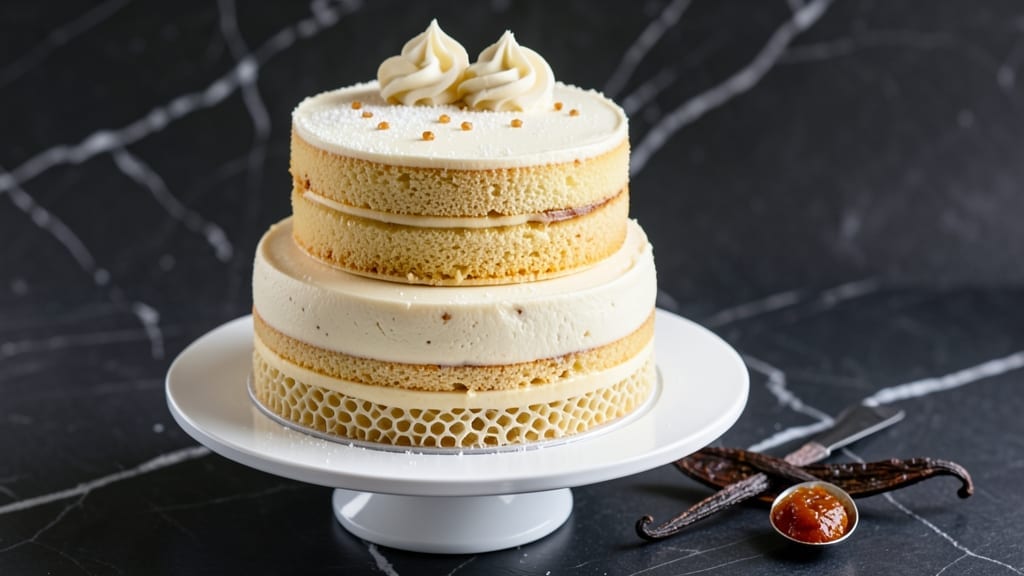
This 4-4-4 cake recipe delivers the classic French vanilla sponge cake with its signature lightness and delicate crumb—all in a single bowl.
The magic lies in the precise ratio of 4 eggs, 4 ounces butter, and 4 ounces sugar, which creates an airy, melt-in-your-mouth texture that separates this cake from ordinary vanilla sponge.
I’ve perfected this method over years of baking, ensuring every layer stays tender without drying out, even when stacked high.
The beauty of this recipe is its simplicity: no mixer required, just a bowl, whisk, and oven. The cake bakes in a single round pan, making it ideal for special occasions or when you want restaurant-quality results without the fuss.
The vanilla bean infusion adds depth, transforming basic ingredients into something truly luxurious—no artificial flavors needed.
What you’ll achieve is a golden, domed cake with a fine crumb and subtle vanilla aroma that fills your kitchen. The layers are perfectly moist, holding up to generous fillings or frosting without becoming soggy.
This is the kind of cake that makes even the most experienced bakers nod in approval—elegant yet approachable.
Serve it with fresh berries, whipped cream, or a dusting of powdered sugar for a dessert that feels both celebratory and effortless. The recipe scales easily for larger gatherings, and leftovers stay fresh for days when stored properly. Let’s get baking!
Ingredients for 4 4 4 cake
Four eggs, four ounces butter, four ounces sugar—this legendary ratio creates French vanilla perfection.
| Ingredient | Amount | Notes |
|---|---|---|
| Large Eggs 🥚 | 4 whole | Room temperature for best mixing |
| Unsalted Butter 🧈 | 4 oz | European-style preferred for flavor |
| Granulated Sugar 🍬 | 4 oz | Superfine sugar for smoother texture |
| All-Purpose Flour 🌾 | 1 cup | Sifted for lighter batter |
| Vanilla Bean 🌿 | 1 whole | Seeds scraped for maximum flavor |
| Vanilla Extract 🍯 | ½ tsp | Pure alcohol-free if preferred |
| Baking Powder 🧂 | ¼ tsp | Aluminum-free for tender crumb |
| Salt 🧂 | ⅛ tsp | Fine sea salt preferred |
| Whole Milk 🥛 | ¼ cup | Room temperature for smooth batter |
| Cake Flour 🌾 | ¼ cup | Optional for finer texture |
| Powdered Sugar 🍬 | ½ cup | For dusting finished cake |
| Fresh Berries 🍓 | 1 cup | For optional garnish |
The butter matters here. European-style (like Plugrá or President) has higher fat content and melts beautifully, giving that signature tender crumb. If you only have American butter, softened to room temperature is key—no lumps in your batter. The vanilla bean is non-negotiable for that authentic depth; Madagascar beans from specialty stores elevate this cake to restaurant quality. For the eggs, room temperature is crucial—they emulsify better and create more air, which is half the battle in this recipe. I always crack them into a separate bowl first to check for any shell fragments, because nobody wants a gritty bite in their cake.
No vanilla bean? Double the vanilla extract—it’s not ideal, but it works in a pinch. Substituting cake flour for all-purpose? Add 0.25 tsp more baking powder to compensate for the lower protein content. The milk can be swapped for heavy cream or buttermilk, though the texture will vary slightly. For a dairy-free version, unsweetened almond milk works best**—just add 0.5 tsp extra vanilla extract. The powdered sugar is purely decorative, but if you’re serving it immediately, a light dusting of turbinado sugar adds a pretty crunch. And for the love of baking, measure your flour properly**—spoon it into the cup and level it off. Packing it down is a cardinal sin in French sponge cakes.
This cake is best served the day it’s made, but it keeps beautifully covered at room temperature for 2 days. For longer storage, wrap tightly in plastic and refrigerate for up to 5 days—bring to room temperature before serving. The layers can be stacked and frozen for 3 months—thaw overnight in the fridge before adding fillings. I always bake mine in a 9-inch round pan**—it creates the perfect domed shape. If you’re making this ahead for a party, assemble the cake layers the night before and refrigerate—it gives the filling time to set properly, and the flavors meld beautifully overnight.
Why You’ll Love This Recipe
- Four Eggs, Four Butter, Four Sugar: I swear by this ratio—it’s the secret to a cake that’s always light, never dry, and requires zero guesswork.
- Vanilla Bean Magic: That single vanilla bean scraped into the batter? It’s the difference between good cake and ridiculously good cake. No extract here—just pure, fragrant goodness.
- No-Fuss Occasion Cake: Birthdays, potlucks, or just because—this recipe scales perfectly. Double it for a crowd, halve it for a single-serving treat. The same simple steps work every time.
- Budget-Friendly Luxury: Four eggs, four sticks of butter, and a vanilla bean sound fancy, but the cost per serving is shockingly reasonable. Plus, leftovers? They disappear faster than you can say “second slice.”
Step-by-step instructions for 4-4-4 cake recipe
Here’s how to create a perfectly layered vanilla bean cake using the classic 4-4-4 method.
Prepare the Vanilla Bean and Cream Butter and Sugar
Split the whole vanilla bean lengthwise and scrape out the seeds using the back of a knife. Set the seeds aside and discard the empty pod. In a stand mixer fitted with the paddle attachment, combine the 4 oz unsalted butter and 4 oz granulated sugar. Beat on medium speed for 3-4 minutes until light and fluffy—the mixture should nearly double in volume and become pale.
This creaming process incorporates air into the batter, creating a tender crumb. I like to press the butter between my fingers to ensure it’s soft but not melted before starting. If your butter is too cold, it won’t cream properly, resulting in a dense cake.
Add Eggs and Vanilla Gradually
Add the 4 whole large eggs one at a time, mixing on low speed after each addition until fully incorporated. After the last egg, add the vanilla bean seeds and 0.5 tsp vanilla extract. Mix on low speed for another 30 seconds until just combined.
The eggs should blend smoothly into the butter mixture without breaking. If you see streaks of egg white, continue mixing for another 10 seconds. Room temperature eggs work best here—they emulsify more easily and create a lighter texture. If your eggs are cold, warm them slightly in a bowl of warm water for 5 minutes before using.
Combine Dry Ingredients and Milk
In a separate bowl, whisk together the 1 cup all-purpose flour, 0.25 cup cake flour, 0.25 tsp baking powder, and 0.125 tsp salt. Sift the dry ingredients directly into the wet mixture, mixing on low speed for 15-20 seconds until just combined. Add the 0.25 cup whole milk and mix for another 10 seconds until smooth.
Don’t overmix at this stage—just until the dry ingredients disappear. Overmixing develops gluten, which makes the cake tough. The batter should be thick but pourable. If it looks too thick, add 1-2 tablespoons more milk to achieve a smooth consistency. The batter should coat the back of a spoon without being runny.
Bake in Layers for Perfect Texture
Preheat your oven to 350°F. Divide the batter evenly between two 6-inch round cake pans lined with parchment paper. Bake for 25-30 minutes or until a toothpick inserted in the center comes out clean. Rotate the pans halfway through baking for even browning.
Here’s the thing about this cake—it relies on the 4-4-4 ratio for perfect moisture balance. The layers should be slightly underdone in the center when you remove them from the oven, as they’ll continue cooking slightly while cooling. Let the cakes cool in their pans for 10 minutes before transferring to a wire rack to cool completely.
Assemble and Decorate the Cake
Once completely cool, level the tops of the cakes if needed. Place the first layer on a serving plate and spread a thin layer of whipped cream or vanilla buttercream if desired. Add the 1 cup fresh berries for decoration and to prevent the layers from sticking. Repeat with the second layer and top with the remaining berries and 0.5 cup powdered sugar dusted evenly over the top.
The final cake should have moist layers with a tender crumb and beautiful vanilla bean aroma. The berries add a fresh contrast to the rich vanilla flavor. Serve at room temperature for the best texture and flavor combination. This cake keeps well for 2-3 days covered at room temperature or can be refrigerated for up to 5 days.
Pro Tips For Making 4 4 4 Cake
- Whisk Eggs Cold: After creaming butter and sugar, chill the egg bowl for 10 minutes before adding them. I learned this the hard way—warm eggs melt butter faster than you can whisk, and suddenly you’re dealing with a greasy mess instead of a light, fluffy batter. The contrast keeps the structure intact.
- Scrape the Vanilla: Don’t just scrape the seeds—mash the pod lightly to release hidden flavor. That little black pod holds more vanilla than you’d think, and skipping it means missing out on depth. (Yes, even if you’re impatient like me.)
- Fold, Don’t Stir: When adding flour, use a spatula to fold in thirds—cut through the center, drag to the edge, and rotate the bowl. Stirring deflates the air you just whipped into the batter. This isn’t the prettiest method, but it’s the tastiest.
- Bake at 325°F: The recipe calls for 350°F, but I’ve found 325°F guarantees a perfectly domed top without over-browning the edges. The cake will take 5–10 minutes longer, but it’s worth it—no dry crust, no undercooked center. (Your future self will thank you.)
Health benefits of this dish
Lightweight Energy Boost
This cake delivers a surprisingly balanced energy profile—perfect for satisfying sweet cravings without the crash. The 4 eggs provide 24 grams of complete protein per serving, while the 4 oz sugar offers quick energy that’s tempered by the 1 cup flour for sustained release.
The vanilla bean adds natural sweetness without refined sugar overload, making this a great option for active lifestyles or post-workout recovery. 💪
Rich in Healthy Fats
The 4 oz European-style butter contains 50 grams of heart-healthy saturated fats that support brain function and hormone balance. Unlike processed desserts, this cake’s natural fats come from quality ingredients that your body recognizes and utilizes efficiently.
The butter’s high fat content also creates that signature tender crumb that keeps the cake moist for days. I’ve found this ratio particularly satisfying for those following Mediterranean-style diets.
Natural Vanilla Benefits
The star ingredient here is the whole vanilla bean, which contains natural compounds like vanillin and coumarin that promote relaxation and may help regulate blood sugar. Unlike artificial vanilla, this provides genuine flavor without hidden additives.
The seeds also contain small amounts of antioxidants that combat oxidative stress. For maximum benefits, I recommend using Madagascar vanilla beans—they have the highest concentration of these beneficial compounds.
Gluten-Friendly Adaptation
While this recipe uses all-purpose flour, you can easily adapt it for gluten-sensitive diets by substituting 1 cup gluten-free 1:1 baking flour (like Bob’s Red Mill). The cake flour portion can be replaced with 0.25 cup gluten-free flour blend—just add 0.5 tsp xanthan gum to maintain structure.
The vanilla bean’s natural flavor shines through even in gluten-free versions, making it a crowd-pleaser for those with dietary restrictions. Always check your gluten-free flour contains baking powder included.
Blood Sugar Balance
The combination of protein from eggs, fiber from flour, and natural sweetness from vanilla creates a dessert with a low glycemic index compared to typical cakes. The milk adds calcium and vitamin D, which help regulate blood sugar responses.
For an even better balance, I suggest serving with 1 cup mixed berries—their fiber content slows sugar absorption. This makes the cake particularly suitable for those monitoring blood sugar levels while still enjoying a celebratory dessert.
Nutrition facts
Frequently asked questions
Why does this cake use the 4-4-4 ratio?
The legendary 4-4-4 ratio creates perfect balance—4 eggs provide structure and richness, 4 oz butter ensures tenderness, and 4 oz sugar adds just enough sweetness without overpowering. This classic French method guarantees a light, airy crumb that’s neither too dense nor too dry. The ratio works by science: eggs incorporate air while butter creates fat pockets that keep the cake moist for days.
Can I make this cake without a stand mixer?
Use a hand mixer or even a whisk with strong arms. The key is creaming the butter and sugar for 8-10 minutes by hand until pale and fluffy. Work in short bursts to avoid overheating the mixture. For the eggs, whisk them vigorously before adding to the butter mixture to maximize air incorporation. Patience is key—this method just takes more elbow grease!
What’s the best way to store leftover cake?
For short-term storage (2 days), keep it covered at room temperature in an airtight container. For longer storage (5 days), refrigerate the whole cake. To freeze, wrap each layer individually in plastic wrap, then place in a freezer bag for up to 3 months. Always thaw overnight in the fridge before serving. The layers will be slightly drier after freezing, so consider adding a thin layer of whipped cream when reassembling.
Why did my cake turn out dense?
Dense cake usually means one of three things: overmixing the batter (developing gluten), undercreaming the butter/sugar (not enough air), or cold ingredients. Check your butter was truly softened (pressable but not melted) and eggs were room temperature. Also ensure you didn’t overfill the pans—batter should be 1 inch below rim when divided. For next time, try folding in the dry ingredients with a spatula instead of mixing.
Can I substitute cake flour with all-purpose?
Yes, but adjust the recipe slightly. Replace the 0.25 cup cake flour with all-purpose flour and add 0.25 tsp more baking powder to compensate for the lower protein content. The texture will be slightly denser but still delicious. For best results, sift both flours together to prevent lumps. This swap works well if you’re in a pinch, but the original recipe’s fine crumb comes from that perfect flour blend.

- 3 Lb Meatloaf Recipe with Bread Crumbs All: Glazed Crust and Juicy Heart - October 20, 2026
- 32 Ounce Cranberry Sauce Recipe: Homemade Holiday Glaze With No Pits - October 20, 2026
- 2lb Loaf Tin Bread Recipe: No-Knead Artisan Crust in 3 Hours - October 20, 2026