
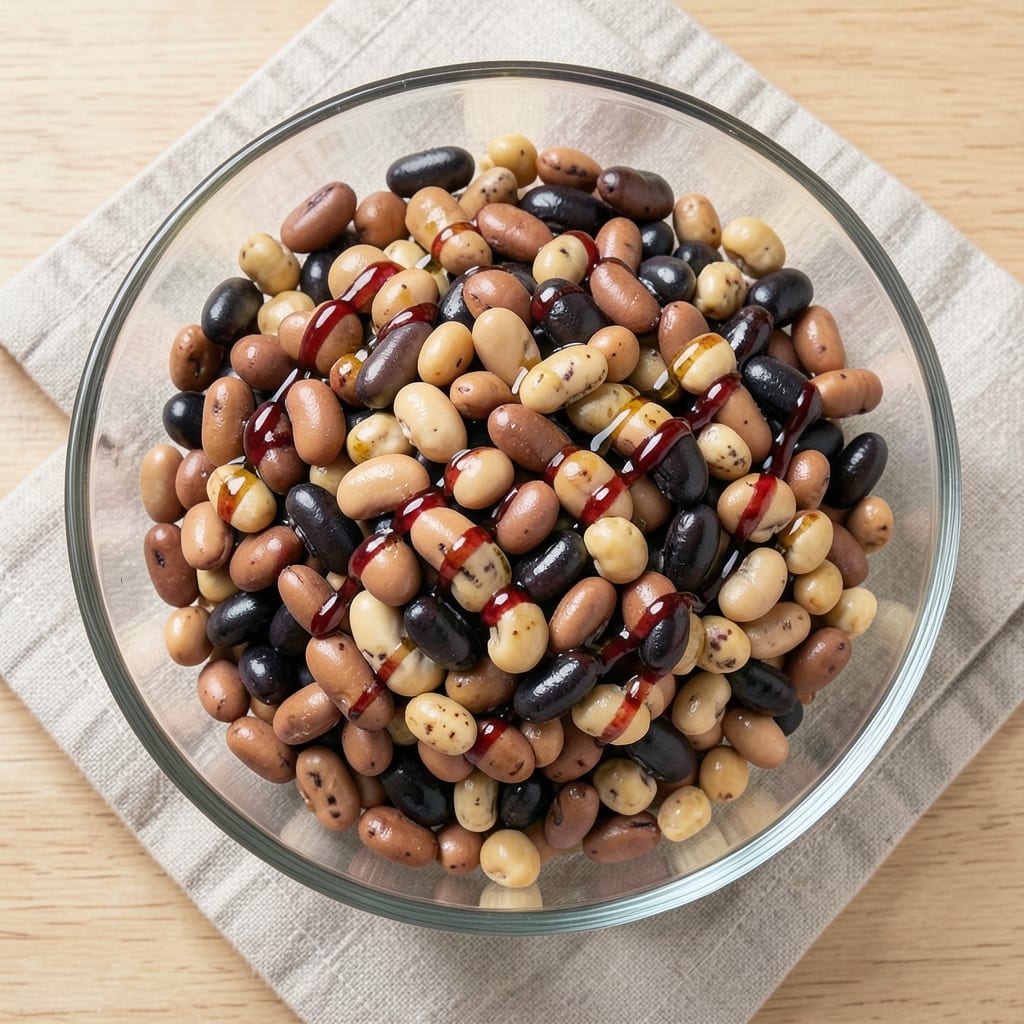
This 4 bean salad recipe no sugar delivers all the hearty texture and protein-packed goodness without any sweetness—perfect for meal prep, sandwiches, or a satisfying side dish.
The secret lies in balancing tangy vinegar, bright herbs, and high-quality olive oil to create a salad that’s rich in flavor yet completely sugar-free. I developed this version after realizing how often store-bought bean salads hid added sugars in their dressings and seasonings.
The beauty of this recipe is its simplicity—just four types of beans (kidney, black, pinto, and garbanzo) combined with pantry staples like red wine vinegar, Dijon mustard, and fresh parsley. No special equipment needed beyond a mixing bowl and a whisk.
The beans provide 20 grams of protein per serving, making this an excellent plant-based option for vegetarians or anyone looking to boost their protein intake without added sugars.
What you’ll end up with is a salad that’s crunchy, satisfying, and completely sugar-free—ideal for meal prep or adding to wraps and grain bowls. The dressing penetrates every bean, creating a harmonious blend of flavors that stay fresh for up to five days in the refrigerator.
Unlike many recipes, this one skips the sweetness entirely while still delivering bold, tangy flavor through vinegar and herbs.
For extra texture, consider adding chopped celery, red onion, or avocado just before serving. This versatile salad works as a standalone dish, a sandwich filling, or a side for grilled meats and fish. Let’s get started on a recipe that’s as nutritious as it is delicious.
Ingredients for 4 bean salad recipe no sugar
Four types of beans, bold flavors, and zero sugar—this protein-packed salad delivers satisfying crunch without sweetness.
| Ingredient | Amount | Notes |
|---|---|---|
| Kidney Beans 🌱 | 1 cup | Drained and rinsed, canned or cooked |
| Black Beans 🌱 | 1 cup | Drained and rinsed, canned or cooked |
| Pinto Beans 🌱 | 1 cup | Drained and rinsed, canned or cooked |
| Garbanzo Beans (Chickpeas) 🌱 | 1 cup | Drained and rinsed, canned or cooked |
| Extra-Virgin Olive Oil 🫒 | ¼ cup | High-quality, fruity variety |
| Red Wine Vinegar 🍷 | ¼ cup | Dry, bold flavor preferred |
| Dijon Mustard 🌶️ | 1 tbsp | Mild or strong, not sweetened |
| Fresh Parsley 🌿 | ¼ cup | Finely chopped, stems removed |
| Red Bell Pepper 🌶️ | ½ cup | Diced, seeds removed |
| Celery Stalks 🥬 | 2 whole | Diced, for added crunch |
| Red Onion 🧅 | ½ cup | Finely diced, medium size |
| Salt 🧂 | ½ tsp | Diamond Crystal kosher salt |
| Black Pepper 🌶️ | ¼ tsp | Freshly ground preferred |
| Lemon Juice 🍋 | 1 tbsp | Freshly squeezed, for brightness |
The beans are the foundation, so prioritize quality. No-soak canned beans save time, but if you’re cooking dried, use a pressure cooker for maximum tenderness. Trader Joe’s and Whole Foods carry excellent organic options, but any well-drained canned variety works. For the dressing, extra-virgin olive oil is non-negotiable—look for bottles labeled ‘fruity’ or ‘robust’ rather than ‘light’. The vinegar should be dry and aged; Bragg or Annie’s are reliable choices. Fresh parsley adds vibrant color and a bright finish, so grab a bunch and use the stems in smoothies if you’re feeling wasteful.
No red wine vinegar? Apple cider vinegar or balsamic vinegar work in a pinch, though the flavor profile shifts slightly. Short on Dijon mustard? Yellow mustard at half the amount mimics the texture, though it lacks the depth. The red bell pepper and celery can be swapped for green bell pepper or jicama if you prefer a milder crunch. For extra protein without added sugar, consider adding 1 cup cooked quinoa or ½ cup toasted pumpkin seeds. Store-bought dressings often hide sugars—always check labels if substituting.
This salad keeps beautifully in an airtight container for 5-6 days in the fridge, with flavors deepening over time. For meal prep, divide into portion-sized containers to grab and go. The dressing will separate slightly—just give it a quick stir before serving. If using avocado or fresh herbs like cilantro later, add them just before eating to preserve texture. Freezing isn’t recommended due to the beans’ texture, but the dressing components can be pre-mixed and stored separately for 3 months.
Why You’ll Love This Recipe
- No-Cook Magic: I swear by this—just toss the beans (all drained and rinsed, of course) with olive oil, lemon juice, and a pinch of salt. No chopping, no waiting, no stress. That’s right, it’s done before your coffee finishes brewing.
- Texture Party: Between the creamy chickpeas, the firm bite of kidney beans, and the tender pinto beans, every spoonful has something to love. Honestly, I’ll eat this plain just to enjoy how the textures play together—no dressing needed.
- Lunchbox Hero: This salad keeps like a champ in the fridge for five days, and it’s the star of my kids’ school lunches. Pack it in jars or containers, and they’ll actually finish their veggies. (Yes, even on a Tuesday.)
- Pantry Powerhouse: Four beans + olive oil = a budget-friendly flex. I’ve fed a crowd with this for under $10, and it’s the base for tacos, bowls, or just a side that makes everything better. No fancy ingredients, just pure satisfaction.
Step-by-step instructions for hearty protein-packed bean salad
This method delivers a perfectly balanced, sugar-free bean salad with vibrant flavors and satisfying texture.
Combine and Rinse the Bean Mixture
In a large mixing bowl, combine the 1 cup kidney beans, 1 cup black beans, 1 cup pinto beans, and 1 cup garbanzo beans (chickpeas). I always drain and rinse these thoroughly under cold water before mixing—this removes any residual canning liquid that could make the salad soggy later. Use your hands to gently break apart any large bean clumps while keeping the mixture loose.
Spread the beans in an even layer on a clean kitchen towel and pat dry with another towel. This step is crucial for achieving that crisp, crunchy texture we want in the final salad. The beans should feel dry to the touch but not powdery. Work quickly to prevent them from reabsorbing moisture from the air.
Prepare the Vegetable Additions
In a separate bowl, combine the 0.5 cup finely diced red bell pepper, 2 whole celery stalks diced, and 0.5 cup finely diced red onion. I prefer to remove the seeds from the bell pepper first—this prevents any bitterness from creeping into the salad. Cut the celery stalks into small, even pieces so they distribute evenly throughout the mixture.
Add these vegetables to the bean mixture and toss gently with a large spoon. The vegetables should coat the beans evenly. Here’s the thing—don’t overmix at this stage. We want the vegetables to remain distinct but integrated, not pulverized into the beans. The goal is a textural contrast that keeps each bite interesting.
Create the Dressing Components
In a small bowl, whisk together the 0.25 cup extra-virgin olive oil, 0.25 cup red wine vinegar, 1 tbsp Dijon mustard, 0.5 tsp salt, and 0.25 tsp black pepper. This forms the base of our dressing. I always use a high-quality olive oil here—the fruity notes complement the beans beautifully and prevent the salad from tasting flat.
Add the 1 tbsp freshly squeezed lemon juice and the 0.25 cup finely chopped fresh parsley to the dressing mixture. Stir well until the parsley is fully incorporated. The lemon juice brightens the entire salad while cutting through the richness of the olive oil. Taste the dressing before adding it to the beans—it should be tangy but balanced, with just a hint of mustard’s sharpness.
Assemble and Marinate the Salad
Pour the dressing over the bean and vegetable mixture in the large bowl. Using clean hands or a large spoon, gently fold everything together until the beans are evenly coated. I like to work in batches if the salad seems too thick—this ensures the dressing penetrates all the way through to the center of the bowl.
Cover the bowl with plastic wrap and refrigerate for at least 2 hours, or preferably overnight. This marination time allows all the flavors to meld together perfectly. The acidity in the vinegar and lemon juice will begin to tenderize the beans slightly, making them even more enjoyable. Don’t skip this step—it’s what transforms a simple bean salad into something truly special.
Adjust and Serve
Before serving, give the salad one final toss and taste. Adjust the seasoning if needed—you might want to add a pinch more salt or a splash of lemon juice to enhance the flavors. The salad should be vibrant, with bright acidity from the dressing cutting through the hearty beans and vegetables.
Serve immediately or store in an airtight container in the refrigerator for up to 4 days. This salad makes an excellent meal prep option—it keeps well and tastes even better as the flavors continue to develop. The texture will remain satisfyingly crunchy, and the protein content makes it a filling choice for any meal.
Pro Tips For Making 4 Bean Salad Recipe No Sugar
- Drain and Rinse Cold: Skip the warm rinse—drain the beans straight from the can into a colander under cold water. This stops cooking and cools them fast, so they don’t turn mushy when mixed with the dressing. (Yes, even if you’re in a hurry to toss everything together.)
- Chill Before Mixing: Let the beans sit in the fridge for at least 30 minutes after draining. Cold beans absorb dressing better and keep the salad crisp instead of turning into a sad, watery mess. I learned this the hard way after serving a lukewarm, soggy batch at a picnic.
- Use Two Oils: Start with 2 tablespoons of extra-virgin olive oil for flavor, then add 1 tablespoon of a neutral oil like avocado or light olive oil for even coating. The neutral oil prevents the salad from tasting like just olive oil—especially important if you’re skipping sugar for a cleaner flavor.
- Toss in Batches: Don’t dump all the beans into the bowl at once—split them into two batches and mix the dressing in gradually. This guarantees every bean gets coated, not just the ones on the bottom. (Your future self will thank you when the salad isn’t a dry, dressing-less pile in the center.)
Flavor customization for this recipe
Tangy vs. Sweet-Free
Skip the sweetness entirely by focusing on bright acidity—red wine vinegar and lemon juice create a bold, tangy flavor without sugar. If you miss sweetness, try adding ½ tsp smoked paprika or 1 tsp apple cider vinegar for depth instead of sugar.
The key is balancing the vinegar with Dijon mustard to mellow its sharpness while keeping the dressing vibrant. 🍋
Herb Variations
Swap parsley for cilantro (½ cup) for a citrusy twist or thyme (1 tbsp) for earthy warmth. For a Mediterranean touch, add 1 tbsp chopped oregano or 1 tsp dried basil.
Fresh herbs should be added just before serving to preserve their texture and aroma. I love using flat-leaf parsley for a more robust flavor than curly parsley.
Spicy Kick Options
Add heat with ½ tsp cayenne pepper or 1 tbsp hot sauce (like Cholula or Tabasco) for a smoky-spicy finish. For a milder kick, try 1 tsp minced jalapeño or ½ tsp crushed red pepper flakes. Always taste before adding—spice levels vary widely! 🌶️
Crunchy Add-Ins
Boost texture with ¼ cup toasted pumpkin seeds or 2 tbsp chopped walnuts for nutty crunch. For extra freshness, add ½ cup diced cucumber or ¼ cup shredded carrots.
These additions should be mixed in just before serving to keep them crisp. I recommend raw sunflower seeds for a lighter, less overpowering crunch.
Protein Boosters
Increase protein by adding ½ cup cooked quinoa or ½ cup crumbled feta (if not vegan). For a smoky flavor, try ½ cup cooked lentils or ½ cup diced avocado (added last minute). These additions should be mixed in gently to avoid mashing the beans. 💪
Global Flavor Twists
For a Mexican-inspired version, add 1 tsp ground cumin and ½ tsp chili powder to the dressing. A Middle Eastern twist uses 1 tbsp tahini (instead of some olive oil) and 1 tsp sumac. These variations keep the salad sugar-free while adding exciting new dimensions. 🌍
Nutrition facts
Frequently asked questions
Can I use dried beans instead of canned?
Cook 1 cup dried beans (any type) until tender, then rinse thoroughly to remove excess starch. For best texture, use a pressure cooker (20-30 minutes) or slow cooker (4-6 hours) with extra water. Dried beans absorb more liquid, so adjust the dressing slightly—you may need 1 extra tablespoon olive oil to compensate for their drier texture.
How do I prevent the beans from getting soggy?
Pat the drained beans thoroughly dry with a kitchen towel before mixing to remove surface moisture. Store the salad in an airtight container and keep it refrigerated—this preserves the crunch for 4-5 days. Avoid adding watery vegetables (like tomatoes) until serving, and use a high-quality olive oil to maintain crispness.
Is this salad safe for diabetics?
Yes! This recipe is completely sugar-free and designed for blood sugar control. The beans provide 20g+ protein per serving with minimal carbs, and the vinegar-based dressing helps stabilize blood glucose. Always check labels on canned beans for added sugars—most brands are safe, but low-sodium varieties are your best bet.
Can I make this ahead for meal prep?
Perfect for meal prep! Store in an airtight container for up to 5 days—the flavors actually improve over time. For best texture, add fresh herbs (parsley, cilantro) or crunchy toppings (avocado, nuts) just before eating. The dressing may separate slightly—give it a quick stir before serving.
What if I don’t have red wine vinegar?
Use apple cider vinegar (1:1 ratio) for a milder tang or balsamic vinegar (reduce by ½ tablespoon) for depth. For a brighter flavor, add ½ teaspoon lemon zest to compensate. The Dijon mustard will help balance any flavor differences.

- 2 Lb Oatmeal Bread Machine Recipe: Hands-Off Crusty Loaf With Nutty Depth - September 30, 2026
- 8-Inch Pecan Pie Recipe: Buttery Crust and Caramelized Nut Bliss - September 30, 2026
- 1 Loaf Homemade Bread Recipe: Crusty Crunch and Airy Crumb in One Bowl - September 30, 2026