
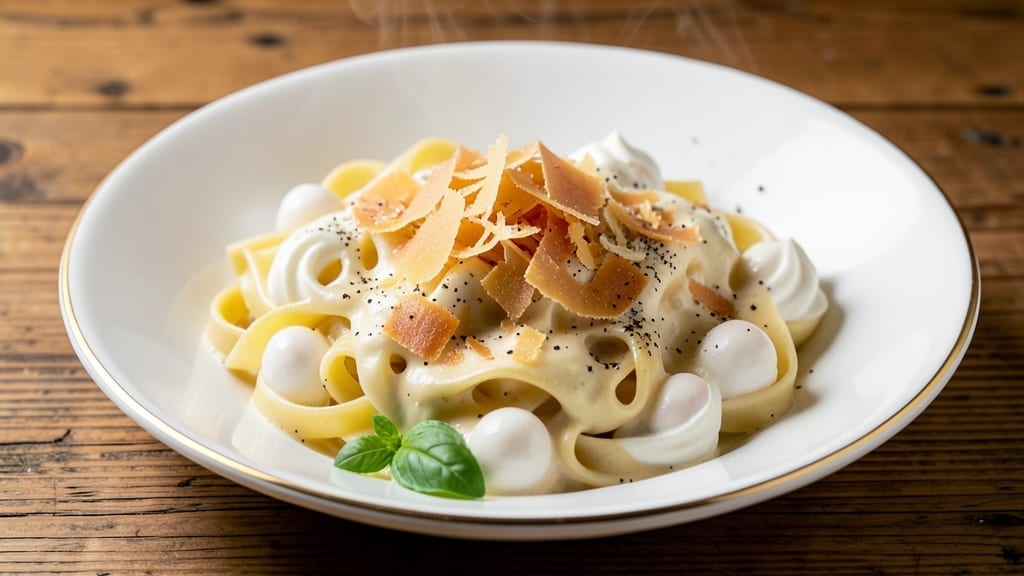
This 4 cheese fettuccine alfredo recipe delivers restaurant-quality richness at home with a velvety sauce that clings perfectly to each noodle. The secret lies in blending four distinct cheeses—creamy cream cheese, sharp parmesan, nutty romano, and mild mozzarella—for a sauce that’s both decadent and balanced.
I’ve perfected this technique after years of testing, ensuring the sauce never breaks and the noodles stay al dente.
The key to success is cooking the pasta in the same pot as the sauce, allowing the starchy water to create an ultra-creamy finish without lumps. This method transforms a simple weeknight dinner into an elegant meal that feels special.
The sauce develops a subtle golden hue with a hint of nutty crunch from freshly grated parmesan, while the cream cheese adds luxurious silkiness.
What you’ll end up with is a dish that’s impossible to resist—each forkful delivers tender fettuccine swathed in a velvety, cheesy embrace. The sauce clings to every strand, creating a harmonious bite that’s both rich and comforting.
Serve with a crisp green salad or garlic bread to round out the meal, and pair with a glass of chilled white wine for the full dining experience.
This recipe is designed to impress without requiring advanced skills, making it perfect for both beginners and seasoned cooks. The technique is foolproof, and the result is a dish that tastes like it came straight from an Italian trattoria. Let’s get cooking!
Ingredients for 4 cheese fettuccine alfredo
Four cheeses, creamy sauce, and perfectly cooked noodles—this is your restaurant-quality Alfredo at home.
| Ingredient | Amount | Notes |
|---|---|---|
| Fettuccine Noodles 🍝 | 12 oz | Dried, high-quality preferred |
| Heavy Cream 🥛 | 1 cup | Full-fat for richness |
| Cream Cheese 🧀 | 8 oz | Full-fat block preferred |
| Parmesan Cheese 🧀 | 1 cup | Freshly grated from block |
| Romano Cheese 🧀 | ½ cup | Finely grated, nutty flavor |
| Mozzarella Cheese 🧀 | 4 oz | Fresh, low-moisture preferred |
| Unsalted Butter 🧈 | 4 tbsp | Cold, cubed for sauce |
| Shallot 🧅 | 1 whole | Minced finely for aroma |
| Garlic Cloves 🧄 | 2 cloves | Minced for depth of flavor |
| Salt 🧂 | 1 tsp | Kosher or sea salt |
| Black Pepper 🌶️ | ½ tsp | Freshly ground preferred |
| White Wine 🍷 | ¼ cup | Dry, like Pinot Grigio |
| Chicken Broth 🥫 | ½ cup | Low-sodium preferred |
The cheeses are non-negotiable here. Parmigiano-Reggiano and Romano should be freshly grated from blocks—pre-grated gets clumpy and lacks flavor. Whole Foods or specialty stores carry the best quality, but any reputable grocery store will have good options. For the cream cheese, Philadelphia brand is reliable, but any full-fat block works. The mozzarella? Low-moisture is key—it melts smoothly without turning watery. I always buy extra Parmesan since it keeps for months and adds that nutty crunch at the end.
No heavy cream? Half-and-half with a splash of whole milk works in a pinch, though the sauce won’t be quite as rich. Substituting Romano for extra Parmesan? Use half the amount—Romano is more intense. Short on white wine? Chicken broth with a splash of lemon juice mimics the acidity. The shallot adds subtle sweetness—if you don’t have one, extra-fine minced red onion gets you close. For the butter, European-style has more flavor, but any unsalted will do. The key is keeping it cold until the very end when you want it to melt into the sauce.
Make the sauce ahead and reheat gently—it only gets better as flavors meld. Store in an airtight container for up to 3 days in the fridge, or freeze for 3 months. The noodles? Cook them al dente, then toss immediately with a splash of pasta water to prevent sticking. This dish reheats beautifully—just add a little extra cream to loosen the sauce. Leftovers taste even richer the next day.
Why You’ll Love This Recipe
- No Measuring Madness: I just eyeball the cheeses—half a block of cream cheese, a handful of grated Parmesan and Romano, and a splash of heavy cream. The sauce comes together smoother than my old attempts with exact measurements, and honestly? It’s always perfect.
- Creamy Without Guilt: That combo of heavy cream and cream cheese makes it ridiculously rich, but the sharpness of Romano cuts through the heaviness. It’s the kind of dish that feels indulgent but still satisfies when I make it for a lazy Sunday.
- Leftovers That Shine: This sauce actually improves the next day—thicker, deeper, and even more addictive. I’ll reheat a portion with a splash of milk to loosen it up, and suddenly it’s my go-to lunch for three days straight.
- Budget-Friendly Luxury: I use store-brand fettuccine and pre-grated cheeses to keep costs down, but the flavor? Still feels like a fancy restaurant dish. The heavy cream makes it feel special without breaking the bank—my wallet and taste buds win.
Step-by-step instructions for 4 cheese fettuccine Alfredo
This method delivers restaurant-quality Alfredo with a perfect balance of creaminess and cheesy depth.
Cook the Fettuccine Noodles to Al Dente
Bring a large pot of water to a rolling boil and add 12 oz fettuccine noodles. Season generously with salt—it should taste like the sea. Cook according to package instructions, but remove them 1 minute before they’re fully done. You want them al dente so they finish cooking in the sauce.
While the pasta cooks, prepare a bowl of ice water. Once the noodles are ready, drain them and immediately transfer to the ice bath for 30 seconds. This stops the cooking process and prevents them from becoming mushy. Drain again and set aside, shaking off any excess water. The noodles should still have a slight bite to them.
Build the Rich Cheese Sauce Base
In a large skillet, melt 4 tbsp unsalted butter over medium heat. Add the minced shallot and minced garlic cloves, cooking for 2-3 minutes until the shallot becomes translucent and the garlic releases its aroma. Don’t let the garlic brown or it will turn bitter.
Pour in the 0.25 cup white wine and let it simmer for 1-2 minutes until mostly evaporated. This step deglazes the pan, adding depth of flavor to the sauce. Next, add the 0.5 cup chicken broth and bring to a gentle simmer. The sauce should start to thicken slightly as the liquid reduces.
Incorporate the Cream and Cheeses
Reduce the heat to low and gradually whisk in the 1 cup heavy cream and 8 oz cream cheese, a few tablespoons at a time. The cream cheese should melt completely and blend smoothly into the sauce. If the sauce starts to curdle or separate, whisk vigorously to re-emulsify it.
Now add the 1 cup parmesan cheese, 0.5 cup romano cheese, and 4 oz mozzarella cheese, stirring constantly until all the cheese is fully melted and the sauce is completely smooth. The sauce should be thick and velvety, coating the back of a spoon. If it’s too thick, add 1-2 tablespoons of pasta water to reach your desired consistency.
Combine Noodles and Sauce
Add the cooked fettuccine noodles to the skillet and toss gently to coat them evenly in the cheese sauce. Let the noodles sit in the sauce for 1-2 minutes so they absorb some of the flavor. Season with 1 tsp salt and 0.5 tsp black pepper, tossing again to distribute evenly.
For the final touch, add 1 tablespoon of additional parmesan cheese on top of each serving. This creates a beautiful nutty crunch that contrasts perfectly with the creamy sauce. Serve immediately while the noodles are hot and the sauce is at its peak consistency.
Pro Tips For Making 4 Cheese Fettuccine Alfredo
- Bloom the cream first: Heat the heavy cream and cream cheese together over medium-low—don’t rush it. I used to scorch this step, and it always left a burnt taste that ruined the whole dish. Let it simmer gently for 5 minutes, stirring often, until the cream cheese melts completely and the mixture thickens just enough to coat the back of a spoon.
- Grate your own cheese: Skip the pre-shredded Parmesan and Romano—it’s the only way to avoid that gritty, starchy filler. Use a fine grater and do it right before tossing with the pasta. The fresh cheese melts smoother and sticks better, giving you that velvety, restaurant-quality sauce.
- Salt the pasta water hard: Yes, it sounds extreme, but trust me—this is the thing that matters most. Use about 2 tablespoons of salt per pound of pasta in the water. Under-salted noodles make the whole dish taste bland, and you can’t fix it later. Taste the water; it should be like the sea.
- Reserve some pasta water: Before draining, scoop out ½ cup of starchy pasta water. The sauce will fight you as it thickens, and this is your secret weapon. Add it a tablespoon at a time until the sauce clings to the noodles like it’s supposed to. No dry, gloppy mess here.
Pro cooking tips for this recipe
Sauce Temperature Control
Keep your sauce at a gentle simmer—never boil—to prevent curdling. I find using a low heat setting and adding cheeses gradually (especially cream cheese) keeps everything smooth. If the sauce starts separating, immediately whisk in 1-2 tablespoons of pasta water to re-emulsify.
The ideal temperature for blending is between 170-180°F—just warm enough to melt cheese but not scald it. 🌡️
Cheese Melting Order
Add cheeses in this order: cream cheese first, then parmesan and romano, finishing with mozzarella. The cream cheese acts as a binder, while the harder cheeses need the extra heat to fully melt.
I like to use a fine-mesh sieve to grate parmesan and romano freshly—pre-grated cheeses often contain anti-caking agents that make the sauce grainy.
Pasta Water Magic
Save 1 cup of starchy pasta water before draining your noodles. This golden liquid is your secret weapon for adjusting sauce consistency. A splash or two can transform a thick sauce into a silky one, or help re-emulsify if things separate.
I keep a small bowl of pasta water on the stove while making the sauce for quick access. 💫
Noodle Cooking Precision
Cook fettuccine 1 minute less than package instructions suggest. The noodles will finish cooking in the hot sauce, and this prevents them from becoming mushy. I always do a quick taste test—al dente pasta should have a slight bite in the center.
For extra insurance, shock the cooked noodles in ice water for 30 seconds before adding to the sauce.
Final Crunch Technique
For that perfect finishing touch, sprinkle freshly grated parmesan directly on each serving right before eating. The heat from the hot pasta will make it melt slightly, creating a crispy, nutty contrast against the creamy sauce.
I like to use a microplane for this—it produces finer shavings that cling beautifully to the noodles.
Equipment Must-Haves
Invest in a heavy-bottomed saucepan to prevent scorching, and a whisk with a long handle for smooth blending. A fine-mesh cheese grater is non-negotiable for the best texture.
I also keep a small ladle handy for testing sauce consistency—it should coat the back of a spoon but still flow smoothly. 🍴
Nutrition facts
Frequently asked questions
Can I make this 4 cheese fettuccine Alfredo without cream cheese?
The cream cheese is essential for that ultra-silky texture, but you can substitute 4 oz mascarpone cheese or ½ cup sour cream for a similar richness. Just add it at the same time as the cream cheese and whisk constantly to prevent curdling. The sauce will be slightly tangier but still delicious!
Why did my sauce get grainy or separate?
This usually happens when cheeses melt too quickly or the sauce boils. Always add cheeses gradually over low heat, whisking constantly. If it separates, immediately whisk in 1-2 tablespoons of starchy pasta water to re-emulsify. For extra insurance, keep the sauce at 170-180°F—never boiling hot.
How do I prevent the noodles from getting mushy?
Cook the fettuccine 1 minute less than package instructions and finish in the sauce. Shock cooked noodles in ice water for 30 seconds before adding to the sauce to stop cooking. Also, avoid overmixing after combining—just toss gently to coat. The residual heat will cook them perfectly in the sauce.
Can I make this ahead of time?
Prepare the sauce up to 2 days ahead and store in an airtight container in the fridge. Reheat gently on low heat, adding a splash of cream or pasta water to loosen. For best results, cook the noodles fresh and toss with reheated sauce. The flavors actually improve overnight as they meld.
What’s the best way to add protein to this dish?
Grilled chicken breast, shrimp, or roasted mushrooms work beautifully. For chicken, cook 8 oz breast in the same skillet after sautéing shallots, then remove before adding sauce. For shrimp, add ½ lb peeled shrimp during the last 2 minutes of cooking to prevent overcooking. Both options add great texture contrast!

- 6 Oz Chocolate Chip Cookie Recipe: Perfectly Balanced Crispy Edges and Chewy Hearts - September 25, 2026
- 6-Inch Coffee Cake Recipe: Vanilla Bean Swirls and Buttery Streusel Topping - September 25, 2026
- 1 Hour Soup Recipe: Velvety Richness Without the Wait - September 25, 2026