
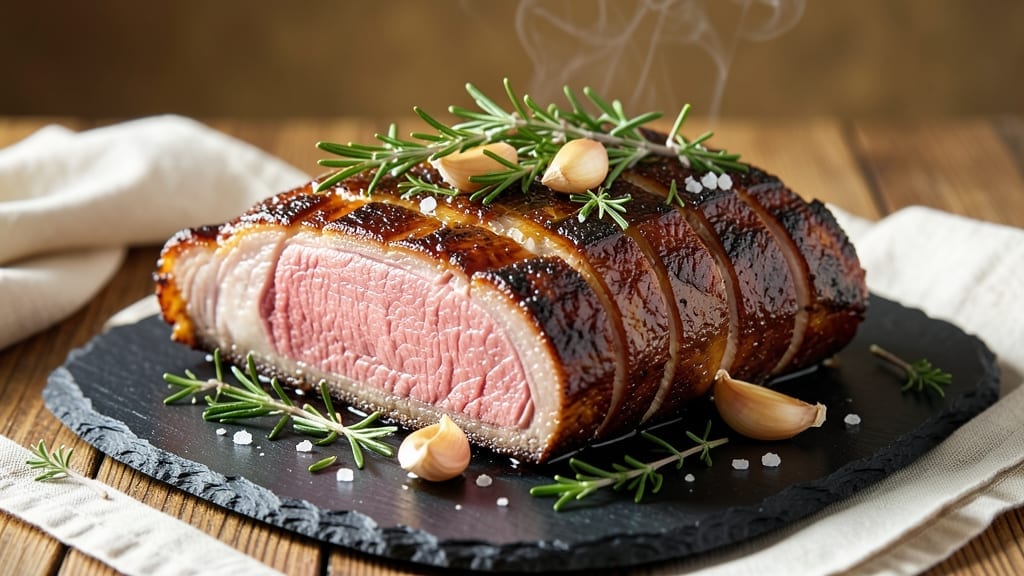
A 4-rib prime rib roast delivers the ultimate showstopper for holiday feasts or special occasions, where crispy crust meets juicy pink centers in perfect harmony. The secret lies in precise seasoning, controlled oven temperatures, and a patient resting period—technique that transforms a simple cut into a restaurant-quality centerpiece.
Unlike pre-packaged roasts, this method ensures the fat cap renders slowly, basting the meat from within for unmatched tenderness.
Mastering this recipe begins with a dry brine (salt the night before) to enhance flavor penetration and moisture retention. Cooking to 130–135°F for medium-rare guarantees that signature pink center, while a 450°F sear creates the coveted crust.
The resting phase—critical for juiciness—is where many home cooks fail, but this step elevates the dish from good to extraordinary. For presentation, a horseradish cream or red wine reduction adds a sophisticated finish that pairs beautifully with the rich beef.
What sets this apart is the balance of tradition and precision: bone-in for deeper flavor versus boneless for easier carving, or a sous-vide prep for guaranteed consistency.
The result is a roast so impressive, guests will assume you spent hours in the kitchen—when in reality, the real work happens during the resting phase. Every slice delivers that first bite of crispy crust followed by buttery tenderness, making it worth the effort.
Serve with classic sides like roasted garlic mashed potatoes or a crisp green salad to complement the richness. For leftovers, thinly sliced prime rib makes reuben sandwiches or beef pot pie—versatility that turns one roast into multiple meals.
This isn’t just dinner; it’s an experience that transforms an ordinary Sunday into a memorable occasion.
Ingredients for 4 rib prime rib roast
Precision-crafted ingredients for a prime rib roast with restaurant-quality crispy crust and juicy pink centers.
| Ingredient | Amount | Notes |
|---|---|---|
| 4-Rib Prime Rib Roast (Bone-In) 🥩 | 6 lb | Center-cut for even cooking |
| Kosher Salt 🧂 | 1 ½ tbsp | Diamond Crystal preferred |
| Freshly Ground Black Pepper 🌶️ | 1 ½ tsp | Coarse grind for texture |
| Fresh Rosemary Sprigs 🌿 | 6 whole | Thick stems for skewering |
| Fresh Thyme Sprigs 🌿 | 4 whole | Leaves only, not stems |
| Garlic Cloves 🧄 | 8 cloves | Smashed for even flavor |
| Unsalted Butter (Room Temperature) 🧈 | ½ cup | European-style preferred |
| Extra-Virgin Olive Oil 🫒 | 2 tbsp | High smoke point for searing |
| Red Wine (Dry, Bold) 🍷 | ½ cup | Cabernet Sauvignon recommended |
| Beef Tallow or Duck Fat 🧈 | 2 tbsp | For basting during sear |
| Baking Twine 🧵 | 1 piece | Heavy-duty butcher's twine |
| Meat Thermometer 🌡️ | 1 whole | Instant-read preferred |
| Horseradish Cream (For Serving) 🧈 | ½ cup | Optional garnish |
The 4-rib prime rib roast is non-negotiable for this recipe—bone-in delivers deeper flavor through slow fat rendering, while center-cut ensures even cooking. Source from a reputable butcher or specialty market like D’Artagnan or Whole Foods for the best quality; look for bright red meat with visible marbling. The rosemary and thyme should be fresh, with vibrant green leaves—Trader Joe’s often carries high-quality bundles. For the garlic, use Italian varieties if available, as they’re more flavorful. The butter and olive oil are critical for both the dry brine and final sear—European-style butter (like Plugrá) has higher fat content for better crust development.
No kosher salt? Diamond Crystal is ideal, but Morton works in a pinch—just use 1.5 times the amount of table salt. Short on fresh herbs? Dried rosemary at one-third the amount suffices, but fresh is preferred for that aromatic punch. The red wine can be swapped for beef stock if needed, though the acidity helps tenderize. For the basting fat, duck fat adds richer flavor than tallow, but either works. The baking twine secures the herbs and garlic, preventing them from burning during the high-heat sear—butcher’s twine is sturdy enough to hold the sprigs tightly. If you’re prepping ahead, brine the roast 12-24 hours in advance for maximum flavor penetration.
Store any unused fresh herbs in a sealed container with a damp paper towel for up to 5 days in the fridge. The prime rib can rest at room temperature for 1-2 hours before cooking for even results, but no longer to avoid bacterial growth. Once cooked, carve against the grain and serve immediately for the best texture. Leftovers reheat beautifully in a low oven (275°F) for 20 minutes with a splash of beef broth. For long-term storage, slice thinly and freeze portions for up to 3 months—perfect for reuben sandwiches or beef pot pie later in the week. The horseradish cream keeps for 3 days in the fridge if stored in an airtight container.
Why You’ll Love This Recipe
- Foolproof Timing: That bone-in prime rib takes care of itself while you sip wine. Set it in a hot oven, forget it for hours—no babysitting required—and walk away to a perfectly pink center with edges that’ll make your guests think you’re a pro.
- Herb-Crusted Magic: Just kosher salt, pepper, rosemary, and thyme—no fancy rubs, no overcomplicating. The herbs cling to the fat cap like a blanket, turning every bite into that perfect mix of earthy, savory, and just-smoky enough.
- Sunday Dinner Simplified: No stressing over side dishes or timing. One pan, one main, and you’ve got the centerpiece for holidays, game days, or just because. Honestly, my lazy Sundays thank me every time.
Step-by-step instructions for 4 rib prime rib roast mastery
Perfecting prime rib requires precision and patience—here’s the method I trust to deliver that signature crust and melt-in-your-mouth tenderness.
Prepare the Prime Rib for Maximum Flavor
Remove the 6 lb 4-rib prime rib roast from the refrigerator and place it on a wire rack set over a baking sheet. This elevation ensures even air circulation during cooking. Pat the surface completely dry with paper towels—moisture is the enemy of crispy crust. I press firmly, especially in the crevices between ribs, to remove every trace of dampness.
Next, create a flavor base by rubbing the roast with the 1.5 tablespoons kosher salt and 1.5 teaspoons freshly ground black pepper. Use your fingertips to press the seasoning into the meat, working it into the crevices. This step isn’t just about seasoning—it’s about creating a dry surface that will develop that coveted crust. Let the seasoned roast sit at room temperature for 1 hour before cooking to ensure even doneness.
Create the Herb Butter Rub and Sear the Roast
In a small bowl, combine the 0.5 cup room temperature unsalted butter with the smashed 8 garlic cloves. Add the leaves from the 4 thyme sprigs and the 6 rosemary sprigs (use the stems to tie the roast later). Mix until the herbs are evenly distributed throughout the butter. This herb butter will both flavor and baste the roast during cooking.
Preheat your oven to 450°F with a rack positioned in the lower third. Heat a large oven-safe roasting pan over high heat until very hot. Add the 2 tablespoons extra-virgin olive oil and 2 tablespoons beef tallow, then carefully place the roast fat-side up in the pan. Sear for 10-12 minutes until the exterior develops a deep golden-brown crust. This initial sear locks in juices and creates the foundation for your crust.
Roast to Perfect Doneness with Wine Basting
Remove the roasting pan from the heat and pour the 0.5 cup dry red wine into the pan, scraping up all the browned bits from the bottom. Return the pan to the oven and roast for 20 minutes. Then reduce the oven temperature to 325°F. At this point, use the baking twine to tie the rosemary sprigs around the roast—this keeps the herbs in place for even flavor distribution.
Continue roasting until the internal temperature reaches 115°F at the thickest part of the roast (about 1 hour 15 minutes total). This is the “medium rare” stage where prime rib achieves its signature juicy pink center. The roast will continue cooking as it rests, so don’t overcook it. For reference, a 6 lb roast typically takes about 18-22 minutes per pound to this temperature.
Rest and Carve for Maximum Juiciness
Remove the roast from the oven and transfer it to a cutting board. Tent loosely with aluminum foil and let it rest for 20-30 minutes. This resting period is critical—it allows the juices to redistribute throughout the meat, preventing them from pooling and running out when you slice. The internal temperature will rise about 5°F during resting, so don’t be concerned if it reaches 120°F.
To carve, make a horizontal cut just above the bone to separate the roast from the ribcage. Then slice against the grain into ½-inch thick slices. The meat should be tender enough to pull apart with gentle pressure, with a beautiful pink center surrounded by a crispy crust. Serve immediately with the 0.5 cup horseradish cream on the side for those who prefer extra kick.
Pro Tips For Making 4 Rib Prime Rib Roast
- SEAR IT HARD: Get that roast screaming hot in a dry pan first—bone-side down, fat-side up—until it’s deep brown, not just pink. I used to rush this, and the crust never tasted like it should. A cast-iron skillet on medium-high for 8-10 minutes on each side (yes, even the bone side) makes all the difference.
- SALT THE NIGHT BEFORE: Toss the prime rib with salt at least 12 hours ahead—it penetrates deeper and keeps the surface dry for that perfect crust. Fresh rosemary and thyme tucked into the fat cap? Add those right before searing so they don’t wilt into mush.
- SKIP THE PROBE: Bone-in prime rib lies to thermometers. Check doneness by pressing the meat near the bone—it should feel like warm butter, not jiggly. For a 4-rib roast, aim for 115–120°F internal temp (medium-rare) and let it rest 20 minutes under foil. Trust your fingers, not the gadget.
- BASTE WITH BUTTER (OR NOT): If you’re basting, use cold unsalted butter (yes, cold—it melts slower and clings better). But here’s the upgrade: skip it entirely. The high-heat sear and resting time lock in enough flavor. That extra step just adds time and stress—your roast doesn’t need it.
Flavor customization for these flavors
Classic Herb Profile
The traditional rosemary-thyme-garlic combination is timeless for prime rib, delivering earthy, aromatic depth that complements the beef’s richness. Use 6 fresh rosemary sprigs and 4 thyme sprigs tied around the roast with baking twine—this keeps the herbs in direct contact with the meat during cooking.
For extra aroma, crush 8 garlic cloves directly into the 0.5 cup herb butter before applying. 🌿
Bold Red Wine Reduction
Swap the standard pan juices for a Cabernet Sauvignon reduction by simmering the 0.5 cup red wine down to 2 tablespoons after roasting. Deglaze the pan with 1 tablespoon beef stock, then reduce until syrupy.
Drizzle over sliced prime rib for a glossy, acidic contrast that cuts through the fat. For depth, add 1 tsp balsamic vinegar during reduction. 🍷
Smoky Chipotle Twist
Infuse the crust with smoky heat by mixing 1 tbsp adobo sauce (from canned chipotles) with the 0.5 cup herb butter. Spread this mixture over the roast after the initial sear.
For extra smokiness, add 1 tsp smoked paprika to the dry rub. This variation works beautifully with horseradish cream for a Southwest-inspired fusion. 🌶️
Citrus-Zest Brightener
Add a refreshing contrast by zesting 1 lemon and 1 orange over the roast after the initial sear. The citrus oils enhance the crust’s crispiness while balancing the beef’s richness.
For serving, garnish with thin citrus slices and a sprinkle of flaky sea salt. This variation pairs perfectly with a white wine sauce instead of horseradish cream. 🍊
Garlic-Herb Crust Boost
For an ultra-flavorful crust, create a garlic-herb paste by blending 6 smashed garlic cloves, 2 tbsp chopped rosemary, 1 tbsp chopped thyme, 1 tbsp Dijon mustard, and 2 tbsp olive oil.
Spread this paste over the roast after the initial sear. The mustard helps emulsify the fat for a glossy, caramelized finish. 🧄
Spicy Horseradish Glaze
Elevate the horseradish cream by adding 1 tbsp prepared horseradish and 1 tbsp crème fraîche to the 0.5 cup base. For heat, stir in 1 tsp hot honey or ½ tsp cayenne pepper.
This spicy-sweet glaze adds a modern twist to the classic presentation. Serve alongside roasted root vegetables for a balanced plate. 💛
Nutrition facts
Frequently asked questions
How do I know when my 4-rib prime rib is done?
Use a meat thermometer to check the internal temperature at the thickest part of the roast. For medium-rare (the ideal doneness), aim for 130–135°F. The roast will rise another 5°F while resting, so pull it out at 125–130°F if you prefer a slightly pinker center. Never rely on color alone—prime rib can look cooked through but still be underdone.
Should I cook a bone-in or boneless prime rib?
Bone-in delivers deeper flavor and richer texture because the bone conducts heat slowly, creating a more tender result. However, boneless is easier to carve and cooks slightly faster. For this recipe, we recommend bone-in for that classic restaurant experience, but boneless works well if you prefer convenience. Just reduce cooking time by about 10-15 minutes.
Why does my prime rib turn out dry?
Overcooking is the #1 culprit—prime rib continues cooking even after removal from the oven. Always rest for 20-30 minutes before slicing, and never exceed 135°F internal temp. Another common mistake is skipping the dry brine (salt 12-24 hours ahead) or not patting the meat completely dry before searing. Moisture on the surface prevents proper crust formation.
Can I make this recipe in a slow cooker?
While possible, prime rib isn’t ideal for slow cooking—it lacks the high-heat sear needed for that perfect crust. For best results, use the oven method above. If you’re short on time, try sous-vide first (cook to 115°F for 4-6 hours), then finish with a quick sear in a screaming-hot pan for color and texture.
How far ahead can I prepare the horseradish cream?
Make it up to 3 days ahead and store in an airtight container in the fridge. The flavors meld beautifully over time. For serving, give it a quick whisk to re-emulsify before dolloping on the prime rib. Pro tip: Add a pinch of sugar to balance the heat if you prefer a smoother texture.

- 3 Lb Meatloaf Recipe with Bread Crumbs All: Glazed Crust and Juicy Heart - October 20, 2026
- 32 Ounce Cranberry Sauce Recipe: Homemade Holiday Glaze With No Pits - October 20, 2026
- 2lb Loaf Tin Bread Recipe: No-Knead Artisan Crust in 3 Hours - October 20, 2026