
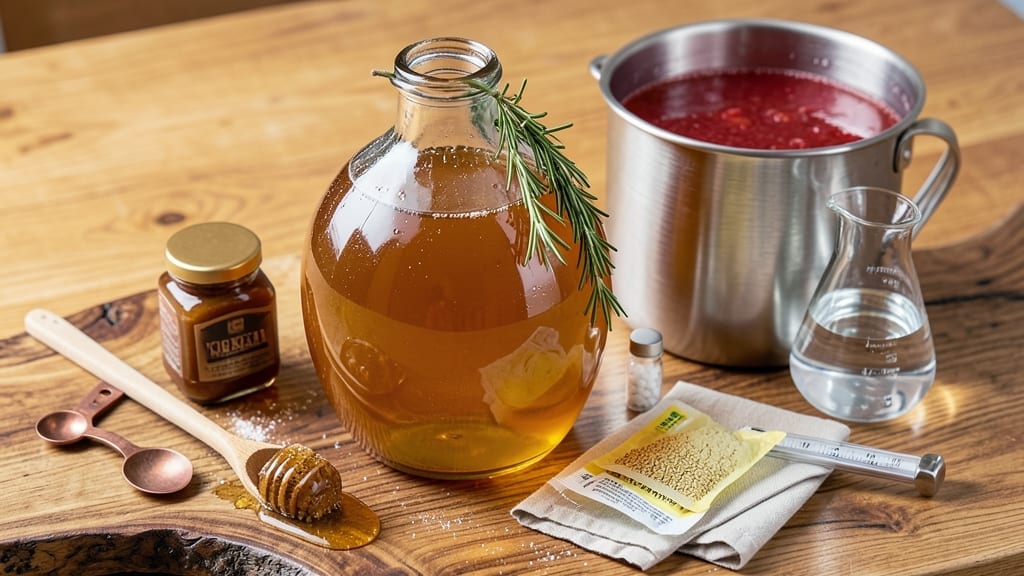
This 5-gallon apple mead recipe transforms crisp autumn apples and rich honey into a velvety fermented drink with honeyed depth and subtle spice notes. 🍏✨ The process combines traditional mead-making with precise fermentation techniques to create a balanced, aromatic beverage that improves with age—perfect for sipping during holidays or gifting to fellow home brewers.
What sets this recipe apart is the careful ratio of honey to apples, which determines both sweetness and alcohol content (typically 12-15%). The fermentation timeline spans 4-6 weeks, with critical steps like sanitization and temperature control ensuring safety and consistency.
Unlike commercial meads, this version uses fresh apple juice and raw honey for complex, natural flavors.
By the time fermentation completes, you’ll have a golden, aromatic mead with honeyed richness and apple’s bright acidity. The aging process (3+ months) mellows the drink, developing deeper caramel and spice notes. Proper bottling and storage preserve its quality for years—ideal for cellaring or sharing.
Safety is paramount: always sanitize equipment, monitor alcohol levels, and follow fermentation guidelines to avoid contamination. This recipe delivers restaurant-quality results at home, with the flexibility to adjust sweetness or spice levels to your taste.
Ingredients for 5 gallon apple mead
Transform crisp autumn apples and rich honey into velvety fermented mead with these precise ingredients.
| Ingredient | Amount | Notes |
|---|---|---|
| Fresh Apple Juice (unpasteurized) 🍏 | 5 gallons | Must be unpasteurized for fermentation |
| Raw Honey (local preferred) 🍯 | 4 lbs | Adjust for desired sweetness/ABV |
| Distilled Water (non-chlorinated) 💧 | 1 gallon | Ensures proper hydration ratio |
| Campden Tablets (potassium metabisulfite) 💊 | 2 tablets | Sanitizes juice before fermentation |
| Wine Yeast (EC-1118 or similar) 🍺 | 1 package | Specialized for mead fermentation |
| Citric Acid 🍋 | 1 tbsp | Balances pH for stability |
| Cinnamon Sticks 🌿 | 4 whole | For spiced fermentation (optional) |
| Star Anise Pods 🌟 | 2 whole | Adds subtle licorice depth |
| Primary Fermenter (5-gallon food-grade) 🥫 | 1 whole | Must be sanitized |
| Air-Lock Fermentation Lock 🔒 | 1 whole | Prevents contamination |
| Sanitizing Solution (Star San or equivalent) 🧼 | 1 quart | For equipment sterilization |
| Bottles (swing-top or flip-top, 750ml) 🍾 | 16 whole | Must be sanitized |
| Hydrometer 📏 | 1 whole | Monitors alcohol progression |
| pH Strips 🧪 | 1 package | Ensures proper acidity levels |
The quality of your apple juice and honey determines the mead’s character. Local, unpasteurized apple juice yields the brightest apple notes, while raw honey from a trusted apiary adds depth and determines alcohol content. For honey, local varieties like clover or wildflower work best—their unique floral notes elevate the mead. The Campden tablets are critical for sanitizing the juice before fermentation, preventing unwanted bacteria. Penzeys Spices carries high-quality Campden tablets if your local store doesn’t stock them. Always use food-grade fermenters—Neris or MoreBeer brands are industry standards for mead-making.
No Campden tablets? Potassium sorbate works as an alternative sanitizer, though it’s less common. Substituting honey? Maple syrup or agave nectar can work, but the flavor profile changes significantly—expect less complexity. The spices (cinnamon and star anise) are optional but recommended for depth. Ground spices work, but whole spices infuse better during fermentation. For the yeast, EC-1118 is ideal for mead, but Lalvin EC-1116 is a good backup. Always check your yeast’s temperature range—most mead yeasts ferment best between 68-75°F. If you’re making a larger batch, scale the Campden tablets proportionally (1 tablet per gallon of juice).
Sanitize all equipment thoroughly before use—Star San is the gold standard for mead-makers. The fermenter should be stored in a dark, 68-75°F environment to maintain consistent fermentation temperatures. Once bottled, store mead in a cool, dark place for 3+ months to age. The bottles should be sealed tightly, and any sediment should be left in the bottle during aging. After aging, store in the refrigerator to slow further fermentation. This mead will continue improving for up to 5 years if stored properly, developing richer caramel and spice notes over time.
Why You’ll Love This Recipe
- Five-Ingredient Magic: I swear by this recipe because it’s that simple—just juice, honey, water, a pinch of Campden tablets, and yeast. No fancy equipment, no stress, and honestly, even my friend who burns toast could pull it off.
- Honey-Apple Bliss: That first sip? Pure autumn in a glass. The raw honey balances the tartness of unpasteurized apple juice so smoothly, it’s like sipping liquid comfort—especially when it’s aged just right.
- Batch-and-Forget Joy: Make a whole five gallons once, then bottle it for months. Perfect for gifting, holiday parties, or just keeping your fridge stocked with something impressive (and cheap) to share.
- Budget Goldmine: Local honey and seasonal apples keep costs low, but the result? A drink that tastes like it cost ten times more. I’ve made 20 gallons for under $50—math doesn’t lie.
Step-by-step instructions for fermenting apple mead
Here’s the precise method to transform fresh apple juice and honey into rich, aromatic mead.
🍳 Step 1: Sanitize Equipment and Prepare the Must
First, sanitize your primary fermenter and all tools using the sanitizing solution. I fill the fermenter with 1 quart of solution, swirl to coat all surfaces, then rinse thoroughly with distilled water to remove any residue. This critical step prevents bacterial contamination that could ruin your fermentation.
In a large, clean container, combine the 5 gallons fresh apple juice and 4 lbs raw honey. I use a wooden spoon to stir vigorously for 5 minutes until the honey dissolves completely. The mixture should appear uniform with no visible honey granules. This ensures even fermentation throughout the batch.
👨🍳 Step 2: Add Water, Acid, and Spices
Pour in the 1 gallon distilled water while stirring continuously. This maintains proper hydration ratio for yeast activity. Add the 1 tbsp citric acid and dissolve completely – this balances pH to prevent bacterial growth. I test the pH using the strips and aim for 3.2-3.5 range, which is ideal for mead fermentation.
Add the 4 cinnamon sticks and 2 star anise pods to the must. These spices will infuse subtle warmth and complexity during fermentation. I gently swirl the fermenter to distribute them evenly without breaking them – we want whole spices for controlled flavor infusion. Let the mixture sit at room temperature for 30 minutes to allow spices to steep.
🔥 Step 3: Sanitize and Activate the Yeast
Crush the 2 Campden tablets and dissolve them in ½ cup distilled water. Add this solution to the must while stirring gently. Cover the fermenter with a clean cloth and let it sit for 24 hours at 70-75°F. This sanitizes the must and prepares it for yeast activation.
While waiting, prepare the yeast. Sprinkle the wine yeast into a jar with ½ cup warm distilled water (around 85°F). Stir gently and let it sit for 15 minutes until it becomes frothy. This indicates active yeast ready for fermentation. The yeast should be fully hydrated before adding to prevent stress on the culture.
🥘 Step 4: Ferment Primary Stage
After 24 hours, attach the air-lock fermentation lock to the fermenter. Pour in the activated yeast mixture and stir gently to distribute. The must should now be at 68-72°F – ideal yeast activity range. Cover the fermenter and place it in a dark location where temperature remains stable.
Ferment for 7-10 days, checking daily for activity. You’ll notice bubbles in the airlock and a slight drop in volume as yeast consumes sugars. Use the hydrometer to monitor specific gravity – it should drop from 1.090-1.100 to 1.020-1.030 by the end of primary fermentation. This indicates most sugars have been converted to alcohol.
⏰ Step 5: Bottle and Age the Mead
When fermentation slows significantly (less than 2 bubbles per hour in airlock), it’s time to bottle. First, sanitize all 16 bottles using the sanitizing solution. Carefully siphon the mead from the fermenter into bottles, leaving behind any sediment. Fill each bottle to 1 inch from the top to allow for carbonation expansion.
Seal the bottles tightly and store them in a cool, dark place for 3-6 months. During this aging period, the mead will mellow and develop complex flavors. I check the bottles monthly for any signs of activity – if you see bubbles, it means residual fermentation is occurring and you should move them to a warmer location to complete fermentation.
Pro Tips For Making 5 Gallon Apple Mead
- Chill the Must First: After mixing your apple juice and honey, let the whole batch sit overnight in the fridge—this prevents a violent fermentation kick when you add yeast. I learned this the hard way when my first batch foamed over the fermenter like a shaken soda can.
- Use Filtered Water Only: Chlorine and chloramine in tap water will kill your yeast before fermentation even starts. If your distilled water has a sulfur smell, boil it for 10 minutes first to drive off any residual impurities—yeast hates surprises.
- Crush Campden Tablets: Don’t just drop whole Campden tablets into your must—they’ll sink and create dead zones where bacteria survive. Crush them into a fine powder first and stir vigorously for 24 hours to ensure even sulfite distribution.
- Pitch Yeast Late: Wait until your must is just below 70°F (21°C) before adding EC-1118—yeast wakes up faster at cooler temps and avoids stress. I used to pitch early, and my fermentations always lagged for days. Patience here pays off.
Dietary considerations for these flavors
Gluten-Free Safety
Apple mead is naturally gluten-free since it’s made from apple juice, honey, and yeast—no grains or gluten-containing ingredients are involved. However, always double-check your yeast package and citric acid labels to ensure they’re certified gluten-free.
I use EC-1118 wine yeast, which is typically safe, but contamination risks exist if shared equipment was previously used for gluten-containing brews. Sanitize everything thoroughly to avoid cross-contamination. 🍏✨
Low-Sugar Adaptations
If you prefer less sweetness, reduce the honey by ½ lb (to 3.5 lbs) and add ½ cup apple juice concentrate instead. This maintains body while cutting sugar content.
For a drier finish, ferment longer until the hydrometer reads 1.000-1.010—though this may require a more alcohol-tolerant yeast strain like Lalvin EC-1116. I’ve found this works well for those managing blood sugar levels.
Vegan Considerations
This recipe is already vegan-friendly since it contains no animal products. However, if you’re concerned about honey’s ethical sourcing, substitute agave nectar (use 3 lbs for equivalent sweetness) or maple syrup (adjust to 4.5 lbs due to lower sugar concentration).
The flavor profile will shift slightly—agave adds a neutral sweetness, while maple syrup introduces earthy notes. Test small batches first to refine your preference. 🍯
Allergen Awareness
While apple mead itself is allergen-free, always be mindful of potential cross-contamination. If you or guests have tree nut allergies, ensure your honey isn’t processed in facilities handling nuts (some raw honey brands do).
For citrus allergies, omit the citric acid and use 1 tsp malic acid instead—it achieves similar pH balancing without citrus. I recommend keeping a separate sanitizing solution for mead batches if you also brew other allergen-prone recipes.
Alcohol Content Control
The 4 lbs honey in this recipe typically yields 12-15% ABV, but you can adjust alcohol levels by modifying honey quantity. For a lighter drink (8-10% ABV), reduce honey to 3 lbs and add 1 extra gallon apple juice.
To boost alcohol (16-18% ABV), increase honey to 5 lbs and use a high-alcohol-tolerant yeast like Lalvin EC-1118. Always monitor with a hydrometer to track progress accurately.
Nutrition facts
Frequently asked questions
Can I use store-bought apple juice instead of fresh?
Store-bought juice works, but pasteurized varieties won’t ferment properly. Look for unpasteurized, unpasteurized-then-filtered, or raw apple juice labeled for fermentation. Brands like Tree Top or Odwalla make suitable options. Fresh-pressed juice yields the brightest apple flavor, but quality unpasteurized store juice is a good alternative when fresh isn’t available.
How do I know when fermentation is complete?
Fermentation is done when you see fewer than 2 bubbles per hour in the airlock and the hydrometer reading stabilizes at 1.000-1.010 for 3 consecutive days. The mead should also smell clean and free of fruity or yeasty aromas. If you’re unsure, taste a small sample – it should be dry with no sweetness remaining. Patience is key here!
What if my mead smells or tastes off during fermentation?
Off smells (vinegar, rotten, or sulfur) indicate contamination. If this happens, discard the batch immediately – mead won’t “fix” itself. Common causes include unsanitized equipment or temperature fluctuations. Always use Campden tablets and maintain 68-75°F temperatures. For future batches, consider adding ½ tsp potassium sorbate after primary fermentation to prevent refermentation.
Can I add more spices after bottling?
Yes, but with caution! You can add spices like cinnamon sticks or vanilla beans to individual bottles after aging. Simply drop them in before sealing and let them infuse for 4-6 weeks in a cool, dark place. For stronger flavors, use 2-3 cinnamon sticks per bottle or 1 vanilla bean split lengthwise. Remove spices before serving to avoid bitterness. This works best with mead that’s already aged 3+ months.
How long will my finished mead last?
Properly bottled and stored mead will last 3-5 years in the pantry, with flavors continuing to develop. Once opened, refrigerate and consume within 2-3 weeks. For long-term storage, keep bottles in a cool, dark place (like a cellar) away from temperature fluctuations. The mead’s color may darken slightly over time, which is normal and indicates aging. Always use sanitized equipment when bottling to maximize shelf life.

- 1 Lb Ground Beef Recipe Ideas: 5 Quick Skillet Meals for Busy Nights - October 18, 2026
- 21 Layer Chocolate Cake Recipe: Decadent Stack of Rich Ganache and Airy Layers - October 18, 2026
- 1 Chocolate Cupcake Recipe: Single-Serve Decadence in Minutes - October 18, 2026