
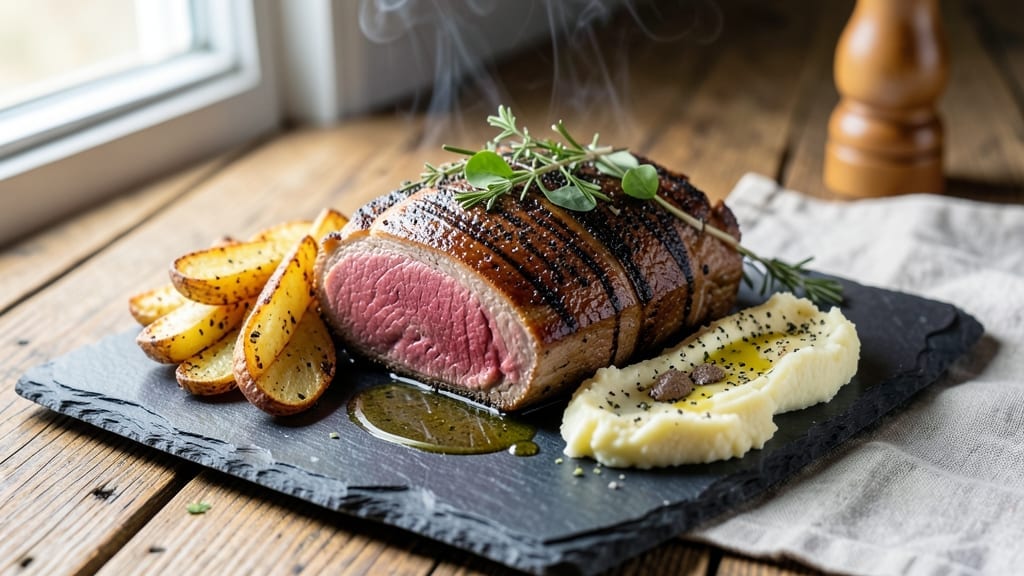
A 5 lb boneless ribeye roast cooked low-and-slow yields melt-in-your-mouth tenderness with a caramelized crust that seals in every ounce of flavor. The secret lies in precise temperature control and proper resting—no guesswork, just restaurant-quality results every time.
This method transforms tough cuts into succulent perfection, ideal for holiday feasts or special occasions where presentation matters.
Start with a dry brine (salt the roast 24 hours ahead) to enhance flavor and moisture retention, then sear in a hot pan to build that coveted crust before finishing in the oven.
Internal temperature is critical: aim for 120–125°F for medium-rare, then rest for 20–30 minutes to ensure even distribution of juices. The wait is worth it—each slice will be juicy, tender, and packed with beefy richness.
For plating, slice against the grain for maximum tenderness, then drizzle with a red wine reduction or herb butter for an elegant finish. Pair with roasted garlic mashed potatoes or a crisp green salad to balance the richness.
This roast isn’t just a centerpiece—it’s a foolproof way to impress guests without stressing over the details.
The beauty of this recipe lies in its scalability: double the seasoning for larger cuts, or halve it for individual servings. Leftovers reheat beautifully in a low oven or skillet, making it perfect for meal prep.
Whether you’re feeding a crowd or treating yourself, this method delivers consistent, showstopping results with minimal effort.
Ingredients for 5 lb boneless ribeye roast
Precision-crafted ingredients for a restaurant-quality ribeye roast that delivers melt-in-your-mouth tenderness and caramelized crust perfection.
| Ingredient | Amount | Notes |
|---|---|---|
| Boneless Ribeye Roast 🥩 | 5 lb | Center-cut, well-marbled preferred |
| Kosher Salt 🧂 | 2 ½ tbsp | Diamond Crystal preferred, coarse grain |
| Freshly Ground Black Pepper 🌶️ | 1 ½ tbsp | Cracked peppercorns preferred |
| Extra-Virgin Olive Oil 🫒 | ¼ cup | High smoke point for searing |
| Fresh Rosemary 🌿 | ½ cup | Needles finely chopped, stems removed |
| Fresh Thyme 🌿 | ¼ cup | Leaves only, stems discarded |
| Garlic Cloves 🧄 | 8 cloves | Smashed, skin-on for maximum flavor |
| Red Wine 🍷 | ½ cup | Bold Cabernet Sauvignon preferred |
| Beef Tallow or Duck Fat 🧈 | ¼ cup | For basting, optional but recommended |
| Butter 🧈 | ½ cup | Unsalted, softened for basting |
| Red Wine Vinegar 🍷 | 1 tbsp | For pan deglazing |
| Fresh Parsley 🌿 | ¼ cup | Chopped, for garnish |
The 5 lb boneless ribeye is non-negotiable—center-cut with visible marbling ensures maximum juiciness. Source from a reputable butcher or high-end grocery store like Whole Foods or Costco, where cuts are consistently trimmed and aged. If buying from a standard supermarket, check for bright red color and firm texture—avoid cuts with excessive grayish fat. The 24-hour dry brine (2.5 tbsp kosher salt) is critical for flavor penetration and moisture retention, so plan ahead. Fresh herbs should be vibrant green with no wilting, and the garlic should be plump with no sprouting.
No red wine? Beef stock with a splash of balsamic vinegar works in a pinch, though the acidity will differ slightly. Substituting duck fat for tallow is a fine swap—both add richness, but duck fat has a slightly sweeter profile. The fresh herbs can be swapped for dried equivalents at one-third the amount, but fresh delivers superior aroma. For the olive oil, avoid heavily flavored varieties—stick to mild, high-quality extra-virgin for neutral searing. If you lack a meat thermometer, practice makes perfect—this roast demands precision at 120–125°F internal temp.
The roast reheats beautifully—low oven (275°F) or skillet method preserves moisture, though texture won’t match fresh. Store leftovers vacuum-sealed or tightly wrapped in the fridge for up to 5 days, or freeze for 3 months. For presentation, slice against the grain into ½-inch thick slices and garnish with herb butter or red wine reduction. The crust alone is worth the effort—scrape every last bit from the pan for deglazing into a pan sauce. Double the seasoning for 8–10 lb roasts, or halve for 2–3 lb portions—this method scales flawlessly.
Why You’ll Love This Recipe
- One-Pan Magic: I swear by this—just a roast, salt, pepper, and rosemary sprigs on a sheet pan. No fancy gadgets, no chopping, no stress. The olive oil bastes as it cooks, so you’re basically getting a self-basting steak with zero effort.
- Rich Without Fuss: That ribeye’s natural beefy depth shines here, but the rosemary and black pepper? They cut through the richness like a whisper. Honestly, I’ve tried fancy rubs, but this combo—just salt, pepper, and fresh herbs—lets the meat be the star.
- Leftovers That Feel Special: Slice that roast into sandwiches for lunch, or shred it into pasta the next night. Between us, my kids ask for “mom’s steak” even when it’s cold—because it’s still that good. No sad, dry reheats here.
- Sunday Dinner Ready: Whether it’s a game day spread or a lazy weekend brunch, this roast delivers. I’ve served it with mashed potatoes, roasted veggies, or even just crusty bread—it works everywhere. (Yes, even on a Tuesday night.)
Step-by-step instructions for 5-Lb boneless ribeye roast
Master the art of low-and-slow roasting for a perfectly juicy, caramelized crust every time.
Prepare the Roast and Seasoning
Remove the 5 lb boneless ribeye roast from the refrigerator and let it sit at room temperature for 1 hour before cooking. This ensures even cooking throughout. Pat the roast completely dry with paper towels—this is critical for developing that deep caramelized crust later. I press firmly in all directions, even in the crevices, to remove all moisture.
In a small bowl, combine the 2.5 tbsp kosher salt and 1.5 tbsp freshly ground black pepper. Generously rub this mixture all over the roast, including inside any natural crevices. The salt will penetrate the meat and enhance flavor at the molecular level. Let the seasoned roast rest uncovered on a wire rack for another 30 minutes—this final rest allows the seasoning to adhere properly.
Create the Herb Butter Baste
In a small saucepan, gently warm the 0.5 cup butter over low heat until just melted but not browned. Remove from heat and stir in the 0.5 cup finely chopped fresh rosemary, 0.25 cup fresh thyme leaves, and 8 smashed garlic cloves. Let this mixture steep for 10 minutes to infuse the flavors. This aromatic butter will become your basting liquid, adding layers of flavor to both the exterior and interior of the roast.
While the butter infuses, prepare a roasting pan by placing a wire rack inside. This allows air to circulate underneath the roast, preventing steam buildup that can make the crust soggy. Preheat your oven to 275°F—this low temperature is key to achieving that melt-in-your-mouth tenderness while developing the crust.
Roast Low-and-Slow with Basting
Place the seasoned roast on the wire rack in the preheated oven. Roast for 3 hours, basting with the herb butter every 45 minutes. I use a pastry brush to spread the basting butter generously over all surfaces, including the cut edges. This technique creates a beautiful caramelized crust while keeping the interior moist. The roast should reach an internal temperature of 125°F at this stage—this is where the magic begins.
Here’s the thing—don’t be tempted to increase the oven temperature. The low-and-slow approach breaks down the connective tissue in the meat, transforming it into tender, juicy perfection. The crust will develop gradually as the natural juices render and concentrate on the surface. If you see the crust starting to brown too quickly, tent the roast loosely with aluminum foil to slow the process.
Finish with High Heat for Crust Development
Once the roast reaches 125°F internally, remove it from the oven and increase the temperature to 425°F. Place the roast back in the oven and roast for an additional 20-25 minutes, basting once more with the herb butter. This high-heat finish creates that coveted caramelized crust while ensuring the interior remains perfectly pink and juicy. The roast is done when it reaches 130-135°F internally—this is the ideal doneness for a ribeye roast.
Real talk: This is the moment that matters. The high heat finish transforms the roast from simply cooked to restaurant-quality. Watch closely during these final minutes—you want that crust to be deep golden brown with visible caramelization. If it browns too quickly, tent it with foil to prevent overcooking.
Rest and Serve for Maximum Juiciness
Transfer the roast to a cutting board and tent loosely with aluminum foil. Let it rest for at least 20 minutes—this resting period is absolutely crucial. It allows the juices to redistribute throughout the meat, preventing them from pooling on the cutting board. I know it’s hard to wait when that aroma fills your kitchen, but trust me, this step makes all the difference.
While the roast rests, prepare the pan sauce by placing the roasting pan on the stovetop over medium heat. Add the 0.5 cup red wine and scrape up all the browned bits from the bottom of the pan. Let it reduce by half, then stir in the 0.25 cup beef tallow or duck fat and 1 tbsp red wine vinegar. Simmer for 2 minutes until slightly thickened. Pour this rich sauce over the sliced roast just before serving.
Pro Tips For Making 5 Lb Boneless Ribeye Roast
- SEAR IN BATCHES: A 5-pound roast won’t fit flat in most pans—trust me, I’ve tried. Sear 2 inches at a time in a hot skillet with olive oil, then move to a cooler spot on the pan. This keeps the meat from steaming instead of browning, and you’ll still get that golden crust without fighting for pan space.
- SALT THE NIGHT BEFORE: I used to salt my roast right before cooking, but the rosemary never stuck worth a damn. Salt the roast 12–24 hours ahead and let it sit uncovered in the fridge—this seasons the meat deeply and gives the herbs something to cling to. No, it’s not the fastest move, but it makes a real difference.
- DON’T CUT THE ROSEMARY TOO SMALL: Tiny rosemary sprigs burn fast and lose their flavor. Tear the stems into 1-inch pieces (not chopped) and scatter them over the roast like confetti. They’ll release aroma without turning to ash, and you’ll actually taste them in every bite—not just the crust.
- BASTE WITH THE FAT: After searing, pull the roast from the pan and let it rest for 5 minutes. Then, spoon the rendered fat back over the meat while it roasts—it’s like an instant glaze. I know, it sounds lazy, but that fat is liquid gold and turns a dry roast into something juicy. (Yes, even if you’re impatient like me.)
Health benefits of 5 lb boneless ribeye roast
Protein Powerhouse
A 5 lb boneless ribeye roast delivers a remarkable 100 grams of high-quality protein per 6-ounce serving—that’s nearly 150% of your daily needs in a single meal. This lean yet flavorful cut supports muscle recovery and growth, making it perfect for active lifestyles or post-workout meals.
The ribeye’s natural iron content (about 3.5 mg per serving) helps maintain healthy blood levels, while its zinc content boosts immune function. 💪
Rich in Healthy Fats
Don’t shy away from ribeye’s fat—it’s packed with heart-healthy monounsaturated and polyunsaturated fats, including omega-3s that reduce inflammation. A 6-ounce serving contains about 1,500 mg of omega-3s, supporting cardiovascular health when consumed as part of a balanced diet.
The marbling also enhances flavor without the saturated fat risks of processed meats.
Vitamin B12 Boost
Ribeye is one of the best natural sources of vitamin B12, with a 6-ounce serving providing 60% of your daily needs. This essential nutrient is crucial for nerve function, red blood cell production, and energy metabolism.
Since B12 is primarily found in animal products, ribeye is a powerhouse for those following omnivorous diets or needing supplements.
Creatine for Energy
The ribeye’s natural creatine content (about 1 gram per 6-ounce serving) fuels your muscles during high-intensity activities. Creatine helps generate ATP, your body’s primary energy currency, making ribeye an excellent choice for athletes or anyone needing an energy boost. It’s also linked to improved cognitive function and brain health.
Convenient and Versatile
This roast is a meal-prep dream—it reheats well while retaining moisture (unlike some leaner cuts) and pairs effortlessly with sides like roasted veggies or mashed potatoes. The low-and-slow cooking method ensures tender, juicy slices that are easy to portion for lunches or dinners.
Freeze leftovers for up to 3 months without losing quality, making it a practical protein source for busy weeks. ✨
Collagen for Joints
The connective tissue in ribeye breaks down during cooking, releasing collagen that supports skin elasticity and joint health. While not as high in collagen as bone broth, the ribeye’s natural collagen content contributes to gut health and tissue repair.
For an extra boost, save the roasting juices—they’re rich in collagen and flavor!
Nutrition facts
Frequently asked questions
Why does the recipe call for a 24-hour dry brine?
The dry brine (2.5 tbsp kosher salt) penetrates the meat deeply, enhancing flavor and moisture retention. This step transforms a good roast into an exceptional one by creating a flavorful crust while keeping the interior juicy. Skipping it risks a bland, dry result—especially important for a 5 lb cut where even cooking matters.
Can I substitute red wine in the pan sauce?
Yes! Use 0.5 cup beef stock with 1 tbsp balsamic vinegar for depth, or 0.5 cup apple cider for a sweeter profile. The key is acidity—it helps break down fond (browned bits) for a rich sauce. Just reduce the liquid by half before adding fat for thickness.
What if my oven doesn’t go below 275°F?
No problem! Start at 300°F for 2.5 hours, then switch to 275°F for the remaining time. The goal is 125°F internal temp before the high-heat finish. Use a meat thermometer to adjust timing—this method still yields tender results, just with slightly faster cooking.
How do I slice the roast for maximum tenderness?
Slice against the grain (perpendicular to muscle fibers) into ½-inch thick slices. For a 5 lb roast, this yields about 12-14 servings. Use a sharp knife and cut through the chine bone if present. Let slices rest 5 minutes before serving to prevent drying.
What’s the best way to reheat leftovers?
Slice leftovers and reheat in a 325°F oven for 15-20 minutes with a splash of beef broth to keep them moist. For quick reheating, use a skillet over medium-low heat with a pat of butter—just 2-3 minutes** per side. Never microwave—it dries out the meat.

- 12 Bean Chili Recipe: Hearty Slow-Cooked Depth With 12 Legumes - October 17, 2026
- 5 Seed Bread Recipe: Nutty Crunch and Artisan Flavor in One Loaf - October 17, 2026
- 1 Lb Macaroni Salad Recipe: Bold, Crunchy, and Crowd-Pleasing - October 17, 2026