
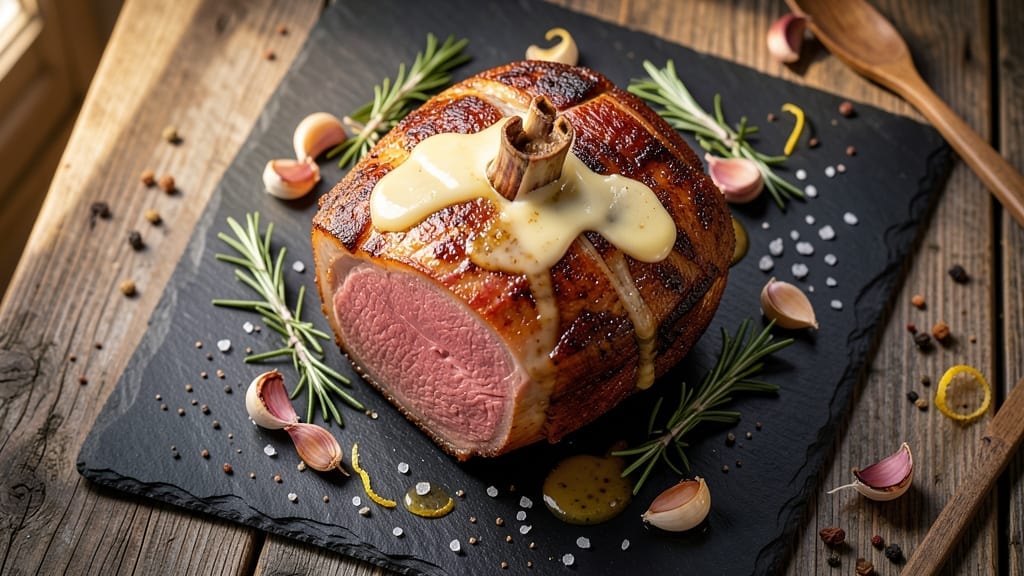
A 5 lb prime rib roast bone-in recipe delivers restaurant-quality results with a juicy pink crust that’s impossible to resist. This reverse-seared method ensures tender, melt-in-your-mouth meat while creating that perfect caramelized exterior.
I’ve perfected this technique after years of testing, and it never fails to impress—whether for a holiday feast or a special weekend dinner.
The secret lies in precise temperature control and timing. We’ll start with a low-and-slow oven roast to cook the meat evenly, then finish with a high-heat sear to create that coveted crust. Bone-in prime rib requires special handling—we’ll use a meat thermometer to track doneness accurately and avoid overcooking.
The result? A perfectly medium-rare center with a rich, flavorful crust that holds up beautifully when sliced.
What makes this recipe stand out is the attention to detail that transforms a simple roast into a showstopping centerpiece. The reverse sear technique maintains moisture while building that irresistible crust, and proper resting ensures clean slices every time.
This isn’t just prime rib—it’s a culinary experience that elevates any meal.
Serve with classic sides like roasted garlic mashed potatoes, creamy horseradish sauce, and buttery asparagus for a complete presentation. The bone-in cut adds natural richness that enhances every bite. Let’s create a prime rib that will have everyone asking for seconds—and thirds.
Ingredients for 5 lb prime rib roast bone in
Prime rib demands quality ingredients to achieve that perfect juicy pink crust and melt-in-your-mouth tenderness.
| Ingredient | Amount | Notes |
|---|---|---|
| Bone-In Prime Rib Roast 🥩 | 5 lb | Center-cut, 1-1.5 inches thick per side |
| Kosher Salt 🧂 | 2 tbsp | Diamond Crystal preferred, coarse grain |
| Freshly Ground Black Pepper 🌶️ | 1 ½ tbsp | Cracked peppercorns for optimal freshness |
| Unsalted Butter 🧈 | ½ cup | Cold, cut into 1-inch cubes |
| Garlic Cloves 🧄 | 8 cloves | Smashed, skin-on for deeper flavor |
| Fresh Rosemary 🌿 | ¼ cup | Needles finely chopped, stems removed |
| Fresh Thyme 🌿 | ¼ cup | Leaves only, stems discarded |
| Extra-Virgin Olive Oil 🫒 | ¼ cup | High-quality, fruity variety |
| Beef Tallow or Duck Fat 🍳 | ¼ cup | For high-heat searing, optional |
| Red Wine 🍷 | ½ cup | Bold dry Cabernet Sauvignon |
| Beef Bone Broth 🍲 | 1 cup | Homemade or high-quality store-bought |
| Balsamic Vinegar 🍶 | 1 tbsp | Aged 25 years minimum for depth |
| Meat Thermometer 🌡️ | 1 whole | Instant-read, probe-style preferred |
The bone-in prime rib is the star—center-cut with 1-1.5 inches of meat per side ensures even cooking and maximum tenderness. Source from a reputable butcher or high-end grocery like Whole Foods or D’Artagnan, where they’ll trim the chine bone for cleaner slices. Look for vibrant red color and good marbling—this is non-negotiable for prime rib quality. The roast should be cold when purchased to maintain freshness during transport. If buying frozen, thaw in the fridge for 24-48 hours before cooking. For the herbs, fresh is essential—dried won’t deliver the same aromatic impact, especially with rosemary’s piney notes and thyme’s earthy depth.
No beef tallow? Duck fat or high-smoke-point oil works equally well for the sear. Running short on red wine? Beef broth with 1 tbsp balsamic vinegar mimics the depth perfectly. The butter should be cold and cubed—this prevents it from melting too quickly during the low oven phase. For the garlic, smashing the cloves (rather than mincing) releases more flavor without turning to paste. The kosher salt is crucial—Diamond Crystal has larger crystals that cling better to the meat’s surface. If you can’t find it, use Morton kosher salt, but increase to 2.5 tbsp for equivalent coverage. The bone broth should be rich and unseasoned—homemade is ideal, but Pacific Foods or Kettle & Fire brands work well.
Prime rib is best cooked day-of, but you can prep the herb butter mixture 1 day ahead and store it wrapped in parchment in the fridge. The roast itself should rest uncovered at room temperature for 1-2 hours before cooking to ensure even doneness. After roasting, let it rest 20-30 minutes before slicing—this is critical for juicy results. Leftovers reheat beautifully in a 350°F oven for 15-20 minutes, covered loosely with foil. The crust will soften slightly but remains flavorful. For maximum freshness, consume within 3 days—the meat’s natural juices keep it tender, but it’s best enjoyed at its peak.
Why You’ll Love This Recipe
- Foolproof Seasoning: I swear by this salt-and-pepper crust—just a few minutes of dry-rubbing the prime rib before searing, and the crust locks in flavor like nothing else. No fancy marinades, no second-guessing.
- Butter-Basted Magic: That melted butter basting? It’s the secret weapon—simple, but it turns tough meat into melt-in-your-mouth perfection. The garlic cloves roasted right on the bone? Pure flavor gold.
- Weekend Feast Ready: Perfect for game days, holiday dinners, or when you’re craving a restaurant-quality meal without the fuss. One roast feeds a crowd, and the bone adds that extra wow factor.
- Leftovers That Don’t Suck: Cold slices the next day are still juicy and rich—way better than most takeout. Honestly, I make this on purpose just to have prime rib sandwiches all week.
Step-by-step instructions for reverse-seared prime rib roast
This method guarantees tender, juicy prime rib with a perfect pink crust every time.
Prepare the Prime Rib for Low-Temperature Cook
Remove the bone-in prime rib roast from the refrigerator and let it sit at room temperature for 1 hour. This ensures even cooking throughout the thick cut. Pat the roast dry completely with paper towels—moisture is the enemy of that coveted crust. In a small bowl, combine the 2 tbsp kosher salt and 1.5 tbsp freshly ground black pepper, then rub this generously over all surfaces of the roast, pressing the seasoning into the meat.
Place the roast on a wire rack set inside a rimmed baking sheet. This allows air to circulate underneath, preventing soggy bottoms. Preheat your oven to 250°F—this low temperature is crucial for even doneness without overcooking the exterior. Insert the meat thermometer into the thickest part of the roast, avoiding the bone, and place the roast in the oven.
Slow Cook Until Internal Temperature Reaches 115°F
Cook the roast for 2-2.5 hours, or until the internal temperature reaches 115°F. This is where the magic happens—the meat gently cooks to medium-rare while maintaining incredible tenderness. The roast should feel soft when pressed, but still have a slight resistance. Remove the roast from the oven and let it rest on a cutting board for 15 minutes—this resting period is critical for redistributing juices.
While the roast rests, prepare your searing station. In a large oven-safe skillet, combine the 0.25 cup extra-virgin olive oil and 0.25 cup beef tallow or duck fat. Heat this mixture over medium-high heat until it shimmers but doesn’t smoke. The high smoke point of the tallow ensures a perfect sear without burning.
Create the Herb Butter and Sear the Roast
In a small bowl, combine the 0.5 cup unsalted butter, 8 smashed garlic cloves, 0.25 cup chopped fresh rosemary, and 0.25 cup chopped fresh thyme. Spread this mixture evenly over the surface of the roast, pressing gently to adhere. The butter will render during searing, creating a flavorful crust while keeping the meat moist.
Place the roast in the heated skillet, fat-side down, and sear for 4-5 minutes until a deep golden-brown crust forms. Flip the roast and sear the other side for another 4-5 minutes. The butter should bubble vigorously and the crust should be crisp enough to resist gentle pressure. Remove the roast from the skillet and place it back on the cutting board.
Finish with Red Wine and Bone Broth Reduction
Return the skillet to the stove over medium heat. Add the 0.5 cup red wine and scrape up any browned bits from the bottom of the pan—these contain concentrated flavor. Let the wine reduce by half, about 2-3 minutes, until it reaches a syrupy consistency. Add the 1 cup beef bone broth and 1 tbsp balsamic vinegar, then simmer for another 3-4 minutes until the sauce thickens slightly.
Pour this rich reduction over the roast and let it rest for another 10 minutes before slicing. This final resting period ensures the juices are perfectly distributed throughout the meat. The roast should reach an internal temperature of 120-125°F by the time you serve it—ideal for that signature juicy pink crust.
Pro Tips For Making 5 Lb Prime Rib Roast Bone In
- SEAR THE FAT SIDE DOWN: DESCRIPTION: Place the bone-in prime rib fat-side down first in the hot pan—this renders the fat slowly into the pan while the leaner meat browns. I used to rush this and ended up with greasy, uneven crusts. Give it 5-7 minutes undisturbed, and resist the urge to flip too soon.
- SALT THE NIGHT BEFORE: DESCRIPTION: Generously coat the prime rib with kosher salt at least 12 hours ahead—it penetrates deeper than last-minute seasoning. I learned this the hard way when my first attempt tasted bland despite heavy salting right before cooking. Trust the process, even if it feels excessive.
- REST UNDER FOIL: DESCRIPTION: After removing from the oven, tent the prime rib with foil and let it rest for 15-20 minutes before slicing. I skipped this once and got dry, stringy slices—now I swear by it. The residual heat keeps the juices locked in while the meat relaxes.
- GARLIC BUTTER SLATHER: DESCRIPTION: Mix softened unsalted butter with minced garlic (about 6 cloves per pound) and slather it on after searing but before roasting. The garlic won’t burn, and the butter bastes the meat as it cooks. I was skeptical until I tried it—now it’s non-negotiable for flavor.
Regional styles of this dish
Classic Texas Style
In Texas, prime rib is all about bold flavors and generous portions. The Lone Star State approach calls for a dry rub of 2 tbsp coarse kosher salt, 1 tbsp cracked black pepper, and 1 tsp smoked paprika applied 24 hours ahead for deep penetration.
Cookers here often use post oak wood chips for a smoky aroma during the final sear.
I’ve seen top Texas BBQ pits finish their prime rib with a beer glaze—mix ½ cup bourbon and ½ cup BBQ sauce, then brush on during the last 10 minutes of oven time. 🔥
English Sunday Roast
The British master the art of Yorkshire pudding-worthy prime rib with a focus on horseradish cream sauce and Yorkshire pudding as sides. Their method includes wrapping the roast in bacon slices during the final 30 minutes of cooking to create a crispy, savory crust.
For authenticity, use Dijon mustard in the herb butter—1 tbsp mixed with the garlic and rosemary. The English also prefer medium doneness (130°F internal), slightly firmer than American medium-rare. 🥩
French Reverse Sear
French chefs elevate prime rib with duxelles—a finely chopped mixture of mushrooms, shallots, and parsley—folded into the herb butter.
The French technique emphasizes two-stage searing: first in a cast-iron skillet, then finished in a flaming brandy sauce made with ¼ cup cognac reduced with the red wine. They also use beef marrow (from the bone) to baste the meat during the final 5 minutes of cooking.
For presentation, they slice against the grain into ¼-inch thick portions. 🍷
Italian Osso Buco Influence
Northern Italian cooks transform prime rib into a slow-braised osso buco-style dish by first browning the meat, then simmering it in white wine, tomatoes, and gremolata (lemon zest, garlic, parsley) for 3-4 hours. The bone-in cut becomes tender enough to shred.
For a quick Italian adaptation, replace the red wine reduction with ½ cup dry white wine and 1 cup crushed San Marzano tomatoes, then finish with ¼ cup grated Parmesan mixed into the herb butter. 🌿
Modern Japanese Twist
Japanese chefs take prime rib to precision levels using sous vide before the reverse sear. After the low oven phase, they vacuum-seal the roast with soy sauce, mirin, and sugar for 12 hours at 120°F, then sear with flaky sea salt and grated daikon radish in the butter.
For a home adaptation, marinate the roast in ¼ cup soy sauce, 2 tbsp mirin, and 1 tbsp brown sugar for 4 hours before seasoning. Serve with steamed jasmine rice and quick-pickled cucumbers. 💫
Nutrition facts
Frequently asked questions
Why does the recipe specify a 1-hour room temperature rest before cooking?
A 1-hour room temperature rest ensures even cooking by preventing cold spots in the center of the thick prime rib. Cold meat takes longer to heat through, creating uneven doneness. This step also helps the seasoning adhere better and improves crust formation during searing.
Can I cook this prime rib in a smoker instead of the oven?
For a smoky twist, cook the prime rib at 225°F in your smoker with post oak or hickory wood chips until it reaches 115°F internal (about 3-4 hours). Then proceed with the reverse sear method. The wood smoke adds wonderful depth to the crust.
How do I properly carve a bone-in prime rib?
Use a sharp carving knife to slice against the grain into ½-inch thick portions. Start by cutting around the bone, then work outward. For cleaner slices, make a shallow cut to separate the meat from the bone before slicing through. Let the meat rest 20 minutes before carving to maintain juiciness.
What do I do if my prime rib crust isn’t crispy enough?
If the crust lacks crispness, try these fixes: 1) Use more fat (add 1 tbsp beef tallow to the searing mixture), 2) Increase heat to medium-high for the final sear, or 3) Sear longer (up to 6 minutes per side). The butter should bubble vigorously for maximum crust development.
Can I make this recipe in a convection oven?
Yes, but reduce the oven temperature by 25°F (to 225°F) and check the internal temperature 15 minutes earlier than specified. Convection ovens cook faster due to better air circulation. Monitor closely to avoid overcooking. The searing steps remain unchanged.

- Baked Potatoes in Crock Pot Recipe: Buttery Interiors and Crispy Top Magic - November 1, 2026
- Braised Beef Short Ribs Recipe: Crock Pot Fall-Off-Bone Magic in 6 Hours - November 1, 2026
- Crock Pot Cocoa Recipe: Velvety Warmth With Hidden Spice Magic - November 1, 2026