
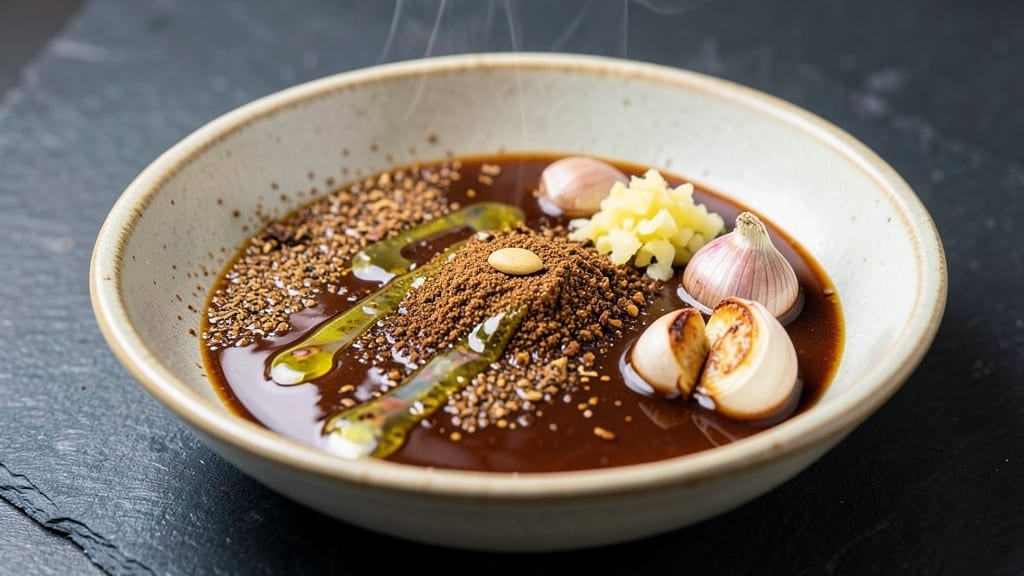
This 5-spice sauce recipe transforms ordinary dishes into bold, aromatic masterpieces with just a few simple ingredients and a simmering pot. The secret lies in balancing five-spice powder—a fragrant blend of cinnamon, cloves, fennel, star anise, and pepper—with umami-rich elements like soy sauce and garlic.
I developed this sauce after years of Asian home cooking, where it became my go-to for stir-fries, marinades, and dipping sauces.
The beauty of this sauce is its versatility—it works as a marinade for meats, a dipping sauce for spring rolls, or a finishing drizzle over noodles. The simmering process reduces the sauce to a glossy, concentrated consistency, intensifying the flavors while keeping it smooth enough to coat every bite.
High-quality five-spice powder is key; don’t substitute with individual spices unless you’re prepared for a more complex balance.
What you’ll end up with is a rich, aromatic sauce that’s tangy, slightly sweet, and packed with depth—perfect for adding a restaurant-quality kick to home cooking. The five-spice blend adds warmth and complexity, while the soy and vinegar provide that signature umami tang.
It keeps well in the refrigerator for up to two weeks, making it ideal for meal prep and batch cooking.
Use it to elevate stir-fries, glaze roasted vegetables, or drizzle over grilled meats. The possibilities are endless, but the technique is simple: simmer, reduce, and taste as you go. Let’s make this sauce!
Ingredients for 5 spice sauce
Nine ingredients, one simmering pot—this sauce delivers restaurant-quality depth with minimal effort.
| Ingredient | Amount | Notes |
|---|---|---|
| Five-Spice Powder 🌶️ | 1 ½ tbsp | High-quality blend preferred |
| Light Soy Sauce 🥢 | ½ cup | Kikkoman preferred for balance |
| Rice Vinegar 🍶 | ¼ cup | White or seasoned variety |
| Sesame Oil 🫒 | 1 tbsp | Toasted sesame oil for aroma |
| Garlic Cloves 🧄 | 4 cloves | Minced for even distribution |
| Fresh Ginger 🌿 | 1 tbsp | Finely grated, peel removed |
| Honey 🍯 | 1 tbsp | For subtle sweetness balance |
| Water 💧 | ¼ cup | For thinning consistency |
| Cornstarch 🌾 | ½ tsp | Dissolved in 1 tbsp water |
| Red Chili Flakes 🔥 | ½ tsp | Adjust for heat preference |
The five-spice powder is non-negotiable—Penzeys or Spicewalla are my go-tos for that authentic balance of cinnamon, cloves, fennel, star anise, and pepper. If you’re using individual spices, toast them whole first (except pepper) to deepen their aroma—trust me, it makes all the difference. For the soy sauce, Kikkoman light soy is my standard, but any good-quality light soy will work. The rice vinegar should smell bright and tangy—if it’s dull, it’s past its prime. Sesame oil? Toasted, not regular—the nutty aroma is what you’re after here. Fresh ginger and garlic are best, but if you’re in a pinch, powdered ginger or jarred minced garlic will do in a bind.
No five-spice powder? Mix 1/4 tsp each of cinnamon, cloves, fennel seeds, star anise, and black pepper—but be warned, the balance might take some tweaking. Swapping soy sauce for tamari? Go for it—just reduce the water slightly since tamari is saltier. The honey can be swapped for maple syrup or agave if you’re avoiding it. For a smoother texture, blend the ginger and garlic with the water before adding. If you prefer less heat, skip the chili flakes entirely or use a pinch of cayenne instead. The cornstarch slurry is key for that glossy finish—don’t skip it unless you’re okay with a thinner sauce.
This sauce keeps beautifully in the fridge for up to 2 weeks in an airtight container. The flavors actually improve over time as everything melds together. For longer storage, freeze it in ice cube trays—perfect for adding to dishes later. When reheating, warm it gently on the stove or microwave it in 10-second bursts to maintain that glossy texture. A little goes a long way—start with 1-2 tablespoons per dish and adjust to taste. The sauce thickens as it cools, so don’t over-thicken it initially.
Why You’ll Love This Recipe
- Pantry Magic: I’ll never buy store-bought sauce again—just toss five-spice powder, a splash of rice vinegar, and minced garlic into warm soy sauce, let it bloom for 10 minutes. That’s it. No fancy techniques, no last-minute grocery runs.
- Umami Bomb: The garlic sizzles just enough to wake up the five-spice powder, while the sesame oil adds this nutty, toasty finish that sticks to everything. Drizzle it on noodles, toss it in stir-fries—suddenly, everything tastes like a late-night takeout order you’d actually pay full price for.
- Weeknight Swiss Army: This sauce is my secret weapon for lazy nights: dump it on eggs, slather it over grilled chicken, or mix it into cold noodles for instant lunch. Honestly, I’ve even used it as a marinade for tofu when I forgot to plan ahead. (Yes, it works.)
- Budget Stretch: A little goes a long way—this recipe costs pennies and stretches for days. I keep a jar in the fridge and add a spoonful to whatever’s in the fridge before it expires. Suddenly, sad leftovers become something worth eating.
Step-by-step instructions for bold five-spice sauce
This aromatic sauce builds layer by layer—start with the aromatics, then balance with vinegar and sweetness for that signature umami depth.
Bloom the Five-Spice and Aromatics
Heat a small saucepan over medium-low heat and add the 1 tablespoon sesame oil. Once the oil shimmers but doesn’t smoke, add the 1.5 tablespoons five-spice powder and stir constantly for 30 seconds until fragrant. This step releases the spices’ essential oils and prevents bitterness.
Add the 4 minced garlic cloves and 1 tablespoon finely grated ginger, stirring for another 30 seconds until the garlic turns translucent and the ginger loses its raw aroma. You’ll notice the spices release their aromatic oils—this is when the sauce starts building its complex flavor profile. Keep the heat gentle; garlic burns quickly and ruins the delicate balance.
Build the Base with Vinegar and Soy
Pour in the 0.5 cup light soy sauce and 0.25 cup rice vinegar, stirring continuously. Increase heat to medium and bring the mixture to a gentle simmer. Let it cook uncovered for 3-4 minutes until the liquid reduces by about 25% and thickens slightly.
This reduction concentrates the flavors and removes excess acidity. You’ll see the sauce transform from thin and tangy to syrupy and cohesive. Taste at this stage—it should be salty, vinegary, and slightly spicy from the five-spice. If it needs more depth, this is the time to add a splash of water, but typically the soy and vinegar balance perfectly at this point.
Sweeten and Thicken the Sauce
Lower the heat to low and stir in the 1 tablespoon honey and 0.5 teaspoon red chili flakes. The honey will dissolve quickly, adding a subtle sweetness that rounds out the sauce’s complexity. Let the sauce simmer gently for 1-2 minutes to meld the flavors.
In a small bowl, whisk together the 0.5 teaspoon cornstarch with 1 tablespoon of the 0.25 cup water until smooth. Slowly pour this slurry into the sauce while stirring constantly. The sauce will thicken immediately—keep stirring for 1-2 minutes until it reaches a glossy, coating consistency, similar to a light glaze. If it’s too thick, add the remaining 1 tablespoon water to adjust.
Finish and Rest for Maximum Flavor
Remove the sauce from heat and let it cool to room temperature. This resting period allows the flavors to fully integrate and the sauce to thicken further as it cools. Taste again—you may want to adjust the seasoning. If it needs more salt, add a pinch at a time; if it’s too tangy, a touch more honey balances it.
The sauce should be vibrant, with a deep umami richness from the five-spice, a bright acidity from the vinegar, and a subtle heat from the chili flakes. Store any leftovers in an airtight container in the refrigerator for up to 1 week. Before using, gently reheat over low heat and stir in a splash of water if needed to restore consistency.
Pro Tips For Making 5 Spice Sauce
- Bloom the Garlic First: Toss minced garlic cloves in a splash of soy sauce for 5 minutes before cooking—this softens them without burning and deepens their flavor. I learned this the hard way after my sauce tasted raw and sharp instead of rich and mellow.
- Toast the Five-Spice: Dry-toast your five-spice powder in a small pan over low heat for 30 seconds—just until fragrant. This wakes up the spices and cuts through the vinegar’s sharpness. Skip this, and your sauce will taste flat.
- Balance the Vinegar: Taste before adding rice vinegar, then adjust in ½-teaspoon increments. Too much makes the sauce taste like a pickle; too little leaves it one-dimensional. I used to eyeball it and always overdid it.
- Whisk in Sesame Oil Last: Stir in sesame oil only at the very end—it burns easily and overpowers if heated. A few drops at room temperature add aroma without bitterness. My first batch tasted like liniment because I added it too soon.
Pro cooking tips for 5 spice sauce
Blooming Spices
Always bloom your five-spice powder in sesame oil over medium-low heat for 30 seconds—this releases the essential oils and prevents bitterness. I use toasted sesame oil exclusively because it adds a nutty depth that regular sesame oil can’t match.
If your oil starts smoking, you’ve gone too far—lower the heat immediately. The spices should smell warm, earthy, and slightly sweet, like a cozy spice cabinet. 🌶️
Reduction Timing
Simmer the soy-vinegar base for exactly 3-4 minutes uncovered—this reduces the sauce by 25% while concentrating the flavors. I set a timer because it’s easy to over-reduce and end up with a thick paste.
If the sauce looks too thin after 4 minutes, add 1 tablespoon water to adjust. Taste frequently during this stage; the balance of salt, acid, and umami should be evident by now.
Cornstarch Slurry
Whisk the cornstarch with cold water before adding it to the sauce—this prevents clumping and ensures a smooth, glossy finish. I use a small whisk for this step because it creates less mess than a spoon.
Pour the slurry slowly while stirring constantly, and keep the heat at low to prevent the sauce from seizing up. The sauce should thicken within 1-2 minutes of adding the slurry.
Adjusting Heat
If the red chili flakes feel too intense, reduce them to ¼ teaspoon next time. For extra heat, add ½ teaspoon of gochujang (Korean chili paste) instead—it adds a fermented depth that complements the five-spice beautifully.
Always taste as you go; the sauce should have a subtle warmth, not a burning sensation. 🔥
Resting the Sauce
Never skip the 10-minute resting period—this allows the flavors to meld and the sauce to thicken naturally. I often let mine rest for 20 minutes if I have time; the difference in flavor integration is noticeable.
Store leftovers in an airtight glass jar to preserve freshness. The sauce thickens further when refrigerated, so add 1-2 teaspoons water when reheating to restore consistency.
Equipment Essentials
Use a small saucepan with sloped sides (like a 3-quart stainless steel pan) for even heating and easy stirring. A fine-mesh strainer helps remove any stray ginger bits if you prefer a silky texture.
For measuring, a spoon rest keeps your spices and liquids organized. I keep a small bowl nearby to taste-test the sauce at each stage—this helps track flavor development accurately. ✨
Nutrition facts
Frequently asked questions
Can I make this sauce without cornstarch?
Yes! If you don’t have cornstarch, use ½ teaspoon arrowroot powder or 1 teaspoon tomato paste instead. For a completely starch-free version, reduce the sauce longer (up to 8-10 minutes) and add 1 tablespoon water to adjust thickness. The texture will be slightly thinner but still flavorful.
How do I adjust the heat level?
For less heat, reduce the red chili flakes to ¼ teaspoon or omit them entirely. For extra spice, add ½ teaspoon gochujang (Korean chili paste) or ¼ teaspoon cayenne pepper with the five-spice powder. Always taste as you go—this sauce should have warmth, not intensity.
What’s the best way to store leftovers?
Store in an airtight glass jar in the fridge for up to 2 weeks. The sauce thickens when chilled, so stir in 1-2 teaspoons water when reheating. For longer storage, freeze in ice cube trays—perfect for adding to dishes later. Thaw overnight in the fridge before using.
Can I use this sauce as a marinade?
This sauce makes an excellent marinade for chicken, pork, or tofu. Dilute with ¼ cup water and marinate for 30-60 minutes (longer for tougher cuts). The five-spice adds incredible depth to grilled or roasted meats. Just don’t over-marinate—2 hours max to prevent mushy texture.
Why does my sauce taste bitter?
Bitterness usually comes from overcooking the garlic or five-spice powder. Bloom spices for exactly 30 seconds at medium-low heat—no longer! Also check your five-spice quality: old or low-grade blends can taste harsh. If needed, balance with ½ teaspoon honey or a pinch of sugar to counteract bitterness.

- 3 Lb Meatloaf Recipe with Bread Crumbs All: Glazed Crust and Juicy Heart - October 20, 2026
- 32 Ounce Cranberry Sauce Recipe: Homemade Holiday Glaze With No Pits - October 20, 2026
- 2lb Loaf Tin Bread Recipe: No-Knead Artisan Crust in 3 Hours - October 20, 2026