
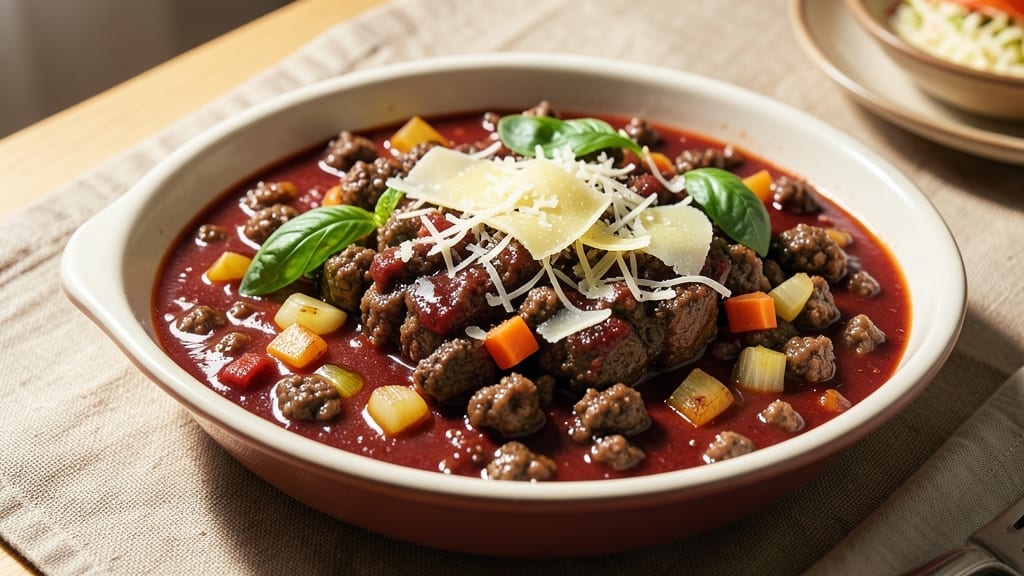
This 5-star Bolognese recipe transforms humble pantry staples into a restaurant-worthy masterpiece that simmers for hours to develop layers of depth.
The secret lies in slow-cooked ground beef, rich red wine, and a blend of aromatic vegetables that meld into a sauce so velvety it clings to every strand of pasta.
After years of perfecting this technique—balancing acidity, richness, and umami—I’ve finally cracked the code for achieving that signature Italian depth without shortcuts.
What sets this recipe apart is the three-stage cooking process: first browning the meat for maximum flavor, then deglazing with wine to dissolve those caramelized bits, and finally simmering low and slow until the sauce thickens to a luxurious, almost gravy-like consistency.
The key ingredients—tomato paste, milk (yes, milk!), and fresh herbs—create a sauce that’s far more complex than basic marinara. This isn’t just pasta sauce; it’s a meat-centric experience that deserves its own plate.
By the time you twirl that first forkful of tagliatelle or fettuccine, you’ll taste the difference: tender beef chunks, a sauce that coats without overwhelming, and a balance of sweetness, acidity, and savory richness.
The aroma alone—warm spices, red wine, and simmering tomatoes—will have everyone at the table asking for seconds. This is the kind of Bolognese that makes you feel like you’ve stepped into a trattoria, not just a home kitchen.
Serve with crispy garlic bread to soak up every last drop or pair it with a simple arugula salad to cut through the richness. The leftovers? Even better the next day as the flavors continue to develop. Let’s get cooking—this is the Bolognese you’ll make again and again.
Ingredients for 5 star bolognese
Pantry staples meet Italian sophistication—just 15 ingredients for a sauce that tastes like a trattoria secret.
| Ingredient | Amount | Notes |
|---|---|---|
| Ground Beef (Chuck Roast) 🥩 | 1 ½ lb | 80% lean, finely ground for even cooking |
| Red Wine (Dry, Bold) 🍷 | 1 cup | Cabernet Sauvignon or Merlot preferred |
| Tomato Paste 🍅 | ½ cup | High-quality, unsweetened preferred |
| Whole Milk 🥛 | ½ cup | Full-fat for richness (don't skip) |
| Onion (Yellow) 🧅 | 1 whole | Finely diced, about 1.5 cups |
| Carrot 🥕 | 1 whole | Finely diced, about 0.5 cup |
| Celery Stalk 🌿 | 1 whole | Finely diced, about 0.5 cup |
| Garlic Cloves 🧄 | 4 cloves | Minced, not powdered |
| Canned Crushed Tomatoes 🍅 | 28 oz | San Marzano preferred, no salt added |
| Fresh Parsley 🌿 | ¼ cup | Chopped, for finishing |
| Fresh Sage Leaves 🌿 | ¼ cup | Chopped, for aroma |
| Olive Oil (Extra-Virgin) 🫒 | ¼ cup | For browning meat, fruity variety |
| Salt 🧂 | 1 ½ tsp | Diamond Crystal preferred, kosher |
| Ground Black Pepper 🌶️ | ½ tsp | Freshly cracked for best flavor |
| Dried Thyme 🌿 | 1 tsp | Or 1 tbsp fresh thyme |
The beef is non-negotiable—chuck roast gives that melt-in-your-mouth texture, not lean ground chuck. Costco or Whole Foods sell it pre-ground, but if you’re buying whole, ask the butcher to grind it fine. Look for 80% lean—more fat equals more flavor. The wine? Any bold, dry red works here—Cab Sauv, Merlot, whatever’s open. Never cook with cooking wine. For the tomatoes, San Marzano cans from Whole Foods or Trader Joe’s are worth the splurge—they’re sweeter and less acidic. The milk might seem odd, but trust me on the full-fat version—it creates that signature velvety texture.
No red wine? Beef broth with a splash of balsamic gets you close. Fresh thyme is ideal but dried works at one-third the amount. If tomato paste feels like overkill for half a cup, those squeeze tubes at Trader Joe’s are perfect—no waste, keeps for months. The carrots and celery can be baby versions if that’s what’s in the fridge, but organic is better—less dirt to wash. For the herbs, I always grab extra—half goes in the pot, half gets torn over the top at the end. The parsley adds freshness, but the sage? That’s where the magic happens—it’s the secret ingredient most people skip.
This sauce tastes even better the next day as the flavors meld. Keeps 5 days in the fridge, freezes for 3 months. I portion mine into containers so lunches are sorted for the week. For the freezer, let it cool completely first, then store in airtight containers with a thin layer of olive oil on top to preserve freshness. The garlic bread? Make it the same day—it’s best warm. And if you’re serving with salad, toss the greens with a little balsamic and olive oil to cut through the richness.
Why You’ll Love This Recipe
- One-Pot Magic: I swear by this—just brown the beef, deglaze with wine, and let it simmer. No extra pans, no fuss. The milk smooths everything out while you’re still chopping veggies for the side.
- Wine-Infused Depth: That bold red wine? It’s not just flavor—it’s the secret. The alcohol cooks off, leaving behind layers of richness that turn a simple sauce into something ridiculously good. (Trust me, I’ve tried skipping it.)
- Leftovers That Shine: Make a double batch and freeze half. Thaw it straight into pasta or over rice—still tastes like you slaved over it. My freezer’s packed with this stuff because it’s that reliable.
- Budget Meal, Restaurant Feel: Chuck roast is cheap, but the milk and wine make it taste like a splurge. Serve it over egg noodles for a weeknight win, or dress it up with fresh basil for company. Same sauce, two vibes.
Step-by-step instructions for slow-simmered Bolognese
Here’s how to build a restaurant-quality Bolognese with deep flavor and perfect texture.
Build the Sofritto Base
Heat the 0.25 cup olive oil (extra-virgin) in a large Dutch oven over medium heat. Add the finely diced onion (yellow), carrot, and celery stalk—this trio forms the aromatic base called sofritto. Cook for 8-10 minutes until the vegetables soften and the onion becomes translucent, stirring occasionally to prevent burning.
Here’s the thing—don’t rush this step. The vegetables should release their natural sweetness and meld together into a cohesive paste. Add the minced garlic cloves and cook for another 1 minute until fragrant. The garlic should sizzle gently but not brown—this ensures you capture its sweet, aromatic essence rather than bitter overtones.
Brown the Ground Beef
Push the vegetable mixture to one side of the pot and add the 1.5 lb ground beef (chuck roast) to the empty space. Break it apart with a wooden spoon and let it brown in batches if needed—this prevents steaming and maximizes flavor development. Cook for 8-10 minutes until the beef loses its raw color and develops a deep brown crust.
Don’t be tempted to drain the fat after browning. That rendered beef fat contains concentrated flavor that will form the rich base of your sauce. Once the beef is fully browned, use a wooden spoon to scrape up all the browned bits from the bottom of the pot and stir them back into the mixture. This deglazing step captures all that precious umami flavor.
Deglaze and Simmer the Sauce
Pour in the 1 cup red wine (dry, bold) and scrape the bottom of the pot again to release any stuck-on bits. Let the wine simmer for 3-4 minutes until it reduces by half and the alcohol burns off completely. You’ll see the sauce thicken slightly and the wine’s acidity mellow.
Now add the 0.5 cup tomato paste, 1.5 tsp salt, 0.5 tsp ground black pepper, and 1 tsp dried thyme. Stir well to combine, then pour in the 28 oz canned crushed tomatoes. Bring the mixture to a gentle simmer and let it cook uncovered for 30 minutes, stirring occasionally. This initial simmer allows the flavors to meld and the sauce to develop its foundational depth.
Finish with Milk and Herbs
After the initial simmer, stir in the 0.5 cup whole milk and the 0.25 cup fresh sage leaves. The milk adds a subtle richness that balances the acidity and prevents the sauce from becoming too heavy. Return the sauce to a simmer and cook uncovered for another 1.5-2 hours—this is where the magic happens. The sauce should reduce until it’s thick enough to coat the back of a spoon.
I know it seems like a long time, but patience is key here. The sauce needs this slow cooking to develop its complex, layered flavors. Stir occasionally and check for doneness—you’re looking for a sauce that’s rich, velvety, and deeply flavorful. If it gets too thick before the time is up, add a splash of water or pasta water to loosen it to your desired consistency.
Rest and Serve
Once the Bolognese reaches your desired consistency, remove it from heat and stir in the 0.25 cup fresh parsley. Let the sauce rest for 15-20 minutes before serving. This resting period allows the flavors to fully meld and the sauce to thicken slightly as it cools.
Here’s the moment that matters: when you’re ready to serve, give the sauce one final taste and adjust the seasoning if needed. The Bolognese should be rich, meaty, and deeply aromatic with a perfect balance of acidity and sweetness. Serve it over freshly cooked pasta, reserving some pasta water to thin the sauce if necessary. Each bite should deliver layers of flavor that make this a true 5-star dish.
Pro Tips For Making 5 Star Bolognese
- Sear the Beef Hard: Chuck roast ground beef needs a good crust to hold up during simmering—don’t skimp on the sear. Use a heavy pan (cast iron if you have it) and cook the meat in batches over medium-high heat until deep brown, breaking it up with a wooden spoon. I learned this the hard way—undercooked beef turns mushy when it hits the wine and tomatoes.
- Deglaze with Wine Immediately: As soon as you remove the beef, pour in that bold red wine while the pan is still hot—this pulls up all the browned bits (fond) that make flavor. Let it simmer for 2-3 minutes until it reduces by half before adding anything else. Skipping this step means losing a third of your flavor, and nobody wants that.
- Dissolve Tomato Paste First: Don’t just dump tomato paste into the pot and stir—heat it in the same pan with a splash of olive oil for 1-2 minutes until it darkens slightly. This deepens its flavor and prevents clumping. I was skeptical until I tried it: the sauce goes from good to rich when you do this.
- Add Milk Gradually: Whole milk is your secret weapon for richness, but dumping it all in at once can curdle the sauce. Stir in just ¼ cup at a time, letting each addition simmer for 2-3 minutes before adding more. This isn’t the prettiest method, but it’s the tastiest—trust the process.
Flavor customization for this 5 star bolognese
Spice Level Control
Adjust the heat to your preference by adding ½ teaspoon red pepper flakes for mild warmth or 1 teaspoon crushed chili flakes for a bold kick. I like to toast the flakes in the olive oil during the sofritto stage—this releases their aromatic oils and prevents clumping.
For an extra layer, add ½ teaspoon smoked paprika with the thyme for a subtle smokiness that pairs beautifully with the wine. 🌶️
Sweetness Balance
If your tomatoes taste tart, add 1 tablespoon honey or 1 teaspoon brown sugar during the initial simmer to mellow the acidity. For depth, I sometimes stir in 1 teaspoon balsamic vinegar with the wine—it adds complexity without overpowering.
The milk already balances acidity, but this extra touch ensures a harmonious sweet-savory profile.
Herb Variations
Swap out sage for rosemary (½ cup chopped) for a piney aroma or add 1 bay leaf during the simmer for earthy notes. Fresh basil at the end brightens the dish—toss in ¼ cup chopped basil with the parsley.
For a Mediterranean twist, add ½ teaspoon dried oregano with the thyme. Each herb shifts the flavor profile subtly but noticeably.
Meat Swaps
For a lighter version, replace half the beef with 8 oz Italian sausage (sweet or spicy) or 8 oz ground pork. Both add richness and fat without overpowering. If you prefer vegetarian, crumble 12 oz mushrooms (cremini or portobello) and brown them with the beef.
The umami from mushrooms mimics the meatiness perfectly—just add 1 teaspoon soy sauce to the sauce for extra depth.
Texture Adjustments
For a chunkier texture, use ½ lb diced pancetta instead of some beef—it renders beautifully and adds a salty, fatty contrast. For a smoother sauce, blend half the finished Bolognese with an immersion blender before serving.
I often reserve ¼ cup pasta water to thin the sauce at the table—this keeps the consistency perfect without diluting the flavor.
Umami Boosters
Elevate the depth by adding 1 teaspoon fish sauce or 1 teaspoon Worcestershire sauce with the wine. For a vegetarian option, stir in 1 tablespoon tomato paste mixed with 1 teaspoon miso paste during the simmer.
These umami-rich additions amplify the meaty flavor without altering the sauce’s balance. Trust me, your taste buds will thank you. ✨
Nutrition facts
Frequently asked questions
Why does this Bolognese recipe use milk?
The milk creates that signature velvety texture and balances the acidity of the tomatoes. Full-fat milk adds richness without overpowering, while also preventing the sauce from becoming too heavy. It’s a traditional Italian technique that makes the difference between ordinary and extraordinary.
Can I make this Bolognese in a slow cooker?
Yes! Brown the meat and sofritto first in a skillet, then transfer everything to your slow cooker. Cook on low for 6-8 hours or high for 4-5 hours. The slow cooker method actually enhances the flavors by keeping everything warm and simmering gently. Just add the milk and herbs during the last 30 minutes of cooking.
What’s the best pasta to serve with this?
Tagliatelle or fettuccine are classic choices as their flat surfaces hold the sauce beautifully. For extra indulgence, try pappardelle (wide ribbon pasta) or even gnocchi. Avoid long, thin noodles like spaghetti—they can get lost in the rich sauce.
How do I fix Bolognese that’s too thick?
Add ¼ cup pasta water at a time while stirring until you reach your desired consistency. Never add cold water—it can shock the sauce and make it separate. For a smoother texture, blend half the sauce with an immersion blender. If it’s still too thick after resting, a splash of whole milk works beautifully.
Can I make this ahead of time?
This sauce tastes even better the next day as flavors deepen! Store in an airtight container in the fridge for up to 5 days or freeze for 3 months. Reheat gently on the stove with a splash of water or broth to restore moisture. For serving, warm through and adjust seasoning if needed.

- 3 Cheese Pimento Cheese Recipe: Sharp Cheddar, Peppery Heat, and Creamy Spread Magic - October 10, 2026
- 7 Egg Cake Recipe: Fluffy Layers With Vanilla Bean Infusion - October 10, 2026
- 3 Musketeers Cookie Recipe: Crunchy Chocolate Shells With Gooey Caramel Centers - October 10, 2026