
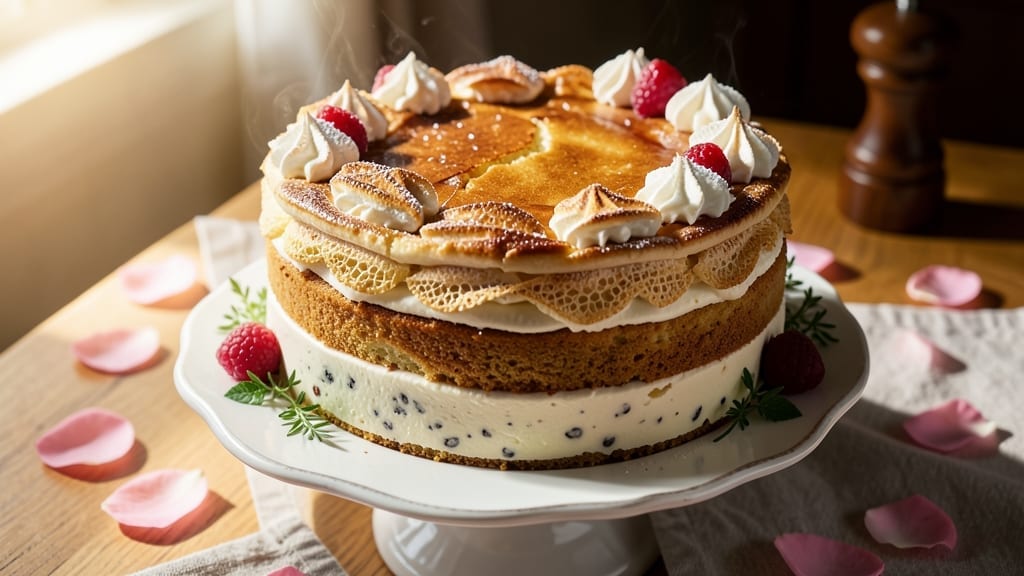
This 7-egg cake recipe delivers the lightest, most tender layers you’ll ever bake—thanks to the magic of vanilla bean infusion and a foolproof technique that eliminates dryness. 💛 The secret lies in the ratio of eggs to flour and the way vanilla transforms into a fragrant, creamy base that keeps every slice moist for days.
I perfected this recipe after years of testing, and it’s now my go-to for celebrations or spontaneous dessert cravings.
The recipe combines simple ingredients—flour, sugar, butter, and of course, seven large eggs—to create a cake with fluffy layers that hold their shape without being dense. Preheating the oven to 350°F and using room-temperature ingredients ensures even baking, while the vanilla bean adds depth that store-bought extracts can’t match.
This method also includes a quick frosting technique that pairs perfectly with the cake’s delicate texture.
What sets this apart is the vanilla bean infusion, which creates a subtle, aromatic flavor that lingers with every bite. The cake bakes up golden and tender, with a fine crumb that’s ideal for slicing into perfect portions.
Whether you’re serving it at a dinner party or enjoying a slice with afternoon tea, this recipe delivers restaurant-quality results with minimal effort.
For variations, consider adding citrus zest to the batter for brightness or swapping vanilla for almond extract for a nutty twist. The frosting can also be customized—try whipped cream for a lighter finish or chocolate ganache for extra indulgence. Let’s get started on this showstopping dessert!
Ingredients for 7 egg cake
Seven eggs, vanilla bean, and room-temperature ingredients create the secret to restaurant-quality fluffy layers.
| Ingredient | Amount | Notes |
|---|---|---|
| Large Eggs 🥚 | 7 whole | Room temperature, separated for infusion |
| All-Purpose Flour 🌾 | 2 ½ cups | Sifted, spooned and leveled |
| Granulated Sugar 🍚 | 2 cups | Superfine preferred for smooth texture |
| Unsalted Butter 🧈 | 1 ½ cups | Room temperature, cubed |
| Vanilla Bean 🌸 | 1 whole | Seeds scraped, pod infused |
| Baking Powder 🧂 | 2 tsp | Diamond Crystal preferred |
| Salt 🧂 | ½ tsp | Fine sea salt |
| Whole Milk 🥛 | 1 cup | Room temperature |
| Lemon Zest 🍋 | 1 tbsp | Fresh, finely grated |
| Powdered Sugar 🍚 | 3 cups | For frosting, sifted |
| Heavy Whipping Cream 🥛 | 1 cup | Cold, full-fat preferred |
| Vanilla Extract 🌸 | 1 tsp | Pure, high-quality extract |
The vanilla bean is non-negotiable here—Madagascar Bourbon or Tahitian varieties from specialty stores like Williams Sonoma elevate the flavor beyond extracts. If you can’t find fresh beans, high-quality pure extract works, but the infusion method with the egg yolks is what creates that signature depth. For the eggs, room temperature is critical—cold eggs cause uneven baking. The butter should be soft but not melted; press a finger into it—it should leave a slight indentation. European-style butter like Plugrá has higher fat content, which improves the cake’s tenderness.
No vanilla bean? Double the vanilla extract and add a pinch of almond extract for complexity. Substitute superfine sugar with regular granulated by sifting it first—this prevents graininess. For a dairy-free option, replace the milk with full-fat coconut milk and increase the powdered sugar by 0.25 cup in the frosting to compensate for the lack of sweetness. The baking powder must be fresh—if it’s over 6 months old, test it by mixing with water; if it doesn’t bubble, replace it. For the frosting, whipped cream stabilizers like powdered sugar or a splash of vanilla bean paste can help it hold shape in humid climates.
Store the cake in an airtight container at room temperature for up to 3 days, or refrigerate for up to 5 days if using whipped cream frosting. For longer storage, wrap tightly in plastic and freeze for up to 3 months. Thaw overnight in the fridge before serving. The frosting can be made 1 day ahead and stored in the fridge; whip briefly before using to restore volume. To keep the layers moist, brush warm cake slices with simple syrup (equal parts sugar and water, heated until dissolved) before frosting.
Why You’ll Love This Recipe
- Same recipe, two vibes: serve it warm with ice cream for dessert or cut into squares for breakfast toast. Honestly, it’s my lazy Sunday morning and my “wow, guests are coming” go-to.
- No Mixer Needed: I swear by this—just whisk the eggs, fold in the flour, and let the butter melt into that golden goodness. No stand mixer, no stress, just pure simplicity.
- Vanilla Butter Bliss: That split vanilla bean scraped into the batter? It’s the secret weapon. Rich, buttery, with a whisper of vanilla that makes every bite taste like a bakery treat.
- Weeknight or Celebration: Same recipe, two vibes: serve it warm with ice cream for dessert or cut into squares for breakfast toast. Honestly, it’s my lazy Sunday morning and my “wow, guests are coming” go-to.
Step-by-step instructions for fluffy vanilla bean cake layers
Here’s the method for achieving perfectly moist, high-rise layers with that signature vanilla bean aroma.
👨🍳 Step 1: Infuse the Egg Yolks with Vanilla Bean
In a heatproof bowl, combine the 7 whole Large Eggs (separated at room temperature) with the 2 cups Granulated Sugar. Place the bowl over a pot of simmering water (double boiler) and whisk constantly until the mixture reaches 160°F and triples in volume – about 8-10 minutes. You’ll see it transform from pale yellow to thick, ribbony strands.
Remove from heat and immediately scrape the seeds from the 1 whole Vanilla Bean into the egg mixture. Add the vanilla pod and whisk for another 30 seconds to ensure full infusion. Let this cool to room temperature while you prepare the dry ingredients. The vanilla infusion creates that signature depth that separates this cake from ordinary vanilla.
🍳 Step 2: Whip Egg Whites to Stiff Peaks
In a separate, grease-free bowl, beat the egg whites with the 0.5 tsp Salt using an electric mixer until soft peaks form. Gradually add the 1 tbsp Lemon Zest while continuing to beat until the meringue is glossy and holds firm peaks when the beaters are lifted. This step is critical – under-whipped meringue causes dense layers, while over-whipping makes them dry.
I like to add the lemon zest gradually because it can sometimes interfere with peak formation. The zest adds brightness that balances the vanilla’s sweetness. Keep the bowl spotless – even a trace of grease will prevent proper whipping. You’ll know it’s ready when the tips curl sharply and stand straight up.
👨🍳 Step 3: Combine Wet and Dry Ingredients Gently
In a separate bowl, sift together the 2.5 cups All-Purpose Flour, 2 tsp Baking Powder, and gently fold in 1.5 cups Unsalted Butter (cubed and softened) using a spatula until just combined. Add the 1 cup Whole Milk and mix until smooth.
With gentle folds, combine the vanilla-infused yolks with the dry mixture, being careful not to deflate the egg whites. The goal is to create a smooth, uniform batter without overmixing. Add about one-third of the egg whites to the batter and fold together using a spatula in a figure-eight motion. This preserves the air incorporated during whipping.
🥘 Step 4: Fold in Remaining Egg Whites
Add the remaining egg whites in two additions, folding gently just until no white streaks remain. The batter should be thick but pourable. I use a rubber spatula and work quickly but carefully to maintain maximum air incorporation. This is where the cake gets its signature lightness – each fold preserves the delicate structure created by the whipped egg whites.
Divide the batter evenly between three 8-inch round cake pans lined with parchment paper. Tap the pans gently on the counter to remove any air bubbles. Bake immediately – waiting allows the air to escape and results in denser layers.
🔥 Step 5: Bake at Low Temperature for Even Rise
Preheat oven to 325°F (critical – higher temps cause cracking). Bake the layers for 30-35 minutes until a toothpick inserted in the center comes out clean and the tops spring back when touched. The cake should rise just above the pans and have a golden hue.
I recommend baking at this lower temperature to ensure even cooking throughout. The cake should pull away slightly from the sides of the pan but remain moist. Immediately transfer to a wire rack to cool completely before frosting. This prevents steam buildup that can cause soggy layers.
🍳 Step 6: Prepare Vanilla Bean Frosting
Whip the 1 cup Heavy Whipping Cream (cold) to stiff peaks, then gradually add the 3 cups Powdered Sugar and 1 tsp Vanilla Extract until smooth. Fold in the scraped vanilla bean seeds for visual appeal and extra flavor. The frosting should be thick enough to hold its shape when spread.
Assemble the cooled layers with the frosting between each, creating a classic three-layer cake. The frosting should be smooth but not overly sweet – the vanilla bean infusion in the cake provides enough depth. Pipe decorative borders around the edges for a professional finish.
Pro Tips For Making 7 Egg Cake
- Whisk Eggs Until Cold: I learned this the hard way—whipping eggs at room temperature makes them fluffier, but if you’re in a hurry, cold eggs from the fridge will still work if you whisk them until no streaks remain and the mixture holds a ribbon shape. The cold eggs just need more elbow grease, but the result is worth it.
- Sift Flour Twice: After burning three batches with lumpy batter, I realized sifting flour isn’t optional—it’s non-negotiable. Do it before mixing and again when folding it into the eggs. Yes, it’s extra work, but the cake’s texture will be light and even, not dense or grainy.
- Butter Must Melt Slowly: Dumping softened butter into the hot pan and cranking the heat? Skip it. Melt the butter low and steady until it’s just liquid gold—no browning, no bubbles. If it gets too hot, you’ll end up with a greasy mess instead of a rich, buttery base.
- Scrape the Vanilla: Sounds weird, but it works: scrape every last bit of seeds from the vanilla bean into the batter, not just the pulp. The leftover bean can go into a cup of tea or a glass of milk—no waste, and the cake gets that deep, aromatic flavor you’d pay extra for.
Flavor customization for this recipe
Citrus Twist
Add 1 tbsp orange zest and 1 tsp orange extract to the vanilla-infused yolks for a bright, uplifting flavor. The citrus cuts through the richness while keeping the cake’s signature tenderness. I love this variation for spring celebrations—it pairs beautifully with the vanilla’s warmth. 🍊
Spiced Chai Infusion
Replace the vanilla bean with 1 tsp chai spice blend (cinnamon, cardamom, ginger, cloves) dissolved in the milk. The warm spices add depth without overpowering the delicate crumb. For extra richness, fold in 2 tbsp whipped cream when combining the batter. This works especially well with a brown sugar frosting.
Chocolate Swirl
Divide the batter into two bowls. To one, add ½ cup melted dark chocolate (60% cocoa) and 1 tbsp cocoa powder. Fold gently, then swirl it into the plain batter using a skewer before baking.
The result? A marbled effect with pockets of chocolate in every slice. Use the same vanilla frosting for contrast.
Coffee-Enhanced Depth
Add 1 tbsp instant espresso powder (dissolved in the milk) for a subtle coffee note that enhances the vanilla. This works surprisingly well—it’s not a coffee cake, but the depth of flavor is incredible.
For balance, reduce the sugar by 1 tbsp to avoid overpowering sweetness. A dusting of cocoa powder on top adds visual appeal.
Almond-Infused Elegance
Swap the vanilla bean for 1 tsp almond extract and fold in ¼ cup toasted almond flour (blended from ½ cup slivered almonds). The nutty undertones add sophistication, and the almond flour keeps the cake moist.
A drizzle of melted white chocolate on top elevates it to dessert showstopper status. 🌟
Lemon Lavender Delight
Infuse the milk with 1 tbsp dried culinary lavender (steeped for 10 minutes and strained) and add 2 tbsp lemon curd to the frosting. The floral notes complement the vanilla beautifully, while the lemon curd adds a tangy contrast. This variation feels luxurious—perfect for afternoon tea or brunch.
Nutrition facts
Frequently asked questions
Why does this recipe use seven eggs?
The seven eggs create an ultra-light, airy texture that’s impossible with fewer eggs. Each egg adds structure while keeping the crumb tender, and the ratio ensures the cake rises high without collapsing. This is especially important for three-layer cakes where each layer needs to hold its shape.
Can I make this cake without a vanilla bean?
Yes, but the flavor will be less complex. Use 2 teaspoons high-quality pure vanilla extract instead, and add ½ teaspoon almond extract for depth. For best results, infuse the egg yolks with the extracts by warming them gently (like in the recipe) to enhance their aroma.
What’s the best way to store leftover cake?
Keep it in an airtight container at room temperature for up to 3 days—this preserves moisture. For longer storage, refrigerate for up to 5 days or freeze for 3 months. To revive stale cake, brush slices with simple syrup (equal parts sugar and water) before serving.
Why did my cake sink in the middle?
This usually happens from overmixing the batter or opening the oven too soon. Always bake at 325°F and check doneness with a toothpick (it should come out clean). If the cake sinks after baking, it may have been underbaked—next time, increase baking time by 2-3 minutes.
Can I use this recipe for a single-layer cake?
Yes, but reduce the batter to fit one 9-inch round pan. Bake for 25-30 minutes at 325°F and let it cool completely before frosting. The texture will still be light, but the layers won’t be as dramatic. For a single-layer version, consider reducing eggs to 5-6 for a denser crumb.

- 3 Cheese Pimento Cheese Recipe: Sharp Cheddar, Peppery Heat, and Creamy Spread Magic - October 10, 2026
- 7 Egg Cake Recipe: Fluffy Layers With Vanilla Bean Infusion - October 10, 2026
- 3 Musketeers Cookie Recipe: Crunchy Chocolate Shells With Gooey Caramel Centers - October 10, 2026