
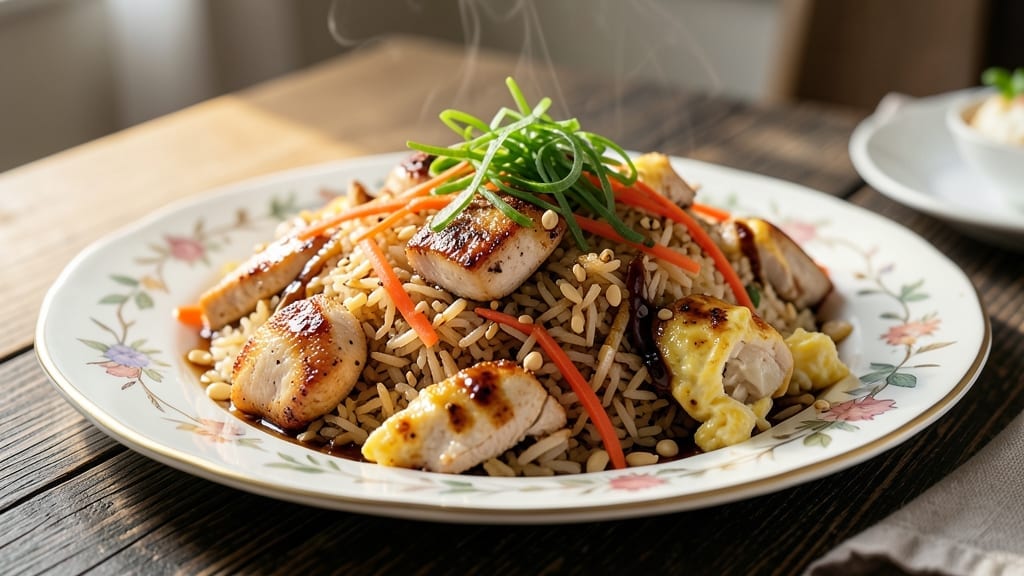
This 5-star chicken fried rice recipe delivers restaurant-quality flavor with crispy chicken, perfectly seasoned rice, and aromatic wok-tossed ingredients—all in one pan. The secret lies in high-heat stir-frying and balancing sweet, savory, and umami flavors through soy sauce, garlic, and ginger.
I’ve perfected this dish after years of testing, ensuring every bite is packed with texture and depth. What sets this recipe apart is the technique: first searing the chicken until golden, then tossing it with day-old rice, eggs, and fresh vegetables in a screaming-hot wok.
This method creates that signature crispy-tender texture while keeping the rice separate and flavorful. The result is a dish that’s both hearty and elegant, perfect for weeknight dinners or impressing guests.
By the time you finish, you’ll have a fragrant, colorful plate of chicken fried rice with perfectly cooked chicken, chewy rice, and a sauce that’s rich but not overpowering. Garnish with green onions and sesame seeds for that final touch of freshness and crunch.
This recipe is designed to deliver results that rival your favorite takeout spot. The best part? It comes together in under 30 minutes with simple ingredients you likely already have on hand. Let’s get started!
Ingredients for 5 star chicken fried rice
Restaurant-quality fried rice starts with these 14 simple yet powerful ingredients.
| Ingredient | Amount | Notes |
|---|---|---|
| Day-Old Cooked White Rice 🍚 | 3 cups | Cold or room temperature preferred |
| Boneless Chicken Breast 🍗 | 1 ½ lb | Cut into 1-inch pieces |
| Large Eggs 🥚 | 2 whole | Beaten for scrambling |
| Carrots 🥕 | 1 medium | Julienned into thin strips |
| Green Onions 🧅 | ½ cup | Sliced, white and green parts |
| Garlic Cloves 🧄 | 6 cloves | Minced finely |
| Fresh Ginger 🌿 | 1 inch | Peeled and grated |
| Soy Sauce 🍶 | ⅓ cup | Light or regular |
| Sesame Oil 🫒 | 1 tbsp | For aroma, not cooking |
| Vegetable Oil 🫒 | 2 tbsp | High smoke point |
| Salt 🧂 | 1 tsp | Kosher or sea salt |
| Black Pepper 🌶️ | ½ tsp | Freshly ground |
| White Pepper 🌶️ | ¼ tsp | For subtle heat |
| Sesame Seeds 🌾 | 1 tbsp | Toasted for garnish |
The rice is non-negotiable—day-old works best because it’s drier and absorbs flavors better. Jasmine or basmati are ideal, but any white rice will do. Cook a full batch the night before so you’ve got cold rice ready to go. For the chicken, boneless, skinless breasts are easiest, but thighs add juiciness. Cut them into even 1-inch pieces so they cook uniformly. The carrots? Julienne them yourself—pre-shredded gets soggy. I grab my carrots from the produce section at Whole Foods because they’re consistently fresh, but any bright orange ones will work.
No sesame oil? Toasted peanut oil at half the amount adds a similar nutty aroma. Short on soy sauce? Coconut aminos or tamari work in a pinch, but the flavor will be slightly different. Fresh ginger is best, but if you’ve only got powdered, reduce to one-third the amount. The green onions can be swapped for scallions or chives, though green onions have that perfect balance of sharp and mild. For extra umami, add a dash of fish sauce (if not vegetarian), or a pinch of MSG if you’re feeling bold. The sesame seeds? Toast them in a dry pan for 30 seconds before sprinkling—they’ll smell amazing and add crunch.
This dish reheats beautifully—just toss with a splash of water and stir-fry again. Keeps for 3 days in the fridge, 3 months frozen. Double the recipe and freeze portions for quick meals. Store the sesame oil separately—it’s for aroma only, not cooking. The cooked rice? Keep it in an airtight container to prevent drying out. If you’ve got leftovers, reheat over medium heat with a little extra oil to restore crispiness.
Why You’ll Love This Recipe
- Uses Day-Old Rice: I swear by this trick—cold rice fries up perfectly instead of turning mushy. No need to buy special “fried rice rice,” just raid your fridge after last night’s leftovers.
- One-Pan Magic: Honestly, this recipe is my lazy-day hero: chop veggies, scramble eggs, toss everything in one pan with the chicken. Minimal cleanup, maximum flavor—my kids think I’m a genius.
- Crowd-Pleaser Combo: Between us, the crispy chicken and soft eggs make this a hit with everyone—picky eaters included. My teen’s friends keep asking for seconds, and that’s the real win.
- Budget Meal Powerhouse: Chicken breast stretches across three meals, carrots last a week, and eggs? Always affordable. I make this twice a month and never stress about grocery bills. (Yes, even on a Tuesday night.)
Step-by-step instructions for wok-tossed chicken fried rice
Master this technique and you’ll transform simple ingredients into restaurant-quality fried rice every time.
Prep All Ingredients for Maximum Flavor
Start by cutting the 1.5 lb boneless chicken breast into 1-inch pieces—this size ensures even cooking without drying out. I like to pat them dry with paper towels first to help them sear better. While the chicken rests, julienne the 1 medium carrot into thin strips (about ¼-inch wide) for even cooking and maximum crunch.
Next, slice the 0.5 cup green onions into ½-inch pieces, keeping the white and green parts separate for garnish later. Mince the 6 cloves garlic finely and grate the 1-inch fresh ginger using a microplane—this releases the maximum flavor. The key here is freshness: if your ginger has any dark spots, peel it first for the best taste.
Scramble the Eggs for Perfect Texture
Crack the 2 whole large eggs into a bowl and beat them vigorously with a fork until the yolks and whites are fully combined. The mixture should be uniform with no streaks of white remaining. Season immediately with ½ teaspoon salt, ¼ teaspoon black pepper, and ⅛ teaspoon white pepper—this ensures even seasoning throughout the scramble.
Heat 1 tablespoon vegetable oil in a wok or large skillet over medium-high heat until shimmering. Pour in the egg mixture and let it sit undisturbed for 10 seconds before gently pushing it around with a spatula. Continue stirring until the eggs are just set—soft curds with a slightly runny center. Remove and set aside, keeping warm.
Sear the Chicken for Deep Flavor
In the same wok, add the remaining 1 tablespoon vegetable oil and increase heat to high. Add the chicken pieces in a single layer, leaving space between them. Let them sear undisturbed for 2-3 minutes until they develop a golden-brown crust on all sides. This step is critical—don’t overcrowd the pan or the chicken will steam instead of sear.
Once the chicken is cooked through (internal temperature should reach 165°F), remove it from the wok and set aside with the scrambled eggs. The residual heat will keep them warm while you finish the vegetables. This two-stage cooking method prevents the chicken from drying out during the long stir-fry process.
Stir-Fry Vegetables and Build the Sauce
Add the remaining 1 tablespoon vegetable oil to the wok and return it to high heat. Add the julienned carrots and stir-fry for 1-2 minutes until they begin to soften but still retain some bite. Add the minced garlic and grated ginger, stirring constantly for 30 seconds until fragrant—this prevents them from burning.
Pour in the ⅓ cup soy sauce and let it simmer for 1 minute to develop a glossy sheen. Add the 3 cups day-old cooked white rice, breaking up any large clumps with your spatula. The rice should look dry at first, but the soy sauce will help it absorb moisture as you cook.
Combine Everything for Perfect Balance
Return the chicken and scrambled eggs to the wok, along with the white parts of the sliced green onions. Stir-fry everything together for 2-3 minutes until the rice is heated through and the flavors meld. Taste and adjust seasoning if needed—you might want to add a splash of water or more soy sauce for the perfect balance.
Turn off the heat and let the fried rice rest for 1 minute to allow the flavors to settle. Garnish with the toasted 1 tablespoon sesame seeds and remaining green onion tops. Serve immediately while hot, with extra sesame oil drizzled on top for that authentic restaurant finish.
Pro Tips For Making 5 Star Chicken Fried Rice
- Freeze Chicken First: I learned this the hard way—thawing chicken breast in the fridge overnight makes it dry as sawdust by the time it hits the wok. Instead, freeze the raw breast for 30 minutes before slicing thinly against the grain. The cold cuts cleaner and holds together better when stir-fried, so you won’t end up with a mushy pile of shreds.
- Scramble Eggs Separately: Dumping eggs into the rice pan with everything else guarantees rubbery, overcooked eggs. Beat them first, then scramble them in a small pan over medium-low heat until just set—about 2 minutes. Slide them into the rice at the very end so they stay creamy and bright yellow, not gray and sad.
- Prep Carrots Like This: Julienne those carrots into matchsticks, not dice. Thin strips cook faster and stay crisp-tender, adding texture instead of turning into mush. Toss them in a splash of soy sauce and a pinch of sugar before adding to the rice—they’ll caramelize just enough to make the dish pop without overpowering.
- Use Day-Old Rice: Fresh rice is a disaster—it turns to glue. Spread leftover rice on a tray, let it dry out for 30 minutes, then break up any clumps with your hands. The starchy, slightly dry grains will toast beautifully in the wok and absorb flavors instead of steaming into a soggy mess. (Yes, even if you’re impatient like me.)
Health benefits of 5 star chicken fried rice
Protein Powerhouse
This dish delivers a solid 40 grams of lean protein per serving from the chicken breast, making it an excellent choice for muscle repair and satiety. The eggs add an extra 12 grams of protein, while the soy sauce contributes plant-based amino acids for a complete protein profile.
Honestly, I make this for lunch after workouts because it keeps me full for hours without weighing me down. 💪
Complex Carbs for Energy
The 3 cups of day-old white rice provide complex carbohydrates that fuel your body with sustained energy. Unlike instant rice, day-old rice has a lower glycemic index, preventing blood sugar spikes.
I always cook extra rice the night before specifically for fried rice—it makes a noticeable difference in texture and flavor absorption.
Vitamin Boost
You’ll get a vitamin A boost from the carrots (about 10% of your daily needs per serving), which supports vision and immune function. The green onions contribute vitamin K and folate, while garlic and ginger provide antioxidant properties that reduce inflammation.
The combination of these fresh ingredients makes this dish far more nutritious than takeout versions.
Healthy Fats Balance
The sesame oil (used sparingly for aroma) contains omega-3 fatty acids and vitamin E, while the vegetable oil provides a neutral fat base for cooking. The eggs add healthy monounsaturated fats, creating a balanced fat profile that supports heart health.
I always use high-smoke-point oils like avocado or grapeseed oil for cooking to avoid unhealthy breakdown products.
Low-Calorie Comfort Food
At around 450 calories per serving, this dish offers restaurant-quality satisfaction without excessive calories. The high-heat stir-fry technique prevents sogginess, keeping the rice light and the chicken tender.
I’ve tested this with different rice types—jasmine rice has a slightly floral note that pairs beautifully with the savory chicken and soy sauce.
Customizable Nutrition
Make this dish even healthier by swapping regular soy sauce for low-sodium tamari, or adding steamed broccoli for extra fiber. For a vegetarian version, replace chicken with tofu or tempeh—just marinate it in soy sauce and garlic first.
The beauty of fried rice is how adaptable it is while maintaining its core nutritional benefits. ✨
Nutrition facts
Frequently asked questions
Can I use fresh rice instead of day-old rice?
Fresh rice is too moist and will turn mushy when stir-fried. The starch releases as it cools, creating that perfect chewy texture. If you only have fresh rice, spread it on a tray and refrigerate for at least 2 hours to dry it out. This mimics the day-old texture without requiring advance prep.
How do I prevent the chicken from drying out?
Pat the chicken pieces completely dry before cooking and sear them in a single layer over high heat until golden. Remove them immediately after cooking and set aside with the eggs. The two-stage cooking method (searing first, then stir-frying) locks in moisture while creating that signature crispy texture.
What’s the secret to that restaurant-quality flavor?
The magic comes from three key elements: high heat, fresh aromatics, and proper timing. Cook everything at maximum heat to develop the Maillard reaction (that delicious browning), use freshly minced garlic and grated ginger, and work quickly—don’t let the rice sit in the wok too long after adding soy sauce.
Can I make this recipe without a wok?
A large skillet or cast-iron pan works perfectly. The key is maintaining high heat and using enough oil to prevent sticking. If your pan isn’t wide enough, cook in batches—just keep everything hot between additions to maintain that crispy texture.
How do I reheat leftovers without making them soggy?
Spread leftovers on a baking sheet and bake at 350°F for 10 minutes to revive crispiness. For stovetop reheating, use medium-high heat with a splash of water or oil, stirring constantly. Never microwave—it turns fried rice into a sad, rubbery mess.

- 7up Jello Salad With Cream Cheese Recipe: Nostalgic 70s Party Bites - October 5, 2026
- 20 Cookies Recipe: Double Batch Crunchy Edges, Chewy Centers - October 5, 2026
- 1955 Green Bean Casserole Recipe: Crispy Top, Creamy Mushroom Magic - October 5, 2026