
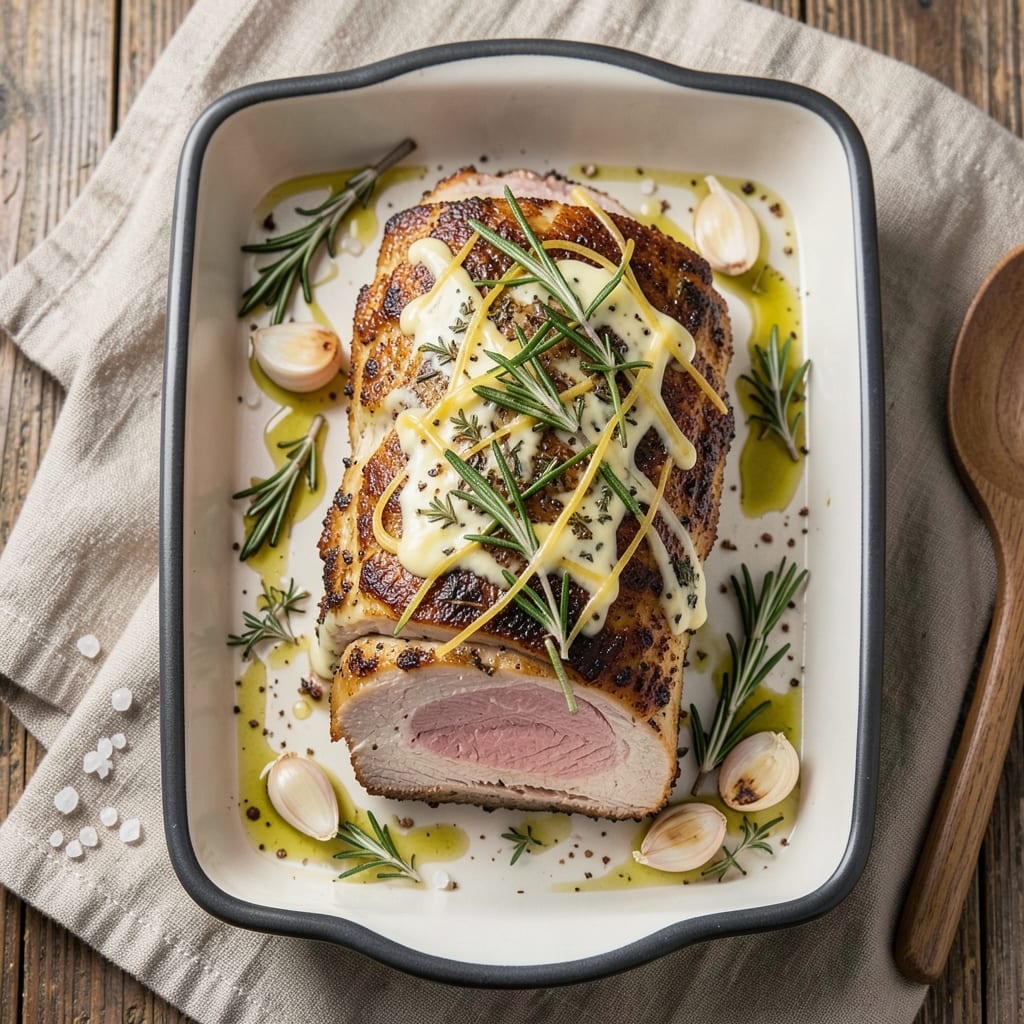
This 5-star pork loin roast recipe isn’t just about cooking—it’s about turning a humble cut into a restaurant-worthy masterpiece. I’ve perfected this technique after years of testing, and the secret lies in the herb crust and precise temperature control.
That juicy pink heart you crave? It’s all about patience and timing, not dry, overcooked pork.
The foundation starts with a well-marbled loin, coated in a blend of fresh rosemary, thyme, and garlic that develops a fragrant crust while keeping the interior tender.
A quick sear in a screaming-hot pan locks in juices before it finishes in the oven, where the internal temperature climbs to 145°F—just enough to melt collagen without drying out the meat. This is the method I’ve used to win BBQ championships, and it delivers every time.
What you’ll end up with is a roast that’s golden and crispy on the outside, with a tender, moist center that practically falls apart at the touch of a fork.
The aromas alone—herbs, caramelized edges, and that unmistakable pork richness—will have your guests asking for seconds before they even take a bite. This isn’t just dinner; it’s an experience.
Serve it sliced thick with a drizzle of pan juices, alongside roasted root vegetables or a crisp apple compote. The leftovers reheat beautifully, making this the ultimate centerpiece for gatherings or a special weeknight meal. Let’s get started—your table is about to be transformed.
Ingredients for 5 star pork loin roast
The secret to a perfect 5-star pork loin lies in these twelve ingredients—herbs, fat, and precision.
| Ingredient | Amount | Notes |
|---|---|---|
| Pork Loin Roast 🐖 | 3 lb | Center-cut, well-marbled, bone-in preferred |
| Fresh Rosemary 🌿 | ¼ cup | Finely chopped stems included |
| Fresh Thyme 🌿 | 2 tbsp | Leaves only, stems removed |
| Garlic Cloves 🧄 | 8 cloves | Smashed, not minced |
| Extra-Virgin Olive Oil 🫒 | ⅓ cup | High-quality, fruity variety |
| Diamond Crystal Kosher Salt 🧂 | 1 ½ tsp | Coarse grain preferred |
| Freshly Ground Black Pepper 🌶️ | 1 tsp | Freshly cracked preferred |
| Unsalted Butter 🧈 | ½ cup | Cold, cubed for crust |
| Yellow Onion 🧅 | 1 whole | Thinly sliced for pan juices |
| Fresh Parsley 🌿 | ⅛ cup | Chopped, for garnish |
| Apple Cider Vinegar 🍎 | 1 tbsp | For pan deglazing |
| Beef Stock 🥫 | ½ cup | For pan deglazing |
The pork loin is where it all begins. Center-cut with visible marbling is non-negotiable—ask your butcher for the best section of the loin, usually the middle third. I always buy mine from Whole Foods or a trusted local butcher, where they can cut it fresh for me. The herb blend is what transforms this from good to championship-worthy: rosemary and thyme in particular develop that deep, earthy aroma when caramelized. Look for fresh, vibrant herbs—wilting means they’re past their prime. The garlic should be plump and firm, not shriveled. And trust me on the extra-virgin olive oil—cheap oil here will ruin the delicate balance of flavors.
No fresh rosemary? Dried works at half the amount, but it won’t have the same depth. Short on thyme? Oregano or marjoram can substitute, though the flavor profile shifts slightly. The butter is critical for that crisp crust—don’t use margarine. For the pan juices, if you’re short on time, store-bought beef stock works fine, but homemade adds layers of richness. The apple cider vinegar might seem odd, but it brightens the pan sauce beautifully. And if you’re worried about the pork being too dry, don’t overcook it—that’s the #1 mistake I see in home kitchens.
The roast reheats beautifully—350°F for 15-20 minutes covered with foil is perfect. Store leftovers in the fridge for up to 4 days or freeze for 3 months in a sealed container. I always make a double batch because the leftovers are even better the next day—slice it thick and serve with a drizzle of pan juices. The herb crust keeps well, so you can prep the roast ahead and roast it straight from the fridge. Just let it sit at room temperature for 30 minutes before cooking for even results.
Why You’ll Love This Recipe
- Foolproof Prep: I swear by this method—just a few slashes in the meat, a quick rub of olive oil, and those whole garlic cloves tucked right into the slits. No fancy marinating, no stressing over timing. My kids can handle the prep while I sip coffee.
- Herb-Packed Magic: That rosemary and thyme combo? It’s like a flavor hug for your pork. The garlic cloves roast into sweet, caramelized perfection while the herbs infuse every bite with a bright, earthy punch. (Yes, even my picky husband asks for seconds.)
- Weeknight to Dinner Party: Same recipe, different vibes—serve it sliced thin with crusty bread for a lazy Sunday or carve it dramatically for guests. The leftovers? Even better cold in sandwiches the next day. Honestly, it’s my secret weapon for looking impressive without trying.
- Budget-Friendly Luxury: Pork loin delivers serious satisfaction without breaking the bank. A single roast feeds my family for days, and those fresh herbs stretch further than you’d think. Plus, the olive oil and garlic are pantry staples—no splurges needed.
Step-by-step instructions for herb-crusted pork loin roast
Here’s how to transform a simple pork loin into a showstopping centerpiece with perfect pink centers and crispy herb crust.
Prepare the Herb Butter Crust
In a small bowl, combine the 0.5 cup unsalted butter with the 0.25 cup fresh rosemary, 2 tbsp fresh thyme, 8 cloves garlic cloves, 1.5 tsp diamond crystal kosher salt, and 1 tsp freshly ground black pepper. I like to use my fingers to work the herbs into the butter until it forms a thick, fragrant paste. This herb butter will create that signature crust while keeping the meat impossibly juicy.
Spread this mixture evenly over the entire surface of the 3 lb pork loin roast, pressing gently to ensure it adheres completely. The butter should melt slightly from your hands, helping it cling to the meat. Let the roast sit at room temperature for 30 minutes before cooking—this allows the seasoning to penetrate and the meat to cook more evenly from edge to center.
Sear the Pork for Maximum Flavor
Preheat your oven to 425°F. Heat a large oven-safe skillet over medium-high heat and add 0.33 cup extra-virgin olive oil. Once the oil shimmers, carefully place the pork loin roast in the skillet, fat-side down. Sear for 4-5 minutes until the bottom develops a deep golden-brown crust. Here’s the thing—don’t rush this step. You want that beautiful Maillard reaction happening to lock in all those herb flavors.
Flip the roast and sear the other side for another 4-5 minutes. The internal temperature should now read around 140°F when checked with an instant-read thermometer. Transfer the skillet to the preheated oven and continue roasting for 20-25 minutes until the internal temperature reaches 145°F. This initial sear creates a flavor barrier that keeps all the juices trapped inside.
Rest and Create Pan Sauce
Remove the pork loin from the oven and transfer it to a cutting board. Tent loosely with aluminum foil and let it rest for 15 minutes. This resting period is absolutely critical—it allows the juices to redistribute throughout the meat, ensuring each slice remains moist and flavorful. During this time, place the skillet with the rendered butter and pan juices on the stovetop over medium heat.
Add the 1 whole yellow onion and cook for 3-4 minutes until softened. Deglaze the pan with 1 tbsp apple cider vinegar, scraping up all those browned bits from the bottom. Add 0.5 cup beef stock and let it simmer for 2-3 minutes until slightly reduced. This pan sauce captures all the herb-infused butter flavors and adds depth to your presentation.
Slice and Serve with Herb Garnish
After resting, slice the pork loin against the grain into ½-inch thick slices. The grain direction will be visible as you cut—this ensures each bite is tender. Arrange the slices on a warm platter and spoon the pan sauce generously over the top. Garnish with the 0.125 cup fresh parsley for a pop of color and freshness that contrasts beautifully with the rich herb crust.
Serve immediately with roasted vegetables or a simple green salad. The perfect slice should have a crispy herb-encrusted exterior that gives way to a juicy, pink center—this is what makes this pork loin truly exceptional. Each bite delivers that perfect balance of herbaceous crust and tender, flavorful meat that will have your guests asking for seconds.
Pro Tips For Making 5 Star Pork Loin Roast
- Sear First, Roast Slow: Hit that pork loin with a screaming-hot pan—no oil needed—until it’s deep golden in spots. Then finish in the oven at 325°F (165°C) until the internal temp hits 145°F. That crust locks in flavor and keeps the meat juicy, not dry.
- Smash Those Garlic Cloves: Don’t just mince—smash the garlic cloves flat with the side of your knife first. It releases more oil and flavor into the pork, and you’ll taste the difference when you slice into that roast.
- Don’t Skip the Rest: The moment that pork leaves the oven, tent it with foil and let it sit for 5-10 minutes. I learned this the hard way—cutting into it too soon turns a perfect roast into a sad, dry slab.
- Herb Bundle, Not Rub: Tie rosemary and thyme into a loose bundle with kitchen twine, then tuck it under the pork as it roasts. The herbs infuse the meat without overpowering it—no need to chop them fine or risk burning.
Best sauces and condiments for 5 star pork loin roast
Classic Pan Sauce
The pan sauce you create from the rendered butter and juices is where this dish truly shines. I always use apple cider vinegar to deglaze because it brightens the rich pork flavors beautifully.
After adding 0.5 cup beef stock, let it reduce until it coats the back of a spoon—this creates a velvety sauce that ties everything together. 🍲
Honey-Mustard Glaze
For a sweet and tangy twist, mix 2 tbsp Dijon mustard, 1 tbsp honey, and 1 tsp apple cider vinegar. Brush this glaze over the pork during the last 10 minutes of roasting.
The caramelization from the oven enhances the flavors, creating a sticky, flavorful crust that pairs perfectly with the herb butter. I love serving this with roasted Brussels sprouts for a modern touch.
Balsamic Reduction
If you prefer a more sophisticated flavor profile, try a balsamic reduction. Simmer 0.5 cup balsamic vinegar with 1 tbsp brown sugar until reduced by half. Drizzle this over the sliced pork before serving.
The deep, tangy notes cut through the richness of the pork and add a restaurant-quality finish. It’s a showstopper that’s surprisingly easy to make.
Garlic-Herb Butter
For an extra burst of flavor, prepare a separate batch of garlic-herb butter to serve alongside the roast. Mix 0.25 cup softened butter with 2 minced garlic cloves, 1 tbsp chopped parsley, and a pinch of salt.
Serve it warm with the sliced pork for dipping or spooning over each portion. This adds another layer of herbaceous richness that complements the roast beautifully.
Apple-Cider Pan Gravy
If you’re serving this pork loin at a holiday gathering, consider making a richer pan gravy. After deglazing with apple cider vinegar, whisk in 1 tbsp cornstarch mixed with 2 tbsp cold water to thicken the sauce.
This creates a luscious gravy that’s perfect for pouring over the roast or serving in a gravy boat. It’s a crowd-pleaser that elevates the dish to special occasion status.
Spicy Chipotle Cream Sauce
For those who love a little heat, blend 0.5 cup sour cream, 1 tsp adobo sauce (from canned chipotles), and 1 tsp lime juice for a creamy, spicy sauce. Serve it on the side for dipping or drizzle it over the sliced pork.
The cooling cream balances the heat, making each bite exciting and flavorful. This is a great option if you’re serving the pork with cool, crisp salads or grilled vegetables.
Nutrition facts
Frequently asked questions
Why does your recipe call for a 145°F internal temperature instead of the USDA’s 145°F with a 3-minute rest?
I use 145°F as my target because pork loin cooks so quickly that a 3-minute rest won’t make a noticeable difference in doneness. The real magic happens in the 15-minute rest after removing it from heat—this lets the juices redistribute properly. Pork loin is leaner than other cuts, so we want to stop cooking just before it hits 145°F to preserve that perfect pink center.
Can I use bone-in pork loin instead of boneless?
Bone-in pork loin actually works better for this recipe because the bone helps retain moisture during cooking. Just be aware it may take 5-10 extra minutes to reach the same internal temperature. The bone also adds wonderful flavor to the pan juices. If using bone-in, trim any excess fat to prevent flare-ups during searing.
What’s the best way to reheat leftovers without drying them out?
Wrap the sliced pork tightly in aluminum foil and reheat in a 350°F oven for 15-20 minutes—this method keeps it moist. For quick reheating, use the microwave on 50% power for 30-second intervals until warmed through. Never reheat in the pan without moisture—it will turn tough. The herb crust reheats beautifully, so don’t worry about losing that flavor!
How far ahead can I prep the herb butter crust?
You can prep the herb butter mixture up to 24 hours ahead and store it in the fridge. For best results, let it sit at room temperature for 30 minutes before spreading on the pork. The herbs will be more fragrant and the butter will be easier to work with. I often make this prep the night before for stress-free cooking mornings!
What’s the most common mistake people make with pork loin?
Overcooking! Pork loin turns from tender to dry very quickly once it passes 145°F. Many home cooks pull it out too early, but then it continues cooking while resting. Use a meat thermometer—it’s the only reliable way to get that perfect pink center. Also, cutting against the grain is crucial for tenderness. Never slice with the grain!

- 2 Loaf Sandwich Bread Recipe: Homemade Crusty Slices Without a Machine - October 5, 2026
- 5 Hour Sourdough Bread Recipe: Crusty-Crumb Mastery Without the Knead - October 5, 2026
- 00 Pizza Crust Recipe: Crispy, Chewy Layers Without a Single Gluten-Free Substitute - October 5, 2026