
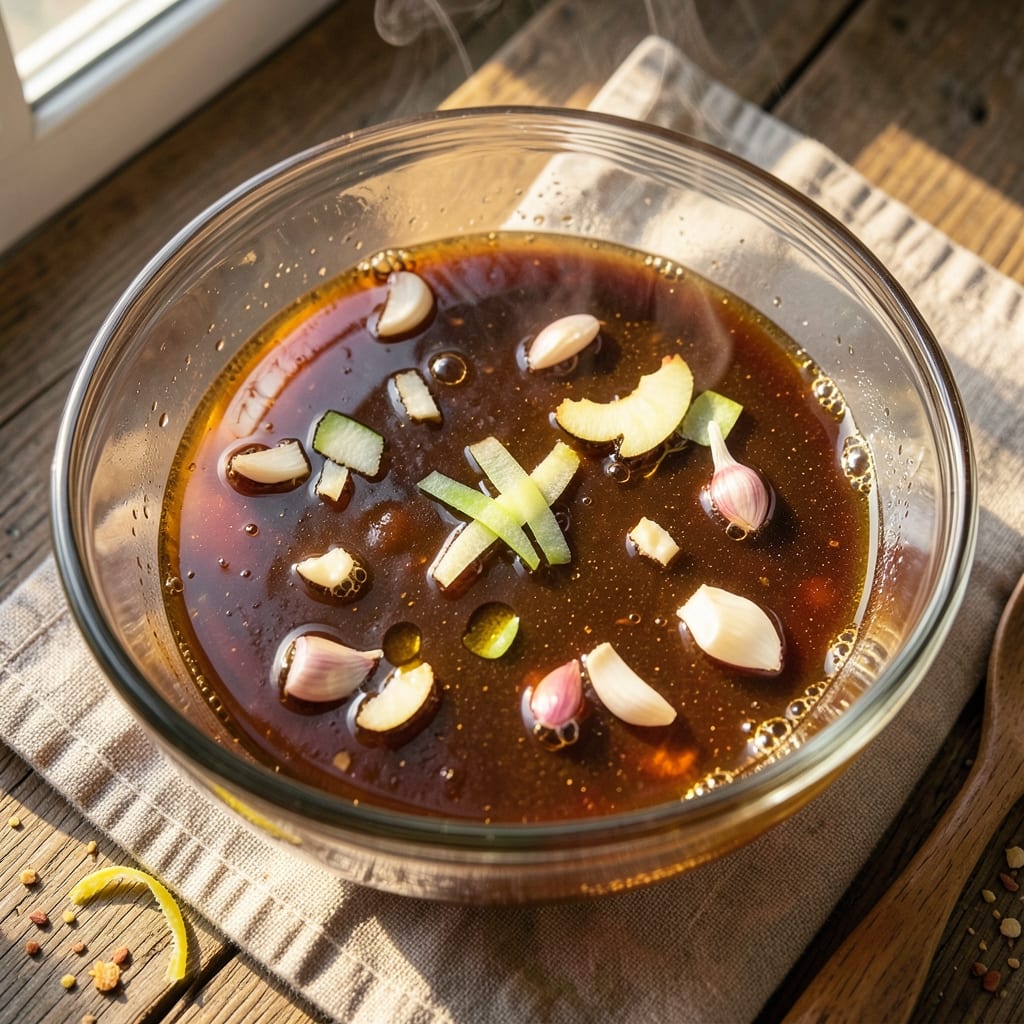
This 5-star steak marinade recipe transforms tough cuts into melt-in-your-mouth perfection with a bold umami crust and tender core—no fancy equipment required. I developed this after years of testing marinades that either overpowered the steak or failed to tenderize properly.
The secret lies in balancing acidity, enzymes, and aromatic oils to break down fibers while enhancing natural beef flavors.
The marinade combines soy sauce for umami depth, Worcestershire for complexity, and a touch of pineapple juice to tenderize without over-acidifying. Garlic, ginger, and smoked paprika add layers of flavor, while olive oil ensures the crust sears beautifully on the grill or skillet.
This blend works equally well for ribeye, sirloin, or flank steak, delivering restaurant-quality results at home.
Simply mix the ingredients and let the steak soak for at least 4 hours (overnight for tougher cuts) to guarantee maximum tenderness. The marinade doesn’t just flavor—it transforms texture, creating a caramelized crust that locks in juices while keeping the interior succulent.
Trust me, this is the marinade that’ll have your guests asking for the recipe.
Use it for grilled steaks, pan-seared cuts, or even as a quick pre-cook marinade before finishing with a high-heat sear. The versatility makes it a staple in any kitchen, and the bold flavors stand up to bold cuts. Let’s get started—your next steak dinner is about to become legendary.
Ingredients for 5 star steak marinade
Nine bold flavors that turn steak into a restaurant-worthy masterpiece—no fancy gear needed.
| Ingredient | Amount | Notes |
|---|---|---|
| Soy Sauce 🥢 | ½ cup | High-quality, reduced-sodium preferred |
| Worcestershire Sauce 🍶 | ¼ cup | Lea & Perrins brand recommended |
| Pineapple Juice 🍍 | ½ cup | Freshly squeezed for best results |
| Extra-Virgin Olive Oil 🫒 | ½ cup | Fruity, peppery variety preferred |
| Garlic Cloves 🧄 | 6 cloves | Freshly minced, skin-on for flavor |
| Fresh Ginger 🌿 | 2 tbsp | Finely grated, skin-on |
| Smoked Paprika 🌶️ | 2 tbsp | High-quality, not sweet paprika |
| Brown Sugar 🍚 | 2 tbsp | Light or dark, packed tightly |
| Black Peppercorns 🌶️ | 1 tsp | Freshly cracked, coarse grind |
| Kosher Salt 🧂 | 1 ½ tsp | Diamond Crystal preferred |
The soy sauce and Worcestershire are the flavor anchors here. Lea & Perrins Worcestershire is a must—it’s got that perfect balance of tang and umami. For the soy, Kikkoman or Gold Peak are solid choices, but avoid the super-low-sodium versions—they lack depth. Pineapple juice might seem odd, but it tenderizes without over-acidifying (unlike lemon or vinegar). Freshly squeezed is ideal, but the canned kind works in a pinch. The olive oil? Don’t skimp—California Extra Virgin or Colavita brands add that fruity punch that carries through the sear. I always grab a whole head of garlic and ginger at Whole Foods—the fresher, the better. Smoked paprika should be Spanish or Hungarian style (not sweet)—look for it in the international aisle if your store has one.
No Worcestershire? Fish sauce plus a pinch of sugar mimics that umami punch, though it’s not identical. Running out of pineapple juice? Mango nectar or even peach juice work—just add a splash of vinegar to balance. The brown sugar can be swapped for honey or maple syrup, but it’ll taste slightly different. Fresh ginger and garlic non-negotiable here—dried versions just don’t cut it. No fresh garlic? Garlic powder at half the amount is better than nothing, but you’ll notice the difference. The black pepper should be freshly cracked—pre-ground loses its kick. Salt is last in the mix, so taste as you go—adjust if your steak is extra lean or thick-cut.
This marinade keeps for up to 2 weeks in the fridge, sealed tight. I double the batch and store it in glass jars—plastic can absorb odors. For maximum tenderness, marinate steaks for at least 4 hours, but overnight is best for tougher cuts. The flavors meld beautifully, so don’t rush it. If you’ve got leftovers, freeze them in ice cube trays—perfect for quick steak nights later. Pro tip: Let the steak come to room temp before marinating for even penetration.
Why You’ll Love This Recipe
- Pantry Magic: The ingredients are things I already have—no fancy shopping required. That pineapple juice? It tenderizes while adding a bright sweetness that cuts through the richness of the steak.
- Sweet-Savory Bomb: The soy and Worcestershire give it that umami punch, but the pineapple juice? It’s the secret weapon—caramelizes beautifully when seared, leaving you with a sticky, glaze-like finish that’s dangerously addictive.
- Weeknight to Weekend: Marinate a few hours for dinner, or let it sit overnight for a weekend cookout. Works just as well on grilled strips for tacos or a single thick cut for date night—no rules, just results.
- Leftovers That Don’t Suck: The marinade doubles as a sauce if you don’t use it all. Strain it, reduce it, and drizzle it over rice or noodles—suddenly, your fridge becomes a flavor goldmine without extra effort.
Step-by-step instructions for 5 star steak marinade
This marinade transforms tough cuts into melt-in-your-mouth steaks with a caramelized crust.
Combine the Wet Ingredients
In a medium bowl, whisk together the 0.5 cup soy sauce, 0.25 cup Worcestershire sauce, and 0.5 cup pineapple juice until fully blended. The pineapple juice contains natural enzymes that tenderize the meat while adding a subtle sweetness. Don’t rush this step—let the flavors meld for 2-3 minutes so the soy sauce’s umami and Worcestershire’s depth develop properly.
Next, pour in the 0.5 cup extra-virgin olive oil while continuing to whisk. The oil carries the marinade’s flavors deep into the meat fibers. If you’re using a fruity, peppery olive oil, you’ll notice a slight tang that pairs beautifully with the bold flavors. Let the mixture sit for 5 minutes to allow the oil to emulsify with the other ingredients.
Add Aromatics and Sweetener
Peel and finely mince the 6 cloves garlic—leave the skins on for extra flavor if you prefer, but I like to remove them for a cleaner texture. Add the garlic to the bowl along with the 2 tbsp freshly grated ginger (skin-on for maximum zing). Stir well to distribute these potent aromatics evenly. The ginger’s heat and the garlic’s sharpness will create a flavor bridge for the other ingredients.
Sprinkle in the 2 tbsp smoked paprika and 2 tbsp brown sugar, then whisk until the sugar dissolves completely. The smoked paprika adds depth and a subtle charred note, while the brown sugar caramelizes during cooking, creating that coveted crust. If you’re using light brown sugar, it’ll dissolve more easily than dark, but either works well here.
Season and Rest the Marinade
Crack the 1 tsp black peppercorns using a mortar and pestle or the flat side of a chef’s knife—you want a coarse grind for texture. Add them to the bowl along with the 1.5 tsp kosher salt, then give everything a final stir. Taste the marinade before proceeding; you should detect layers of umami, sweetness, and a hint of spice. Adjust the salt if needed—this is your flavor baseline.
Transfer the marinade to an airtight container and let it rest at room temperature for at least 30 minutes before using. This resting period allows the flavors to fully integrate, ensuring every bite of your steak carries the marinade’s complexity. If you can wait longer, up to 4 hours, the marinade will develop even deeper flavor, though I wouldn’t recommend marinating for more than that—you want to tenderize, not turn the meat mushy.
Marinate the Steak
Pat your steak dry with paper towels—this step is non-negotiable for a good sear. Place the steak in a shallow dish or zip-top bag and pour the marinade over it, ensuring it coats all surfaces evenly. For even coverage, I like to use a zip-top bag and gently massage the marinade into the meat, especially if you’re working with thicker cuts like ribeye or New York strip.
Marinate for 4-12 hours in the refrigerator, turning the steak occasionally for even penetration. The acidity in the pineapple juice and soy sauce will begin breaking down the meat fibers almost immediately, but the real magic happens during the longer marinating time. For the best results, I recommend 8 hours—this gives the marinade enough time to work its tenderness magic without overdoing it.
Pro Tips For Making 5 Star Steak Marinade
- Blend Garlic First: Mince the garlic cloves before adding them to the marinade—no need for a food processor, just a sharp knife and a few firm chops. I used to crush them whole, thinking it’d be fine, but the flavor stays uneven and some cloves never break down. A quick 30-second prep saves you from chewing on undercooked garlic later.
- Reduce Pineapple Juice: Simmer the pineapple juice for 3–4 minutes before mixing it in—this concentrates the sweetness and cuts the wateriness that can dilute your marinade. I learned this the hard way after marinating a steak that tasted more like a sad cocktail than a flavor bomb.
- Don’t Overmix Soy: Stir the soy sauce just until combined—no need to blend it into oblivion. Overworking it releases bitterness, and this marinade relies on that deep umami without turning harsh. A quick swirl with a fork is all it takes.
- Marinate 2–4 Hours Max: Keep the steak in the fridge for no longer than 4 hours—any more, and the acid from the pineapple starts breaking down the meat’s surface, turning it mushy. I once left mine overnight, and the texture was ruined, even though the flavor was still there. Timing matters more than you’d think.
Essential equipment for this recipe
Marinating Essentials
Start with a large glass bowl—glass preserves flavors better than plastic and won’t absorb marinade odors. I use a 16×12-inch Pyrex baking dish for steaks up to 2 inches thick, as it gives enough surface area for even coating.
For thinner cuts like flank steak, a shallow ceramic dish works perfectly—just ensure the marinade covers all sides completely. 🥩
Precision Tools
Invest in a high-quality whisk (like the OXO Good Grips) for emulsifying the oil and liquids smoothly. For measuring, a liquid measuring cup with clear markings ensures accuracy—especially for the 0.5 cup pineapple juice and 0.5 cup olive oil.
A microplane for ginger and garlic is a game-changer; it creates fine, even grates that dissolve into the marinade without clumping. 🧄
Temperature Control
Use a meat thermometer (I swear by the ThermoWorks Smoke) to monitor steak temps during and after marinating. For tough cuts like ribeye or flank steak, keep them at 35-40°F in the fridge while marinating.
If your kitchen runs warm, nestle the dish in a larger bowl of ice water to maintain consistent temps. Never marinate at room temperature—it speeds up bacterial growth and ruins the texture. ❄️
Storage Containers
For leftovers, store marinade in amber glass jars—they block light and preserve flavors better than plastic. I keep a quart-sized jar in my fridge for quick steak nights.
If freezing, use silicone ice cube trays for portion control—just pop out a cube and thaw it overnight in the fridge before using. Label everything with dates; this marinade stays fresh for 2 weeks refrigerated or 3 months frozen. 📅
Searing Gear
No marinade is complete without a proper sear. A cast-iron skillet (like Lodge 10.25-inch) is my go-to for pan-seared steaks—it retains heat perfectly and develops that Maillard crust.
For grilling, a charcoal chimney starter (I use the Weber Original) gets coals to 350°F in 15 minutes, ideal for medium-rare doneness. Always preheat your cookware—cold surfaces steal heat from the steak, ruining the sear. 🔥
Nutrition facts
Frequently asked questions
Can I use this marinade on chicken or pork instead of steak?
The bold umami flavors work beautifully on chicken thighs or pork chops, but adjust marinating time to 2-4 hours max—acidic ingredients like pineapple juice can over-tenderize poultry. For chicken breasts, reduce time to 1 hour to avoid toughness.
What’s the best way to remove the marinade before cooking?
Pat the steak dry with paper towels first, then wipe off excess marinade with a clean towel. For extra crispiness, let it sit uncovered in the fridge for 10-15 minutes to dry the surface before searing. Never rinse—this removes flavor! The residual marinade will caramelize beautifully.
Can I make this marinade without Worcestershire sauce?
Yes! Replace it with 1 tbsp fish sauce + 1 tsp sugar for umami depth, or use 2 tbsp soy sauce + 1 tsp molasses. The marinade will still deliver rich flavor—just slightly different complexity. For vegetarian versions, swap Worcestershire with 1 tbsp mushroom sauce + 1 tsp soy sauce.
Why does my steak turn out tough after marinating?
Over-marinating (beyond 12 hours) breaks down too many fibers, or using acidic ingredients like lemon/vinegar instead of pineapple juice can make meat mushy. Always pat dry before cooking, and use medium-high heat for a proper sear—this locks in juices. For tough cuts, try pounding to even thickness before marinating.
How do I store leftover marinade?
Transfer to an airtight glass jar and refrigerate for up to 2 weeks. For longer storage, freeze in ice cube trays—thaw overnight in the fridge before using. Never freeze in plastic, as it absorbs odors. Label with dates! The flavors actually improve slightly after 3-5 days of resting.
