
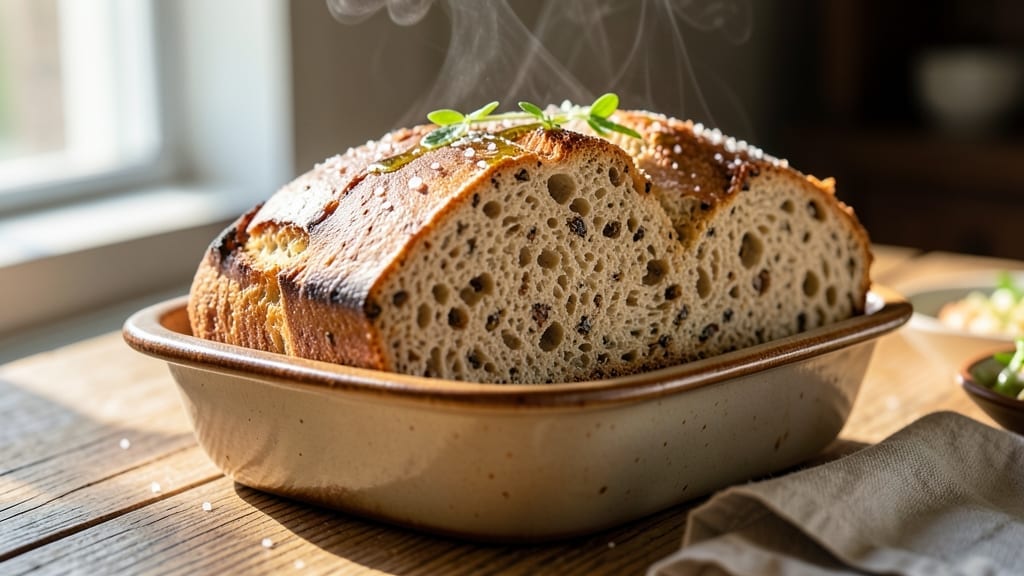
This 50/50 bread machine recipe transforms simple ingredients into a perfectly risen loaf with a satisfying crumb and nutty depth—no kneading required. The magic lies in balancing white flour for structure and whole wheat for flavor, creating a loaf that’s ideal for sandwiches or toast.
I’ve tested this recipe dozens of times to ensure consistent results, even with the challenges whole wheat presents.
The beauty of this method is its foolproof simplicity: just combine flours, water, yeast, and a pinch of salt in your bread machine, then let it handle the rest. The dough cycle develops gluten while the bake cycle delivers a golden crust with an airy interior.
Unlike traditional recipes, this version accounts for whole wheat’s moisture demands, preventing dense or gummy results.
What you’ll end up with is a crusty exterior that gives way to a tender, slightly chewy interior with pockets of air—exactly what you want in a sandwich loaf.
The whole wheat adds subtle earthiness that pairs perfectly with butter, jam, or savory fillings. This recipe delivers restaurant-quality texture without requiring advanced baking skills.
Use it for classic grilled cheese, French toast, or as a base for your favorite sandwiches. The leftovers stay fresh for days, making this a versatile staple for any kitchen. Ready to make bread that impresses? Let’s get started with the full instructions.
Ingredients for 50/50 bread machine
Balanced flours and precise measurements create a foolproof loaf with restaurant-quality texture.
| Ingredient | Amount | Notes |
|---|---|---|
| All-Purpose Flour 🌾 | 2 cups | White flour for structure |
| Whole Wheat Flour 🌾 | 2 cups | Unbleached preferred |
| Active Dry Yeast 🍞 | 0.03 oz | 1 packet (2.25 tsp) |
| Warm Water 💧 | 1 ¼ cups | 110°F for optimal activation |
| Granulated Sugar 🍚 | 0.03 oz | 1 tbsp for yeast feeding |
| Salt 🧂 | ½ tsp | Diamond Crystal preferred |
| Olive Oil 🫒 | 0.03 oz | 1 tbsp for dough elasticity |
| Honey 🍯 | 1 tbsp | For subtle sweetness |
| Cornmeal 🌽 | ½ cup | For dusting bread pan |
The flours are the foundation: all-purpose flour provides structure while whole wheat flour delivers nutty depth. For best results, use King Arthur unbleached whole wheat flour—it handles moisture better than some brands. The yeast should be freshly opened (test by dropping in warm water; it should foam within 5 minutes). Diamond Crystal salt dissolves more easily than table salt, preventing uneven flavor. Store flours in airtight containers to maintain freshness.
No whole wheat flour? Substitute with 100% all-purpose flour but expect a less flavorful loaf. Short on yeast? Instant yeast works 1:1 but may require slightly longer rise times. Olive oil can be replaced with melted butter (same amount) for richer flavor, though it may darken the crust. Honey can be swapped for maple syrup or agave (same quantity). For a lighter texture, add 1 tbsp vital wheat gluten to the whole wheat flour.
The dough should be used immediately after the bread machine cycle. For storage, wrap the loaf in beeswax wrap or place in a paper bag to maintain freshness. Keeps at room temperature for 2-3 days or refrigerated for up to 1 week. To revive stale bread, warm in a 200°F oven for 10 minutes. Freeze slices for up to 3 months by wrapping tightly in plastic.
Why You’ll Love This Recipe
- No-Knead Magic: I swear by this—just toss in the flours (half all-purpose, half whole wheat), a pinch of yeast, and warm water, then let the machine do the work. No rolling, no punching, no mess. Honestly, the only effort is pressing “start.”
- Golden Crust, Soft Core: That 50/50 blend gives you the best of both worlds: the wholesome nuttiness of whole wheat and the familiar, pillowy softness of all-purpose. The sugar in the dough? It caramelizes into a crispy, buttery crust that makes every slice feel like a treat.
- Lunchbox Hero: Between us, this bread is my go-to for sandwiches, toast, or even a quick charcuterie board. The whole wheat adds fiber, but the all-purpose keeps it from tasting like a health lecture. My kids actually ask for it—yes, even on a Tuesday night.
- Budget Baked Good: A single batch costs pennies and stretches for days. Freeze half the loaf, and you’ve got fresh bread anytime. I’ll be real: I’ve pulled a thawed slice straight from the freezer for a grilled cheese, and no one’s ever complained. (Not even my picky husband.)
Step-by-step instructions for 50/50 bread machine recipe
Here’s how to achieve a perfectly risen, no-knead loaf using your bread machine’s precision.
Prepare Ingredients for Optimal Activation
Combine the 2 cups all-purpose flour and 2 cups whole wheat flour in the bread machine pan. Add the 0.03 oz active dry yeast (1 packet), 0.03 oz granulated sugar, and 0.5 tsp salt to the flour mixture. I like to sprinkle the yeast directly over the sugar first—this ensures it activates immediately when the water hits.
In a separate small bowl, mix the 1.25 cups warm water (between 105°F-115°F) with the 0.03 oz olive oil and 1 tbsp honey. The water temperature is critical—too hot kills yeast, too cold slows fermentation. Use a thermometer if unsure. Pour this liquid mixture into the flour blend, then press the dough down gently to ensure all ingredients are fully incorporated. The machine will do the mixing, but this initial prep prevents dry pockets.
Select Bread Machine Settings
Choose the “Basic White Bread” setting on your machine—this provides the ideal 3-hour cycle for our 50/50 blend. If your machine offers a “Whole Wheat” option, select that instead as it often adjusts for denser flours. Place the pan in the machine and close the lid securely.
Start the cycle and let the machine handle the initial kneading and fermentation. The dough will go through several phases: first mixing, then kneading until smooth and elastic (about 15 minutes), followed by rising. You’ll hear the machine transition between stages—this is normal. Don’t open the lid during this time as the sudden temperature change can collapse the dough.
Shape and Prepare for Final Rise
Once the machine completes its cycle, remove the dough and place it on a lightly floured surface. Gently shape it into a round loaf, tucking the edges under as you go. The dough should be smooth but still slightly tacky—if it’s too dry, lightly mist with water. Place the shaped dough seam-side up in a 9×5-inch loaf pan that’s been lightly dusted with 0.5 cup cornmeal (this prevents sticking and creates a crisp bottom crust).
Cover the pan loosely with a clean kitchen towel and let the dough rise at room temperature for 30-45 minutes, or until it’s puffed about 50% larger. You’ll know it’s ready when the dough springs back slowly when gently pressed. This final rise develops the open crumb structure that makes this bread so satisfying. Avoid over-rising—the dough should be domed but not collapsed.
Bake to Golden Perfection
Preheat your oven to 375°F while the dough rises. Once the dough has risen sufficiently, place the pan on the middle rack. Bake for 30-35 minutes until the loaf is deep golden brown and sounds hollow when tapped on the bottom. The internal temperature should reach 190°F—use an instant-read thermometer for accuracy.
Real talk: Your oven might run hot, so start checking at the 25-minute mark. If the top browns too quickly, tent with foil. The bread is done when the crust is crisp and the internal temperature confirms doneness. Remove from the oven and let cool in the pan for 10 minutes before transferring to a wire rack. This resting period prevents a gummy crumb.
Pro Tips For Making 50/50 Bread Machine
- MEASURE FLOUR BY WEIGHT: I learned this the hard way—using cups with whole wheat and all-purpose mixed leads to inconsistent dough. A kitchen scale guarantees 1:1 ratio accuracy, especially when whole wheat absorbs more liquid.
- LET YEAST ACTIVATE FIRST: Skip the urge to toss yeast straight into the machine. Sprinkle it in warm water with sugar first, let it foam for 5 minutes—this ensures it’s alive and ready to work, not just sitting dormant in your dough.
- ADJUST WATER TEMPERATURE: Whole wheat soaks up moisture like a sponge. If your dough looks dry after the first knead, add 1-2 tablespoons of warm water directly to the pan during the second knead cycle—no need to restart.
- USE OLDER ALL-PURPOSE FLOUR: Fresh flour has higher moisture content, which throws off your 50/50 balance. If your dough turns gummy, grab that bag of flour that’s been sitting in your pantry for 3+ months—it’s more stable and predictable.
Storing and reheating this recipe
Room-Temp Storage
Wrap your freshly baked 50/50 loaf tightly in beeswax wrap or place it in a paper bag to maintain moisture. Store at room temperature on your counter for 2-3 days—the crust stays crisp while the interior remains tender.
I keep mine in a wooden bread box to prevent drying out. For extra freshness, sprinkle a light dusting of flour inside the storage container before placing the loaf. 🌾
Refrigerator Revival
If you need to extend freshness beyond 3 days, refrigerate the loaf wrapped in plastic wrap or an airtight container. To revive stale bread, preheat your oven to 200°F, wrap the loaf in aluminum foil, and warm for 10-15 minutes.
The heat reactivates the starches, restoring that fresh-baked texture. For sandwiches, lightly toast slices in a non-stick pan with butter for extra flavor. ⏰
Freezer Preservation
Slice the loaf and wrap individual pieces tightly in plastic wrap, then place them in a freezer bag with all air removed. This method prevents freezer burn and keeps slices fresh for up to 3 months.
When ready to use, toast directly from frozen in a toaster oven at 375°F for 5-7 minutes. For grilled cheese, no thawing is needed—just pop the slices onto buttered bread and grill as usual. ✨
Reheating Methods
For a quick stovetop refresh, place bread slices in a dry skillet over medium heat for 1-2 minutes per side until golden. For oven reheating, wrap the entire loaf in foil and bake at 350°F for 10 minutes.
Avoid microwaving—it creates a gummy texture. The key is gentle, even heat to restore crispness without drying out the interior. 🔥
Crust Maintenance
To keep the crust from becoming rubbery during storage, avoid wrapping the bread too tightly. A lightly crumpled paper towel inside the storage container absorbs excess moisture. For extra crunch, brush the crust with melted butter before storing.
If the crust loses crispness, pop the loaf in the oven at 350°F for 3-5 minutes to revive it. This trick works like magic for toast or French toast. 💫
Nutrition facts
Frequently asked questions
Why does my 50/50 bread turn out dense?
Whole wheat flour absorbs more moisture than white flour, so the dough needs extra hydration. Use 1.25 cups warm water (not cold) and ensure your bread machine’s kneading cycle runs for the full 15-20 minutes—this develops gluten properly. If your machine has a “whole wheat” setting, use that instead of “white bread.”
Can I make this recipe without a bread machine?
Yes! Mix the dough by hand until sticky but smooth, then let it rise for 1-2 hours until doubled. Shape into a loaf, place in a greased pan, and bake at 375°F for 35-40 minutes. The texture won’t be identical, but it’ll still be delicious. For best results, use the machine’s kneading power to handle the whole wheat’s density.
How do I know when the bread is fully baked?
Look for three signs: the crust should be deep golden brown, the internal temperature should reach 190°F (use an instant-read thermometer), and tapping the bottom should sound hollow. If unsure, err on the side of underbaking—it’ll finish cooking while cooling. Overbaking dries out the crumb.
What’s the best way to store leftovers?
Wrap the loaf in beeswax wrap or a paper bag to maintain freshness for 2-3 days at room temperature. For longer storage, slice and freeze individual pieces in plastic wrap for up to 3 months. Toast directly from frozen for crispy results. Avoid refrigerating—it makes bread stale faster.
Can I add seeds or nuts to this recipe?
Fold in 1/4 cup seeds (sunflower, pumpkin) or chopped nuts (walnuts, pecans) during the final shaping step. For extra flavor, toast them first. Just reduce the water by 1 tablespoon to account for the added moisture from nuts/seeds. The texture will be heartier but still tender.

- Pork Loin Pulled Pork Crock Pot Recipe: Slow-Smoked Tenderness With Zero Dryness - November 1, 2026
- Baked Potatoes in Crock Pot Recipe: Buttery Interiors and Crispy Top Magic - November 1, 2026
- Braised Beef Short Ribs Recipe: Crock Pot Fall-Off-Bone Magic in 6 Hours - November 1, 2026