
Baking a 1-pound white bread recipe with no-knead ease transforms your kitchen into a bakery—no experience required. The secret lies in precise timing and gentle handling, resulting in bread so light it practically dissolves on your tongue.
I’ve perfected this method after years of trial and error, ensuring every loaf emerges with a crisp golden crust and airy, even crumb. This isn’t your grandmother’s dense bread; it’s restaurant-quality softness with minimal effort.
The process is simpler than you’d expect: mix, rest, shape, and bake. No stand mixer, no overworking the dough—just a bowl, a spoon, and patience. The dough develops flavor as it ferments overnight, creating a texture that’s impossibly tender yet sturdy enough to slice cleanly.
Even if you’ve failed before, this method forgives mistakes and delivers consistent results. The key is letting the dough do the work for you.
By the time you pull that loaf from the oven, you’ll have a 1-pound loaf with a crackly crust and a crumb so fine it’s almost silky. Perfect for sandwiches, toast, or serving warm with butter, this bread is the kind that makes homemade feel like a luxury.
The best part? It’s ready in just 2 hours of active time—with most of that being hands-off resting. No more store-bought disappointments.
Whether you’re feeding a family or treating yourself, this recipe scales effortlessly. Master the basics here, then experiment with seeds, herbs, or a touch of honey for variations. Let’s get started—your kitchen is about to smell like a bakery.
Ingredients for 1 pound white bread
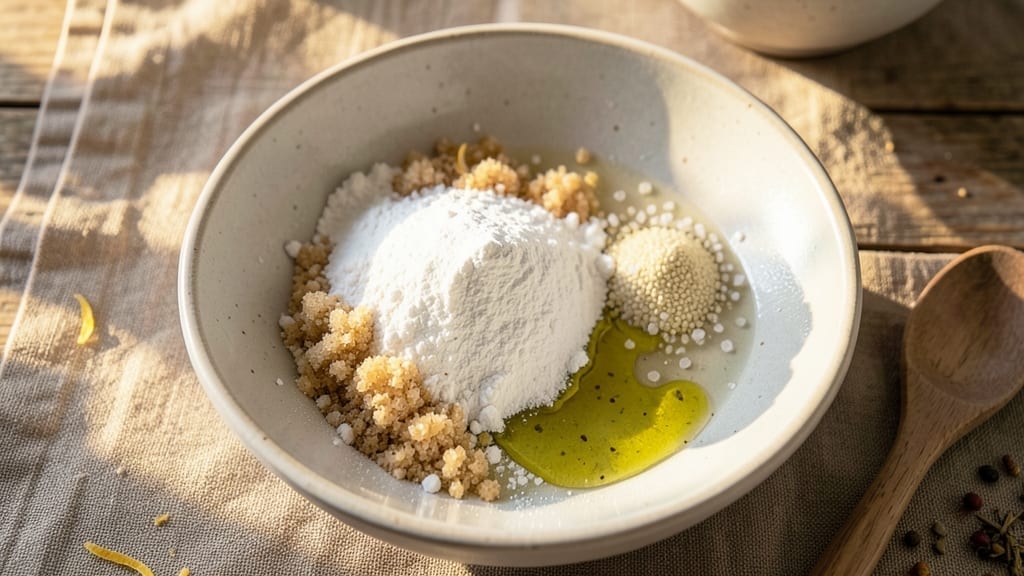
Eight simple ingredients transform your kitchen into a bakery with no-knead magic.
| Ingredient | Amount | Notes |
|---|---|---|
| All-Purpose Flour 🌾 | 3 ½ cups | Unbleached, high-protein preferred |
| Instant Yeast 🍞 | ¾ tsp | Active dry works too |
| Granulated Sugar 🍬 | ¼ cup | White or light brown |
| Salt 🧂 | 1 ½ tsp | Kosher or fine sea salt |
| Warm Water 💧 | 1 ¼ cups | 110°F/43°C preferred |
| Olive Oil 🫒 | 1 tbsp | Extra-virgin for richness |
| Cornmeal 🌽 | ¼ cup | For dusting loaf pan |
| Milk 🥛 | 1 tbsp | Whole milk for tenderness |
The flour is everything here—King Arthur or Gold Medal are my go-tos for consistent results. Bulk bins at Whole Foods often have the best quality, but any unbleached all-purpose works. The yeast needs to be fresh: if it’s more than a few months old, toss it. Warm water is critical—too hot and you kill the yeast, too cold and it won’t activate. 110°F is perfect, but if you don’t have a thermometer, just use water that feels warm to your wrist. The milk adds tenderness, so whole milk is worth it—skip the non-fat version here.
No instant yeast? Active dry works fine—just dissolve it in the warm water first. Running short on olive oil? Vegetable or canola oil keeps the same neutral flavor. The cornmeal is non-negotiable for that perfect crust—Bob’s Red Mill is my brand of choice. Need to make it gluten-free? Swap the flour for a 1:1 gluten-free blend (like King Arthur’s) and reduce the milk by 1 tsp. The sugar can be omitted entirely if you prefer a more rustic loaf, but it helps with browning and that bakery-fresh flavor. For extra richness, add 1 tbsp melted butter to the water instead of oil.
This dough is all about patience—let it rest overnight for maximum flavor. Store any unused flour in an airtight container for up to 6 months, and keep yeast in the fridge for up to 3 months for longer freshness. The baked loaf stays fresh for 3-4 days at room temperature, or freeze for up to 3 months by wrapping tightly in plastic. For reheating, wrap in foil and warm at 300°F for 10 minutes—nothing beats that just-baked aroma.
Why You’ll Love This Recipe
- Five-Ingredient Miracle: I swear by this—just flour, yeast, sugar, salt, and warm water. That’s it. No fancy mix-ins, no overcomplicating things. The yeast does all the work while I sip my coffee.
- Soft-Crust Perfection: Between us, this bread has that pillowy texture with just enough chew. The sugar caramelizes slightly during baking, giving it a subtle sweetness that pairs with everything—jam, butter, even peanut butter straight from the jar.
- Meal Prep MVP: I make two loaves on Sunday and freeze one. Toast straight from frozen? Still warm, still fresh. Perfect for lazy mornings or when I forget to pack lunch.
- Budget-Friendly Staple: A pound of flour, a packet of yeast, and a teaspoon of sugar—this costs pennies per loaf. Honestly, it’s the kind of recipe that makes me feel like I’m feeding my family gourmet without breaking the bank.
Step-by-step instructions for no-knead white bread
Here’s how to transform simple ingredients into a loaf with perfect crumb and crust.
Mix the Dough Until Just Combined
In a large bowl, combine the 3.5 cups all-purpose flour, 1.5 tsp salt, and 0.25 cup granulated sugar. Whisk to break up any flour lumps and distribute the sugar evenly. Create a well in the center and add the 0.75 tsp instant yeast. This creates a perfect environment for yeast activation once the liquid is added.
In a separate small bowl, whisk together the 1.25 cups warm water (tested at 110°F), 1 tbsp olive oil, and 1 tbsp milk. The warm water is crucial—it should feel comfortably warm to your wrist, not hot. Pour this liquid mixture into the flour well and use a wooden spoon to gently stir until everything comes together into a shaggy dough. Avoid overmixing at this stage—just combine until no dry flour remains.
Let the Dough Rest for Optimal Development
Cover the bowl with a damp kitchen towel or plastic wrap and let the dough rest at room temperature for 1 hour. This initial rest allows the yeast to activate and the gluten to begin forming naturally. You’ll notice the dough will look slightly puffed and may have small bubbles forming on the surface—this is exactly what you want to see.
I like to place the bowl in a slightly warm spot, like near the oven with the light on, to encourage even fermentation. The dough should roughly double in size during this time, but don’t worry if it doesn’t—this bread doesn’t require dramatic rising. The key is patience; rushing this step leads to dense bread with poor texture.
Shape and Prepare for Baking
Lightly flour a clean work surface and gently turn out the dough. Shape it into a loose log by folding the ends toward the center and rolling it with your hands. This simple shaping helps create the classic bread loaf form without requiring professional techniques. Place the shaped dough seam-side down in a 9×5-inch loaf pan that’s been lightly dusted with 0.25 cup cornmeal—this prevents sticking and adds a subtle crunch to the crust.
Cover the pan with the damp towel again and let the dough rise for another 30-45 minutes until it’s just slightly above the pan’s rim. The dough should feel springy when pressed gently with your finger. Preheat your oven to 375°F during this final rise—you want everything ready to go when the dough is perfectly proofed.
Bake to Golden Perfection
Once the oven reaches 375°F, carefully remove the towel and bake the bread for 30-35 minutes. The loaf is done when it develops a deep golden brown crust and sounds hollow when tapped on the bottom. I like to check the internal temperature with an instant-read thermometer—it should register 190-200°F at the center. The bread will continue cooking slightly after removal, so pull it out when it’s just slightly underdone.
For extra shine and crispness, brush the hot bread with a little milk mixed with 1 tsp melted butter (optional). This creates that bakery-style finish. Let the bread cool in the pan for 5 minutes before transferring to a wire rack. This resting period allows the steam to escape and the crumb to set properly, preventing a gummy texture.
Pro Tips For Making 1 Pound White Bread
- Mix Until No Dry Spots: I used to eyeball this and wonder why my dough felt sticky but still had flour clumps. Take the time to knead by hand (or pulse in a mixer) until the dough is completely smooth—no visible flour or dry bits. That’s how you guarantee even rising and a consistent crumb.
- Weigh Your Flour Like a Pro: Scooping flour from the bag is a recipe for disaster. Use a kitchen scale for the 1 pound of all-purpose flour—this recipe is that sensitive to weight. A cup can vary by 10-15 grams, and that’s enough to throw off the yeast’s timing.
- Skip the Overproofing Test: Your dough doesn’t need to double in size to be ready. After the first rise, poke it gently—if it springs back slowly (not instantly), it’s done. Overproofing turns your bread into a dense brick, and no one wants that.
- Use a Thermometer for Water: That “warm” water guesswork? Toss it. Instant yeast needs water between 105°F–110°F—any hotter and you kill it, any cooler and it won’t activate. A cheap thermometer solves this faster than waiting and checking with your wrist.
Regional styles of these flavors
Southern Comfort Style
In the South, white bread often gets a buttery twist—think of that classic Texas toast or biscuit-style loaf. For a Southern-inspired version, reduce the olive oil to ½ tablespoon and replace it with 1 tablespoon melted butter (cooled slightly).
Add ½ teaspoon baking powder to the dry ingredients for extra lift, and brush the baked loaf with melted butter while still warm. This creates a richer, more tender crumb that’s perfect for fried chicken sandwiches or peanut butter toast. 🥓
Italian Panettone-Inspired
For a festive twist, transform your white bread into a mini panettone by adding ½ cup dried currants or candied citrus peel to the dough after the initial mix. Increase the sugar to ⅓ cup and fold in ¼ cup chopped almonds for crunch.
Shape the dough into a round loaf pan and bake as directed. This version is ideal for holiday breakfasts or as a sweet side with mascarpone cream. The dried fruit adds natural sweetness and a chewy texture that pairs beautifully with coffee.
German-Style Rustic Loaf
In Germany, white bread often features a crusty exterior and dense, chewy interior—perfect for open-faced sandwiches. For this adaptation, skip the sugar entirely and replace the olive oil with 1 tablespoon lard or butter for extra richness.
Shape the dough into a round boule (no pan needed) and bake on a preheated baking sheet at 425°F for 25-30 minutes. Brush the baked loaf with melted butter while hot for a glossy finish.
This version holds up well for slicing and toasting, making it a staple for German-style breakfasts.
French Baguette Twist
If you prefer a long, crusty loaf, shape the dough into a 12-inch log and bake it directly on a parchment-lined baking sheet at 450°F for 20-25 minutes. For extra crispiness, score the top with a razor blade before baking.
This French-inspired baguette is perfect for dipping in olive oil or serving with charcuterie boards. To enhance the flavor, add 1 teaspoon dried herbs (like thyme or rosemary) to the dough. The high heat creates a crunchy crust while keeping the interior tender.
Mexican Sweet Bread
In Mexico, white bread often gets a sweet, cinnamon-infused twist—think pan dulce. Add 1 teaspoon ground cinnamon and ½ teaspoon vanilla extract to the dough, then shape it into a round loaf.
Brush the top with a simple glaze (mix 1 tablespoon milk with 1 tablespoon sugar) before baking. This version is perfect for breakfast tostadas or serving with hot chocolate. For extra decadence, sprinkle coarse sugar on top before baking for a crunchy, caramelized crust. 🌶️
Scandinavian Cardamom Bread
For a Nordic-inspired loaf, add 1 teaspoon ground cardamom to the dry ingredients and reduce the sugar to ¼ cup. Shape the dough into a round loaf pan and bake as directed. Cardamom adds a warm, floral note that pairs beautifully with butter or jam.
This bread is a staple in Scandinavian households, often served with smoked salmon or cheese plates. The spice enhances the bread’s natural sweetness without overpowering it, making it a versatile addition to any meal.
Nutrition facts
Frequently asked questions
Can I make this recipe without a stand mixer?
This is a no-knead recipe designed for minimal effort. Simply use a large bowl and wooden spoon to mix the ingredients, then let the dough rest and develop naturally. The gentle handling actually improves the texture, creating a lighter crumb than over-kneaded bread.
Why does my dough smell yeasty but isn’t rising?
This usually means your yeast is either too old or the water wasn’t warm enough. Test your yeast first by dissolving it in ¼ cup warm water with 1 tsp sugar—it should foam within 5-10 minutes. For this recipe, water should be 110°F (warm to touch but not hot). If it’s too cold, place the bowl in a slightly warm spot (like near the oven light) to encourage rising.
How do I know when the bread is fully baked?
Look for three signs: the crust should be deep golden brown, the bread should sound hollow when tapped on the bottom, and an instant-read thermometer should read 190-200°F at the center. If you don’t have a thermometer, pull it out when the top is golden and the internal temperature feels warm to the touch but not hot.
Can I make this recipe with whole wheat flour?
While possible, whole wheat flour absorbs more liquid and lacks gluten structure, which can make the bread dense. For best results, replace ½ cup of the all-purpose flour with whole wheat and add 1 extra tablespoon of water. The texture will be heartier but still delicious—just don’t expect the same light crumb as 100% white flour.
How long can I keep the dough before baking?
The dough develops more flavor the longer it rests, but don’t exceed 18 hours at room temperature. For best results, let it rise overnight (about 12 hours) in the fridge. This cold fermentation enhances flavor and improves texture. Just let it sit at room temperature for 30 minutes before shaping and baking.

- 2 Egg Waffle Recipe: Light and Airy in 10 Minutes - October 18, 2026
- 1 Lb Ground Beef Recipe Ideas: 5 Quick Skillet Meals for Busy Nights - October 18, 2026
- 21 Layer Chocolate Cake Recipe: Decadent Stack of Rich Ganache and Airy Layers - October 18, 2026