
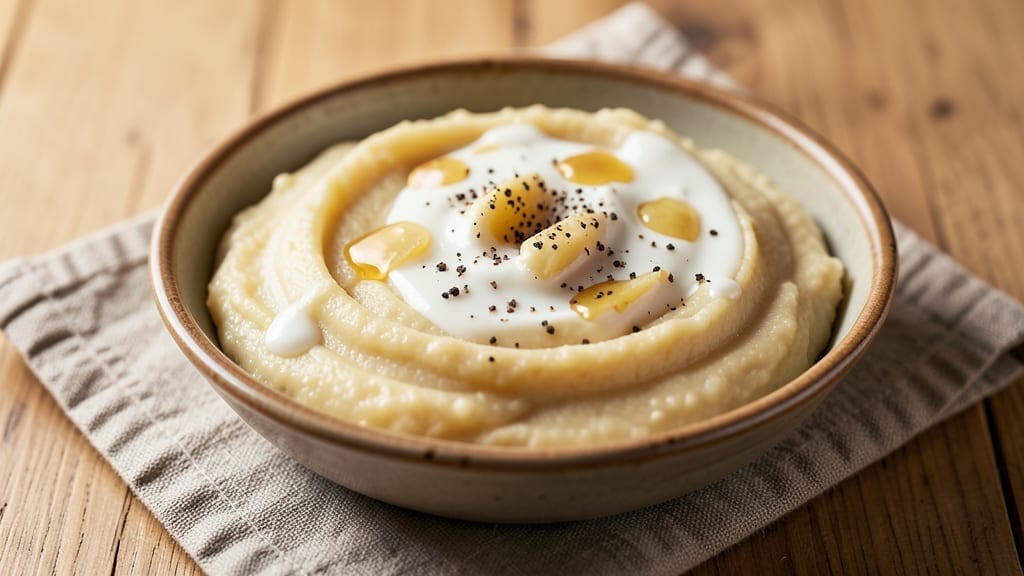
Mastering 50/50 mashed potatoes means achieving that perfect balance of fluffy potatoes and rich dairy—no lumps, no grittiness, just ultra-creamy perfection every time.
I spent years perfecting this technique after burning through three batches that turned out either gluey or grainy, and now I’m sharing the foolproof method that delivers restaurant-quality results at home.
The secret lies in precise ratios, proper cooking times, and a specific mashing technique that transforms starchy potatoes into velvety clouds.
This recipe starts with equal parts potatoes and dairy (hence the name), where waxy potatoes like Yukon Golds or Russets create the ideal texture when boiled until tender but still holding their shape. The dairy—whole milk, heavy cream, or butter—adds richness while keeping the mashed potatoes light, never heavy.
What sets this apart is the two-stage mashing process: first breaking down the potatoes roughly, then incorporating the warm dairy gradually to create a silky, lump-free finish.
By the time you’re done, you’ll have mashed potatoes that are impossibly smooth, with just the right amount of body to hold their shape on a plate.
The flavor is pure comfort—creamy, buttery, and perfectly seasoned with salt and pepper—without any of the common pitfalls that turn mashed potatoes into a mushy disaster. This is the kind of side dish that makes dinner feel like a celebration, no matter what’s on the main plate.
The beauty of this method is its versatility. You can keep it classic with just butter and cream, or elevate it with roasted garlic, fresh herbs, or even a touch of sour cream for tang.
Leftovers reheat beautifully, making this the ultimate make-ahead side for holiday dinners or busy weeknights. Let’s get started—your taste buds will thank you.
Ingredients for 50/50 mashed potatoes
Six simple ingredients, one perfect balance—creamy, buttery, and lump-free every time.
| Ingredient | Amount | Notes |
|---|---|---|
| Yukon Gold Potatoes 🥔 | 3 lb | Peeled, cut into even chunks |
| Heavy Cream 🥛 | 1 ½ cups | Full-fat for best texture |
| Unsalted Butter 🧈 | ½ cup | Cold, cubed for even melting |
| Whole Milk 🥛 | ½ cup | Warmed for smooth blending |
| Salt 🧂 | 1 ½ tsp | Kosher or sea salt preferred |
| Freshly Ground Black Pepper 🌶️ | ½ tsp | Freshly cracked for best flavor |
| Roasted Garlic Cloves 🧄 | 2 whole | Optional, for depth of flavor |
| Fresh Chives 🌿 | 2 tbsp | Chopped, for garnish |
The potatoes are everything here. Yukon Golds are my go-to—they’re waxy enough to hold shape but creamy when cooked. Russets work too, but they can get gummy if overcooked. Peel them first (no need to dry them), then cut into even 1-inch chunks so they cook uniformly. I always boil mine in salted water—about 1 tbsp salt for the pot—and use a pinch of baking soda to keep them from turning gluey. The key is cooking them until fork-tender but still holding their shape—about 15 minutes. Don’t skip the baking soda; it’s a game-changer for texture.
For the dairy, full-fat is non-negotiable—low-fat or skim will give you that dreaded grainy texture. The butter should be cold when you add it (cube it and keep it in the fridge) so it melts gradually into the warm potatoes. Heavy cream and milk should be warmed separately—just heat them in the microwave for 30 seconds or until steaming. No roasted garlic? Fresh minced garlic works, but roasting brings out a sweeter, deeper flavor. And if you’re short on chives, parsley or green onion will do in a pinch. The secret to the creamy texture is adding the dairy in stages—never all at once.
Leftovers are a win here. Store in an airtight container and reheat with a splash of milk or water to loosen them up. They’ll keep for 4-5 days in the fridge, and you can even freeze them for up to 3 months. Just thaw overnight in the fridge and reheat gently. Pro tip: if you’re making this ahead for a crowd, pre-peel and store the potatoes in cold water in the fridge for up to 24 hours before cooking. And always taste as you go—seasoning builds up, so start with less salt and adjust.
Why You’ll Love This Recipe
- No-Fuss Ratio: I swear by this 50/50 split—half Yukon Golds, half dairy—because it’s the magic number. No measuring cups, no guesswork; just eyeball it. The cream and milk blend so smoothly, you’ll wonder why you ever strained potatoes.
- Velvet Texture Obsession: That buttery richness from the heavy cream? It’s next-level. The potatoes stay fluffy while the dairy adds this silky, almost luxurious mouthfeel. Honestly, it’s the kind of mashed potatoes that make you slow down and savor every bite.
- Game for Any Meal: Weeknight dinners? Sunday suppers? Potlucks where you’re the hero? This recipe handles it all. Pair it with roasted chicken for a classic, or pile it onto a burger for a decadent twist. (Yes, even on a Tuesday night.)
- Leftovers That Don’t Suck: Unlike some mashed potatoes that turn gluey, this mix reheats like a dream—just warm with a splash of milk. Plus, it’s budget-friendly; Yukon Golds are a splurge, but the rest? Pantry staples. I’ve fed a family of four for days with one big batch.
Step-by-step instructions for ultra-creamy 50/50 mashed potatoes
Here’s how to make the fluffiest, lump-free mashed potatoes you’ve ever tasted.
Boil the Potatoes Until Fork-Tender
Place the 3 lb Yukon Gold Potatoes (peeled and cut into even chunks) in a large pot and cover with cold water by about 2 inches. Add 1.5 tsp Salt and bring to a rolling boil over high heat. Once boiling, reduce to a gentle simmer and cook for 15-20 minutes until a knife slides in easily with just a little resistance.
I like to test the potatoes by piercing them with a knife—if it goes in like butter, they’re ready. Drain the potatoes thoroughly in a colander and return them to the pot. This step ensures the potatoes are fully cooked but not mushy, which is key for that perfect texture.
Mash the Potatoes Until Smooth
Using a potato masher or ricer, mash the hot potatoes until they’re completely smooth. I prefer a ricer because it breaks down the potatoes into fine, silky strands without creating lumps. If you’re using a masher, press down firmly and work in small batches to avoid overworking the potatoes.
Don’t worry if the potatoes look a little dry at this point—that’s normal. The cream and butter will come next to create that signature creamy texture. The goal here is to get them as smooth as possible before adding the dairy. If you see any lumps, press them through a fine-mesh sieve to ensure a silky finish.
Heat the Dairy Mixture
In a separate saucepan, combine the 1.5 cups Heavy Cream, 0.5 cup Unsalted Butter (cubed), 0.5 cup Whole Milk, and the 2 whole Roasted Garlic Cloves (if using). Warm the mixture over medium-low heat until the butter melts completely and the mixture is steaming but not boiling. This should take about 3-4 minutes.
Here’s the thing—warming the dairy first ensures it blends seamlessly with the potatoes without creating any clumps. The roasted garlic adds a subtle depth of flavor that pairs perfectly with the creamy texture. If you’re not using roasted garlic, simply omit it and increase the milk slightly to keep the same volume.
Combine and Whip to Perfection
Pour the warm dairy mixture into the mashed potatoes and stir gently to combine. Then, using a hand mixer or stand mixer with the paddle attachment, whip the potatoes on medium speed for 2-3 minutes until completely smooth and fluffy. You’re looking for a light, airy texture that’s almost like a cloud.
This is where the magic happens—the mixing incorporates air, creating that signature lightness. If the mixture looks too thick, add a splash of warm milk to loosen it. The goal is to achieve a consistency that’s creamy but still spreadable, not gluey. Taste and adjust the seasoning with 0.5 tsp Freshly Ground Black Pepper if needed.
Garnish and Serve Immediately
Transfer the mashed potatoes to a serving bowl and garnish with the 2 tbsp Fresh Chives, chopped finely. Serve immediately while still warm for the best texture. The chives add a bright, fresh contrast to the rich, creamy potatoes.
Real talk: these potatoes are best served right away. The creaminess starts to break down as they cool, so don’t let them sit too long. Pair them with your favorite protein and veggies for a comforting meal that’s sure to impress. Enjoy your ultra-creamy, lump-free 50/50 mashed potatoes!
Pro Tips For Making 50/50 Mashed Potatoes
- Boil Until Fork-Tender: Yukon Golds need to be actually done—no one likes that chalky bite. Test with a fork: it should slide in like butter. If it resists, keep boiling 5 more minutes. (Yes, I’ve learned this the hard way when my potatoes fought me.)
- Salt the Potatoes Early: Toss the peeled potatoes in salted water from the start—about 1½ teaspoons per pound. This keeps them flavorful all the way through, not just at the end. (Your future self will notice the difference.)
- Warm the Dairy First: Heat the heavy cream and milk in a small saucepan until just steaming—no boiling. Cold dairy makes mashed potatoes gummy. Trust me, I’ve ruined a batch by skipping this. (Your mouth will thank you.)
- Butter in Stages: Don’t dump all the butter at once—start with half while mashing, then add the rest at the end. This keeps the texture light and creamy, not greasy. (I used to go overboard, and it was a disaster.)
Essential equipment for this recipe
Potato Prep Tools
Start with a sharp chef’s knife and cutting board—I swear by my Victorinox Fibrox because it glides through potatoes without slipping. A mandoline slicer (like the OXO Good Grips) saves time if you prefer uniform chunks, but hand-cutting gives you more control over size.
For peeling, a Y-peeler works faster than a swivel peeler for long strips, and I always keep a colander with large holes nearby to drain those potatoes thoroughly. 🥔
Boiling Essentials
A large, heavy-bottomed pot (I use my All-Clad Stainless) prevents scorching and ensures even heat distribution. A wooden spoon helps stir without scratching the pot, and a fine-mesh strainer (like OXO Good Grips) drains potatoes efficiently.
For testing doneness, a fork or knife is all you need—no fancy gadgets required. Pro tip: I add ½ tsp baking soda to the boiling water to keep potatoes from breaking down into glue. ❄️
Mashing Must-Haves
For smooth results, a potato ricer (like the OXO Good Grips) is my secret weapon—it eliminates lumps better than any masher. If you’re using a hand masher, go for a sturdy one like Norpro’s with a long handle.
A stand mixer with paddle attachment (like my KitchenAid Artisan) whips potatoes to fluffy perfection, but a hand mixer (like KitchenAid’s KHM5210) works just as well for smaller batches. Don’t skip the fine-mesh sieve—it’s a lifesaver for catching any stray lumps. 💫
Dairy Handling Gear
Warming the dairy requires a medium saucepan (I use Le Creuset’s stainless) and a wooden spoon to stir gently. A thermometer (like Thermoworks’ ThermoPop) ensures the mixture reaches 160°F without boiling—critical for blending smoothly.
For serving, a wide, shallow bowl (like Le Creuset’s stoneware) keeps potatoes warm and makes garnishing easy. And trust me, a sharp microplane for zesting citrus (if you’re adding a bright note) or a garlic press for roasted cloves makes all the difference. 🧈
Storage Solutions
Leftovers deserve airtight glass containers (I love Pyrex with snap-on lids) to maintain texture. For reheating, a double boiler (or a heatproof bowl over simmering water) prevents drying out. If freezing, quart-sized freezer bags (with ¼ inch headspace) are my go-to—they thaw faster than containers.
Label everything with dates, because even the best mashed potatoes won’t last forever. 📅
Nutrition facts
Frequently asked questions
Why is this called “50/50” mashed potatoes?
The name comes from the equal ratio of potatoes to dairy (butter, cream, milk) in the recipe. This balance creates that signature creamy texture without making the potatoes too heavy or gluey. The 50/50 ratio ensures perfect consistency every time—no guessing about proportions!
Can I use a different type of potato?
While Yukon Golds are ideal for their waxy texture, Russets work too but need extra care. For Russets, add ½ tsp baking soda to the boiling water and cook until just tender to avoid gummy results. Avoid starchy potatoes like red potatoes—they’ll turn mushy when mashed.
What if my mashed potatoes turn out gluey?
Gluey potatoes usually mean overcooking or not draining them well. For next time, boil potatoes until fork-tender (not mushy) and drain thoroughly. Also, add ½ tsp baking soda to the boiling water to prevent breakdown. If it happens, stir in a splash of cold milk to reset the texture.
How do I make these ahead for a party?
Make them up to 2 days ahead and store in an airtight container in the fridge. Reheat gently with a splash of warm milk or cream, stirring constantly over low heat. For freezing, cool completely, portion into bags, and freeze for up to 3 months. Thaw overnight in the fridge before reheating.
Can I make this dairy-free?
Yes! Replace the butter with vegan butter or olive oil and use full-fat coconut milk or unsweetened almond milk for creaminess. Add 1 tbsp nutritional yeast for a cheesy flavor. The texture will be slightly different but still delicious—just expect a lighter consistency.

- 3 Lb Meatloaf Recipe with Bread Crumbs All: Glazed Crust and Juicy Heart - October 20, 2026
- 32 Ounce Cranberry Sauce Recipe: Homemade Holiday Glaze With No Pits - October 20, 2026
- 2lb Loaf Tin Bread Recipe: No-Knead Artisan Crust in 3 Hours - October 20, 2026