
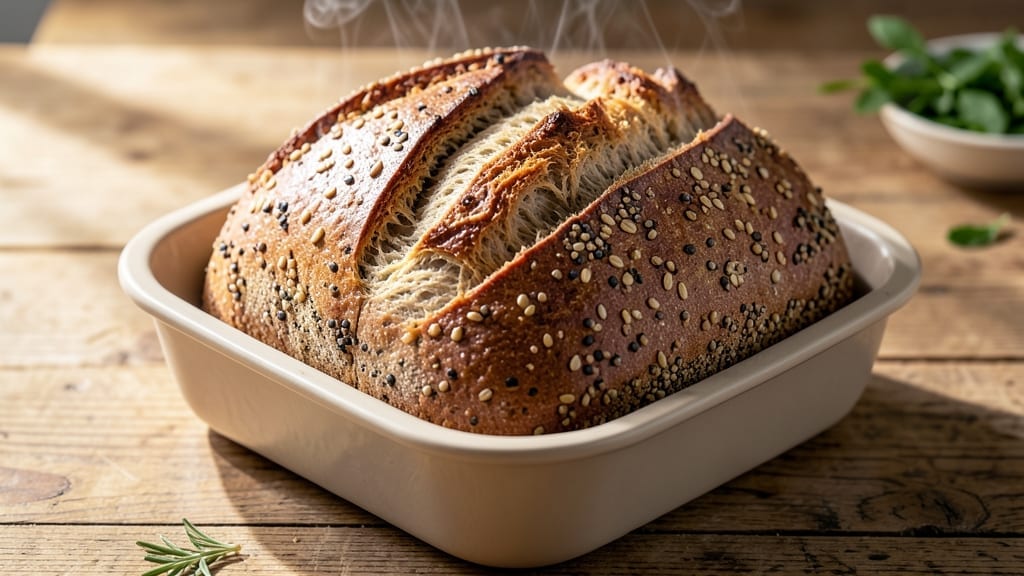
This 9-grain flour bread machine recipe transforms simple pantry staples into a hearty, nutty-loaf with a crisp crust and tender crumb—no kneading required.
The bread machine handles all the heavy lifting, from mixing to baking, while the blend of grains delivers a satisfying texture and earthy depth that store-bought loaves can’t match. I developed this recipe after years of experimenting with whole-grain breads, and the results are consistently impressive, even for beginners.
The key lies in the precise ratio of flours and the bread machine’s ability to develop gluten without overworking the dough.
The magic happens in the machine’s dough cycle, which ensures the grains hydrate properly and the yeast activates evenly. Unlike traditional bread-making, this method skips the guesswork—just add the ingredients, press start, and let the machine do the work.
The crust emerges golden and crisp, while the interior stays soft and slightly chewy, with flecks of toasted grains adding texture and flavor. This loaf is perfect for sandwiches, toast, or serving alongside soups and stews, where its heartiness shines.
What sets this recipe apart is its versatility—you can customize it with seeds, herbs, or even a touch of honey for extra sweetness without altering the basic structure. The bread machine’s precision ensures consistent results, whether you’re baking a single loaf or doubling the recipe for a crowd.
For those new to whole-grain baking, this recipe is a game-changer, proving that nutritious bread can be just as satisfying as its refined counterparts.
The process is straightforward: measure your grains, add the wet ingredients, and let the machine handle the rest. No special tools or techniques are needed, making it ideal for weeknight baking or meal prep.
Once baked, the aroma alone will draw everyone to the kitchen, and the first slice will confirm why this recipe has become a staple in my household. Let’s get started on your first loaf—it’s easier than you think.
Ingredients for 9 grain flour bread machine
Nine flours, one machine, bread that tastes like a bakery secret.
| Ingredient | Amount | Notes |
|---|---|---|
| Whole Wheat Flour 🌾 | 2 cups | Unbleached preferred for texture |
| Rye Flour 🌾 | ½ cup | Dark rye for deeper flavor |
| Spelt Flour 🌾 | ½ cup | Lightly toasted for nuttiness |
| Oat Flour 🌾 | ½ cup | Blended from rolled oats |
| Buckwheat Flour 🌾 | ¼ cup | Rich earthy flavor |
| Quinoa Flour 🌾 | ¼ cup | Light texture, protein boost |
| Amaranth Flour 🌾 | ¼ cup | Fine grind preferred |
| Cornmeal 🌽 | ¼ cup | Fine grind for smooth texture |
| Millet Flour 🌾 | ¼ cup | Mild flavor, adds lightness |
| Active Dry Yeast 🍞 | 2 ¼ tsp | Freshly opened for potency |
| Honey 🍯 | ¼ cup | Wildflower preferred |
| Warm Water 💧 | 1 ¼ cups | 110°F for yeast activation |
| Olive Oil 🫒 | 2 tbsp | Extra-virgin for richness |
| Salt 🧂 | 1 tsp | Fine sea salt preferred |
| Sesame Seeds 🌱 | 1 tbsp | Optional for crunch |
The flours are the heart of this loaf, so quality matters. Bob’s Red Mill or King Arthur are my go-tos for pre-milled grains—they’re consistent and affordable. If you’re buying whole grains to grind yourself, toast them lightly in a dry pan first (3-4 minutes) to deepen their flavors. The buckwheat and rye are non-negotiable for that earthy depth, but the rest can be swapped based on what’s in your pantry. For example, swap millet for sorghum flour if you prefer a slightly sweeter note. Just keep the total grain volume at 4 cups—this ensures the right texture without making the dough too dense. Pro tip: measure flours by weight if your scale allows—it’s more precise than cups for whole grains.
No rye flour? Substitute with extra whole wheat, but reduce by 1 tbsp to account for its denser texture. Running out of honey? Maple syrup or agave works 1:1, though the flavor will shift slightly. The olive oil can be swapped for melted coconut oil if you’re avoiding nuts, but it’ll have a different richness. For the yeast, check the expiration date—old yeast won’t activate properly. If your bread machine has a ‘dough’ setting, use that; otherwise, the ‘basic’ setting works fine. The sesame seeds are optional but add a lovely crunch—toast them in a dry pan for 2 minutes before adding to the dough for extra flavor. And if you’re short on time, pre-mix your flours in a large bowl and store in an airtight container for up to 2 weeks.
Once baked, this loaf stays fresh for 3-4 days at room temperature, wrapped in a cotton towel. For longer storage, slice and freeze the bread in a sealed bag—it’ll keep for up to 3 months. Reheat slices in a toaster or oven for 5 minutes to restore crispness. The crust is best eaten fresh, but the interior remains tender for days. I like to portion the dough into two loaves if my machine allows it—doubling the recipe is easy, just scale all ingredients by 100%. And if you’re feeling adventurous, add 1 tbsp of fresh rosemary or thyme to the dough for a herbal twist.
Why You’ll Love This Recipe
- No-Fuss Mixing: The bread machine does all the heavy lifting—just dump in the flours (whole wheat, rye, spelt, oat, and buckwheat), add water and yeast, and walk away. Honestly, the hardest part is deciding whether to use the whole batch or save half for toast later.
- Earthy, Nutty Magic: That blend of rye and buckwheat? It’s like a warm hug for your taste buds—deep, toasty, and just slightly sweet without any sugar. My kids still ask for seconds, even though I swear I make it the same way every time.
- Weeknight Wonder: Slice it fresh for sandwiches, toast it for breakfast, or freeze half for lazy mornings. Between us, this is the only bread I bake that actually gets used up before it goes stale—no sad, rock-hard loaves here.
- Budget Booster: You’re basically turning pantry staples into gold. Whole grains stretch further than white bread, and the mix of flours cuts costs without sacrificing flavor. Plus, one batch feeds my family for days—no last-minute grocery runs needed.
Step-by-step instructions for 9-Grain flour bread machine recipe
Here’s how to transform nine distinct flours into a hearty, nutty-crusted loaf with perfect texture.
Combine All Dry Ingredients in the Bread Pan
In your bread machine pan, add the 2 cups whole wheat flour, 0.5 cup rye flour, 0.5 cup spelt flour, 0.5 cup oat flour, 0.25 cup buckwheat flour, 0.25 cup quinoa flour, 0.25 cup amaranth flour, 0.25 cup cornmeal, and 0.25 cup millet flour. Sift them together lightly to break up any flour clumps and ensure even distribution. This prevents dense pockets in your final loaf.
I like to use a fine-mesh sieve for this step—it aerates the flour mixture and helps the yeast work more efficiently later. If you don’t have a sieve, simply whisk the flours together vigorously in the pan using a fork or whisk attachment.
Add Wet Ingredients and Yeast
Create a well in the center of the dry ingredients and add the 2.25 teaspoons active dry yeast, 0.25 cup honey, 2 tablespoons olive oil, and 1 teaspoon salt. Pour in the 1.25 cups warm water (about 110°F) and mix everything together using a wooden spoon or the dough hook attachment on low speed for 1-2 minutes until combined.
The warm water activates the yeast immediately, so don’t let the mixture sit too long before starting the machine. The honey adds natural sweetness that feeds the yeast while contributing to a slightly chewy texture. The olive oil ensures a tender crumb and helps create that coveted nutty crust.
Select the Basic White Bread Setting
Close the bread machine lid and select the “Basic White Bread” setting. This cycle typically runs for about 3 to 3.5 hours, including kneading, rising, and baking. The machine will automatically handle the kneading process, which is crucial for developing gluten in this dense flour blend.
Here’s the thing—this flour combination is heavier than all-purpose flour, so the machine’s kneading cycle becomes even more important. If your machine has a “whole wheat” setting, you can use that instead, but the basic setting works perfectly fine. Don’t be tempted to add extra water during the cycle—this recipe’s moisture balance is already optimized.
Let the Bread Cool Before Slicing
Once the baking cycle completes and the bread machine beeps, remove the loaf from the pan and place it on a wire rack. Let it cool for at least 30 minutes before slicing. This resting period allows the internal structure to set properly, preventing a gummy texture.
I know it’s tempting to cut into that warm, fragrant loaf immediately, but patience here makes all the difference. The crust will develop its full nutty depth as it cools, and the crumb will firm up just enough to hold its shape when toasted. While cooling, you can sprinkle the 1 tablespoon sesame seeds on top for added crunch and visual appeal.
Store Properly for Maximum Freshness
For best results, store your bread in an airtight container or bread bag at room temperature for up to 3 days. To revive stale bread, wrap it in a damp towel and heat in the oven at 350°F for 5-10 minutes until warmed through. This bread also freezes beautifully—slice before freezing and toast directly from frozen for crispy results.
The combination of these nine flours creates a bread with exceptional depth of flavor and texture. The crust develops a beautiful golden-brown color with subtle nutty tones from the spelt and buckwheat, while the interior remains tender with just enough chew from the whole grains. Each slice offers a symphony of textures and flavors that make this loaf truly special.
Pro Tips For Making 9 Grain Flour Bread Machine
- Sift the Flours First: I learned this the hard way—dumping all five flours (whole wheat, rye, spelt, oat, buckwheat) straight into the bread machine creates clumps that never fully hydrate. Sift them together through a fine-mesh sieve before adding liquids, then whisk the dry mix to break up any lingering lumps. The bread machine will thank you with a lighter, more even crumb.
- Use Warm Water Only: Cold water makes these dense flours sluggish. Heat your water to 100°F (38°C)—just warm enough to touch comfortably—and let it sit in the machine for 5 minutes before adding yeast. This jumpstarts fermentation, especially with the heavy rye and buckwheat, and prevents a gummy texture.
- Skip the Extra Yeast: Nine grains mean more fiber, which slows fermentation. Stick to the recipe’s yeast amount—adding more won’t speed things up, it’ll just make the bread rise too fast and collapse. If your kitchen’s cold, let the dough knead 10 minutes longer instead.
- Brush with Oil After Baking: This bread dries out fast, but a quick brush with melted butter or olive oil right after removing it from the machine locks in moisture for days. I skip this, and the crust gets tough by morning. (Yes, even if you’re impatient like me.)
Flavor customization for 9 grain flour bread machine
Sweet Variations
Add 1 tbsp cinnamon and ½ cup raisins to the dough for a cinnamon-raisin twist. The honey already in the recipe enhances the sweetness, creating a bread perfect for breakfast toast or French toast.
For a more decadent version, swap ½ cup of the whole wheat flour for ½ cup almond flour—this adds richness and a subtle nuttiness that pairs beautifully with the sweetness. 🍯
Herbal Infusions
Boost the flavor profile with fresh herbs like rosemary or thyme. Add 1 tbsp finely chopped fresh rosemary to the dough for an earthy aroma that complements the grains beautifully.
Alternatively, try 1 tbsp dried lavender for a floral note—just be sure to use culinary lavender (food-safe) and reduce to ½ tbsp if you prefer a milder taste. These additions work especially well with savory dishes like roasted vegetables or soups.
Seeded Crunch
Enhance texture with seeds like sunflower or pumpkin. Sprinkle 2 tbsp sunflower seeds on top of the dough before baking for a nutty crunch, or mix 1 tbsp pumpkin seeds directly into the dough for a subtle earthy flavor.
For extra richness, add 1 tbsp flaxseeds—they’ll give the bread a slightly nutty taste and boost its fiber content. Toast the seeds in a dry pan for 2-3 minutes before adding to deepen their flavor.
Savory Twists
Transform this bread into a savory loaf by adding garlic and cheese. Mix 1 tbsp garlic powder and ½ cup shredded Parmesan cheese into the dough for a flavorful, cheesy bread perfect for grilled cheese sandwiches.
For a smoky kick, add 1 tsp smoked paprika and ½ tsp onion powder—these spices complement the earthy grains wonderfully. This version pairs exceptionally well with hearty soups or as a side to roasted meats. 🧀
Spiced Warmth
Infuse warmth with spices like cardamom or ginger. Add ½ tsp ground cardamom for a fragrant, slightly floral note that balances the earthiness of the grains. Alternatively, include ½ tsp freshly grated ginger for a zesty kick that works wonderfully in sandwiches or toast.
These spices are subtle enough to let the grains shine but add layers of complexity that elevate the bread’s flavor profile.
Extra Moisture
For a softer crumb, replace ¼ cup of the warm water with ¼ cup plain yogurt or buttermilk. The acidity in these dairy products enhances gluten development and creates a lighter, more tender loaf.
If you prefer a slightly sweeter bread, add 1 tbsp maple syrup to the dough along with the honey. This adjustment works particularly well if you’re using a higher proportion of dense flours like rye or buckwheat, which can sometimes make bread dry. 🥛
Nutrition facts
Frequently asked questions
Can I use a different bread machine setting?
The “Basic White Bread” setting works best for this recipe, but if your machine has a “Whole Wheat” option, you can use that instead. Avoid the “Rapid” setting—the dense grain blend needs extra kneading time to develop proper gluten. The cycle typically takes 3-3.5 hours, including rising and baking.
Why does my dough look too wet or dry?
This recipe is precise, but whole grains absorb moisture differently. If the dough seems too wet, add 1-2 tablespoons more flour during mixing. Too dry? Add 1 tablespoon water at a time until it reaches a sticky-but-manageable consistency. The bread machine will adjust during kneading, so don’t overcorrect.
How do I substitute missing grains?
Swap equal amounts by volume, but adjust for texture. Replace buckwheat or rye with whole wheat flour (reduce by 1 tbsp per ½ cup to avoid density). For lighter flours like quinoa or millet, use oat flour or cornmeal. Avoid gluten-free grains—they change the structure completely.
Can I make this bread without a bread machine?
Yes, but expect more hands-on work! Mix ingredients, knead for 8-10 minutes (whole grains need extra time), then let rise for 1-2 hours. Shape into a loaf, place in a greased pan, and bake at 375°F for 40-45 minutes. The crust may be less crisp, but the flavor will be just as rich.
Why is my crust pale or too soft?
A pale crust often means the bread baked too slowly. Ensure your machine’s oven element is clean and functioning. For extra crispness, brush the baked loaf with melted butter while warm. If the crust is soft, check your honey amount—too much can make the crust gummy. The ideal crust should be golden-brown with subtle nutty tones.

- Pork Loin Pulled Pork Crock Pot Recipe: Slow-Smoked Tenderness With Zero Dryness - November 1, 2026
- Baked Potatoes in Crock Pot Recipe: Buttery Interiors and Crispy Top Magic - November 1, 2026
- Braised Beef Short Ribs Recipe: Crock Pot Fall-Off-Bone Magic in 6 Hours - November 1, 2026