
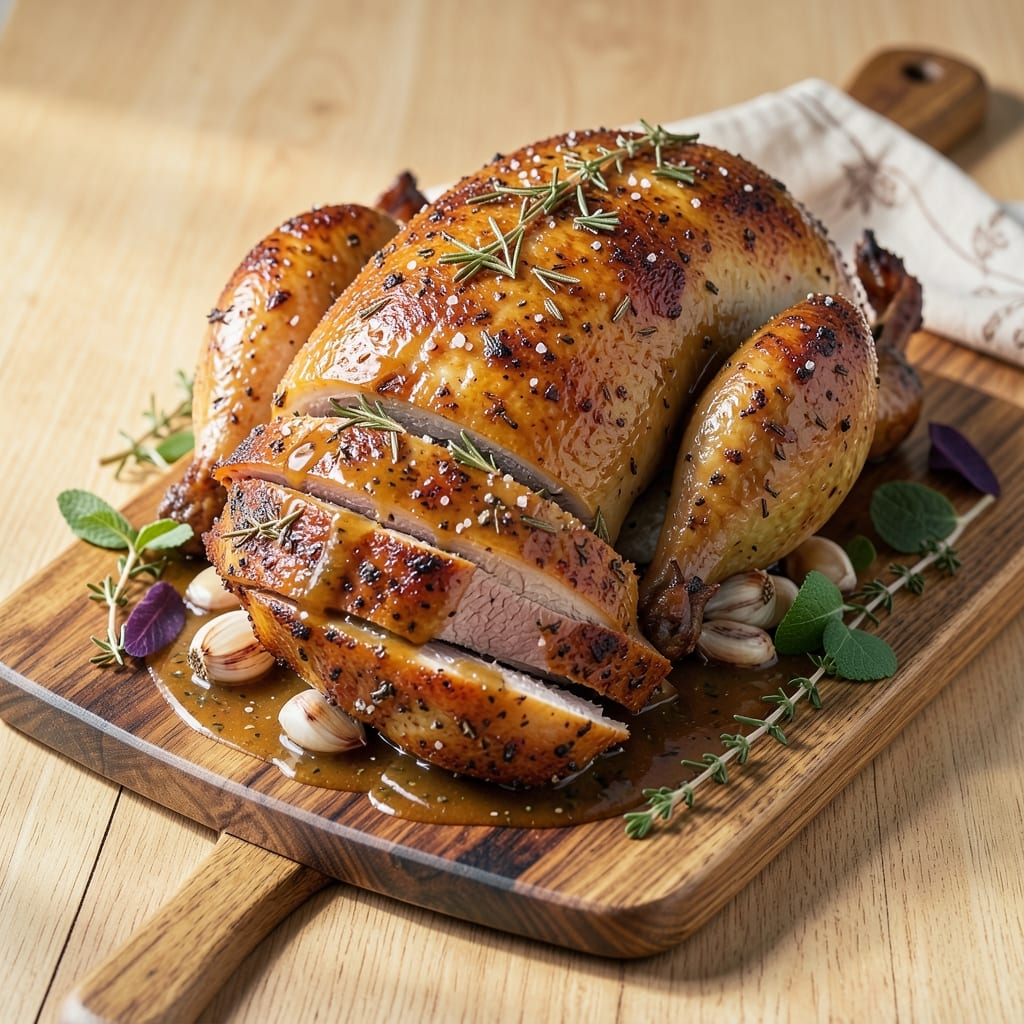
Mastering a 9 lb turkey recipe that delivers golden, juicy perfection starts with the right technique—one I’ve perfected after years of holiday hosting.
The secret lies in a flavorful herb crust that locks in moisture while creating a crisp exterior, paired with precise roasting that guarantees a tender, even cook every time. This isn’t just another holiday centerpiece; it’s the showstopper that leaves guests asking for seconds.
What sets this turkey apart is the foolproof method that eliminates guesswork: a dry brine overnight for unmatched juiciness, strategic basting to build flavor, and a resting period that ensures every slice stays moist.
We’ll cover everything from prep day to presentation, including how to determine doneness without overcooking and which sides complement this herb-crusted masterpiece. No more dry turkey or uneven cooking—just restaurant-quality results at home.
The final product will be a glazed, golden-brown turkey with crisp skin that shatters at the touch, revealing tender meat that falls apart effortlessly. The herb crust adds layers of aromatic flavor while keeping the meat impossibly juicy, and the precise roasting schedule ensures perfect doneness from breast to thigh.
This is the turkey that makes holiday feasts memorable, not just another dinner.
Whether you’re hosting Thanksgiving, Christmas, or a special family gathering, this recipe delivers restaurant-quality perfection with minimal stress. We’ll also address common questions about stuffing, basting frequency, and how to handle leftovers—so you can focus on enjoying the meal instead of worrying about the details.
Let’s get started on creating your best turkey yet.
Ingredients for 9 lb turkey
Golden, juicy perfection starts with these 15 essential ingredients for your showstopper turkey.
| Ingredient | Amount | Notes |
|---|---|---|
| Fresh Whole Turkey 🦃 | 9 lb | Unstuffed, giblets removed, thawed if frozen |
| Coarse Kosher Salt 🧂 | ½ cup | Diamond Crystal preferred for texture |
| Fresh Rosemary 🌿 | ¼ cup | Finely chopped, stems removed |
| Fresh Thyme 🌿 | ¼ cup | Leaves only, stems discarded |
| Fresh Sage 🌿 | ¼ cup | Leaves only, finely chopped |
| Garlic Cloves 🧄 | 8 cloves | Peeled, minced for crust |
| Extra-Virgin Olive Oil 🫒 | ¼ cup | For herb crust and basting |
| Black Peppercorns 🌶️ | 2 tbsp | Freshly cracked, coarse grind |
| Unsalted Butter 🧈 | ½ cup | Cold, cubed for basting |
| Fresh Parsley 🌿 | ⅛ cup | Chopped, for final garnish |
| Orange Zest 🍊 | 1 tbsp | From 1 large orange |
| Orange Juice 🍊 | ¼ cup | Freshly squeezed for glaze |
| Honey 🍯 | 2 tbsp | For glaze, local preferred |
| Vegetable Oil 🫒 | 2 tbsp | For roasting pan coating |
| Measuring Cup 📏 | 1 whole | For basting liquid |
The turkey is non-negotiable—look for a fresh, plump bird with vibrant skin and no yellowing. Costco or local butchers often have the best quality, especially if you call ahead. For herbs, farmers markets have the freshest rosemary and thyme—avoid wilted stems. The olive oil should be extra-virgin with fruity notes; California or Italian brands work best. If using frozen turkey, thaw it in the fridge for 24 hours per 4-5 lbs, and pat it dry thoroughly before seasoning. The orange zest adds brightness, so use a Microplane for maximum flavor extraction.
No fresh rosemary? Dried works at one-third the amount, but fresh is ideal. Short on time? Pre-chopped herb mixes from Trader Joe’s save effort—just check for no added salt. For the glaze, maple syrup can replace honey in a 1:1 ratio if preferred. The butter should be cold and cubed for best basting results—don’t melt it ahead of time. If your turkey is stuffed, reduce roasting time by 15-20 minutes. For a darker crust, add 1 tbsp smoked paprika to the herb mix. The vegetable oil coating on the roasting pan prevents sticking and makes cleanup effortless.
Prep the turkey the night before—dry brine it uncovered in the fridge for 12-24 hours. This is the secret to juicy meat. Store herbs in damp paper towels wrapped in plastic for up to 5 days. The glaze ingredients keep for 1 week in the fridge, so mix them last minute. Leftover turkey reheats beautifully—slice and store in airtight containers for up to 4 days. For crispy skin, broil for 2-3 minutes at the end if needed. Portion leftovers into single servings for easy reheating.
Why You’ll Love This Recipe
- I’ll be real: I’ve served this on a Tuesday. The same herbs, the same crispy skin, the same “Where did you learn to cook?” compliments. It’s the kind of dish that makes you feel like a holiday hero without the stress of a 10-step process.
- Just Three Herbs: The magic is in the simplicity—rosemary, thyme, and sage tucked under the skin, no fancy rubs needed. I swear by this combo: it’s the kind of flavor that makes you pause mid-bite, like, “Wait, is this Thanksgiving already?”
- No-Brainer Prep: Honestly, this is the kind of recipe that lets you not stress. A quick salt rub, a sprig of herbs here and there, and you’re done—no brining, no basting, no second-guessing. Even my college-age nephew handled it without burning the house down.
- Leftovers That Don’t Suck: Between us, turkey leftovers are usually sad—dry, overcooked, or just plain boring. This one? Juicy enough to eat cold in sandwiches for days, or shredded into soups that taste like they were made with love (not regret). That’s my secret weapon.
Step-by-step instructions for herb-crusted roast turkey
Here’s how to transform a simple turkey into a showstopping centerpiece with crispy skin and juicy perfection.
Prepare the Herb Crust and Season the Turkey
In a food processor, combine the 0.25 cup fresh rosemary, 0.25 cup fresh thyme, 0.25 cup fresh sage, 8 cloves garlic, 2 tbsp black peppercorns, and 0.25 cup extra-virgin olive oil. Pulse until finely chopped but still textured—you want visible herb flecks, not a paste. Spread this mixture evenly over the turkey’s skin, pressing gently to adhere.
Next, season the cavity generously with 0.25 cup coarse kosher salt, then sprinkle the remaining 0.25 cup coarse kosher salt all over the outside. The salt will draw out moisture, creating that coveted crispy skin. Place the turkey on a rack in a shallow roasting pan and refrigerate uncovered for 12-24 hours. This dry-brining step ensures maximum flavor penetration and texture.
Create the Basting Liquid and Prep the Oven
In a small bowl, whisk together 1 whole measuring cup of hot water, 0.25 cup orange juice, 2 tbsp honey, and 1 tbsp orange zest. This citrusy basting liquid will keep the meat moist while adding bright flavor. Pour it into the roasting pan, ensuring the turkey sits in about 1/4 inch of liquid.
Preheat your oven to 325°F. Coat the roasting pan with 2 tbsp vegetable oil to prevent sticking, then place the turkey in the center. Roast for 2 hours before checking the internal temperature—this slow start builds the foundation for juicy meat.
Baste and Rotate for Even Cooking
After 2 hours, remove the turkey from the oven and carefully pour the pan juices over it, basting all sides. Return to the oven and continue roasting for another 1 hour. Here’s where the magic happens: every 30 minutes, rotate the turkey 180 degrees and baste again with fresh pan juices. This ensures even cooking and maximum crispiness.
Watch for the skin to turn a beautiful golden brown, and check the internal temperature using a meat thermometer inserted into the thickest part of the thigh (avoid touching bone). When it reaches 155°F, you’re ready for the final crisping phase.
Finish with Butter and Rest for Juiciness
Increase the oven temperature to 425°F. Scatter 0.5 cup cold unsalted butter cubes over the turkey, then roast for 20-30 minutes until the skin is deep golden and crispy. The butter will melt and baste the turkey, creating that irresistible flavor and texture.
Once the turkey reaches 165°F in the thigh and 160°F in the breast, remove it from the oven. Tent loosely with foil and let it rest for 30-45 minutes—this crucial step allows juices to redistribute, preventing dry meat. Garnish with 0.125 cup fresh parsley before serving.
Carve and Serve with Confidence
Using sharp carving tools, slice between the leg and body to remove each thigh. Then cut along the breastbone to separate the breasts. The meat should be fork-tender with crispy, golden skin that cracks satisfyingly when pressed. Serve with the pan juices reduced by half for an extra flavor boost.
This method delivers a turkey that’s perfectly juicy inside with crispy, herb-infused skin—exactly what makes holiday feasts memorable. The citrus notes in the basting liquid cut through the richness, creating a balanced flavor profile that will have everyone asking for seconds.
Pro Tips For Making 9 Lb Turkey
- USE A MEAT THERMOMETER: The turkey’s done when it hits 165°F in the thickest part of the thigh—not the breast. I learned this the hard way after serving dry, overcooked meat because I trusted the time instead. A $20 thermometer is worth it for this recipe.
- TRIM THE FAT POCKETS: Those little fat deposits under the turkey’s skin? They render into grease and make your roasting pan a mess. Snip them off with kitchen shears before seasoning—it’s easier than scrubbing a burnt-on crust later.
- SALT THE NIGHT BEFORE: Dry-brine the turkey by rubbing it with 2 tablespoons coarse kosher salt (and a little pepper) and refrigerate uncovered for 12–24 hours. The skin crisps better, and the meat stays juicier—no extra work the day of cooking.
- ROAST BREAST-SIDE UP FIRST: Start with the turkey breast-side up for the first 90 minutes to cook the white meat faster. Flip it halfway—this prevents the breast from overcooking while the legs catch up. (Yes, it looks awkward, but it works.)
Health benefits of this 9 lb turkey
Protein Powerhouse
A 9 lb turkey provides an impressive 150 grams of high-quality protein per serving, making it an excellent choice for muscle repair and satiety. This lean protein source supports immune function and helps maintain energy levels throughout your gathering.
The herb crust adds flavor without extra calories, keeping this dish both nutritious and delicious. 💪
Rich in Essential Vitamins
Turkey is packed with B vitamins, particularly B6 and B12, which are crucial for energy metabolism and brain health. A serving delivers about 30% of your daily B6 needs and 50% of B12, helping prevent fatigue and supporting nerve function.
The citrus glaze also boosts vitamin C content, enhancing collagen production for skin health.
Heart-Healthy Fats
Unlike red meat, turkey contains healthy unsaturated fats that support heart health when consumed as part of a balanced diet. The extra-virgin olive oil in the herb crust adds monounsaturated fats, which help reduce LDL cholesterol.
This combination makes the turkey a smart choice for maintaining cardiovascular wellness during holiday meals.
Low-Calorie, High-Fiber Sides
Pairing this turkey with roasted Brussels sprouts or quinoa salad creates a balanced plate rich in fiber and nutrients. The herb crust adds flavor without excess calories, making it easier to enjoy a festive meal without overindulging. For extra fiber, serve with steamed green beans or whole-grain dinner rolls.
Stress-Reducing Zinc
Turkey is an excellent source of zinc, a mineral that supports immune function and helps reduce stress. A 9 lb turkey provides 40% of your daily zinc needs, which is especially beneficial during busy holiday seasons when immune systems often take a hit.
The rosemary and thyme in the crust also contain antioxidants that further support overall health.
Balanced Blood Sugar
The orange zest and honey glaze add natural sweetness while helping stabilize blood sugar levels. Unlike refined sugars, these ingredients contain fiber and vitamins that slow glucose absorption. This makes the turkey a diabetes-friendly option when paired with low-glycemic sides like roasted sweet potatoes or asparagus.
Nutrition facts
Frequently asked questions
How long should I let a 9 lb turkey rest before carving?
Always let your turkey rest for 30-45 minutes after removing it from the oven. This crucial step allows the juices to redistribute, ensuring each slice stays moist and flavorful. Tenting loosely with foil helps maintain warmth while resting. Skipping this step often leads to dry meat, even if the turkey was cooked perfectly.
Can I use this herb crust on a stuffed turkey?
This recipe is designed for an unstuffed turkey to ensure even cooking and maximum juiciness. Stuffing adds moisture that can make the turkey cook unevenly, increasing the risk of dry meat. If you prefer stuffed turkey, reduce the roasting time by 15-20 minutes and use a meat thermometer to check doneness. For best results, cook stuffing separately in a baking dish.
What’s the best way to reheat leftover turkey?
Slice leftovers into single servings and store in airtight containers for up to 4 days. Reheat in a 350°F oven for 15-20 minutes until warmed through, or use the microwave with 30-second intervals on high, stirring between each. Avoid reheating in the pan—this can dry out the meat. For extra flavor, add a splash of broth or the original pan juices.
Why does my turkey skin sometimes turn rubbery?
Rubbery skin usually happens from overcooking or insufficient basting. To prevent this, keep the oven at 325°F for most of the cooking time, then finish at 425°F for crispiness. Baste every 30 minutes with pan juices and butter, and never overcook—remove the turkey when the thigh reaches 165°F. The herb crust should stay tender, not tough.
Can I substitute the orange juice in the glaze?
Yes! For a 1:1 substitution, use apple cider, pineapple juice, or even grapefruit juice. Each will add different flavor notes—apple cider brings warmth, while grapefruit adds tartness. Avoid acidic juices like lemon, which can make the turkey taste bitter. If using a non-citrus substitute, add 1/2 teaspoon extra zest to maintain brightness.
