
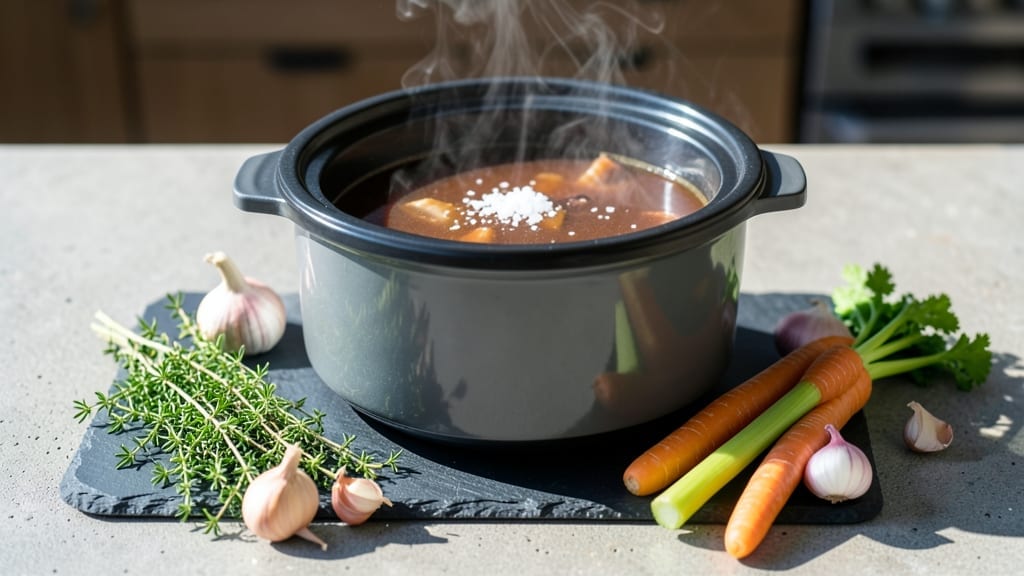
Transforming simple pantry staples into beef bone broth using a crock pot unlocks a deep umami infusion that elevates every dish. The slow cooking process extracts rich collagen and minerals from bones, creating a velvety, nutrient-dense foundation for soups, stews, and sauces.
My method focuses on maximizing flavor through proper preparation and timing—no specialized equipment required.
This recipe relies on three key steps: roasting bones for enhanced depth, layering aromatics like onions and garlic, and maintaining a consistent simmer for 12-24 hours. The crock pot handles the long cooking time effortlessly, while the low heat prevents scorching.
For best results, use a mix of marrow and knuckle bones—they yield the most gelatin and flavor.
What you’ll end up with is a golden, aromatic broth that’s rich yet balanced, with a natural sweetness from the caramelized bones. The straining process removes impurities, leaving behind a silky liquid that freezes beautifully for future use.
This isn’t just broth; it’s a flavor multiplier that transforms ordinary meals into extraordinary ones.
Once complete, store your broth in airtight containers for up to 6 months in the freezer or 1 week in the refrigerator. Reheat gently on the stove or directly in the crock pot, stirring occasionally.
The versatility of this broth makes it a pantry essential—perfect for braising, deglazing pans, or simply sipping as a nourishing tonic.
Ingredients for beef bone broth recipe crock pot
Pantry staples meet slow-cooked sophistication—this beef bone broth transforms humble ingredients into a nutrient-rich foundation.
| Ingredient | Amount | Notes |
|---|---|---|
| Beef Bones (Marrow and Knuckle) 🦴 | 4 lb | Raw, uncooked, organic preferred |
| Yellow Onions 🧅 | 2 whole | Medium size, halved and charred |
| Garlic Cloves 🧄 | 6 cloves | Peeled, lightly crushed |
| Carrots 🥕 | 4 whole | Medium size, roughly chopped |
| Celery Stalks 🌿 | 4 whole | Organic preferred, chopped |
| Apple Cider Vinegar 🍎 | ¼ cup | Organic, unfiltered preferred |
| Fresh Rosemary 🌿 | 2 sprigs | Organic, stems removed |
| Fresh Thyme 🌿 | 2 sprigs | Organic, stems removed |
| Bay Leaves 🍃 | 4 whole | Dried, high-quality preferred |
| Diamond Crystal Kosher Salt 🧂 | 2 tbsp | For seasoning and flavor balance |
| Black Peppercorns 🌶️ | 1 tbsp | Freshly cracked, coarse grind |
The bones are the cornerstone of this recipe. Marrow and knuckle bones from a trusted butcher or Costco bulk section provide optimal gelatin and collagen extraction. Organic bones, if available, reduce impurities during straining. Avoid bones with excessive meat residue, as they can introduce unwanted flavors. For best results, source bones from grass-fed cattle, which yield a cleaner, more flavorful broth. If you can’t find marrow bones, femur or neck bones are excellent substitutes—just expect slightly less gelatinous texture.
Fresh aromatics elevate the broth’s complexity. Char the onions and carrots in a dry skillet before adding to the crock pot—this caramelization deepens the umami profile. Substitute leeks or fennel for onions if preferred, but reduce to half the quantity to avoid bitterness. Dried herbs like thyme and rosemary can be used at one-third the amount, though fresh imparts superior flavor. The apple cider vinegar, while seemingly minor, plays a crucial role in tenderizing the bones and extracting minerals. Bragg’s or organic brands from health food stores provide the best results. For a quicker option, white vinegar or lemon juice works in a pinch, though with slightly less depth.
Store the finished broth in glass mason jars or airtight containers for maximum freshness. In the refrigerator, it remains stable for 5-7 days, while freezing extends its shelf life to 6 months. For long-term storage, portion into 1-cup ice cube trays before transferring to freezer bags—ideal for single-use applications like braising or deglazing. Reheat gently on low heat, stirring occasionally to prevent scorching. The broth’s gelatin content thickens when chilled, so always reheat slowly to restore its silky texture.
Why You’ll Love This Recipe
- Dump-and-Walk Away: I swear by this method—just toss the bones, veggies, and water into the crock pot, then forget about it. No stirring, no skimming, no babysitting. The marrow bones practically melt themselves into the broth while you’re out running errands or binge-watching your favorite show.
- Deep Umami Magic: That first sip? Rich, slow-cooked beef with layers of caramelized onion and garlic—it’s like a hug in a mug. The knuckle bones add a meaty depth, while the celery and carrots sweeten just enough to balance the savory punch. Honestly, store-bought broth can’t compete.
- Meal Prep MVP: Freeze it in ice cube trays or jars for instant upgrades to soups, stews, or even mashed potatoes. I keep a stash in my freezer for those nights when I’m too tired to cook—just toss a cube into simmering water, and boom, flavor without effort.
- Budget Booster: Use cheaper cuts of beef bones (like knuckles) and stretch them into gallons of broth for pennies per serving. Between us, this is how I feed my family hearty meals without breaking the bank—plus, the leftovers keep for months, so no food waste here.
Step-by-step instructions for beef bone broth in a crock pot
Here’s the method for extracting maximum flavor and collagen from your ingredients.
Prepare and Char the Vegetables
Begin by halving the 2 whole yellow onions and placing them cut-side down on a dry skillet over medium-high heat. Let them char for 5-7 minutes until deeply browned and caramelized—this develops complex, sweet flavors that infuse into the broth. The charred onions should have visible blackened patches on the cut surfaces.
While the onions cook, peel and lightly crush the 6 cloves garlic cloves with the flat side of your knife. Roughly chop the 4 whole carrots and 4 whole celery stalks into ½-inch pieces. Set these aside—they’ll add body and sweetness to your broth. Once the onions are charred, remove them from the skillet and set aside with the other vegetables.
Assemble the Crock Pot Ingredients
Place the 4 lb beef bones (marrow and knuckle) into your crock pot. Arrange them in a single layer if possible, or stack them loosely to allow liquid circulation. Add the charred yellow onions, chopped carrots, celery stalks, and crushed garlic cloves on top of the bones. The vegetables should surround the bones evenly for balanced flavor extraction.
Add the 2 sprigs fresh rosemary, 2 sprigs fresh thyme, and 4 whole bay leaves directly to the crock pot. These herbs will steep in the liquid, contributing aromatic depth. Pour in the 0.25 cup apple cider vinegar—this acid helps break down collagen and extract minerals from the bones, resulting in a richer, more gelatinous broth.
Season and Add Water
Sprinkle the 2 tbsp diamond crystal kosher salt and 1 tbsp black peppercorns over the ingredients. The salt enhances flavor while balancing the acidity of the vinegar, and the peppercorns add subtle warmth. Pour in 8 cups of cold water to cover the bones completely—this ensures maximum surface area for collagen extraction during the long cook.
Here’s the thing—don’t use hot water. Cold water allows for better collagen extraction as the broth slowly heats up. Stir the mixture gently to distribute the seasonings, then secure the crock pot lid tightly. This prevents moisture loss and ensures even heat distribution throughout the cooking process.
Cook on Low for Maximum Flavor Extraction
Set your crock pot to low heat and let it cook undisturbed for 18-24 hours. This extended cooking time is critical—it breaks down collagen into gelatin, which gives the broth its signature richness and body. The longer it cooks, the deeper the flavor and the more nutrients are extracted from the bones and vegetables.
Resist the urge to peek or stir during cooking. Every time you open the lid, you release steam and lose heat, which can extend cooking time and dilute flavor. Instead, trust the process and let the ingredients work their magic. You’ll know it’s ready when the broth takes on a deep amber color and the bones are tender enough to crumble slightly with a fork.
Strain and Reduce for Concentrated Flavor
Once cooking is complete, carefully ladle the broth through a fine-mesh strainer into a large pot or bowl, pressing gently on the solids to extract every last drop of liquid. Discard the strained solids—though they’ve given everything they have, they’re no longer useful. The strained broth should be rich, opaque, and deeply aromatic with a hint of smokiness from the charred onions.
Return the strained broth to the pot and simmer over medium heat for 20-30 minutes to reduce it slightly. This step intensifies the flavor by concentrating the gelatin and umami compounds. The broth should reduce by about 10-15%—you’ll notice it thickens slightly and becomes even more robust. Taste and adjust seasoning if needed, then let it cool before storing or serving.
Pro Tips For Making Beef Bone Broth Recipe Crock Pot
- Roast Bones First: I learned this the hard way—raw knuckle bones take forever to render flavor. Brown them in a 400°F oven for 20-30 minutes before adding to the crock pot. The caramelization kicks off collagen breakdown early, saving you 6+ hours of simmer time.
- Chop Onions Roughly: Halved yellow onions work fine, but quarter them and leave the skin on for extra depth. No need to peel—just scrub and chop. The skins add subtle bitterness that rounds out the broth, and you won’t waste time peeling.
- Skip the Crowded Pot: Packing the crock pot too full traps steam instead of releasing it, which dulls the broth’s richness. Fill it no more than halfway with bones and veggies—you’re not making soup, you’re extracting flavor. The broth will rise as it cooks.
- Add Acid Late: Toss in a splash of apple cider vinegar or lemon juice only in the last 30 minutes. This cuts through any funky bone odors and brightens the broth, but add it too early and it’ll turn the whole thing sour. (Yes, even if you’re impatient like me.)
Dietary considerations for these flavors
Gluten-Free Adaptations
This recipe is naturally gluten-free since it relies on bones, vegetables, and herbs—no grains or flour are involved. The only potential concern comes from apple cider vinegar, which may sometimes be processed in facilities handling gluten.
Always check labels for certified gluten-free brands like Bragg’s or Annie’s. For extra safety, use white vinegar or lemon juice instead of apple cider vinegar. 🌾
Dairy-Free Considerations
Beef bone broth is inherently dairy-free, making it perfect for lactose-intolerant individuals or those following dairy-free diets. The collagen-rich liquid adds body to soups and stews without any dairy components.
Just ensure your kosher salt and peppercorns are also dairy-free, as some blends may contain additives. I recommend Morton Kosher Salt for its pure composition.
Low-Sodium Options
If you’re watching your sodium intake, reduce the 2 tbsp kosher salt to just 1 tsp or omit it entirely. The bones and vegetables naturally provide flavor, though the broth may taste slightly milder.
For extra depth, add 1 tbsp fish sauce or 1 tsp soy sauce (ensure gluten-free if needed) during the final reduction step. Always taste before storing to adjust seasoning.
Paleo and Whole30 Compliance
This broth fits seamlessly into paleo and Whole30 diets, as it contains only animal bones, vegetables, and herbs—no processed ingredients or sugars. For Whole30 compliance, ensure all spices (like bay leaves) are certified compliant, as some blends contain additives.
I recommend Simply Organic or Primal Palate spice blends for peace of mind. The apple cider vinegar is also Whole30-friendly when unfiltered and organic.
Allergen-Friendly Swaps
For nut allergies, no adjustments are needed since this recipe contains zero nuts. If you’re allergic to celery, substitute with fennel or leeks (use half the quantity to avoid bitterness). For onion allergies), replace with garlic and mushrooms—sauté ½ cup sliced mushrooms until caramelized before adding to the crock pot.
Always double-check ingredient labels for cross-contamination warnings, especially with organic or bulk-purchased items.
Vegetarian and Vegan Alternatives
While traditional bone broth relies on animal bones, you can create a plant-based version using mushrooms, seaweed, and vegetable scraps. Simmer 2 cups chopped mushrooms, 1 cup kombu seaweed, and 2 tbsp nutritional yeast in 8 cups water for 6-8 hours on low heat.
Strain and reduce as directed. For a richer texture, add 1 tbsp agar-agar powder before straining to mimic gelatin. This version won’t have the same depth as beef broth but works well for vegetarian dishes. 🌱
Nutrition facts
Frequently asked questions
Why should I use marrow and knuckle bones instead of other cuts?
Marrow and knuckle bones contain the highest concentration of collagen and gelatin, which gives your broth that signature rich, velvety texture. These bones also yield more flavorful liquid during the long cook. While femur or neck bones work, they produce slightly less gelatin and may require an extra hour of cooking time for comparable results.
Can I use frozen bones instead of fresh?
Yes, but thaw them completely in cold water before adding to the crock pot. Frozen bones release more impurities during cooking, which can make your broth cloudy. For best results, opt for fresh bones whenever possible. If using frozen, pat them dry before roasting to prevent steam buildup in the skillet.
How do I know when the broth is fully cooked?
The broth is ready when it reaches a deep amber color and the bones are tender enough to crumble slightly with a fork. This typically happens after 18-24 hours on low heat. You’ll also notice the liquid becomes more opaque and develops a rich, meaty aroma. Overcooking won’t hurt—just extend the time if needed.
What’s the best way to store leftover broth?
Store in glass mason jars or airtight containers in the fridge for up to 5-7 days or freeze for 6 months. For long-term storage, portion into 1-cup ice cube trays before transferring to freezer bags—perfect for single-use applications. Always leave 1-inch headspace in containers to prevent expansion during freezing.
Can I make this broth in a slow cooker with less time?
No—this recipe requires the full 18-24 hours to properly break down collagen into gelatin. A shorter cook time will yield a thinner, less flavorful broth. If you’re short on time, use a pressure cooker (like Instant Pot) for a 3-4 hour version, but the texture and depth won’t match the crock pot method.

- Crock Pot Round Steak Recipe: Slow-Sear Crust With Juicy Center - November 6, 2026
- Candied Sweet Potatoes Crock Pot Recipe: Caramelized Sweetness With Zero Effort - November 6, 2026
- Steak Recipe Crock Pot: Juicy, Caramelized Crust in 4 Hours - November 6, 2026