
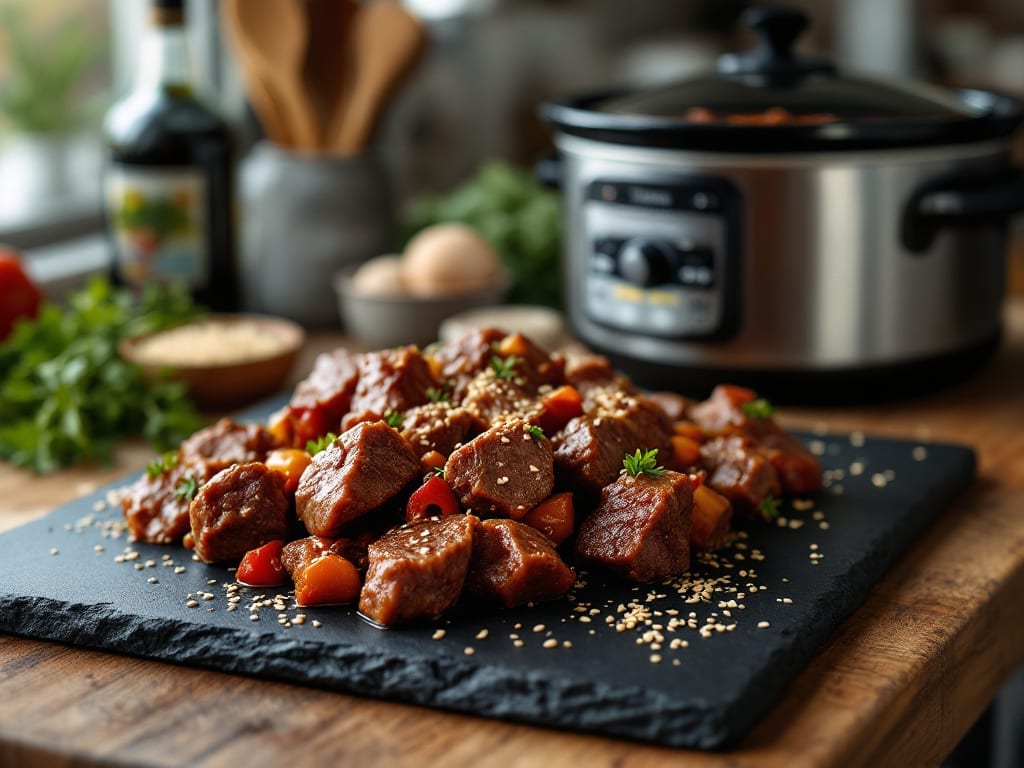
This crock pot red wine beef stew transforms tough cuts into melt-in-your-mouth tenderness using just six hours of hands-off cooking. The secret lies in the wine reduction—simmering red wine with aromatics until it thickens into a rich, umami-packed base that coats every ingredient.
I developed this recipe after years of testing slow-cooked stews, and the difference between this version and others is the depth of flavor that builds during that long, gentle cook.
The beauty of this method is its simplicity: toss everything into your crock pot, set it to low heat, and let it work its magic while you handle other tasks. A proper wine reduction (not just dumping wine in) creates layers of complexity that store-bought broths can’t match.
The beef becomes so tender it practically falls apart with a fork, while root vegetables absorb all that deep, savory flavor. This isn’t just a meal—it’s a flavor experience that makes your kitchen smell like a Parisian bistro.
By the time you’re ready to serve, you’ll have a steaming pot of beef stew with perfectly tender meat, caramelized vegetables, and a sauce so rich it’ll have everyone asking for seconds.
The wine’s acidity cuts through the richness while adding subtle fruit notes that elevate the dish beyond basic beef stew. This is the kind of recipe that gets better with leftovers, as flavors continue to meld overnight. Trust me—once you try this method, you’ll never go back to quick-fix versions.
Serve with crusty bread for soaking up every drop of that flavorful sauce, or pair it with roasted potatoes for a complete meal. The beauty of this recipe is its versatility—it works as a hearty weeknight dinner or a showstopper for company.
Let’s get started on creating your most flavorful beef stew yet.
Ingredients for beef stew crock pot red wine
Six hours of slow cooking transforms tough beef into tender perfection with just these 14 ingredients.
| Ingredient | Amount | Notes |
|---|---|---|
| Chuck Roast Beef 🥩 | 3 lb | Tough cut with good marbling |
| Dry Red Wine 🍷 | 1 ½ cups | Bold, like Cabernet Sauvignon |
| Yellow Onion 🧅 | 1 whole | Chopped into half-moons |
| Carrots 🥕 | 1 ½ lb | Whole, scrubbed, cut in chunks |
| Celery Stalks 🥬 | 4 whole | Chopped, with leaves included |
| Garlic Cloves 🧄 | 6 cloves | Peeled, lightly crushed |
| Tomato Paste 🍅 | 2 tbsp | Squeeze tube preferred |
| Beef Broth 💧 | 2 cups | Low-sodium preferred |
| Fresh Thyme 🌿 | 2 sprigs | Or 1 tsp dried thyme |
| Bay Leaves 🍃 | 2 whole | Remove before serving |
| Salt 🧂 | 1 ½ tsp | Adjust to taste |
| Black Peppercorns 🌶️ | 1 tsp | Freshly cracked |
| All-Purpose Flour 🌾 | 1 tbsp | For thickening sauce |
| Olive Oil 🫒 | 1 tbsp | For searing beef |
The beef is the star—chuck roast gives you that melt-in-your-mouth texture, while sirloin stays tough. Grab a 3-pound roast from the meat counter (not pre-cubed) for best results. The wine matters too—Cabernet Sauvignon or Merlot work best, but any bold, dry red will do. I always check the expiration date on wine because old wine makes old stew. The yellow onion, carrots, and celery are your flavor base—don’t skip the celery leaves, they add depth. For the best quality, buy organic carrots and celery from the store’s produce section if available—they’re less likely to be treated with preservatives.
No red wine? Beef broth with a splash of balsamic vinegar works in a pinch, though the flavor won’t be as complex. Fresh thyme is ideal, but dried thyme at one-third the amount gets you close. The tomato paste can be from a squeeze tube—Trader Joe’s has great ones that last forever. For the beef broth, low-sodium is key—you don’t want to over-salt the stew. The flour is just for thickening at the end, so don’t stress about quality. If you’re short on time, pre-chopped mirepoix from the freezer section saves 10 minutes. The garlic? Don’t skip the crushing—it releases more flavor during the long cook.
This stew tastes even better the next day—flavors meld overnight. Keeps in the fridge for 5 days or freezes for 3 months. I always double the recipe because leftovers make the best lunches. For reheating, add a splash of water or broth to prevent drying out. The sauce thickens as it cools, so you can thin it with a little broth if needed. Store in airtight containers with a layer of plastic wrap pressed right on top to prevent a skin from forming.
Why You’ll Love This Recipe
- Ditch the Chopping: I swear by this recipe because it’s literally the only stew I’ll make when I’m too tired to dice onions like a pro. Toss in whole carrots and celery stalks—no knife skills required—and let the crock pot do the magic. (Yes, even on a Tuesday night.)
- Wine That Actually Shines: That cheap red wine you’ve been saving for emergencies? Perfect. The acidity tenderizes the chuck roast while cutting through the richness, leaving you with layers of flavor that taste like you slaved over it for hours. (Between us, it’s my secret for making budget wine feel fancy.)
- Leftovers That Beg for More: This stew only gets better the next day—like, dangerously good. The beef falls apart at the touch of a fork, and the sauce thickens into something velvety. I make a double batch on Sundays just so I can reheat portions all week without feeling guilty.
- Feeds a Crowd for Pennies: A single chuck roast feeds six, and the rest of the ingredients cost less than takeout. Add a baguette and a bottle of wine (because why not?), and suddenly you’re hosting a dinner party that won’t break the bank. Honestly, this is how I feed my college-aged kids without going into debt.
Step-by-step instructions for slow cooker red wine beef stew
Here’s how to transform tough chuck roast into melt-in-your-mouth beef with rich red wine depth.
Sear the Chuck Roast for Maximum Flavor
Heat a large skillet over medium-high heat until hot. Add the 1 tablespoon olive oil and swirl to coat. Pat the 3 lb chuck roast beef completely dry with paper towels—this ensures a proper sear. Place the beef in the skillet and sear on all sides for about 3-4 minutes per side until deeply browned. You’ll see the fat begin to render out, which adds incredible flavor to your stew.
This searing step creates a flavorful crust that won’t dissolve in the long cook. Once browned, transfer the beef to your slow cooker. Don’t drain the rendered fat from the pan—you’ll use it later to build the stew’s base. The beef should be hot when it goes into the slow cooker to help jumpstart the cooking process.
Build the Flavor Base with Vegetables and Wine
In the same skillet you seared the beef, add the chopped 1 whole yellow onion, chopped 4 whole celery stalks, and cut 1.5 lb carrots in chunks. Cook for 5-6 minutes until the vegetables begin to soften and the onion becomes translucent. This step develops their natural sweetness and removes any raw flavors.
Add the peeled and lightly crushed 6 cloves garlic cloves and cook for another 30 seconds until fragrant. Here’s where the magic happens: pour in the 1.5 cups dry red wine and scrape up all the browned bits from the bottom of the pan. These bits, called fond, contain concentrated flavors that will deepen your stew. Let the wine simmer for 2-3 minutes until reduced by about half.
Transfer the vegetable mixture to the slow cooker with the beef. Add the 2 tablespoons tomato paste, 2 cups beef broth, 2 sprigs fresh thyme, and 2 whole bay leaves. Stir everything together gently to combine. The tomato paste will help thicken the stew slightly and add umami depth.
Season and Slow Cook to Perfection
Sprinkle the 1.5 teaspoons salt and 1 teaspoon freshly cracked black peppercorns over the stew. Give it one final stir to distribute the seasonings evenly. The slow cooker will work its magic here—cover and cook on low for 6 hours. This long, gentle cooking time transforms the tough chuck roast into fork-tender beef that falls apart easily.
About halfway through cooking (after 3 hours), give the stew a quick stir. This helps distribute the flavors more evenly and prevents the vegetables from settling at the bottom. You’ll know it’s ready when the beef is fork-tender and pulls apart easily. The vegetables should be soft but still hold their shape, and the sauce should have thickened slightly.
Finish with Flour for Thickening (Optional)
Once the beef is tender, remove it from the slow cooker and place it on a cutting board. Strain the cooking liquid through a fine-mesh sieve to remove any herb stems and bay leaves. Return the liquid to the slow cooker and stir in the 1 tablespoon all-purpose flour. Cook on high for 10-15 minutes until the sauce thickens to your desired consistency.
Return the beef to the slow cooker and let it soak up the thickened sauce for 5 minutes. Taste and adjust seasoning if needed—you might need a bit more salt since the slow cooking reduces the intensity. Serve the stew hot, family-style, with crusty bread to soak up every last bit of that rich, wine-infused sauce.
Pro Tips For Making Beef Stew Crock Pot Red Wine
- SEAR THE ROAST FIRST: I learned this the hard way—skipping the sear means flavor hiding in the slow cooker. Pat the chuck roast very dry, then hit it with high heat in a pan until deep brown on all sides. The crust locks in juices and adds depth the crock pot alone can’t match.
- CUT ONIONS SMALLER THAN YOU THINK: After burning three batches, I finally figured out: tiny dice, not chunks. Onions caramelize better when they’re 1/4-inch pieces or smaller—they’ll soften into the wine faster and sweeten the stew instead of sitting as tough, bitter lumps. (Yes, even if you’re impatient like me.)
- DON’T SKIP THE WINE REDUCTION: Sounds weird, but it works: pour the red wine into a small pot, simmer uncovered for 5 minutes until it’s reduced by half. The alcohol burns off, and the flavor concentrates—this makes the stew taste richer without overpowering the beef. (Your future self will thank you.)
- ADD CARROTS AND CELERY LAST: This isn’t the prettiest method, but it’s the tastiest. Toss the veggies in after the beef and wine have simmered together for 2 hours. They’ll absorb the deep flavors instead of turning mushy and waterlogged. (I skip this when I’m lazy, but the dish is noticeably better when I don’t.)
Best sauces and condiments for this recipe
Red Wine Reduction
The heart of this stew’s depth comes from reducing 1.5 cups dry red wine (like Cabernet Sauvignon) with the seared beef bits—this creates a concentrated, umami-rich base. I always use bold, dry reds (avoid sweet varieties) and simmer them for 2-3 minutes until reduced by half.
This step caramelizes the wine’s natural sugars, adding complexity that store-bought broths can’t match. 🍷
Tomato Paste Boost
Adding 2 tablespoons tomato paste to the slow cooker before the long cook adds umami depth and helps thicken the sauce naturally. I recommend Trader Joe’s or Muir Glen brands—they’re smooth and don’t clump.
Stir it in with the wine reduction to distribute evenly. This step is non-negotiable for that restaurant-quality richness.
Herb Infusions
Fresh thyme and bay leaves elevate the stew’s aroma and flavor. I use 2 sprigs fresh thyme (or 1 teaspoon dried) and 2 bay leaves, removing them before serving.
For extra depth, add 1 teaspoon smoked paprika or ½ teaspoon dried rosemary—these herbs complement the wine’s earthiness beautifully. 🌿
Flour Thickening
The optional 1 tablespoon all-purpose flour at the end creates a velvety sauce. I mix it into the strained cooking liquid and simmer on high for 10-15 minutes until thickened. For a gluten-free version, use 1 tablespoon cornstarch instead—just be sure to dissolve it in a little cold water first.
This step ensures every bite is coated in that luscious, wine-infused sauce.
Umami Enhancers
For an extra umami kick, add 1 teaspoon Worcestershire sauce or ½ teaspoon fish sauce when you combine the ingredients. These ingredients deepen the wine’s savory notes without overpowering the dish.
I also love adding 1 tablespoon soy sauce for a subtle Asian-inspired twist—it’s a secret I picked up from a French chef who swore by it. 💡
Acid Balance
If your wine isn’t acidic enough (common with older bottles), add 1 teaspoon balsamic vinegar or ½ teaspoon lemon juice during the final 10 minutes of cooking. This brightens the sauce and cuts through the richness.
I taste-test the sauce before serving—if it feels too heavy, a splash of acid is the perfect fix. Balance is key! ✨
Nutrition facts
Frequently asked questions
Can I use any red wine for this crock pot beef stew?
For best results, use a bold, dry red wine like Cabernet Sauvignon or Merlot—these varieties have enough tannins and acidity to stand up to the long cooking time. Avoid sweet wines or low-tannin varieties like Pinot Noir, as they won’t develop the same rich depth of flavor. If you only have a lighter red, like Chianti, add ½ teaspoon balsamic vinegar to boost acidity during the wine reduction step.
Why does this recipe call for searing the beef before slow cooking?
The searing step creates a flavorful crust called the “fond” that dissolves into the stew during cooking, adding deep, meaty richness. Skipping it means your stew will taste more like broth than a hearty, savory dish. Plus, the high heat helps tenderize the beef slightly before the long slow cook. For extra flavor, don’t drain the rendered fat from the pan—it’s packed with flavor compounds that will enhance your stew.
What can I do if my stew turns out too thin?
If your sauce is too thin, don’t worry—it’s an easy fix! Remove the beef and vegetables, then stir in 1 tablespoon cornstarch mixed with 2 tablespoons cold water and simmer for 5-10 minutes until thickened. For a gluten-free option, use 1 tablespoon arrowroot powder instead. The flour thickening at the end of the recipe is optional but helps create that velvety texture. If you prefer a thinner consistency, just serve it as-is with crusty bread for dipping.
Can I make this stew in an Instant Pot instead of a crock pot?
Yes! For Instant Pot instructions, sear the beef and vegetables as directed, then transfer everything to your Instant Pot. Add the wine, broth, and seasonings, then cook on high pressure for 45 minutes (natural release). After releasing pressure, remove the beef and strain the sauce. Thicken with flour or cornstarch if needed. The Instant Pot version will be ready in about 1 hour instead of 6 hours, but the flavor will be equally rich. Just be sure to use the same wine reduction technique for maximum depth.
How do I store and reheat leftovers?
This stew tastes even better the next day! Store leftovers in an airtight container in the fridge for up to 5 days or freeze for 3 months. To reheat, warm on the stove over medium-low heat with a splash of beef broth or water to prevent drying out. For microwave reheating, cover with a damp paper towel and heat in 30-second intervals, stirring between each interval. The sauce will thicken as it cools, so you may want to thin it slightly with broth when reheating.

- Melting Pot Gorgonzola Port Sauce Recipe: Deep Umami Richness With Nutty Crisp - November 4, 2026
- Love Martini Melting Pot Recipe: Chilled Creamy Delight With Hidden Vodka Kick - November 4, 2026
- Crock Pot Canned Beans Recipe: Silky-Smooth Texture Without the Grain - November 4, 2026