
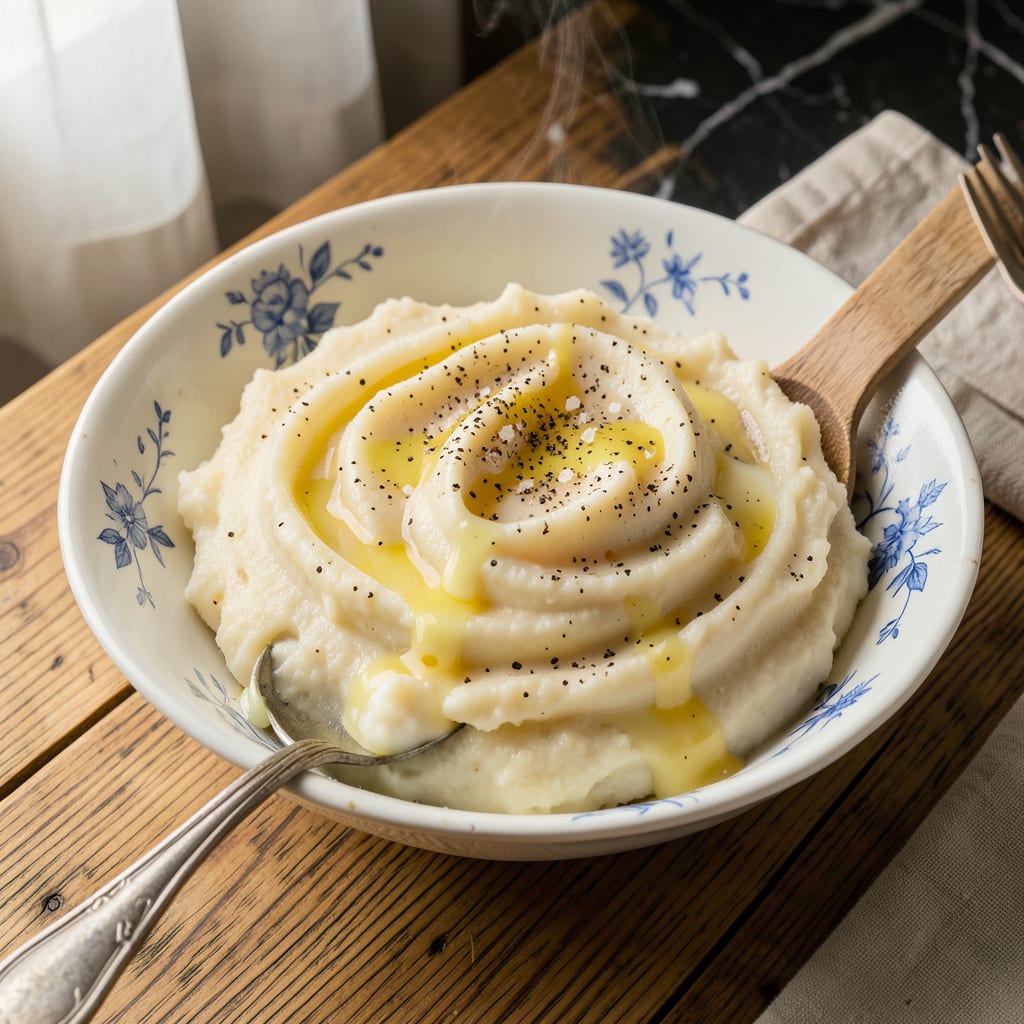
Recreating Bob Evans’ signature mashed potatoes at home delivers that same homestyle comfort you love from the restaurant. This copycat recipe focuses on achieving their signature creamy texture and buttery richness using simple pantry staples and precise techniques.
The secret lies in the perfect balance of russet potatoes, real butter, and whole milk—combined with a mashing method that ensures smoothness without gumminess. Whether serving with fried chicken or as part of a holiday spread, these potatoes bring that familiar restaurant-quality taste to your table.
Ingredients for Bob Evans Mashed Potatoes Copycat
Simple pantry staples transform into that creamy, buttery Bob Evans magic you crave.
| Ingredient | Amount | Notes |
|---|---|---|
| Russet Potatoes 🥔 | 2 ½ lb | Peeled and cut into 1-inch cubes |
| Unsalted Butter 🧈 | ½ cup | Cold, cut into small cubes |
| Whole Milk 🥛 | ¾ cup | Warm to room temperature |
| Heavy Cream 🥛 | ¼ cup | For extra richness (optional) |
| Kosher Salt 🧂 | 1 ½ tsp | Diamond Crystal preferred |
| Freshly Ground Black Pepper 🌶️ | ½ tsp | Coarse grind for texture |
| Garlic Cloves 🧄 | 2 cloves | Minced (optional, for depth) |
| Sour Cream 🥛 | ¼ cup | Full-fat for creaminess |
| Chicken Stock 🍲 | ¼ cup | Low-sodium, for flavor base |
| Green Onions 🧅 | 2 whole | Thinly sliced for garnish |
The potatoes are everything here. Russets give you that fluffy texture—don’t swap for waxy varieties like red or Yukon. I grab mine from Costco for bulk savings, but any grocery store works. The butter matters too—unsalted lets you control the salt level. For the milk, whole milk is non-negotiable (trust me on this). If you’re feeling fancy, the heavy cream adds that restaurant richness, but it’s optional if you’re watching calories. Just don’t skip the sour cream—it’s the secret to that tangy depth Bob Evans nails every time.
No whole milk? Half-and-half with a splash of water gets you close. Out of chicken stock? Vegetable broth works fine—just add an extra pinch of salt. The garlic is optional but worth it (I always double mine). If you’re avoiding dairy, olive oil instead of butter changes the flavor but keeps things creamy. For extra richness, some folks swear by cream cheese—about 2 ounces, softened. The green onions are just for garnish, so skip ’em if you’re not a fan.
These potatoes reheat like a dream—just add a splash of milk and warm gently. Store leftovers in an airtight container for up to 5 days. They freeze okay, but the texture changes slightly (good for 1 month max). Pro tip: Make a double batch. The flavor actually improves overnight as everything melds together.
Why You’ll Love This Recipe
- One-Pot Magic: I love that this comes together in a single saucepan—no peeling russets over the sink, no colander to wash. Just boil, mash, and stir in the butter, milk, and cream right in the same pot. Honestly, cleanup takes longer than the actual cooking.
- That Diner-Worthy Texture: The combo of whole milk and heavy cream gives these mashed potatoes that rich, velvety consistency Bob Evans is known for—smooth but still with just enough body. And the kosher salt? It hits differently than table salt, making every bite taste perfectly seasoned.
- Leftovers You’ll Fight Over: Here’s what sold me—these reheat better than most mashed potatoes. A splash of milk and 30 seconds in the microwave, and they’re back to creamy glory. I’ll be real: I’ve made a double batch just to have extras for potato pancakes the next day.
Step-by-Step Instructions for Creamy Homestyle Mashed Potatoes
Here’s how to nail that signature Bob Evans texture—smooth, rich, and full of homestyle comfort.
Step 1: Prepare and Cook the Russet Potatoes
Start by peeling the 2.5 lb Russet Potatoes and cutting them into 1-inch cubes. I like to keep the cubes uniform so they cook at the same rate. Place them in a large pot and cover with cold water by about 2 inches. Add 1 tablespoon of the kosher salt—this seasons the potatoes from the inside out.
Bring the water to a rolling boil over high heat, then reduce to medium and simmer for 15-20 minutes until the potatoes are fork-tender. You’ll know they’re done when a fork slides in easily with no resistance, but don’t overcook them or they’ll get waterlogged. Drain immediately in a colander and let them steam-dry for 2 minutes—this removes excess moisture for creamier results.
Step 2: Infuse the Dairy Mixture
While the potatoes cook, combine the 0.75 cup whole milk, 0.25 cup heavy cream, and 0.25 cup chicken stock in a small saucepan. Warm this mixture over low heat until it reaches about 110°F—just warm to the touch. If you’re using the 2 cloves minced garlic, add them now and let them steep for 5 minutes to infuse flavor, then strain them out.
Cut the 0.5 cup unsalted butter into small cubes and keep it cold. The key here is temperature control—warm dairy blends smoothly with the potatoes, while cold butter creates little pockets of richness that melt perfectly when mixed. This two-temperature approach gives you that restaurant-quality creaminess.
Step 3: Mash to Perfect Consistency
Return the drained potatoes to the warm pot and let them sit for 1 minute to evaporate any remaining moisture. Add the 1.5 tsp kosher salt and 0.5 tsp freshly ground black pepper, then begin mashing with a potato masher or ricer. I prefer a ricer for ultra-smooth results, but a masher works fine if you don’t mind a slightly rustic texture.
Once the potatoes are mostly broken down, pour in the warm dairy mixture in three additions, mixing well after each. Then add the cold butter cubes a few at a time, folding them in as they melt. This gradual incorporation prevents a gummy texture. The potatoes should be creamy but still hold their shape—like soft clouds.
Step 4: Finish with Richness and Garnish
Fold in the 0.25 cup sour cream until just combined—this adds that signature tangy richness that makes Bob Evans’ version so addictive. Taste and adjust seasoning if needed, but remember the flavors will meld as it rests. The texture should be smooth and velvety, with just enough body to hold its shape when scooped.
Transfer to a serving bowl and garnish with the thinly sliced green onions. The slight onion bite cuts through the richness beautifully. For that true homestyle presentation, use the back of a spoon to create gentle swirls on top—just like they do at the restaurant.
Step 5: Hold for Service
If you’re not serving immediately, cover the bowl with plastic wrap pressed directly onto the surface to prevent a skin from forming. These potatoes hold beautifully in a 170°F oven for up to 1 hour. When ready to serve, give them a quick stir and add a splash of warm milk if they’ve thickened too much.
The real test? They should be creamy enough to eat with just a fork, but rich enough that you’ll want to savor every bite. This is comfort food at its finest—simple ingredients transformed into something extraordinary through careful technique.
Storing and Reheating This Recipe
Refrigerator Storage
Let your mashed potatoes cool completely before transferring to an airtight container. I use glass containers with snap-tight lids to prevent any fridge odors from seeping in. They’ll stay fresh for up to 5 days at 40°F or below. The flavors actually deepen overnight as the dairy and seasonings meld together. ❄️
Freezer Storage
For longer storage, portion the potatoes into quart-sized freezer bags, pressing out all excess air before sealing. They’ll keep for up to 1 month without significant texture changes. When freezing, I recommend slightly under-seasoning—salt can intensify during freezing. Label with the date so you don’t forget!
Stovetop Reheating
This is my go-to method for maintaining that creamy texture. Transfer the potatoes to a saucepan and add 2-3 tablespoons of whole milk per cup of potatoes. Warm over low heat, stirring frequently, until heated through—about 8-10 minutes. If they seem dry, add another splash of milk and stir gently.
Microwave Reheating
For quick single servings, place potatoes in a microwave-safe bowl and sprinkle with 1 tablespoon of milk. Cover with a damp paper towel and heat on 50% power for 2 minutes, stir, then continue in 30-second bursts until warm. This prevents that rubbery texture microwaves can sometimes create.
Oven Reheating
Perfect for larger batches! Spread potatoes in an oven-safe dish, dot with 1 tablespoon of butter, and cover tightly with foil. Bake at 300°F for 20-25 minutes, stirring once halfway through. The gentle heat revives that just-made creaminess. I often add a sprinkle of fresh green onions after reheating for brightness. 🔥
Reviving Leftovers
If your stored potatoes seem thick, don’t panic! Warm them gently with a splash of chicken stock instead of milk—it adds flavor while restoring moisture. For extra richness, stir in 1 tablespoon of sour cream per cup of potatoes. The key is low, slow heat and patience—rushing with high heat will make them gluey.
Nutrition Facts
Frequently Asked Questions
Can I make these ahead of time?
Prepare the recipe as directed, then store in an airtight container for up to 5 days. The flavors actually improve overnight. Reheat gently with a splash of milk to restore creaminess.
What’s the best potato substitute?
For closest results, stick with russets. Yukon Golds work in a pinch but yield a denser texture. Avoid waxy varieties like red potatoes—they won’t get fluffy enough.
Why does my mixture seem gummy?
Overworking the potatoes releases too much starch. Use a ricer instead of a mixer, and fold in butter/dairy gently. Also ensure potatoes are fully drained before mashing.
Can I use margarine instead of butter?
Technically yes, but the flavor won’t match. Butter’s fat content creates that signature richness. If substituting, use 1:1 ratio but expect less depth.

- 6 Bean Chili Recipe: Hearty, Smoky Depth That Gets Richer Over Time - September 26, 2026
- 2 Gallon Red Sangria Recipe: Bold Spice and Fruit Fusion for Crowds - September 26, 2026
- 5 Star Apple Bread Recipe: Spiced Apple Swirl With Buttery Crust - September 26, 2026