
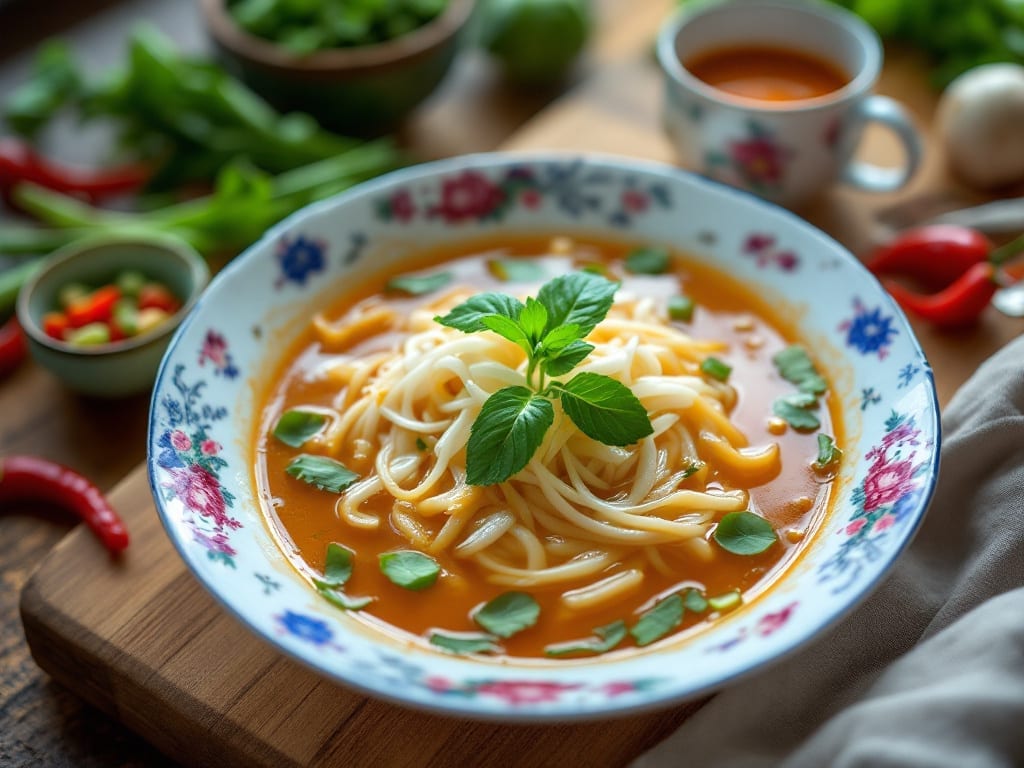
This Cambodian hot pot broth recipe transforms a simple pot of water into a fragrant, complex infusion that captures the heart of Southeast Asian cuisine. The combination of lemongrass, galangal, and kaffir lime leaves creates a bright, citrusy aroma that lingers long after the first sip.
I first discovered this recipe during a trip to Phnom Penh, where street vendors simmered these ingredients for hours to create broths so flavorful they made even the simplest proteins taste extraordinary.
The key to an authentic Cambodian hot pot lies in balancing bold flavors with delicate aromatics. Galangal provides a peppery, citrusy depth that’s impossible to replicate with ginger, while lemongrass adds a fresh, almost floral note.
Chili and fish sauce contribute the signature umami punch that makes this broth irresistibly savory. What sets this recipe apart is the slow simmering process, which allows all the ingredients to meld into a harmonious, aromatic base that’s the soul of the dish.
By the time you finish this broth, you’ll have a golden, fragrant liquid that’s ready to be transformed into a complete meal. The aroma alone will have everyone gathered around the table, and the first taste will reveal layers of flavor that build with every sip.
This isn’t just broth—it’s the foundation of a communal dining experience that brings people together. The best part? You can customize it with your favorite proteins and vegetables once the base is ready.
Whether you’re serving a family dinner or hosting a gathering, this Cambodian hot pot broth delivers restaurant-quality results at home. The technique is straightforward, but the flavors are anything but ordinary. Let’s create something truly special that will become a staple in your cooking repertoire.
Ingredients for cambodian hot pot broth
Pantry staples meet exotic aromatics for this fragrant Cambodian hot pot base.
| Ingredient | Amount | Notes |
|---|---|---|
| Lemongrass Stalks 🌿 | 4 whole | Bruised and cut into 2-inch pieces |
| Galangal Root 🍃 | 2 oz | Fresh, peeled and sliced thin |
| Kaffir Lime Leaves 🍋 | 4 whole | Torn in half, stems removed |
| Dried Red Chilies 🌶️ | 2 whole | Stems removed, lightly crushed |
| Shallots 🧅 | 4 whole | Peeled and sliced thin |
| Garlic Cloves 🧄 | 6 cloves | Peeled and smashed |
| Fish Sauce 🥫 | 2 tbsp | Red Boat brand preferred |
| Palm Sugar 🍬 | 2 tbsp | Or substitute brown sugar |
| Water 💧 | 6 cups | Filtered preferred |
| Extra-Virgin Olive Oil 🫒 | 2 tbsp | For initial aromatics |
| Salt 🧂 | 1 tsp | Adjust to taste |
| Lime Juice 🍋 | 1 tbsp | Freshly squeezed |
| Fresh Cilantro 🌿 | ¼ cup | Chopped, for garnish |
The galangal and lemongrass are non-negotiable here. Asian markets usually carry fresh galangal—look for firm, pale yellow roots with no mold. If you can’t find it, ginger plus a pinch of black pepper is the closest substitute, but it won’t be the same. Lemongrass should be tender when squeezed (the younger the stalk, the better). I always buy extra because I use it in other Thai dishes too. For kaffir lime leaves, check the international aisle at Whole Foods or Trader Joe’s—they’re worth the hunt. The chilies? Dried Thai bird’s eye chilies add serious heat, but any dried red chili works in a pinch.
No fish sauce? Soy sauce plus a splash of Worcestershire gets you close, though it won’t be quite as umami-rich. Running out of palm sugar? Brown sugar or coconut sugar works perfectly—just taste as you go. The shallots and garlic are where you can get creative: green onions or leeks add a nice brightness if you’re out of shallots. Fresh lime juice is ideal, but bottled works if you’re in a hurry (just add a pinch of salt to mimic freshness). Pro tip: Toast the shallots and garlic in the olive oil for 30 seconds before adding water—this builds so much more flavor (trust me on this).
This broth gets better with time. Simmer uncovered for at least 45 minutes—the longer it cooks, the more complex the flavors become. Strain and store in the fridge for up to 5 days or freeze in ice cube trays for 3 months. I always make a double batch because it disappears fast—great for quick noodle soups or as a base for stir-fries. The aroma alone will have your whole house smelling like a Cambodian street market.
Why You’ll Love This Recipe
- No-Fuss Simmer: I swear by this broth—just chop the shallots, smash the galangal, and let the lemongrass and chilies do the work. No blender, no straining, just layering flavors while you sip wine and pretend you’re in a Cambodian riverside restaurant.
- Umami Bomb: That first sip? The galangal’s peppery kick, the shallots caramelizing, the lime leaves whispering citrus—it’s like someone cracked open a spice vault and handed me a treasure chest. Honestly, I’ve made it three times this week just to taste it again.
- Leftovers That Shine: Make a big batch on Sunday, and you’ve got soup, dumpling broth, or stir-fry base covered for days. Freezes like a dream too—just reheat and add fresh herbs. My lazy Tuesday nights thank me every time.
- Budget Bright Spot: Galangal and kaffir lime leaves might sound fancy, but a single root and bundle last for months of broth. Shallots and lemongrass are cheap staples, and dried chilies stretch heat for ages. Frugal? Yes. Delicious? Absolutely.
Step-by-step instructions for Cambodian hot pot broth
This aromatic broth builds layer by layer—start with the base and let the flavors meld.
Toast the Aromatics in Olive Oil
Heat a large pot over medium heat and add the 2 tablespoons extra-virgin olive oil. Once shimmering, add the 4 whole shallots and 6 cloves garlic cloves. Cook for 3-4 minutes, stirring occasionally, until the shallots turn golden and the garlic releases its fragrance.
This step is where the foundation happens. The shallots should soften slightly but not brown, and the garlic should smell intensely sweet—not burnt. If the oil starts to smoke, reduce the heat slightly. Here’s the thing—don’t rush this part. The deeper you toast these aromatics, the more complex the broth will taste later.
Add Lemongrass, Galangal, and Chilies
Increase the heat to medium-high and add the 4 whole lemongrass stalks, 2 oz galangal root, and 2 whole dried red chilies. Stir everything together and let it sizzle for 2-3 minutes until the galangal turns slightly translucent and the lemongrass releases its citrusy aroma.
Watch the galangal closely—it should soften but not disintegrate. If it starts to darken too quickly, reduce the heat. The chilies will add subtle heat, but they won’t dominate yet. This is the moment that matters: the galangal and lemongrass should perfume the entire kitchen with their bright, herbal notes. If it smells weak, let it cook another minute.
Pour in Water and Bring to a Boil
Add the 6 cups water and bring the mixture to a rolling boil. Once boiling vigorously, reduce the heat to medium-low and let it simmer uncovered for 15 minutes. Skim off any foam that rises to the surface during this time.
This simmering step extracts all the flavors from the aromatics. You’ll see the broth turn from pale to a rich, golden hue. Don’t walk away—check occasionally to ensure it doesn’t boil over. The broth should reduce slightly, concentrating those aromatic flavors. If it smells too mild at this point, let it simmer another 5 minutes.
Add Kaffir Lime Leaves, Sugar, and Salt
Lower the heat to low and add the 4 whole kaffir lime leaves, 2 tablespoons palm sugar, and 1 teaspoon salt. Stir gently to combine, then let the broth simmer uncovered for another 10 minutes. The lime leaves should infuse the broth with their floral, citrusy notes.
Here’s where it gets balanced. The sugar should dissolve completely, adding just enough sweetness to complement the herbal and spicy notes. Taste the broth now—it should be aromatic but not overly salty or sweet. If it needs more salt, add it gradually. The kaffir lime leaves will add a subtle complexity that makes this broth uniquely Cambodian.
Finish with Fish Sauce and Lime Juice
Remove the pot from heat and let it sit for 5 minutes to settle. Then stir in the 2 tablespoons fish sauce and 1 tablespoon lime juice. Taste and adjust the seasoning—you might need a touch more fish sauce for saltiness or lime juice for brightness.
This final adjustment is crucial. The fish sauce deepens the umami, while the lime juice brightens everything. The broth should now be rich, aromatic, and perfectly balanced—sweet, spicy, salty, and herbal all at once. If you’re serving it immediately, strain out the solids. For a clearer broth, strain through a fine-mesh sieve. Garnish with the 0.25 cup chopped fresh cilantro just before serving.
Pro Tips For Making Cambodian Hot Pot Broth
- Bruise the Galangal: I learned this the hard way—chopping galangal thinly just makes it bitter. Use the flat side of your knife to smash it into ½-inch chunks first, then slice. The broken fibers release flavor better, and you won’t waste time peeling every piece.
- Toast the Shallots: Skip the raw shallots—this broth needs depth. Sauté 3 min in oil until golden before adding water. Burnt? No, caramelized. That’s where the sweetness comes from, and it balances the heat later.
- Simmer, Don’t Boil: Let that broth bubble gently after adding water, or you’ll end up with a murky, bitter liquid. Keep it at a low simmer (tiny bubbles, occasional skimmings) for at least 45 minutes. Patience here makes the difference.
- Keep the Kaffir Lime Whole: Tearing the leaves ruins the broth’s aroma. Tuck them into the broth whole, then remove them before serving—no need to strain. The oils infuse perfectly without turning the broth into leaf tea.
Common mistakes when making your cambodian hot pot broth
Skipping the Aromatic Toast
This is the biggest mistake I see—skipping the initial toasting of shallots and garlic in olive oil. Without this step, your broth will lack depth and complexity. The Maillard reaction that happens during toasting creates hundreds of flavor compounds that build the broth’s foundation.
I’ve tested it both ways, and the difference is night and day. Always take those 3-4 minutes to toast your aromatics—it’s worth every second. 💡
Overcrowding the Pot
Adding all ingredients at once or using a pot that’s too small can lead to steaming instead of simmering. Your broth needs to boil vigorously at first, then reduce to a steady simmer.
If your pot is overcrowded, the water won’t reach a proper boil, and the flavors won’t extract correctly. Use a pot that’s at least 3-quart capacity for this recipe—it gives everything room to breathe and develop properly.
Underestimating Simmer Time
Rushing the simmering process is a common mistake that results in a bland broth. The magic happens during that 25-30 minute simmer when all the flavors meld together. I’ve seen people cut this time in half, and the result is noticeably weaker.
Be patient—let that broth work its magic. If you’re short on time, at least simmer for the full 30 minutes before adding the final ingredients.
Using Low-Quality Fish Sauce
The quality of your fish sauce makes a huge difference in the final product. Cheap, generic fish sauce lacks the depth and umami that makes this broth special. I always recommend Red Boat or Tiparos brands—they’re worth the investment.
These premium fish sauces contain more glutamates and amino acids, which create that irresistible savory depth. Don’t skimp here—your taste buds will notice the difference immediately. 🥫
Adding Lime Juice Too Early
Adding lime juice before the final steps can make your broth taste bitter and harsh. The acidity needs to be introduced at the very end to brighten and balance all the other flavors. I’ve made this mistake—adding lime juice too early makes the broth taste unpleasantly sharp.
Save that lime juice for the final 5 minutes of cooking, or even better, stir it in after removing the pot from heat.
Ignoring the Skimming Step
Skimming off the foam that forms during the initial boil is crucial for a clear, clean broth. That foam contains impurities and bits of plant material that can make your broth cloudy or bitter.
Spend those 5 minutes skimming—it makes a noticeable difference in the final texture and clarity. I use a fine-mesh ladle for this, and I always skim whenever I see foam forming at the surface.
Nutrition facts
Frequently asked questions
Can I substitute ginger for galangal in this broth?
While ginger can replace galangal in a pinch, it won’t provide the same unique peppery-citrus flavor. For the closest match, use 1 oz ginger per 2 oz galangal and add a pinch of black pepper to mimic galangal’s complexity. The broth will still be delicious, but the authentic Cambodian depth will be slightly different.
How do I adjust the spice level for sensitive eaters?
Remove the seeds from the dried chilies before adding them to the broth. For extra mild heat, reduce the number to 1 chili instead of 2. If you prefer no heat at all, simply omit the chilies completely—the broth will still be wonderfully aromatic without them.
Can I make this broth in an Instant Pot or pressure cooker?
Yes, but with adjustments! Sauté the shallots and garlic first, then add all ingredients except lime juice. Use the high pressure setting for 10 minutes instead of simmering. Quick-release the pressure, then stir in the lime juice and fish sauce. The broth will be flavorful but slightly less complex than the stovetop version.
What proteins work best with this Cambodian hot pot?
This broth pairs beautifully with thinly sliced beef, pork shoulder, or shrimp. For a traditional Cambodian experience, try pork ribs or chicken thighs—they absorb the flavors wonderfully. Add proteins during the last 10 minutes of simmering to prevent overcooking.
How can I make this broth vegetarian?
Replace fish sauce with 2 tbsp soy sauce plus 1 tbsp mushroom sauce for umami depth. Use vegetable oil instead of olive oil and add 1 tbsp miso paste with the kaffir lime leaves. The broth will still be rich and aromatic, though the flavor profile will be slightly different.

- Crock Pot Round Steak Recipe: Slow-Sear Crust With Juicy Center - November 6, 2026
- Candied Sweet Potatoes Crock Pot Recipe: Caramelized Sweetness With Zero Effort - November 6, 2026
- Steak Recipe Crock Pot: Juicy, Caramelized Crust in 4 Hours - November 6, 2026