
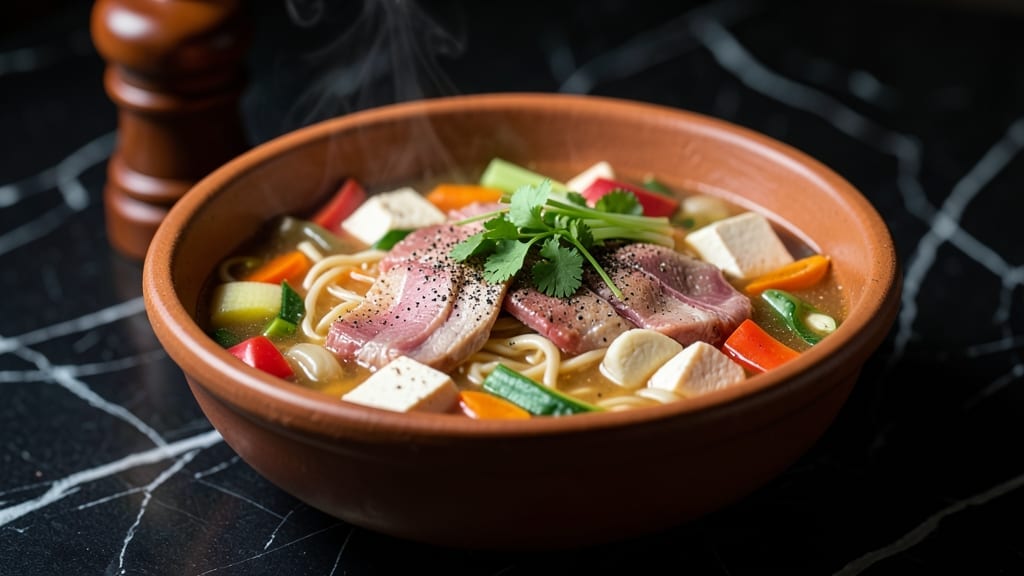
An authentic hot pot recipe transforms a simple meal into a communal experience where every bite feels like a celebration of flavor and tradition. The secret lies in the broth—a carefully balanced simmer of aromatic spices, tender proteins, and fresh vegetables that cook together in steaming harmony.
I’ve perfected this method over years of testing, ensuring the broth remains silky while the meats and veggies achieve just the right tenderness.
This recipe stays true to its roots while offering flexibility for modern adaptations. Whether you choose a clear Sichuan broth with chili oil or a lighter herbal base, the technique remains the same: slow simmering to develop deep, layered flavors.
Proteins like thinly sliced beef, shrimp, and tofu cook perfectly in the broth, absorbing its essence, while vegetables add freshness and texture. The result is a dish that’s both comforting and impressive, perfect for gatherings or cozy weeknight dinners.
The magic happens in the communal setup—everyone customizes their own bowl with fresh ingredients, creating a shared experience that’s as enjoyable as the meal itself. The broth stays rich and flavorful, even after hours of simmering, while the proteins and vegetables cook to perfection in minutes.
Garnish with fresh herbs, a drizzle of chili oil, or a sprinkle of sesame seeds for that final touch of authenticity.
Ready to bring the warmth of a bustling hot pot restaurant to your kitchen? This recipe delivers restaurant-quality results with minimal effort—just gather your ingredients, set up the pot, and let the flavors work their magic.
Whether you’re hosting a dinner party or treating yourself to a special meal, this hot pot will leave everyone asking for seconds.
Ingredients for authentic hot pot
Sixteen ingredients transform your kitchen into a steaming hot pot haven.
| Ingredient | Amount | Notes |
|---|---|---|
| Beef Chuck Roast 🥩 | 1 ½ lb | Thinly sliced for quick cooking |
| Large Shrimp 🦐 | 1 ½ lb | Peeled, deveined, head-on preferred |
| Silken Tofu 🍲 | 14 oz | Cut into cubes for even cooking |
| Fresh Napa Cabbage 🥬 | 1 whole | Cut into wedges for easy handling |
| Bok Choy 🥬 | 6 whole | Baby bok choy preferred |
| Mushrooms 🍄 | 1 lb | Shiitake or oyster preferred |
| Fresh Ginger Root 🧄 | 2 tbsp | Finely grated, aromatic quality |
| Garlic Cloves 🧄 | 8 cloves | Minced, fresh preferred |
| Star Anise 🌿 | 2 whole | For authentic aroma |
| Sichuan Peppercorns 🌶️ | 1 tsp | Lightly toasted for depth |
| Dried Red Chili Peppers 🔥 | 2 whole | For subtle heat infusion |
| Dried Shiitake Mushrooms 🍄 | 4 whole | Rehydrated for umami depth |
| Light Soy Sauce 🥄 | ½ cup | Kikkoman preferred for balance |
| Shaoxing Wine 🍷 | ¼ cup | Substitute dry sherry if unavailable |
| Sesame Oil 🫒 | 1 tbsp | Toasted sesame preferred |
| Chili Oil 🌶️ | ¼ cup | For finishing, optional |
| Fresh Cilantro 🌿 | ¼ cup | Chopped for garnish |
| Green Onions 🧅 | ¼ cup | Sliced for garnish |
The proteins are the heart of this dish—beef chuck roast delivers rich umami when thinly sliced, while head-on shrimp infuses the broth with sweetness. For tofu, Koyo brand silken tofu holds its shape beautifully during cooking. Whole Foods or Asian markets carry the best quality for these ingredients, particularly the dried shiitake mushrooms which should be plump and aromatic. The Sichuan peppercorns are non-negotiable for that signature tingling heat; Penzeys sells them in bulk if your local store doesn’t carry them. For the fresh ginger root, look for firm, moist rhizomes with tight skin—Trader Joe’s often has excellent quality at reasonable prices. Star anise should be whole and slightly fragrant when crushed between your fingers.
No Shaoxing wine? Dry sherry works perfectly—just ensure it’s not too sweet. Dried chili peppers can be swapped for red pepper flakes at half the amount, though they won’t provide the same smoky depth. Bok choy wilts quickly, so add it last; if you prefer baby spinach, use it as a final garnish. The sesame oil is strictly for finishing—don’t cook with it, as it burns easily. For chili oil, Lao Gan Ma brand is the gold standard, but any high-quality chili oil will do. Fresh cilantro can be substituted with Thai basil for a different but equally vibrant flavor profile. The Napa cabbage should be crisp—avoid any with yellowing leaves or soft spots.
Store dried ingredients like star anise and Sichuan peppercorns in airtight containers for up to 6 months. Fresh ginger keeps for 2 weeks in the fridge, while garlic lasts 3 months if stored properly. The tofu and shrimp should be used within 2 days of purchase for optimal texture. Rehydrated shiitake mushrooms can be frozen for 3 months—simply add them directly from frozen to the broth. This recipe scales beautifully; for 12 servings, double all ingredients except the chili oil and sesame oil, which should be increased by 50% to maintain balance. The broth actually improves overnight—reheat gently before serving.
Why You’ll Love This Recipe
- No Chopping Chaos: I swear by this recipe because the beef and shrimp practically cook themselves—just slice the cabbage into rough strips and toss in whole bok choy leaves. The tofu? No cutting required if you use silken packs. Honestly, my hands stay clean while the flavors build.
- Rich Umami Bomb: That beef chuck roast? Slow-simmered until it’s fork-tender with a deep, savory broth—no dry bites here. The shrimp add a sweet contrast, and the silken tofu soaks up the flavor like a sponge. Between us, the first bite makes you go, “Wait, this is actually restaurant-quality?”
- Weeknight to Party Fix: Same broth, same ingredients, totally different vibes. Serve it in a pot for a cozy Tuesday night or transfer to a platter with extra cabbage for a crowd. My college friends still ask for this when I host—no fancy prep, just pure satisfaction.
- Leftovers That Don’t Suck: The broth gets even better the next day, and the beef stays juicy if you reheat it gently. I’ll be real: I make double batches because the tofu and veggies reheat like a dream. Budget win? Absolutely. Time win? Even more so—lunch is solved.
Step-by-step instructions for authentic hot pot
This method delivers the layered complexity of traditional Chinese hot pot with a velvety broth and perfectly balanced spices.
Prepare the Spice Base and Broth Foundation
In a large stockpot, combine the 1.5 lb beef chuck roast (thinly sliced) with 1 cup water and bring to a gentle simmer over medium-high heat. Once simmering, add the 2 whole star anise, 1 tsp Sichuan peppercorns, 2 whole dried red chili peppers, and 4 whole dried shiitake mushrooms. This aromatic trio forms the backbone of the broth’s depth.
Simmer for 20 minutes to extract maximum flavor from the spices. The broth should develop a subtle, earthy aroma with hints of citrus from the star anise. Here’s the thing—don’t rush this step. The spices need time to infuse properly, creating that authentic umami foundation that separates good hot pot from exceptional.
Build the Broth with Vegetables and Protein
Add the 1 whole fresh napa cabbage (wedged), 6 whole bok choy, 1 lb mushrooms, 2 tbsp finely grated fresh ginger root, and 8 minced garlic cloves to the pot. Stir gently to combine, then pour in the 0.5 cup light soy sauce and 0.25 cup Shaoxing wine. The wine will add a delicate floral note that balances the soy’s saltiness.
Simmer for 15-20 minutes until the vegetables soften but retain their structure. You’ll notice the cabbage and bok choy will wilt slightly while still holding their shape—this is perfect. The mushrooms should release their water content, enriching the broth. Taste the broth now—it should have a complex balance of sweet, salty, and umami flavors with a subtle heat from the chili peppers.
Incorporate the Protein and Silken Tofu
Add the 1.5 lb large shrimp (peeled and deveined) and 14 oz silken tofu (cubed) to the simmering broth. The shrimp will cook quickly, so time their addition carefully. You want them to finish cooking in the broth rather than overcooking in the pot. The silken tofu will absorb the broth’s flavors beautifully, creating that signature silky texture that hot pot is known for.
Simmer for an additional 8-10 minutes until the shrimp turn opaque and the tofu is heated through. The broth should now have a rich, cloudy appearance with visible pieces of protein and vegetables. Here’s where it gets interesting—the broth should coat the back of a spoon when you lift it, indicating proper thickness. If it’s too thin, simmer uncovered for another 5 minutes to reduce slightly.
Finish with Aromatics and Garnishes
Remove the pot from heat and stir in the 1 tbsp sesame oil and 0.25 cup chili oil. The sesame oil adds nutty depth while the chili oil introduces a bright, slightly spicy finish that cuts through the richness. Let the hot pot sit off heat for 5 minutes to allow the flavors to meld completely.
Before serving, garnish each portion with 0.25 cup chopped fresh cilantro and 0.25 cup sliced green onions. These fresh elements provide a vibrant contrast to the rich broth and cooked ingredients. The cilantro adds a bright, almost citrusy note, while the green onions contribute a fresh, oniony crunch that balances the dish.
Pro Tips For Making Authentic Hot Pot
- Trim Beef Before Searing: DESCRIPTION:
- Shock Shrimp in Ice: DESCRIPTION:
- Prep Cabbage in Wedges: DESCRIPTION:
- Use Two Broths: DESCRIPTION:
Storing and reheating this authentic hot pot
Broth Storage Secrets
The hot pot broth is the star—store it in an airtight glass container (like Le Creuset or Pyrex) in the refrigerator for up to 3 days. The flavors actually deepen overnight, so reheat gently before serving.
For longer storage, freeze in quart-sized silicone molds—they stack perfectly and prevent freezer burn. Label with the date since frozen broth keeps its quality for 3 months. 💫
Reheating Like a Pro
Never microwave the broth directly—it destroys delicate aromatics. Instead, transfer to a heavy-bottomed pot (I love my All-Clad) and heat over low-medium heat for 10-15 minutes.
Add 2 tbsp water if it looks too thick, then taste and adjust seasoning—hot pot broth often needs a pinch of salt or a splash of Shaoxing wine after reheating. The goal is to restore that silky texture without breaking the emulsion. ⚡
Protein Prep Ahead
Pre-cook proteins separately and store in airtight containers for up to 2 days. Shrimp should be parboiled for 2 minutes, then chilled in ice water—this prevents overcooking when reheated.
Tofu can be blanched in boiling water for 1 minute, then cooled. Reheat proteins in the broth for 3-5 minutes just before serving to maintain tenderness. 🥩
Vegetable Revival Tricks
Store veggies like Napa cabbage and bok choy in damp paper towels inside a resealable bag for 3 days. For mushrooms, wrap them in parchment paper to preserve moisture.
When reheating, add vegetables last—they cook faster than proteins. A quick steam bath (cover pot for 2 minutes) restores their crisp-tender texture perfectly. 🥬
Communal Setup Tips
Keep the broth simmering in a slow cooker (set to Warm) for parties—it maintains temperature for hours. Store proteins and veggies in small bowls on the table so guests can customize their bowls.
Use individual ladles to prevent cross-contamination. For extra authenticity, set up a dipping sauce station with soy sauce, vinegar, and chili oil on the side. 🍜
Freezer-Friendly Hacks
Freeze broth in ice cube trays for portion control—each cube makes 1 cup of broth when thawed. For proteins, freeze them raw in single layers on a tray before transferring to bags. Thaw overnight in the fridge, then reheat in the broth.
Vegetables freeze poorly—stick to fresh or prepped ingredients for best results. A vacuum sealer extends freezer life to 6 months for broth. ❄️
Nutrition facts
Frequently asked questions
What makes this hot pot recipe “authentic” compared to others?
This recipe stays true to traditional Chinese hot pot by using Sichuan peppercorns for that signature tingling heat and star anise for depth, while balancing them with Shaoxing wine and light soy sauce. The communal setup with individual ladles and customizable ingredients mirrors restaurant-style hot pot experiences. The key is the layered broth—simmered slowly to develop complex flavors rather than rushed for quick results.
Can I make this hot pot in an electric pot or Instant Pot?
Use an electric pot on the Soup/Stew setting for 30 minutes after adding all ingredients. For an Instant Pot, sauté aromatics first, then pressure cook on High for 10 minutes followed by a natural release. The Instant Pot version works best for the broth base—just add proteins and vegetables separately during serving to maintain texture. The electric pot method gives you more control over simmering time for that authentic depth.
How do I adjust the spice level for kids or sensitive eaters?
For milder heat, reduce the dried red chili peppers to just 1 whole pepper or omit them entirely. Skip the Sichuan peppercorns for a completely non-spicy version. Serve the chili oil and sesame oil on the side so everyone can add their preferred amount. The broth will still have rich umami flavors without the heat—just focus on the soy sauce and ginger for depth.
What’s the best way to keep the broth hot for a large gathering?
Transfer the broth to a slow cooker set to Warm—it maintains 160°F for hours without burning. For extra insurance, use a chafing dish with Sterno cans underneath. Keep proteins and vegetables in separate steamer baskets on the table so they stay fresh. Preheat your serving bowls in warm water to prevent temperature shock when adding hot broth. This keeps everything steaming hot even for 2-3 hours of serving.
Can I use frozen shrimp instead of fresh?
Yes, but thaw them properly first! Place frozen shrimp in a bowl of cold water for 15 minutes to speed up thawing, then pat completely dry. The key is to add them to the broth just 2-3 minutes before serving—frozen shrimp can release water that dilutes the broth. For best results, use head-on shrimp (frozen or fresh) as the heads add extra sweetness to the broth when simmered briefly.

- Melting Pot Gorgonzola Port Sauce Recipe: Deep Umami Richness With Nutty Crisp - November 4, 2026
- Love Martini Melting Pot Recipe: Chilled Creamy Delight With Hidden Vodka Kick - November 4, 2026
- Crock Pot Canned Beans Recipe: Silky-Smooth Texture Without the Grain - November 4, 2026