
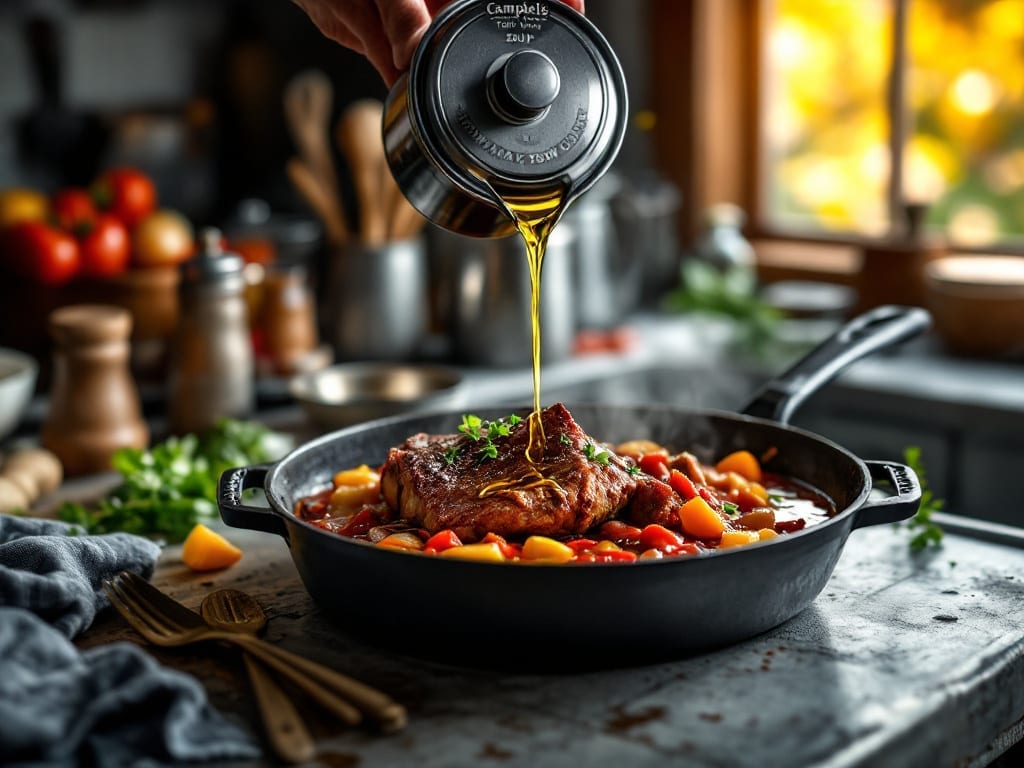
Transforming a simple pot roast into a restaurant-worthy meal starts with this Campbell’s tomato soup pot roast recipe—where rich, slow-braised beef meets velvety soup for a dish that feels indulgent yet effortless.
The secret lies in using Campbell’s tomato soup as both a flavor base and tenderizing agent, creating a sauce that clings to every bite of perfectly cooked beef. I’ve perfected this method over countless weeknight dinners, and it never fails to impress without requiring hours at the stove.
What makes this recipe truly special is how it turns basic ingredients into something extraordinary. A 3-4 pound chuck roast becomes fork-tender through slow cooking, while the tomato soup transforms into a luscious, slightly sweet sauce that balances the beef’s natural richness.
The process is straightforward: brown the meat, sear the vegetables, add the soup as both liquid and flavor enhancer, then let everything simmer until the beef falls apart. This isn’t just comfort food—it’s a foolproof method that delivers professional-quality results every time.
By the time you serve this dish, you’ll have a pot filled with melt-in-your-mouth beef, caramelized onions, and tender vegetables all swimming in a glossy tomato sauce that’s rich yet balanced.
The aroma alone will have everyone gathering at the table, and the first bite delivers that perfect harmony of tender meat and velvety sauce. This is the kind of meal that turns ordinary weeknights into something special—without the fuss of elaborate techniques.
The best part? Leftovers reheat beautifully, making this an ideal make-ahead dish for busy schedules. Whether you’re feeding a family or hosting dinner guests, this recipe delivers on flavor, texture, and convenience. Let’s get started with the step-by-step instructions that will have you serving this classic in no time.
Ingredients for campbell’s tomato soup pot roast
Transform basic pantry staples into restaurant-quality pot roast using Campbell’s tomato soup as the secret weapon.
| Ingredient | Amount | Notes |
|---|---|---|
| Chuck Roast 🥩 | 3 ½ lb | With good marbling for tenderness |
| Campbell's Tomato Soup 🍅 | 2 cans | Condensed, 10.5 oz each |
| Yellow Onions 🧅 | 2 whole | Medium, sliced into half-moons |
| Carrots 🥕 | 4 whole | Medium, peeled and halved |
| Celery Stalks 🥬 | 4 whole | Fresh, cut into 1-inch pieces |
| Garlic Cloves 🧄 | 4 cloves | Fresh, minced |
| Beef Broth 💧 | 2 cups | Low-sodium preferred |
| All-Purpose Flour 🌾 | 2 tbsp | For thickening sauce |
| Worcestershire Sauce 🍯 | 1 tbsp | For depth of flavor |
| Dried Thyme 🌿 | 1 tsp | Or 1 tbsp fresh thyme |
| Salt 🧂 | 1 ½ tsp | Diamond Crystal kosher |
| Black Pepper 🌶️ | 1 tsp | Freshly ground |
| Bay Leaves 🌿 | 2 whole | Removed before serving |
| Extra-Virgin Olive Oil 🫒 | 2 tbsp | For searing |
The chuck roast is non-negotiable for this dish—look for cuts with visible marbling at your local butcher or grocery store meat counter. Costco and Whole Foods typically carry high-quality chuck roasts, but any reputable supermarket’s pre-packaged chuck will work. The beef should be bright red, not brown or grayish. For the Campbell’s tomato soup, stick with the classic condensed version—the thicker consistency helps create that velvety sauce. If you prefer low-sodium, use it but add an extra pinch of salt later to balance the flavors. The onions, carrots, and celery form the aromatic vegetable base, so choose fresh, firm produce with no soft spots or bruising.
No Campbell’s tomato soup? Substitute with 2 cups of homemade tomato sauce or high-quality marinara, but add 1 tbsp of sugar to mimic the soup’s natural sweetness. Running low on beef broth? Use 2 cups of water plus 1 bouillon cube, but reduce the salt in the recipe by half. For the Worcestershire sauce, Lea & Perrins is the gold standard, but any quality brand will work. Fresh thyme is ideal, but if you only have dried, use one-third the amount—dried thyme is more concentrated. The bay leaves add depth but should be removed before serving, so pick fresh, aromatic ones from your local market for the best flavor. For the flour, King Arthur or Gold Medal brands work beautifully for thickening.
This dish tastes even better the next day as the flavors meld together, so plan ahead and make extra. Store leftovers in an airtight container in the refrigerator for up to 5 days, or freeze portions for up to 3 months. To reheat, add a splash of water or broth to prevent drying out. The sauce thickens as it cools, so you may need to thin it with a bit of water or broth when reheating. For meal prep, portion into individual containers with a side of crusty bread or mashed potatoes for a complete meal. The beef will continue to tenderize slightly as it sits, so cut against the grain for maximum tenderness when serving.
Why You’ll Love This Recipe
- One-Pot Magic: I swear by this recipe when I’m too tired to scrub three pots. Chuck roast, soup, and veggies all simmer together—no fancy layers, no stress. Just dump, stir, and let it work.
- Tomato-Soup Secret Weapon: That canned Campbell’s soup isn’t just filling—it’s the star. The umami-rich broth melts into the meat, while the onions and carrots caramelize right in the pot. Rich, tangy, and just sweet enough.
- Leftovers That Win: Between us, this dish tastes better the next day. The roast gets fork-tender, the veggies soak up all the flavor, and I’ve reheated it for lunch three times without a single complaint.
- Budget Feast for Crowds: A chuck roast feeds six, costs half the price of fancy cuts, and the soup stretches it into a meal that actually satisfies. Honestly? This is how I feed my book club without breaking the bank.
Step-by-step instructions for slow-braised tomato soup pot roast
This method transforms tough chuck roast into fork-tender perfection through precise timing and layering of flavors.
Sear the Chuck Roast for Deep Flavor
Pat the 3.5 lb chuck roast completely dry with paper towels—this ensures maximum browning. Heat a Dutch oven over medium-high heat and add 2 tablespoons extra-virgin olive oil. Once shimmering, place the roast fat-side down and sear for 8-10 minutes until deeply browned on all sides. Press down gently with a spoon to render fat and develop crust.
Remove the roast and set aside. The goal here is to create a flavorful browned crust known as the “fond” that will dissolve into the sauce later. If the fond sticks, don’t panic—simply add 1 tablespoon beef broth to deglaze and scrape up those precious browned bits.
Build the Aromatic Vegetable Base
In the same Dutch oven, add 2 whole yellow onions, 4 whole carrots, 4 whole celery stalks, and 4 cloves garlic cloves. Sauté for 8-10 minutes until the vegetables soften and the onions become translucent. This step develops the foundational flavors that will carry through the entire dish.
Stir in 2 tablespoons all-purpose flour and cook for 1 minute to remove any raw taste. This creates a roux that will thicken the sauce later. Immediately pour in 2 cups beef broth and scrape up any browned bits from the bottom of the pot—this ensures maximum flavor extraction.
Layer the Tomato Soup Foundation
Add the 2 cans Campbell’s tomato soup, 1 tablespoon Worcestershire sauce, 1 teaspoon dried thyme, 1.5 teaspoons salt, and 1 teaspoon black pepper. Stir well to combine all ingredients into a cohesive mixture. The soup provides both acidity and natural thickening properties that create the signature velvety texture.
Return the seared chuck roast to the pot, along with 2 whole bay leaves. Bring the mixture to a gentle simmer over medium-low heat. Here’s the critical part: maintain a barely bubbling surface—this ensures even cooking without boiling over. Cover the pot and let it cook for 2 hours to allow the meat to tenderize gradually.
Finish with Low and Slow Braising
After the initial 2 hours, check the doneness by inserting a meat thermometer into the thickest part of the roast. It should register 190-195°F—this indicates the meat is fork-tender and ready. If it hasn’t reached this temperature, continue braising for another 30-60 minutes until it does.
The key to perfect pot roast lies in this low-and-slow braising technique. The collagen in the meat breaks down over time, creating that signature fork-tender texture while the flavors meld together into a harmonious blend. Remove the 2 whole bay leaves before serving as they can be bitter when overcooked.
Rest and Serve with Pan Sauce
Transfer the pot roast to a cutting board and tent loosely with aluminum foil. Let it rest for 15 minutes—this crucial step allows the juices to redistribute throughout the meat, preventing them from running out when sliced. The resting period also gives everyone time to set the table and prepare sides.
Slice the chuck roast against the grain into ½-inch thick pieces. Ladle the rich tomato-vegetable sauce over the meat and serve immediately. The sauce should coat each bite with its velvety texture and complex flavors. This dish pairs beautifully with crusty bread or buttered egg noodles.
Pro Tips For Making Campbell’S Tomato Soup Pot Roast
- Sear the Roast First: Ditch the slow start—pat that chuck roast dry and sear it hard in a hot pot for 3-4 minutes per side before adding anything else. I used to skip this, and the soup just tasted like… well, soup. A proper crust locks in flavor and keeps the meat from turning mushy later.
- Dice Veggies Evenly: Cut onions, carrots, and celery into uniform ½-inch chunks—no tiny bits, no giant hunks. The recipe calls for a “soup base,” but uneven pieces mean some veggies get soggy while others stay crunchy. Lazy chopping = uneven texture. (Yes, even if you’re impatient like me.)
- Simmer, Don’t Boil: After adding the tomato soup, keep the heat at a gentle simmer—tiny bubbles, occasional swirls. I learned this the hard way when I cranked it up and ended with a watery, pasty mess instead of rich, velvety sauce. Patience here makes all the difference.
- Deglaze with a Splash: After searing the roast, hit the pot with ¼ cup of water or broth and scrape up those browned bits before adding the soup. Those bits are flavor gold—skipping the deglaze means losing half the depth of taste. (Your future self will notice.)
Creative variations of this dish
Italian-Inspired Twist
Swap the beef broth for 2 cups low-sodium chicken broth and add 1 teaspoon Italian seasoning along with the thyme. Replace Worcestershire sauce with 1 tablespoon balsamic vinegar and finish with ¼ cup heavy cream stirred in during the last 10 minutes of cooking.
This creates a creamy, tangy sauce reminiscent of a Tuscan-inspired pot roast. 🍷
Smoky BBQ Version
Replace the tomato soup with 1 (15 oz) can BBQ sauce (like Starkist Smoky & Sweet) and add 1 teaspoon smoked paprika and ½ teaspoon garlic powder to the flour mixture.
Cook the roast uncovered for the first 1 hour to develop a smoky crust, then add the BBQ sauce and proceed with braising. Serve with pickled red onions for extra tang. 🔥
Creamy Mushroom Upgrade
Sauté 8 oz sliced cremini mushrooms with the onions and carrots, then deglaze with 2 tablespoons white wine instead of broth. Stir in ½ cup heavy cream along with the tomato soup for a luxurious, earthy sauce. Garnish with fresh parsley and a sprinkle of Parmesan cheese before serving. 🍄
Spicy Cajun Kick
Add 1 teaspoon Cajun seasoning (like Tony Chachere’s) and ½ teaspoon cayenne pepper to the flour mixture. Deglaze with 1 tablespoon hot sauce (like Crystal) after browning the meat. Serve over steamed white rice with green onions for a Louisiana-inspired twist. 🌶️
Comforting Potato Addition
Add 2 cups baby potatoes (halved) to the Dutch oven with the other vegetables. They’ll absorb the flavors beautifully while cooking alongside the roast. For extra richness, stir in 2 tablespoons sour cream during the final 5 minutes of cooking. This turns it into a hearty one-pot meal. 🥔
Slow Cooker Adaptation
For the slow cooker version, brown the meat in a skillet first, then transfer everything (including the seared vegetables) to a 6-quart slow cooker. Cook on LOW for 8 hours or HIGH for 5 hours.
The tomato soup’s natural thickening properties work perfectly in slow cookers, creating a luscious sauce without needing to thicken further. 🍲
Nutrition facts
Frequently asked questions
Can I use a different cut of beef instead of chuck roast?
While chuck roast is ideal for its marbling and tenderness, you can substitute with bottom round or brisket—just increase cooking time by 30-60 minutes since these cuts are tougher. Avoid lean cuts like sirloin, as they won’t develop the same rich flavor.
How do I prevent the sauce from getting too thin?
If the sauce seems too watery, mix 1 tablespoon cornstarch with 2 tablespoons cold water and stir it into the simmering pot. Cook for 2-3 minutes until thickened. Alternatively, simmer uncovered for 5-10 minutes to reduce naturally. The Campbell’s tomato soup already thickens as it cools, so don’t overcorrect!
Can I make this in an Instant Pot or electric pressure cooker?
Yes! Sear the roast first, then add all ingredients (including soup) and cook on high pressure for 60 minutes. Release pressure naturally, then shred the meat. The sauce will be thinner but still flavorful—simmer uncovered for 5 minutes to thicken. Pressure cooking cuts time dramatically while keeping the beef tender.
What’s the best way to reheat leftovers?
Gently reheat in a pot over low heat with 2 tablespoons water or broth to prevent drying. Avoid microwaving, as it can make the sauce watery. For extra richness, stir in 1 tablespoon butter at the end. Leftovers taste even better the next day as flavors meld!
Why does my pot roast turn out tough instead of tender?
This usually happens from overcooking or not enough liquid. Always cook to 190-195°F internal temp, and ensure the pot has enough liquid (about 3 cups total) to braise properly. If using a smaller pot, reduce cooking time by 30 minutes. The Campbell’s soup helps tenderize, but proper liquid levels are key!

- Braised Beef Short Ribs Recipe: Crock Pot Fall-Off-Bone Magic in 6 Hours - November 1, 2026
- Crock Pot Cocoa Recipe: Velvety Warmth With Hidden Spice Magic - November 1, 2026
- White Queso Crock Pot Recipe: Ultra-Smooth Melt Without the Grain - November 1, 2026