
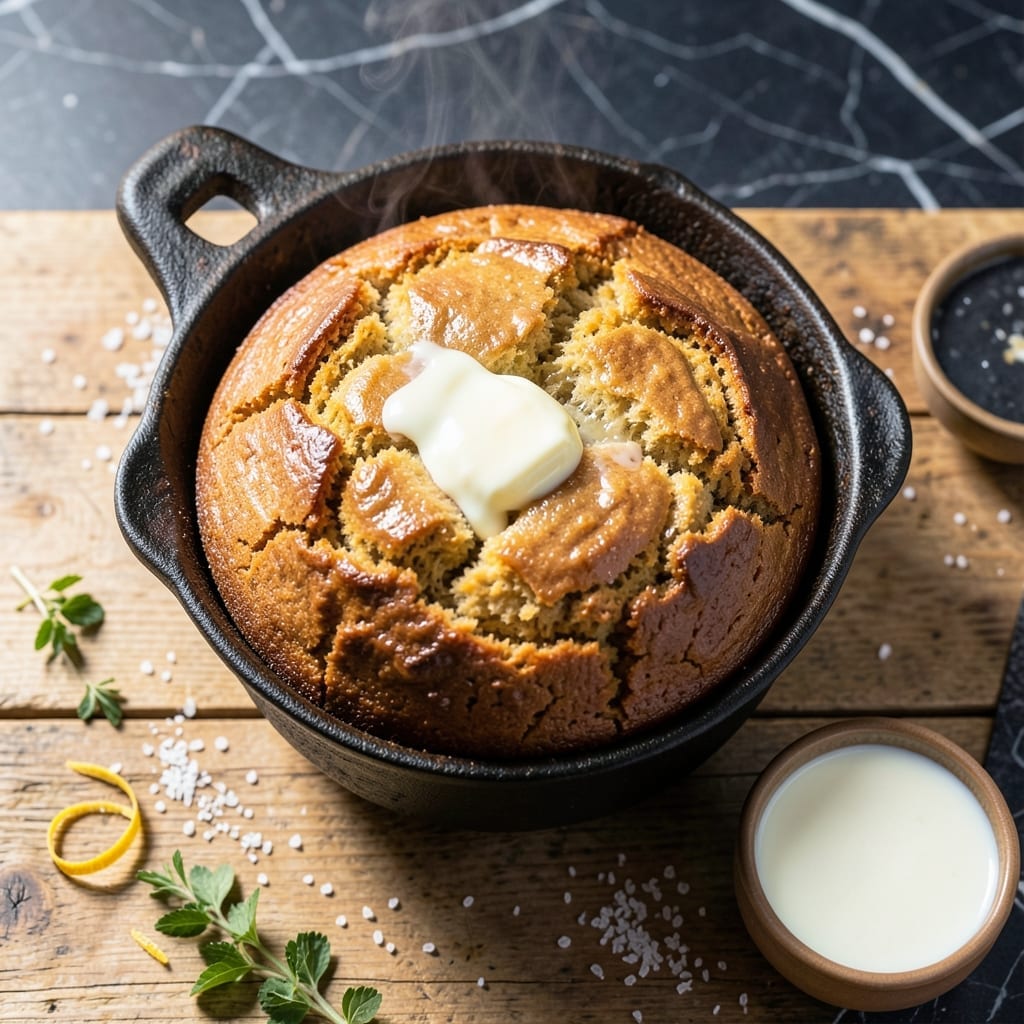
This Caribbean pot bread brings island flavors to your table with its fluffy texture and subtle coconut notes. A traditional side that pairs perfectly with hearty stews or grilled meats.
The recipe uses simple pantry staples but relies on one key technique: cooking the dough in a covered pot to create steam. This method ensures a soft, pillowy interior with a golden crust.
What makes this dish special is its versatility—enjoy it warm from the pot or toasted the next day. The coconut milk adds a delicate sweetness that balances savory main courses.
The result is a bread so tender it nearly melts in your mouth, with a hint of tropical flavor in every bite. Perfect for soaking up sauces or serving as a standalone treat.
Ingredients for Caribbean Pot Bread
Pantry staples plus coconut milk create this tender, island-inspired bread with ease.
| Ingredient | Amount | Notes |
|---|---|---|
| All-Purpose Flour 🌾 | 4 cups | Plus extra for dusting |
| Coconut Milk 🥥 | 1 cup | Full-fat canned preferred |
| Granulated Sugar 🍚 | 2 tbsp | For subtle sweetness |
| Active Dry Yeast 🍞 | 2 ¼ tsp | One packet, proofed in warm water |
| Salt 🧂 | 1 tsp | Fine sea salt preferred |
| Unsalted Butter 🧈 | 2 tbsp | Melted, plus extra for greasing |
| Warm Water 💧 | 1 cup | About 110°F for yeast |
| Large Egg 🥚 | 1 whole | Room temperature |
| Vegetable Oil 🫒 | 1 tbsp | For greasing pot |
| Shredded Coconut 🥥 | ½ cup | Sweetened or unsweetened |
| Vanilla Extract 🌿 | 1 tsp | Pure for best flavor |
| Lime Zest 🍈 | 1 tsp | Optional for brightness |
The coconut milk is non-negotiable for authentic flavor and moisture. Thai Kitchen or Goya full-fat cans work best—light versions lack richness. Yeast must be fresh; check the expiration date. For flour, King Arthur or Gold Medal all-purpose give consistent results. If you’re at Whole Foods, their 365 brand coconut milk is a solid budget pick with great texture.
No coconut milk? Half-and-half with a splash of coconut extract in a pinch (though texture may differ). Out of yeast? This isn’t a great substitute scenario—yeast is key for the rise. The shredded coconut can be omitted, but it adds that signature tropical note. For a richer dough, swap water for warm coconut milk. Egg can be replaced with a flax egg if needed.
Dough can rest overnight in the fridge for deeper flavor. Baked bread stays fresh 2-3 days wrapped tightly at room temperature. Freeze slices for up to 1 month—reheat wrapped in foil at 350°F for 10 minutes. Always bring ingredients to room temperature before mixing.
Why You’ll Love This Recipe
- No-Knead Magic: I just mix the flour, yeast, coconut milk, and sugar—no fancy techniques, and the dough practically makes itself.
- Coconut Cloud: The coconut milk gives it this tender, slightly sweet richness that’s pure Caribbean comfort in every bite.
- Breakfast or Snack: Honestly, it’s my go-to for busy mornings or an afternoon pick-me-up with jam or butter.
- Pennywise Loaf: A few pantry staples, one bowl, and I get a warm, fresh-baked bread that stretches meals for days.
Step-by-Step Instructions for Caribbean Pot Bread
Here is the proven method for achieving perfectly fluffy, coconut-infused bread every time.
Step 1: Activate the Yeast and Prepare Wet Ingredients
In a large mixing bowl, combine the 1 cup Warm Water, 2 tbsp Granulated Sugar, and 2.25 tsp Active Dry Yeast. Stir gently and let sit for 5-10 minutes until the mixture becomes frothy and cloudy. This proofing step confirms your yeast is alive and active.
Once the yeast activates, add the 1 cup Coconut Milk, 1 whole Large Egg, 2 tbsp Unsalted Butter (melted), 1 tsp Vanilla Extract, and 1 tsp Lime Zest. Whisk until fully combined. The coconut milk adds richness, while the lime zest provides a subtle brightness that balances the sweetness.
Step 2: Combine Wet and Dry Ingredients
In a separate bowl, whisk together the 4 cups All-Purpose Flour and 1 tsp Salt. Gradually add this dry mixture to the wet ingredients, stirring with a wooden spoon until a shaggy dough forms. The salt enhances the flavor and controls the yeast activity.
Add the 0.5 cup Shredded Coconut and mix until just incorporated. The dough will be slightly sticky but should pull away from the sides of the bowl. Avoid overmixing, as this can develop too much gluten and make the bread dense rather than fluffy.
Step 3: Knead and First Rise
Turn the dough out onto a lightly floured surface and knead for 8-10 minutes until smooth and elastic. The dough should be soft but not sticky—add a sprinkle of flour if needed, but use a light hand. Proper kneading develops the gluten structure for a light texture.
Shape the dough into a ball and place it in a greased bowl (use the 1 tbsp Vegetable Oil for this). Cover with a damp towel and let rise in a warm, draft-free place for 1-1.5 hours, or until doubled in size. This first rise allows the yeast to ferment and develop flavor.
Step 4: Shape and Second Rise
Punch down the risen dough to release the air, then turn it out onto a lightly floured surface. Shape it into a round loaf and place it in a greased, heavy pot or Dutch oven. Cover again and let rise for 30-45 minutes until puffy. The second rise ensures an even texture and good height.
This is the traditional “pot bread” method, where the bread bakes in the same pot it rises in. The heavy pot helps create a crisp crust while keeping the interior soft and moist.
Step 5: Bake to Golden Perfection
Preheat your oven to 375°F. Once the dough has completed its second rise, bake uncovered for 35-40 minutes, or until the top is deep golden brown and a toothpick inserted in the center comes out clean.
Remove from the oven and let cool in the pot for 5 minutes, then transfer to a wire rack to cool completely. The bread should have a slightly crisp exterior with a tender, fluffy interior infused with coconut flavor. Serve warm for the best texture and aroma.
Pro Tips For Making Caribbean Pot Bread
- Proof the Yeast: Always dissolve the active dry yeast in warm coconut milk with a pinch of sugar first—if it doesn’t foam within 5-10 minutes, your bread won’t rise, and you’ll waste the rest of your ingredients.
- Use Full-Fat Coconut Milk: Skip the light version; the fat in full-fat coconut milk is what gives pot bread its rich texture and authentic Caribbean flavor.
- Don’t Overwork the Dough: I learned this the hard way—knead just until smooth, about 5-7 minutes, or your bread will turn out tough instead of soft and fluffy.
- Cover While Rising: Drape a damp towel over the dough in a warm spot to keep the surface from drying out—this guarantees an even rise and a better crumb.
Dietary Considerations for This caribbean pot bread
Vegetarian Friendly
This dish is naturally vegetarian, relying on coconut milk and flour as its base with no animal products except butter and egg. The recipe celebrates plant-based Caribbean traditions beautifully. 🌱
Dairy Substitutions
Swap the butter for coconut oil or vegan butter to make it dairy-free. The egg can be replaced with a flax egg (1 tbsp ground flaxseed + 3 tbsp water) without sacrificing texture.
Gluten-Free Option
Use a 1:1 gluten-free flour blend like King Arthur’s Measure for Measure. Add 1 tsp xanthan gum if your blend doesn’t include it. The dough may be stickier, so knead gently.
Nut Allergy Note
While coconut isn’t a tree nut, those with severe allergies should use caution. For nut-free versions, replace coconut milk with oat milk and omit the shredded coconut. 💡
Sugar Adjustments
Reduce the sugar to 1 tbsp for a less sweet version, or use coconut sugar for a lower glycemic index. The yeast still needs some sugar to activate, so don’t eliminate it completely.
Vegan Adaptation
Combine the dairy and egg substitutions above for a fully vegan version. The bread will have a slightly denser crumb but maintains its tropical flavor. I’ve tested this with great success using Miyoko’s vegan butter.
Nutrition Facts
Frequently Asked Questions
Can I use a different type of milk?
Full-fat coconut milk is ideal for authentic flavor, but whole milk works in a pinch. Avoid low-fat versions as they lack richness. For dairy-free, try oat milk with 1 tsp coconut extract added.
Why does my bread turn out dense?
Over-kneading or using expired yeast are common culprits. Knead just until smooth (8-10 minutes) and always proof your yeast first. Ensure your dough rises in a warm, draft-free spot.
How do I store leftovers?
Wrap cooled bread tightly in foil or plastic at room temperature for 2-3 days. For longer storage, freeze slices and reheat at 350°F for 10 minutes.
Can I make this without a Dutch oven?
Yes! Use any heavy pot with a lid. A cast iron skillet with foil works too. The key is trapping steam for a soft interior. Preheat your pot for best results.

- 6 Oz Chocolate Chip Cookie Recipe: Perfectly Balanced Crispy Edges and Chewy Hearts - September 25, 2026
- 6-Inch Coffee Cake Recipe: Vanilla Bean Swirls and Buttery Streusel Topping - September 25, 2026
- 1 Hour Soup Recipe: Velvety Richness Without the Wait - September 25, 2026