
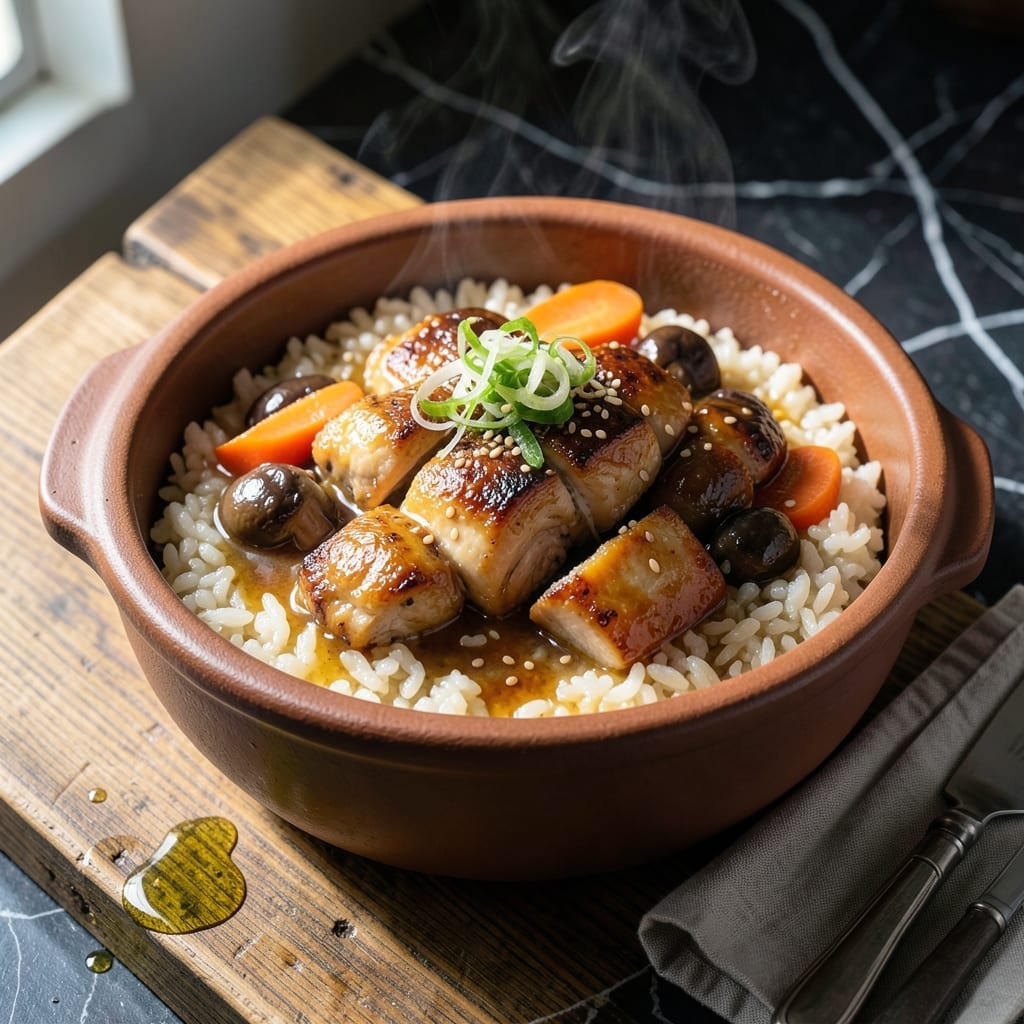
There’s a special warmth that comes from a traditional Japanese rice pot, where simple ingredients transform into hearty comfort. This method honors the donabe style, using gentle heat to coax out deep, savory flavors from each component.
The beauty lies in its simplicity: rice, protein, and vegetables cook together in one pot, absorbing shared flavors. I’ve refined this approach to ensure the rice stays perfectly fluffy while the toppings become tender and rich.
What emerges is a meal that feels both nostalgic and nourishing. The rice at the bottom develops a subtle crispness, while the ingredients above melt into a harmonious whole. It’s comfort food at its most authentic.
Serve it straight from the pot for a truly traditional experience. Here’s how to make it.
Ingredients for Japanese Rice Pot
Simple, authentic ingredients create this deeply comforting one-pot meal in true donabe style.
| Ingredient | Amount | Notes |
|---|---|---|
| Japanese Short-Grain Rice 🍚 | 2 cups | Rinsed until water runs clear |
| Chicken Thighs 🍗 | 1 ½ lb | Boneless, skin-on preferred |
| Carrots 🥕 | 2 whole | Peeled, cut into chunks |
| Shiitake Mushrooms 🍄 | 8 pieces | Fresh or rehydrated dried |
| Dashi Stock 🥣 | 2 ½ cups | Homemade or store-bought |
| Soy Sauce 🫒 | 3 tbsp | Low-sodium preferred |
| Sake 🍶 | 2 tbsp | Dry variety for cooking |
| Mirin 🍯 | 2 tbsp | Sweet cooking rice wine |
| Garlic Cloves 🧄 | 3 cloves | Minced for depth |
| Fresh Ginger 🌿 | 1 tbsp | Grated for aroma |
| Green Onions 🧅 | 4 whole | Sliced for garnish |
| Neutral Oil 🛢️ | 1 tbsp | For searing chicken |
| Sesame Oil 🫒 | 1 tsp | Toasted, for finishing |
| Salt 🧂 | ½ tsp | Adjust to taste |
The rice is non-negotiable—Japanese short-grain like Koshihikari or Nishiki delivers that sticky, fluffy texture essential to this dish. Asian markets often carry premium varieties, but most Whole Foods locations stock it too. For the dashi, instant granules work in a pinch, but homemade (kombu plus bonito flakes) yields superior depth. The chicken thighs should have skin on—it crisps beautifully and renders fat for flavor.
No sake? Dry white wine plus a pinch of sugar mimics the balance. Mirin can be replaced with 1 tbsp sugar plus 1 tbsp water, though the complexity won’t be identical. For a vegetarian version, swap chicken for firm tofu and use vegetable dashi. The mushrooms are flexible—cremini or shimeji both work well. Always rinse the rice thoroughly—this removes excess starch for optimal texture.
Leftovers reheat surprisingly well. Store in an airtight container for up to 3 days in the fridge. The rice will absorb more liquid overnight, so add a splash of water when reheating. For best results, consume within 24 hours—the crispy bottom layer is best fresh from the pot. Freezing isn’t recommended, as it alters the rice texture irreparably.
Why You’ll Love This Recipe
- One Pot Wonder: I just toss everything in, let it simmer, and the rice soaks up all the dashi and chicken juices like magic.
- Umami Bomb: The shiitakes and dashi create this deep, savory richness that makes every bite ridiculously good.
- Weeknight Hero: Honestly, it’s my go-to for busy evenings—ready in 30 minutes and the kids actually eat the carrots.
- Stretches Far: Leftovers taste even better the next day, and it’s cheap to make with just a few ingredients.
Step-by-Step Instructions for Japanese Rice Pot
Traditional technique meets modern convenience with this authentic approach to donabe-style cooking.
Step 1: Prepare and Sear the Chicken Thighs
Pat the 1.5 lb Chicken Thighs dry with paper towels and season lightly with the 0.5 tsp Salt. Heat the 1 tbsp Neutral Oil in a heavy pot or Dutch oven over medium-high heat until it shimmers.
Add the chicken thighs skin-side down and sear undisturbed for 5-6 minutes until the skin is deep golden brown and crisp. The fat should render slightly but not burn. Flip and cook for another 3-4 minutes until just cooked through. Remove and set aside.
Step 2: Sauté Aromatics and Vegetables
In the same pot, add the 2 whole Carrots, 8 pieces Shiitake Mushrooms, minced 3 cloves Garlic Cloves, and grated 1 tbsp Fresh Ginger. Sauté over medium heat for 4-5 minutes until the mushrooms begin to soften and the carrots develop light caramelization.
This builds the flavor foundation. The aroma should be fragrant and the mushrooms should release their moisture before browning. Stir occasionally to prevent sticking, but allow some contact time for proper browning.
Step 3: Toast Rice and Build Flavor Base
Add the rinsed 2 cups Japanese Short-Grain Rice to the pot and stir to coat with the rendered fat and vegetables. Toast for 1-2 minutes until the rice becomes slightly translucent at the edges—this enhances its nutty flavor.
Pour in the 3 tbsp Soy Sauce, 2 tbsp Sake, and 2 tbsp Mirin. Stir well to distribute the liquids evenly and deglaze the pot, scraping up any browned bits from the bottom. The mixture should sizzle and become deeply aromatic.
Step 4: Add Liquids and Finish Cooking
Return the chicken thighs to the pot, skin-side up. Pour in the 2.5 cups Dashi Stock and bring to a gentle boil over medium-high heat. Once boiling, reduce heat to low, cover, and simmer for 20-25 minutes.
The rice should absorb most of the liquid and become tender. Check that the chicken is fully cooked (internal temperature of 165°F) and the rice is no longer chalky. The top should have a slightly crispy, caramelized layer where the rice meets the pot.
Step 5: Rest and Garnish for Serving
Remove from heat and let the pot sit covered for 10 minutes. This allows the rice to steam and the flavors to meld completely. The texture should be creamy with distinct grains, and the chicken should be fall-off-the-bone tender.
Drizzle with the 1 tsp Sesame Oil and garnish with sliced 4 whole Green Onions. Serve directly from the pot, ensuring each portion includes rice, vegetables, and chicken. The final dish should have a balanced savory-sweet profile with umami depth.
Pro Tips For Making Japanese Rice Pot
- Rinse the Rice: Wash the short-grain rice in 3-4 changes of cold water until it runs nearly clear—skipping this makes the final dish gummy, not fluffy.
- Sear Chicken First: Brown the chicken thighs in the pot before adding liquid; it builds a deep fond that flavors the entire rice dish as it simmers.
- Soak Shiitakes: If using dried shiitakes, rehydrate them in the dashi stock for 20 minutes—it boosts umami without extra effort.
- Use Cold Water: After rinsing, let the rice soak in cold water for 15-30 minutes; it ensures even cooking and prevents a raw center in the grains.
Perfect Pairings for This Recipe
Side Dish Pairings
Serve with a simple cucumber sunomono—toss 1 sliced cucumber with 2 tbsp rice vinegar, 1 tsp sugar, and ½ tsp salt. The cool, tangy crunch balances the rich, savory pot. I also love pickled daikon radish for extra acidity. 🥗
Soup Complements
A light miso soup with tofu and wakame enhances the meal without overwhelming it. Use 1 tbsp white miso paste per bowl. Alternatively, a clear broth soup like sumashijiru lets the rice pot shine as the star.
Protein Additions
For extra protein, add soft-boiled eggs marinated in soy sauce and mirin. Soak peeled eggs in ½ cup soy sauce, ¼ cup mirin, and 1 tbsp sugar for 4 hours. The creamy yolks pair perfectly with the rice.
Beverage Pairings
A cold Japanese lager like Sapporo or Asahi cuts through the richness. For non-alcoholic options, try genmaicha (brown rice green tea) or cold mugicha (barley tea). These complement the meal’s umami depth. 🍺
Nutrition Facts
Frequently Asked Questions
Can I use a regular pot instead of a donabe?
A heavy Dutch oven or enameled cast iron pot works perfectly. The key is maintaining even heat distribution and a tight-fitting lid to trap steam.
Why rinse the rice before cooking?
Rinsing removes excess starch, preventing gummy rice. Continue until the water runs nearly clear for the best texture. This step ensures fluffy, separate grains.
How do I prevent the rice from burning at the bottom?
Cook over low heat once simmering and avoid peeking. The liquid should just cover the rice. If worried, add ¼ cup extra dashi at the start.
Can I make this vegetarian?
Yes! Replace chicken with firm tofu or extra mushrooms. Use vegetable dashi and add the tofu halfway through cooking to prevent breaking.

- 6 Oz Chocolate Chip Cookie Recipe: Perfectly Balanced Crispy Edges and Chewy Hearts - September 25, 2026
- 6-Inch Coffee Cake Recipe: Vanilla Bean Swirls and Buttery Streusel Topping - September 25, 2026
- 1 Hour Soup Recipe: Velvety Richness Without the Wait - September 25, 2026