
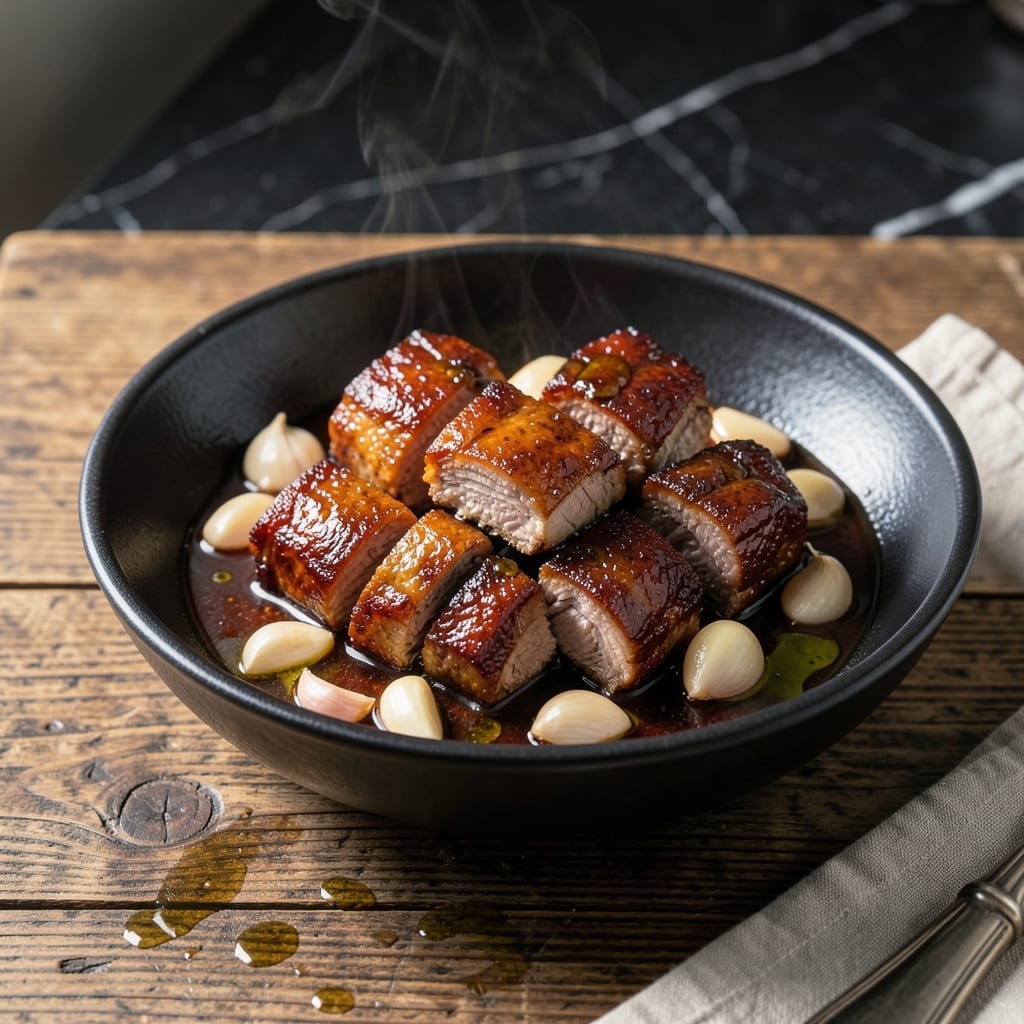
This Chinese pot roast pork delivers tender results with minimal effort and maximum flavor. A slow braise in aromatic spices transforms tough cuts into succulent, fall-apart meat that soaks up every bit of the rich, savory sauce.
The secret lies in the balance of traditional ingredients like soy sauce, hoisin, and five-spice powder. These create depth without overpowering the natural pork flavor, while a touch of brown sugar adds caramelized sweetness to each bite.
What emerges is a dish that’s deeply flavorful yet approachable, with meat so tender it nearly melts in your mouth. The sauce reduces into a glossy glaze that clings to every piece, making it perfect served over rice or noodles.
Ideal for meal prep or a comforting family dinner, this recipe proves that authentic Chinese flavors can be achieved in any home kitchen.
Ingredients for Chinese Pot Roast Pork
Aromatic spices and tender pork combine for a deeply flavorful braise everyone will love.
| Ingredient | Amount | Notes |
|---|---|---|
| Pork Shoulder 🥩 | 2 lb | Boneless, cut into large chunks |
| Soy Sauce 🫒 | ½ cup | Low-sodium preferred |
| Hoisin Sauce 🫒 | ¼ cup | Thick, aromatic variety |
| Five-Spice Powder 🌶️ | 1 tbsp | Freshly ground if possible |
| Brown Sugar 🍚 | ¼ cup | Light or dark variety |
| Garlic Cloves 🧄 | 6 cloves | Minced for depth of flavor |
| Fresh Ginger 🌿 | 1 tbsp | Peeled and grated |
| Green Onions 🧅 | 4 whole | Thinly sliced, whites and greens separated |
| Rice Wine 🍷 | ¼ cup | Dry variety preferred |
| Chicken Stock 🥣 | 1 cup | Low-sodium for balance |
| Vegetable Oil 🫒 | 2 tbsp | For searing pork |
| Star Anise Pods ✨ | 2 whole | Optional for extra aromatic depth |
| Bay Leaves 🍃 | 2 whole | Dried or fresh |
The pork shoulder is non-negotiable here. Look for well-marbled cuts at your butcher or grocery store—this fat renders down during the slow braise, creating that signature melt-in-your-mouth texture. Costco has great pre-cut options if you’re short on time. For the five-spice powder, Penzeys or a local Asian market will have the freshest, most potent blends.
No hoisin sauce? A mix of soy sauce, honey, and a pinch of garlic powder can work in a pinch. Missing rice wine? Dry sherry at half the amount is an acceptable substitute. The brown sugar can be swapped for coconut sugar if you prefer, but stick with a dark variety for that caramelized depth.
This braise actually improves overnight as the flavors meld. Store in an airtight container in the fridge for up to 4 days, or freeze for 3 months (the sauce thickens beautifully when reheated).
Why You’ll Love This Recipe
- Set and Forget: I toss everything in the pot, let it slow-cook, and come back to tender pork that falls apart at the touch.
- Umami Bomb: The hoisin and five-spice create this deep, sweet-savory crust that’s honestly addictive.
- Meal Prep Hero: One batch gives me lunches for days—shred it for bao, rice bowls, or noodles.
- Budget Stretcher: Pork shoulder is cheap, and this turns it into something that tastes like a restaurant special.
Step-by-Step Instructions for Chinese Pot Roast Pork
This method guarantees melt-in-your-mouth results with deep, aromatic flavor in every bite.
Step 1: Sear the Pork Shoulder for Depth of Flavor
Heat the 2 tbsp vegetable oil in a heavy pot over medium-high heat until shimmering. Pat the 2 lb pork shoulder chunks dry with paper towels—this prevents steaming and ensures a proper sear.
Add the pork in a single layer, working in batches if needed to avoid crowding. Sear on all sides for 6-8 minutes total until deeply browned. You’ll see the edges develop a rich, caramelized crust. Remove the pork and set aside—the fond left in the pot will form the base of your braising liquid.
Step 2: Build the Aromatic Foundation
In the same pot, add the 6 cloves garlic cloves, 1 tbsp fresh ginger, and the white parts of the 4 whole green onions. Sauté for 1-2 minutes until fragrant but not browned. The garlic should soften slightly but retain its pungent aroma.
Stir in the 1 tbsp five-spice powder, allowing it to toast for 30 seconds until its spices become aromatic. This step blooms the complex flavors that define this dish. Immediately add the 0.5 cup soy sauce, 0.25 cup hoisin sauce, 0.25 cup brown sugar, 0.25 cup rice wine, 1 cup chicken stock, 2 whole star anise pods, and 2 whole bay leaves to deglaze the pan, scraping up all browned bits.
Step 3: Braise to Tender Perfection
Return the seared pork to the pot, ensuring it’s mostly submerged in the liquid. Bring to a gentle simmer over medium heat, then reduce to low heat, cover, and braise for 2 to 2.5 hours. The pork should become fork-tender, easily pulling apart with minimal resistance.
Occasionally turn the pork chunks to ensure even cooking and flavor distribution. The liquid will reduce slightly, intensifying the flavors. If it reduces too quickly, add a splash of water. You’ll notice the five-spice powder and star anise pods infusing the sauce with their warm, complex notes.
Step 4: Finish and Serve
Once the pork is tender, remove the 2 whole bay leaves and 2 whole star anise pods. Skim any excess fat from the surface of the sauce. The sauce should coat the back of a spoon with a glossy sheen.
Slice the green onion greens and sprinkle them over the top just before serving. The residual heat will soften them slightly while retaining their bright, fresh flavor. Serve the pork with plenty of the rich, aromatic sauce spooned over the top. The meat should fall apart at the touch of a fork, soaked through with the deep, savory-sweet flavors of the braising liquid.
Pro Tips For Making Chinese Pot Roast Pork
- Sear the Pork First: Brown the pork shoulder well in the pot before adding liquids—I learned this the hard way after my first few attempts tasted bland. A deep sear locks in flavor and gives the sauce depth.
- Bloom the Spices: Toast the five-spice powder in the pot for 30 seconds before adding liquids. Sounds weird, but it wakes up the aromatics and makes the sauce more complex.
- Don’t Rush the Braise: Keep the heat low and steady for at least 2 hours. I used to crank it up to speed things along, but the meat comes out tough every time.
- Use Full-Fat Hoisin: Skip the low-fat hoisin—it separates and leaves the sauce greasy. The regular kind emulsifies better and coats the pork beautifully.
Best Sauces and Condiments for These Flavors
Classic Pairings
Serve with a side of steamed jasmine rice to soak up the rich, aromatic sauce. The rice’s subtle floral notes complement the five-spice powder and hoisin sauce beautifully. I also love pairing this with blanched bok choy for a fresh, crisp contrast. 🥗
Spicy Kick
For heat lovers, add a drizzle of chili oil or a spoonful of Sichuan chili crisp just before serving. The spice cuts through the richness and enhances the dish’s depth. I prefer Lao Gan Ma chili crisp for its nutty, spicy complexity.
Sweet and Tangy
A splash of black vinegar or a spoonful of plum sauce adds a bright, tangy contrast to the savory pork. The acidity balances the brown sugar and soy sauce, lifting the flavors. I often mix 1 tbsp black vinegar into the sauce at the end.
Fresh Garnishes
Top with extra thinly sliced green onions and a sprinkle of toasted sesame seeds for texture and visual appeal. The freshness of the green onions cuts through the richness, while the sesame seeds add a nutty crunch. 💫
Dipping Sauce
Offer a side of light soy sauce mixed with a touch of rice vinegar and a dash of sesame oil for dipping. This simple sauce enhances the pork’s natural flavors without overpowering them. I use a 2:1:1 ratio for balance.
Nutrition Facts
Frequently Asked Questions
Can I use a different cut of pork?
Pork shoulder works best, but pork belly or butt are good substitutes. Avoid lean cuts like tenderloin—they lack fat for tenderness.
How do I know when it’s done?
The pork should pull apart easily with a fork after 2-2.5 hours. Internal temp should reach 195°F for ideal tenderness.
Can I make this in a slow cooker?
Yes! Sear the pork first, then cook on low for 6-8 hours. Add a splash of water if the sauce reduces too much.
What if my sauce is too thin?
Remove the pork and simmer the sauce uncovered for 10-15 minutes. For faster results, mix 1 tsp cornstarch with water and stir in.

- 4C Bread Crumbs Meatballs Recipe: Crispy Crust and Juicy Centers - September 25, 2026
- 6 Oz Chocolate Chip Cookie Recipe: Perfectly Balanced Crispy Edges and Chewy Hearts - September 25, 2026
- 6-Inch Coffee Cake Recipe: Vanilla Bean Swirls and Buttery Streusel Topping - September 25, 2026