
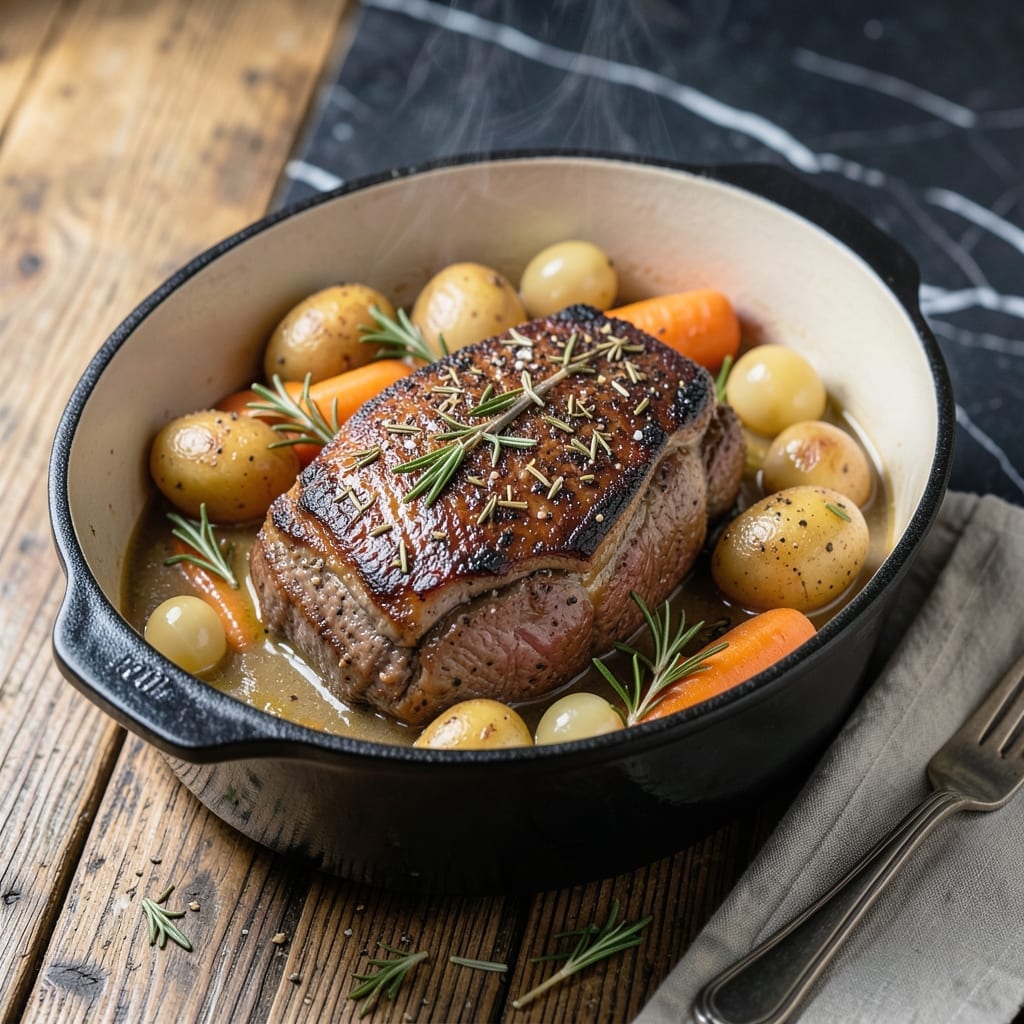
There’s nothing quite like the aroma of a classic pot roast slow-cooking in the oven. This method transforms tough cuts of beef into fall-apart tender meat surrounded by rich, caramelized vegetables.
The secret is low and slow cooking at 325°F, which allows the connective tissue to break down gradually. A simple herb rub and beef broth create a deeply flavorful braising liquid that infuses every bite.
You’ll end up with meat so tender it shreds with a fork, along with potatoes and carrots that have absorbed the savory juices. The result is a hearty, comforting meal that tastes like it came from a professional kitchen.
Perfect for Sunday suppers or special occasions. This is timeless comfort food at its best.
Ingredients for Classic Oven Pot Roast
Transform tough beef into fall-apart tenderness with these classic, deeply flavorful ingredients.
| Ingredient | Amount | Notes |
|---|---|---|
| Chuck Roast 🥩 | 3 lb | Well-marbled, boneless preferred |
| Kosher Salt 🧂 | 2 tsp | Diamond Crystal brand preferred |
| Freshly Ground Black Pepper 🌶️ | 1 tsp | Coarse grind for texture |
| Dried Thyme 🍃 | 1 tbsp | Rubbed between fingers to release oils |
| Dried Rosemary 🌿 | 1 tbsp | Crushed to activate flavor |
| Garlic Powder 🧄 | 1 tsp | Not garlic salt |
| Onion Powder 🧅 | 1 tsp | Adds depth to rub |
| Olive Oil 🫒 | 2 tbsp | For searing roast |
| Yellow Onions 🧅 | 2 whole | Thickly sliced for braising |
| Carrots 🥕 | 4 whole | Peeled, cut into chunks |
| Yukon Gold Potatoes 🥔 | 1 ½ lb | Quartered, skin-on preferred |
| Low-Sodium Beef Broth 🥣 | 3 cups | Homemade or high-quality |
| Tomato Paste 🍅 | 2 tbsp | For umami depth |
| Red Wine 🍷 | 1 cup | Dry variety like Cabernet |
| Bay Leaves 🍃 | 2 whole | For aromatic infusion |
The beef selection is critical. Chuck roast with visible marbling yields the most tender results—avoid lean cuts like round. Source from a trusted butcher or Whole Foods for consistent quality. Look for pieces labeled “chuck pot roast” or “chuck shoulder.” The herb rub requires freshly ground black pepper (pre-ground lacks potency) and high-quality dried thyme and rosemary (check expiration dates).
Substitutions are minimal for authenticity, but beef stock can replace broth in a pinch (reduce sodium accordingly). No red wine? Use additional beef broth with 1 tbsp balsamic vinegar. For the vegetables, russet potatoes work instead of Yukon Gold, and parsnips can replace half the carrots. Always sear the roast—it’s non-negotiable for depth of flavor.
Store the raw roast in its packaging on a plate in the fridge for up to 3 days. The herb rub can be pre-mixed and kept in an airtight container for 1 month. Leftovers (with liquid) freeze beautifully for 3 months—portion before freezing for easy reheating.
Why You’ll Love This Recipe
- Set It and Forget: I toss the chuck roast with salt, pepper, thyme, and rosemary, slide it in the oven, and walk away for hours.
- Herb-Crusted Perfection: The rosemary and thyme form this insane crust on the chuck roast that’s honestly the best part.
- Sunday Supper Star: It’s the dish I pull out for family gatherings, potlucks, or when I just want to feel like a proper host.
- Leftovers for Days: One roast feeds us for two nights, then the leftovers make killer sandwiches or tacos.
Step-by-Step Instructions for Classic Oven Pot Roast
Here’s the method I rely on for perfectly tender beef and deeply caramelized vegetables every time.
Step 1: Season and Sear the Chuck Roast
Pat the 3 lb Chuck Roast completely dry with paper towels. This ensures a proper sear rather than steaming. Rub the surface evenly with the 2 tsp Kosher Salt, 1 tsp Freshly Ground Black Pepper, 1 tbsp Dried Thyme, 1 tbsp Dried Rosemary, 1 tsp Garlic Powder, and 1 tsp Onion Powder. I rub the herbs between my fingers to activate their oils as I apply them.
Heat the 2 tbsp Olive Oil in a heavy Dutch oven over medium-high heat until shimmering. Add the seasoned roast and sear for 4-5 minutes per side until deeply browned. You’ll know it’s ready to flip when it releases easily from the pot. This creates a flavorful fond that will enrich the braising liquid.
Step 2: Prepare the Aromatic Vegetable Base
Remove the roast and set it aside. To the same pot, add the 2 whole Yellow Onions (thickly sliced), 4 whole Carrots (peeled and cut into chunks), and 1.5 lb Yukon Gold Potatoes (quarter them, skin on). Cook for 5-6 minutes, stirring occasionally, until the onions begin to soften and develop some color.
Stir in the 2 tbsp Tomato Paste and cook for 1-2 minutes until it darkens slightly. This step intensifies its umami properties and prevents a raw taste. The vegetables should start to caramelize at the edges, creating a complex flavor foundation.
Step 3: Deglaze and Begin Braising
Pour in the 1 cup Red Wine, scraping up all the browned bits from the bottom of the pot with a wooden spoon. This deglazing step is crucial—it incorporates all that concentrated flavor into the liquid. Let the wine reduce by half, about 3-4 minutes, until it loses its raw alcohol smell.
Return the roast to the pot and add the 3 cups Low-Sodium Beef Broth and 2 whole Bay Leaves. The liquid should come about halfway up the roast. If needed, add a bit more broth. This ensures even cooking without submerging the meat, which would boil rather than braise it.
Step 4: Slow-Braise to Perfection
Cover the pot and transfer it to a preheated 325°F oven. Braise for 2.5 to 3 hours, turning the roast halfway through. You’ll know it’s done when a fork slides in and out with no resistance. The meat should be falling-apart tender but still hold its shape.
The vegetables will be bathed in the rich, herby braising liquid, absorbing all the beefy goodness. If the liquid reduces too much during cooking, add a splash more broth to maintain the proper level. This slow, gentle cooking method transforms the chuck roast into something melt-in-your-mouth tender.
Step 5: Rest and Serve
Carefully remove the roast to a cutting board and tent it loosely with foil. Let it rest for 15-20 minutes before slicing. This allows the juices to redistribute, ensuring every bite is moist and flavorful rather than dry.
Skim any excess fat from the braising liquid if desired, then serve the roast with the vegetables and some of the rich, aromatic juices spooned over the top. The vegetables should be tender with deeply caramelized edges, and the sauce should have a velvety, full-bodied consistency.
Pro Tips For Making Classic Oven Pot Roast
- Sear It Hard: Get your Dutch oven screaming hot before adding the chuck roast—about 2 tablespoons of oil, then sear each side for 3-4 minutes until deeply browned. I learned this the hard way after years of pale, steamed-looking pot roast.
- Season Overnight: Rub that chuck roast with kosher salt, pepper, thyme, and rosemary the night before. Sounds like overkill, but it actually changes the outcome—way more flavor penetration than salting right before cooking.
- Skip the Boiling: Resist the urge to add too much liquid at the start. Just 1-2 cups is plenty—enough to deglaze but not drown the meat. My grandmother swore by this, and she was right: too much liquid = boiled beef, not braised.
- Low and Slow: After searing, drop the oven temp to 300°F and give it 3-4 hours. This isn’t the prettiest method, but it’s the tastiest—any higher and the chuck roast turns tough instead of fall-apart tender.
Wine and Beer Pairings for This Dish
Bold Red Wines
I always pair pot roast with a full-bodied red wine that can stand up to the rich, beefy flavors. A Cabernet Sauvignon from Napa Valley, like Caymus or Robert Mondavi, offers dark fruit notes and firm tannins that complement the dish beautifully. 🍷
Elegant Alternatives
For something slightly different, try a Syrah from the Northern Rhône—its peppery, smoky notes mirror the herb rub. An Australian Shiraz like Penfolds Bin 28 brings jammy fruit that pairs wonderfully with the caramelized vegetables.
Budget-Friendly Picks
Malbec from Argentina offers incredible value, with plush fruit and velvety texture. I love Catena or Alamos for under $20. These wines are approachable yet complex enough to enhance the meal.
Beer Pairings
If you prefer beer, a robust porter or stout works beautifully. Guinness or Founders Porter have roasted malt flavors that echo the seared crust on the beef. The carbonation also cuts through the richness. 🍺
Lighter Options
For those who prefer lighter drinks, a dry rosé with good acidity can surprisingly complement the dish. Look for a Provence rosé like Whispering Angel—its crispness balances the hearty flavors.
Non-Alcoholic Choices
Sparkling black cherry soda or a ginger beer like Fever-Tree offers a festive, alcohol-free pairing. Their bold flavors and effervescence cleanse the palate between bites. ✨
Nutrition Facts
Frequently Asked Questions
What’s the best cut for this dish?
Use a well-marbled chuck roast for the most tender results. Avoid lean cuts like round, as they won’t break down as beautifully during the long braise.
Can I cook it faster at a higher temperature?
No, the 325°F oven temperature is ideal for breaking down connective tissue slowly. Higher heat would toughen the meat and prevent the vegetables from caramelizing properly.
How do I know when it’s done?
Test with a fork after 2.5 hours—it should slide in and out with no resistance. The meat will be falling-apart tender but still hold its shape.
Can I make this in a slow cooker?
Yes! Sear the roast first, then transfer everything to a slow cooker on low for 8 hours. The texture will be similar, though the vegetables may soften more.

- 6 Qt Dutch Oven Bread Recipe: Crusty Crumb and Golden Crust in One Bake - September 25, 2026
- 8-Inch Chocolate Cake Recipe: Fudgy Crust and Decadent Ganache Swirls - September 25, 2026
- 5 Star Lasagna Recipe with Ricotta Cheese: Layers of Creamy Cheese and Tender Meat - September 25, 2026