
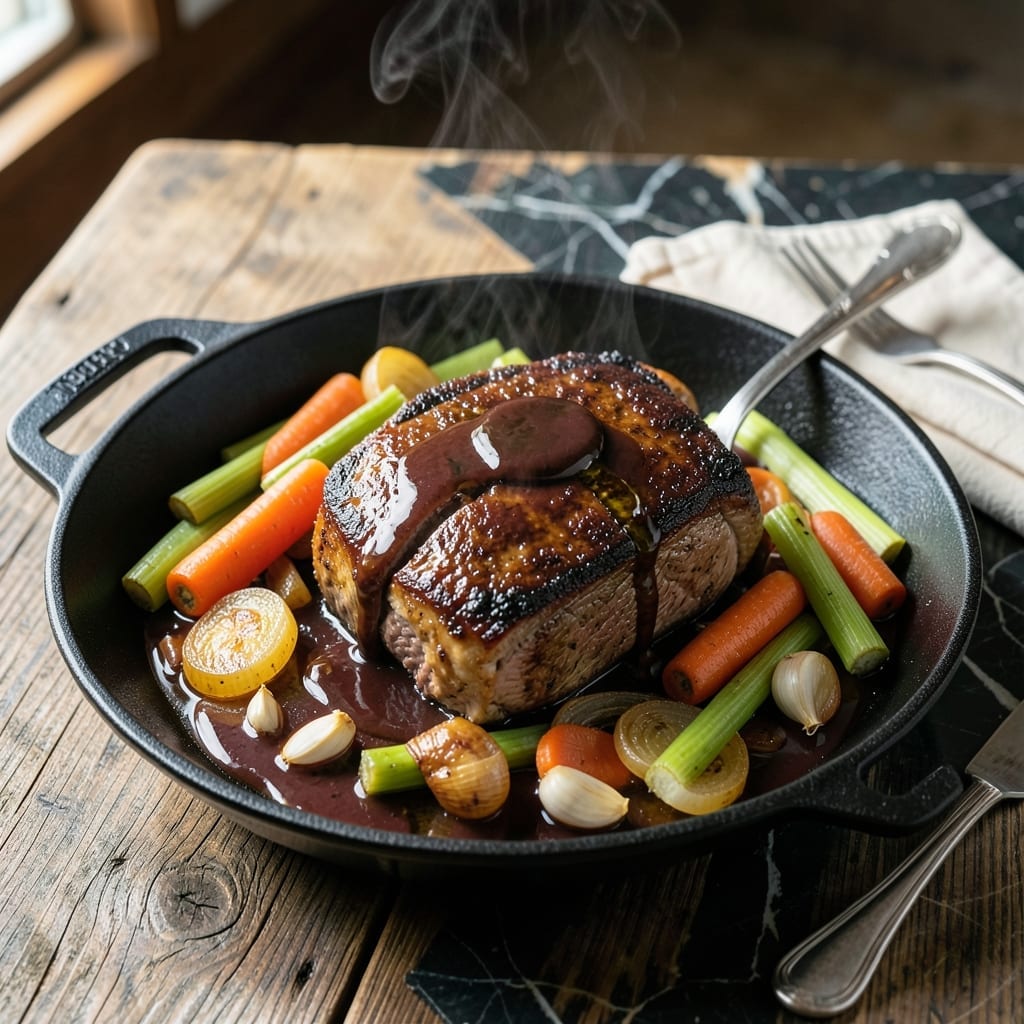
This elk pot roast transforms tough cuts into meltingly tender perfection through slow, steady braising in a Dutch oven. The method is simple but precise, allowing the meat to break down while developing deep, rich flavors.
I’ve refined this technique over years of cooking wild game, focusing on low heat and a flavorful liquid that penetrates every bite. The result is a dish that rivals traditional beef pot roast in both texture and taste.
What sets this apart is the way the elk absorbs the braising liquid, becoming fork-tender while maintaining its robust, slightly gamey character. The Dutch oven locks in moisture, ensuring a juicy finish.
Serve with root vegetables or mashed potatoes to soak up the savory sauce. This is comfort food at its most satisfying.
Ingredients for Elk Pot Roast
Rich, hearty ingredients come together for a braise that turns elk into fork-tender perfection.
| Ingredient | Amount | Notes |
|---|---|---|
| Elk Roast 🦌 | 2 ½ lb | Chuck or shoulder cut preferred |
| Olive Oil 🫒 | 2 tbsp | Divided for searing and braising |
| Yellow Onion 🧅 | 1 whole | Large, roughly chopped |
| Garlic Cloves 🧄 | 5 cloves | Smashed for bold flavor |
| Carrots 🥕 | 3 whole | Peeled, cut into chunks |
| Celery Stalks 🥬 | 3 whole | Cut into large pieces |
| Red Wine 🍷 | 1 ½ cups | Dry variety like Cabernet |
| Beef Stock 🥘 | 2 cups | Low-sodium preferred |
| Tomato Paste 🍅 | 2 tbsp | For depth of flavor |
| Fresh Thyme Sprigs 🌿 | 4 whole | Plus extra for garnish |
| Fresh Rosemary Sprigs 🌿 | 2 whole | Woody stems removed |
| Bay Leaves 🍃 | 2 whole | Dried or fresh |
| All-Purpose Flour 🌾 | 2 tbsp | For thickening the sauce |
| Kosher Salt 🧂 | 1 ½ tsp | Plus more to taste |
| Black Pepper 🌶️ | 1 tsp | Freshly ground preferred |
Elk meat needs the right cut for braising. Chuck or shoulder from a reputable butcher or specialty grocer like Whole Foods works best—look for deep red color with good marbling. Avoid lean cuts like tenderloin; they’ll dry out. If you’re hunting your own, age the meat 3-5 days in the fridge before cooking. The Dutch oven should be heavy—Le Creuset or Lodge are solid choices.
No red wine? Beef broth with 1 tbsp balsamic vinegar mimics the acidity. Short on fresh herbs? Dried thyme and rosemary at one-third the amount work fine. For the stock, Better Than Bouillon makes a rich base if you’re not using homemade. The tomato paste can be swapped for crushed tomatoes (use 1/4 cup). Don’t skip the flour—it’s key for thickening the sauce.
This tastes even better the next day. Cool, refrigerate, and skim off hardened fat before reheating. Stays fresh for 4 days in the fridge or freezes for 3 months (slice before freezing for easy portions).
Why You’ll Love This Recipe
- I’ll be real: this is my go-to for Sunday dinner when the whole family’s over.
- Set It & Forget It: Honestly, I just sear the elk roast, toss in the onions, garlic, and carrots, then let the oven do the work.
- Rich & Hearty: The elk soaks up the olive oil and garlic like a sponge, making every bite ridiculously good.
- Feeds a Crowd: I’ll be real: this is my go-to for Sunday dinner when the whole family’s over.
Step-by-Step Instructions for Elk Pot Roast
This method delivers fall-off-the-bone tenderness with rich, deeply layered flavors.
Step 1: Sear the Elk Roast
Pat the elk roast dry with paper towels, then season all sides with the 1.5 tsp kosher salt and 1 tsp black pepper. Heat 1 tbsp olive oil in a Dutch oven over medium-high heat until shimmering.
Add the elk roast and sear undisturbed for 4-5 minutes per side until deeply browned. This creates a flavorful crust that will translate into the braising liquid. Use tongs to turn the roast—never pierce it with a fork, as this releases precious juices.
Step 2: Sauté the Vegetables and Tomato Paste
Remove the roast and set aside. In the same pot, add the remaining 1 tbsp olive oil if needed. Add the yellow onion, carrots, and celery stalks, cooking for 5 minutes until the onion softens and begins to caramelize.
Stir in the 2 tbsp tomato paste and cook for 1-2 minutes until it darkens slightly. Add the 5 cloves garlic cloves and cook for 30 seconds until fragrant. This builds the flavor base for the braising liquid.
Step 3: Deglaze and Build the Braising Liquid
Pour in the 1.5 cups red wine and scrape the bottom of the pot to release any browned bits. Bring to a simmer and cook for 3-4 minutes until the liquid reduces by about half.
Add the 2 cups beef stock, 4 whole fresh thyme sprigs, 2 whole fresh rosemary sprigs, and 2 whole bay leaves. Return the elk roast to the pot, along with any accumulated juices. The liquid should come about halfway up the roast.
Step 4: Braise Until Fork-Tender
Cover the Dutch oven and transfer it to a preheated 325°F oven. Braise for 2.5 to 3 hours, turning the roast halfway through, until the meat is fork-tender and easily pulls apart with a gentle tug.
Check the roast occasionally and add a splash of water or stock if the liquid level drops too low. The elk is done when an instant-read thermometer inserted into the thickest part registers 195-200°F.
Step 5: Thicken the Sauce and Serve
Remove the roast to a cutting board and tent with foil. Skim excess fat from the surface of the braising liquid, then place the Dutch oven over medium heat. Whisk in the 2 tbsp all-purpose flour and simmer for 5 minutes until the sauce thickens to a gravy-like consistency.
Slice the elk roast against the grain and serve with the sauce spooned over the top. The meat should be incredibly tender with a rich, savory sauce that soaks into every bite.
Pro Tips For Making Elk Pot Roast
- Sear It Hard: I learned this the hard way—elk needs a hot sear to develop flavor, so get your pan screaming hot before adding the roast, and don’t move it for at least 2-3 minutes per side.
- Don’t Rush the Braise: Elk is leaner than beef, so it needs low and slow heat (around 275°F) for at least 3 hours to break down properly—any hotter and it’ll turn tough.
- Salt the Elk First: Pat the roast dry, then salt it generously at least 30 minutes before cooking—this draws out moisture then reabsorbs it, keeping the meat juicy.
- Use Fresh Garlic: Sounds obvious, but old garlic cloves lose their punch; smash 4-5 fresh cloves and toss them in with the onions for a real depth of flavor.
Common Mistakes When Making Perfect Results
Overcooking the Elk
Elk is leaner than beef, so it can dry out quickly. Braise until it reaches 195-200°F internal temperature—this is the sweet spot for fork-tender meat. Going beyond 205°F risks turning your roast into a tough, stringy mess. I always use a ThermoWorks instant-read thermometer for precision. 🌡️
Skipping the Sear
Don’t rush the searing step—it builds the Maillard reaction flavors that define this dish. Sear the roast for 4-5 minutes per side in medium-high heat until deeply browned. Skipping this means missing out on the rich, complex base for your braising liquid.
Using the Wrong Cut
Lean cuts like elk tenderloin won’t work here. Stick with chuck or shoulder, which have the connective tissue that breaks down beautifully during braising. I learned this the hard way after my first attempt with a lean cut turned into a chewy disappointment.
Not Enough Liquid
The braising liquid should come about halfway up the roast. If it’s too low, add more beef stock or water. Check every 45 minutes and top up if needed. Without enough liquid, the meat will steam instead of braise, leading to uneven cooking.
Rushing the Rest
After braising, let the roast rest for at least 15 minutes before slicing. This allows the juices to redistribute, ensuring every bite is moist and flavorful. Slicing too soon sends all those precious juices onto the cutting board instead of into the meat. 💡
Forgetting to Skim
Before thickening the sauce, skim off excess fat from the surface. Elk can release more fat than expected, and leaving it in will make your sauce greasy. I use a fine-mesh skimmer for this—it’s quick and effective.
Nutrition Facts
Frequently Asked Questions
What’s the best cut for braising?
Use chuck or shoulder for the most tender results. These cuts have enough connective tissue to break down beautifully during slow cooking. Avoid lean cuts like tenderloin, which can become dry.
Can I substitute beef for elk?
Yes! Beef chuck roast works well with the same cooking times and temperatures. Elk is leaner, so reduce cooking time by 15-20 minutes if using a fattier cut.
How do I know when it’s done?
Use a meat thermometer—195-200°F internal temperature means it’s ready. The meat should pull apart easily with a fork. Overcooking beyond 205°F can make it tough.
Can I make this in a slow cooker?
Sear the meat first, then transfer to the slow cooker with all liquid. Cook on low for 8-10 hours or high for 5-6 hours.

- 4C Bread Crumbs Meatballs Recipe: Crispy Crust and Juicy Centers - September 25, 2026
- 6 Oz Chocolate Chip Cookie Recipe: Perfectly Balanced Crispy Edges and Chewy Hearts - September 25, 2026
- 6-Inch Coffee Cake Recipe: Vanilla Bean Swirls and Buttery Streusel Topping - September 25, 2026