
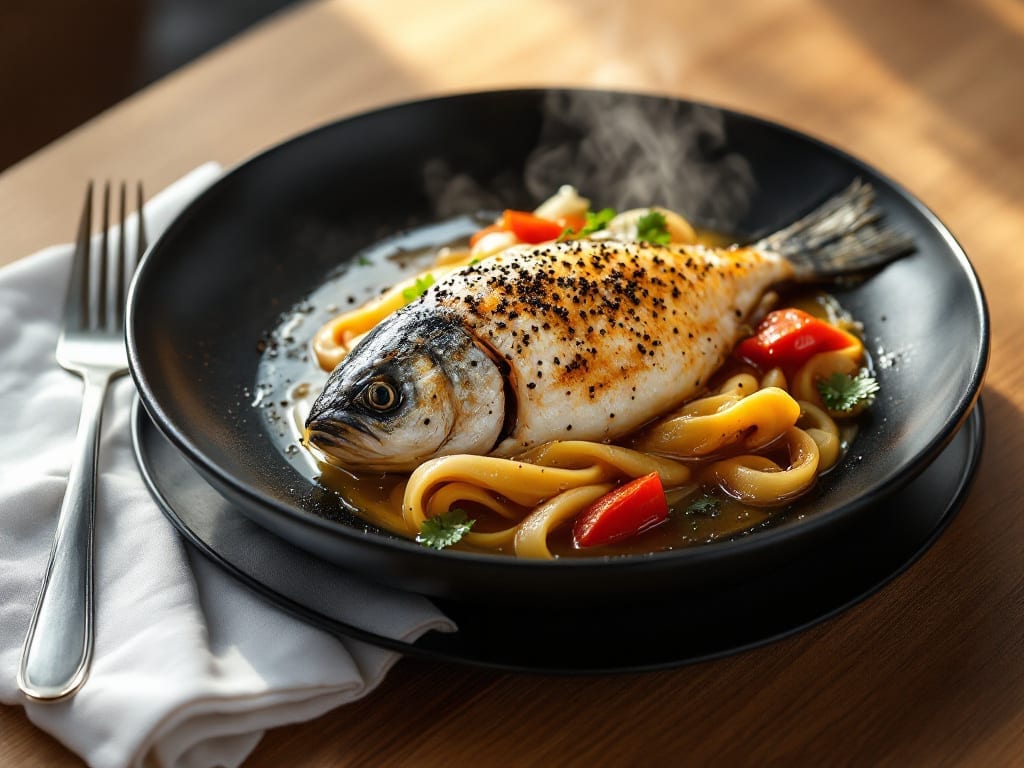
This fish hot pot recipe transforms a simple broth into a fragrant, spiced symphony that turns ordinary ingredients into a restaurant-worthy meal. The secret lies in balancing umami-rich dashi with aromatic spices and a silky dipping sauce that elevates every bite.
After years of refining my technique, I’ve perfected a method that delivers perfectly tender fish, vibrant vegetables, and a broth so flavorful it disappears faster than you can say “second helping.”
The foundation of great fish hot pot is a rich, layered broth built from scratch—no shortcuts here. We’ll start with a base of dashi, then infuse it with ginger, garlic, and star anise for depth, while a touch of soy sauce and mirin adds complexity.
The fish, whether cod, salmon, or a medley of seafood, cooks just long enough to stay moist and flaky, never dry. Vegetables like bok choy and mushrooms absorb the broth’s essence, turning them into tender, flavor-packed additions.
What sets this dish apart is the harmony of textures and flavors—crisp vegetables, silky tofu, and melt-in-your-mouth fish all simmered in a broth that’s equal parts comforting and bold.
The dipping sauce, a blend of sesame oil, rice vinegar, and chili flakes, adds another layer of heat and nuttiness that ties everything together. This isn’t just a meal; it’s an experience that brings the warmth of a bustling Asian hot pot restaurant to your own table.
Perfect for a cozy dinner with friends or a weeknight treat, this recipe scales effortlessly.
Whether you’re drawn to the Japanese nabe, Korean haejangguk, or a Chinese-inspired yu xiang twist, the principles remain the same: a bold broth, tender fish, and a sauce that makes every bite unforgettable. Let’s get started on creating your own hot pot masterpiece.
Ingredients for fish hot pot
Rich broth meets aromatic spices and silky dipping sauce in this restaurant-worthy hot pot masterpiece.
| Ingredient | Amount | Notes |
|---|---|---|
| White Fish Fillets 🐟 | 1 ½ lb | Cod, salmon, or halibut preferred |
| Dried Kombu 🍃 | 1 piece | For dashi base, 4×4 inch |
| Bonito Flakes 🐟 | ½ cup | For dashi base, optional |
| Fresh Ginger 🧅 | 2 tbsp | Grated, organic preferred |
| Garlic Cloves 🧄 | 6 cloves | Minced, fresh preferred |
| Star Anise Pods 🌿 | 2 whole | For aromatic depth |
| Firm Tofu 🧀 | 1 lb | Extra-firm, cubed |
| Bok Choy 🥬 | 2 whole | Baby or regular, halved |
| Shiitake Mushrooms 🍄 | 8 whole | Fresh, stems removed |
| Green Onions 🧅 | 4 whole | Sliced, for garnish |
| Sesame Oil 🫒 | 2 tbsp | Toasted, for dipping sauce |
| Rice Vinegar 🍶 | ¼ cup | Seasoned preferred |
| Red Chili Flakes 🌶️ | 1 tbsp | Adjust for heat preference |
| Mirin 🍶 | ¼ cup | Sweet rice wine |
| Soy Sauce 🍶 | ¼ cup | Light or dark preferred |
The dashi is your flavor foundation—kombu and bonito flakes create that deep umami backbone. Grab fresh kombu from Asian markets (the bigger the better) and bonito flakes from Trader Joe’s for convenience. For ginger, organic is worth it—peel and grate it fresh, no substitutes here. Star anise? Penzeys carries whole pods, but the grocery store usually has them too. The fish matters—wild-caught salmon or cod stays moist, while farmed tilapia gets dry. Buy fillets already cut for ease, or ask your fishmonger to portion them.
No kombu? Dashi powder works (like Hondashi), but fresh is superior. Short on bonito? Skip it—the kombu alone still gives great flavor. Fresh ginger too fibrous? Substitute 1 tbsp paste (but fresh is better). For the dipping sauce, rice vinegar can be swapped for apple cider vinegar, but mirin adds that signature sweetness—Trader Joe’s has it cheap. Chili flakes too spicy? Use half the amount or swap in gochugaru for a milder Korean kick. The tofu? Press it for 20 minutes before cubing to avoid soggy bites.
Broth keeps 3-4 days in the fridge—taste and adjust seasoning before reheating. The dipping sauce? Stays fresh for 1 week, but the sesame oil separates. Just shake before using. Freeze the broth in ice cube trays for quick future meals. Leftover fish and veggies reheat beautifully—microwave 30 seconds to revive crispness. For a crowd, double the broth and use a slow cooker on low for 2 hours.
Why You’ll Love This Recipe
- Same base, endless twists: Add bok choy for a quick weeknight bowl or swap in mushrooms and tofu for a heartier meal. My roommates think I’m a fancy chef when I serve this—no one knows it’s my lazy-day secret.
- No-Fuss Simmer: I swear by this—just slice the ginger, mince the garlic, and toss in whole kombu and bonito flakes. The fish cooks itself while you sip tea. Honestly, I’ve made it with my eyes closed (and once with my phone in hand).
- Umami Magic: That first crackle of bonito flakes hitting the pot? Instant aroma bomb. The kombu dissolves into a silky broth, while the garlic and ginger build layers of warmth. It’s the kind of flavor that makes you pause mid-bite—wait, is this just fish?
- Weeknight to Company Dinner: Same base, endless twists: Add bok choy for a quick weeknight bowl or swap in mushrooms and tofu for a heartier meal. My roommates think I’m a fancy chef when I serve this—no one knows it’s my lazy-day secret.
Step-by-step instructions for fish hot pot with spiced broth
Here’s how to craft a deeply aromatic broth and vibrant dipping sauce that transforms simple ingredients into an unforgettable experience.
Build the Umami-Rich Dashi Base
In a large stockpot, combine the 1 piece dried kombu and 8 cups water (enough to fully submerge all ingredients). Bring to a gentle simmer over medium-low heat until small bubbles form at the edges—this should take about 10 minutes. The kombu will release its oceanic sweetness into the water, creating the foundation of your broth.
Remove the kombu immediately after simmering begins—it’s done its job and will turn bitter if left too long. Add the 0.5 cup bonito flakes, 2 tbsp grated fresh ginger, 6 minced garlic cloves, and 2 whole star anise pods. Let this infuse for 5 minutes while you prepare the remaining ingredients. The broth should smell deeply savory with hints of seaweed and toasted fish—this is your umami backbone.
Develop the Spiced Broth with Vegetables
Add the 1.5 lb white fish fillets (cut into 1-inch cubes), 1 lb cubed firm tofu, and 8 whole shiitake mushrooms (stems removed) to the simmering broth. Reduce heat to low and let everything cook gently for 10-12 minutes, stirring occasionally. The fish should become just opaque at the edges—it’s ready when it flakes easily with a fork but still holds together.
Next, add the 2 halved bok choy and continue simmering for another 5 minutes until the greens are vibrant but still crisp. The broth should now have a complex aroma—sweet from the kombu, funky from the ginger, and deep from the bonito. Taste and adjust seasoning by adding 0.25 cup soy sauce and 0.25 cup mirin now. The broth should be balanced: salty, sweet, and slightly funky.
Prepare the Vibrant Dipping Sauce
In a small saucepan, combine 0.25 cup rice vinegar, 2 tbsp sesame oil, 1 tbsp red chili flakes, and 1 cup water. Bring to a gentle simmer over medium heat and reduce until the mixture thickens slightly—about 5-7 minutes. The sauce should coat the back of a spoon but remain pourable. Strain through a fine-mesh sieve to remove any chili flakes if you prefer a smoother texture.
For extra depth, whisk in 1 tablespoon of the reserved broth from your hot pot. This infusion ties the dipping sauce to the main dish, creating harmony in every bite. Keep the sauce warm over low heat while you serve the hot pot.
Assemble and Serve with Confidence
Divide the cooked ingredients among 4 deep bowls, ensuring each serving has an even distribution of fish, tofu, mushrooms, and bok choy. Ladle the hot, flavorful broth generously over each portion—it should be deep enough to submerge the ingredients when stirred. The broth should be steaming and aromatic when served, with visible layers of ginger and star anise floating on top.
Place small bowls of the dipping sauce on the table alongside 4 whole green onions (sliced) for garnish. Serve immediately while everything is piping hot. The contrast between the rich, umami broth and the bright, slightly spicy dipping sauce makes this hot pot truly special. Each bite should deliver a perfect balance of textures—tender fish, silky tofu, and crisp bok choy—all bathed in complex, layered flavors.
Pro Tips For Making Fish Hot Pot
- Bloom the Kombu First: Tear that dried kombu into thirds and soak it in hot water for 5 minutes before adding to the pot—this jumpstarts the umami bomb without bitterness. I used to skip this, and the broth always tasted flat until I realized the kombu needs a head start to do its magic.
- Salt the Fish Last: Season the fish fillets with salt right before they hit the simmering broth—this keeps them tender instead of turning rubbery. I learned this the hard way when I salted ahead and ended up with fish that fell apart like overcooked pasta.
- Control the Bonito: Add bonito flakes in two batches—first when the broth starts to bubble, then again just before serving. This keeps the broth from turning bitter and lets you adjust the aroma to taste. (Yes, even if you’re impatient like me.)
- Sear the Ginger-Garlic: Mince the garlic and ginger fine (almost paste-like) and sear them in a dry pan for 30 seconds until fragrant before adding to the broth. This builds depth without overpowering the delicate fish. Sounds weird, but it works—my grandmother swore by it, and she was right.
Perfect pairings for this dish
Broth-Based Sides
Serve this fish hot pot with steamed jasmine rice—it soaks up the aromatic broth beautifully. I use Day-O brand jasmine rice cooked in a 1:1.25 rice-to-water ratio for perfect fluffiness. For extra richness, drizzle the rice with 1 tsp toasted sesame oil before serving. 🍚
Crisp Vegetable Contrast
Balance the silky textures with quick-pickled cucumbers—slice 1 English cucumber into ¼-inch rounds and toss with 2 tbsp rice vinegar, 1 tsp sugar, and ¼ tsp salt. Let sit for 15 minutes before serving. The tangy crunch cuts through the richness of the hot pot perfectly.
Wine Pairing Perfection
A crisp Japanese sake like Dassai 23 (a dry junmai) complements the umami depth of the broth without overpowering it. For red wine lovers, try a Pinot Noir from Oregon—its bright acidity mirrors the broth’s ginger and garlic notes.
Avoid heavy, oaky whites that would clash with the dish’s complexity. 🍷
Beer Complements
A light lager like Asahi Super Dry or Sapporo provides a clean, refreshing contrast to the rich broth. For hop lovers, a Belgian witbier (like Hoegaarden) adds citrusy notes that pair surprisingly well with the fish and chili dipping sauce.
Serve both chilled to 40°F for optimal flavor balance. 🍺
Garnish Game-Changers
Finish each bowl with toasted sesame seeds (heat 1 tbsp seeds in a dry pan for 1 minute) and extra green onions for color and freshness.
For a smoky touch, add thinly sliced scallions charred briefly over a gas flame. These garnishes elevate the dish from home-cooked to restaurant-worthy. ✨
Spicy Kick Boost
Set out a small bowl of chili crisp (like Lao Gan Ma) for guests who want extra heat. I recommend ½ tsp per bowl—it adds a fiery, umami punch that pairs perfectly with the fish.
For a milder option, serve Korean gochujang mixed with a touch of honey for a sweet-spicy contrast. 🌶️
Nutrition facts
Frequently asked questions
Can I use frozen fish for this hot pot?
Thaw the fish completely in the refrigerator overnight before cubing it. For best texture, pat the pieces dry with paper towels before adding to the simmering broth. Frozen fish works just as well as fresh, but avoid using pre-cooked or breaded frozen fillets—they won’t hold up in the broth.
How do I adjust the spice level in the dipping sauce?
Start with 1 tbsp red chili flakes and taste before serving. For milder heat, reduce to ½ tbsp or swap in ½ tsp gochugaru (Korean chili flakes). If you love spice, add an extra ½ tsp chili crisp per bowl at the table. The sauce can also be thinned with a splash of water if too thick.
What if my broth tastes too fishy?
Too much bonito flakes or over-simmering can make the broth taste overly fishy. Balance it by adding 1 extra tbsp of mirin or ½ tsp sugar to sweeten the aroma. For a cleaner flavor, strain the broth through a fine-mesh sieve before serving. The kombu and ginger should provide enough umami without overpowering.
Can I make this recipe vegetarian?
Yes! Replace the fish with extra-firm tofu (press and cube 2 lbs) and add 1 lb king oyster mushrooms sliced into thick steaks. Boost umami with 1 tbsp soy sauce in the broth and 1 tsp mushroom powder in the dipping sauce. The texture contrast will still be delicious.
How far ahead can I prepare the broth?
Make the broth up to 3 days ahead and store it in an airtight container in the fridge. Reheat gently over low heat until steaming, then add the fish and vegetables fresh for the best texture. For longer storage, freeze the broth in 1-cup portions—it keeps for 3 months. Thaw overnight in the fridge before using.

- Crock Pot Round Steak Recipe: Slow-Sear Crust With Juicy Center - November 6, 2026
- Candied Sweet Potatoes Crock Pot Recipe: Caramelized Sweetness With Zero Effort - November 6, 2026
- Steak Recipe Crock Pot: Juicy, Caramelized Crust in 4 Hours - November 6, 2026