
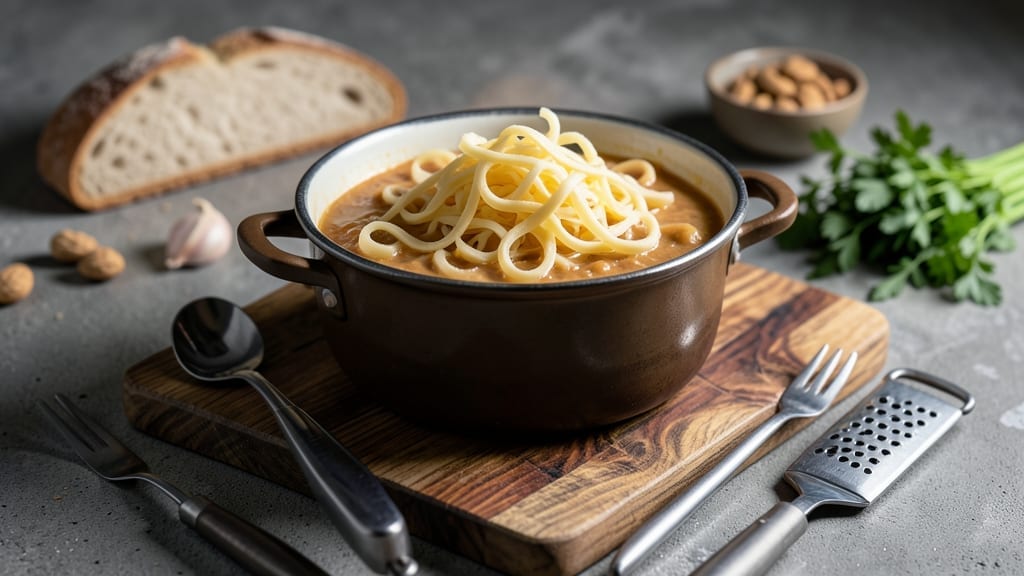
Creating a fondue pot recipe for melted cheese magic transforms any gathering into an interactive feast where every guest becomes part of the meal. The key lies in balancing rich cheeses with the right liquid—white wine or broth—and maintaining that perfect, bubbling temperature for dipping bread, meats, and vegetables.
I’ve perfected this method after years of hosting fondue nights, ensuring the cheese stays velvety and never burns.
This recipe delivers restaurant-quality fondue with simple ingredients: sharp cheddar, Gruyère, and Emmental for depth, plus a splash of white wine or vegetable broth to keep the mixture smooth. A fondue pot with precise temperature control is essential—aim for 185°F to prevent scorching while keeping the cheese fluid.
The secret weapon? A fondue thermometer to monitor heat without guesswork, ensuring every bite is perfectly gooey.
By the end, you’ll have a bubbling cauldron of golden, aromatic cheese that invites everyone to dip crusty bread, roasted chicken, or even fresh apples. The experience isn’t just about the food—it’s about the laughter, the shared utensils, and the joy of creating something together.
Serve with a crisp white wine to complement the flavors and watch your guests fall in love with this timeless tradition.
For a modern twist, swap the cheese for dark chocolate and fruit or experiment with a broccoli-cheese fondue for a vegetarian option. The possibilities are endless, but the foundation remains the same: warmth, sharing, and that irresistible pull of melted goodness. Let’s get started on your next unforgettable fondue night.
Ingredients for fondue recipe for fondue pot
Simple cheeses, bold flavors—this fondue pot recipe transforms your kitchen into a cozy gathering spot.
| Ingredient | Amount | Notes |
|---|---|---|
| Sharp White Cheddar Cheese 🧀 | 3 cups | Shredded, aged 12+ months |
| Gruyère Cheese 🧀 | 2 cups | Shredded, nutty flavor |
| Emmental Cheese 🧀 | 1 ½ cups | Shredded, mild sweetness |
| Dry White Wine 🍷 | 1 cup | Sauvignon Blanc preferred |
| Vegetable Broth 💧 | ½ cup | Low-sodium preferred |
| Cornstarch 🌾 | 1 tbsp | For thickening consistency |
| Garlic Cloves 🧄 | 3 cloves | Minced for aroma |
| Dijon Mustard 🍯 | 1 tsp | For subtle tang |
| Kosher Salt 🧂 | ½ tsp | Diamond Crystal preferred |
| Black Pepper 🌶️ | ¼ tsp | Freshly ground |
| Nutmeg 🌿 | ⅛ tsp | Freshly grated |
| Baguette Slices 🍞 | 12 pieces | Crusty, toasted |
| Apples 🍎 | 2 whole | Honeycrisp variety |
The cheeses are everything here. Gruyère from a specialty cheese shop—like Murray’s Cheese or Whole Foods—adds that signature nutty depth. Sharp cheddar should be aged at least 12 months for real bite. Emmental keeps things smooth, but don’t skimp on quality: pre-shredded gets waxy when melted. If you’re buying blocks, shred yourself—it makes all the difference. The wine? Sauvignon Blanc from Trader Joe’s or a local vineyard works perfectly—just avoid anything too sweet. For a non-alcoholic version, use extra broth and a splash of apple cider.
No white wine? Dry sparkling water with lemon juice mimics the acidity. Running low on Gruyère? Comté cheese is your best swap—same nutty profile. The cornstarch is non-negotiable for that perfect fondue consistency (it prevents graininess). Fresh nutmeg is worth the extra minute—pre-ground tastes like sawdust. And if you’re serving kids, mild cheddar instead of sharp keeps things family-friendly. The apples? Honeycrisp stays crisp when dipped—Costco sells them in bulk, so stock up.
Make the fondue ahead but hold off on melting until guests arrive. Cheese keeps 3 days in the fridge, pre-shredded. The broth can be pre-made and stored for 1 week. Once melted, keep the pot at 185°F—a thermometer is your best friend. Leftover fondue? Spread it on toast or freeze for 1 month in portions. And pro tip: Double the recipe—you’ll want seconds.
Why You’ll Love This Recipe
- No-Fuss Setup: I swear by this—just melt the cheeses in the pot, add the wine and broth, and stir. No fancy techniques, no stress. The fondue pot does all the work while you sip that wine and relax.
- Cheese Love Bomb: That combo of sharp white cheddar, nutty Gruyère, and mild Emmental? It’s a flavor explosion. The wine adds brightness, and the broth keeps it rich without being heavy. Every bite is pure comfort.
- Weeknight to Party Fix: Make it for Tuesday dinner with crusty bread, or crank it up for game night with pretzels and apples. Same recipe, different vibes. Honestly, it’s my secret weapon for effortless gatherings.
- Cheap & Reusable Magic: The wine and broth stretch the cheese further, so you’re not wasting a whole block. And the leftovers? Toss them in a quesadilla or mac and cheese—no guilt, just deliciousness.
Step-by-step instructions for fondue pot recipe
This rich, velvety cheese blend comes together with just a few simple techniques.
Prepare the Cheese Base
Begin by cutting the 3 cups sharp white cheddar cheese, 2 cups gruyère cheese, and 1.5 cups emmental cheese into small, even cubes. The key here is to use a sharp knife and cut each piece uniformly—this ensures everything melts at the same rate without clumping. I like to work in batches to keep the cheese cold until needed, which prevents premature melting.
In a medium heatproof bowl, combine the cheese cubes with the 1 cup dry white wine and 0.5 cup vegetable broth. The wine adds depth while the broth prevents the cheese from becoming too heavy. Let this mixture sit at room temperature for about 15 minutes while you prepare the remaining ingredients. This step is crucial for even melting and prevents the cheese from seizing when it hits the heat.
Build the Flavor Foundation
While the cheese mixture rests, finely mince the 3 cloves garlic cloves and set aside. In a small bowl, whisk together the 1 tablespoon cornstarch, 1 teaspoon Dijon mustard, 0.5 teaspoon kosher salt, 0.25 teaspoon black pepper, and 0.125 teaspoon nutmeg. The cornstarch will help thicken the fondue to a perfect dipping consistency, while the spices add layers of warmth and complexity.
Here’s where it gets good—sprinkle the spice mixture evenly over the cheese mixture and gently fold it in with a wooden spoon. The cornstarch needs to be distributed evenly to avoid any grainy spots in your fondue. Let this mixture sit for another 5 minutes, allowing the flavors to meld together. This resting period ensures the spices infuse properly and the cornstarch activates slightly, creating a smoother texture when heated.
Melt and Whisk to Perfection
Place the bowl over a pot of simmering water on medium heat, making sure the bowl doesn’t touch the water. This gentle indirect heat is perfect for melting cheese without scorching it. Stir constantly with a wooden spoon or silicone spatula, scraping the bottom and sides of the bowl to prevent any cheese from sticking and burning. You’ll know it’s ready when the mixture becomes smooth and glossy, which should take about 8-10 minutes.
If the fondue starts to thicken too much, add 1-2 tablespoons of hot water from the pot to loosen it. The goal is a thick but pourable consistency—like warm honey. Once smooth, remove the bowl from the heat and give it one final stir. The residual heat will keep it warm while you prepare the dippers, and the texture will continue to improve as it sits.
Prepare the Dippers
Toast the 12 pieces baguette slices in a dry skillet over medium heat until they’re golden brown and crispy, about 2 minutes per side. The toasted bread adds a delightful crunch that contrasts beautifully with the creamy fondue. While the bread toasts, peel and core the 2 whole apples, then cut them into thin wedges. The crisp, sweet apples pair wonderfully with the rich cheese.
Arrange the toasted baguette slices and apple wedges on a serving platter. The warm bread will stay crisp longer if you keep it separate from the fondue until serving. Here’s the thing—fondue is all about the experience, so set up your fondue pot with long-handled forks and small plates for dipping. The contrast of textures and temperatures makes every bite exciting.
Serve and Enjoy
Return the melted cheese to the pot of simmering water to keep it warm while serving. The indirect heat maintains the perfect temperature for dipping—hot enough to melt any cheese that clings to the bread or fruit, but not so hot it burns. Ladle the fondue into individual fondue pots or a large communal pot, and let your guests dig in.
Encourage everyone to try different combinations—dip the crispy baguette into the rich cheese, then finish with a bite of sweet apple. The balance of flavors and textures is what makes this fondue truly special. Serve with extra apples and bread on the side, and don’t forget to have a cheese knife handy for scraping off any delicious drips. This is the kind of dish that brings people together, one gooey bite at a time.
Pro Tips For Making Fondue Recipe For Fondue Pot
- Grate Cheese Fresh: Don’t pull those blocks out of the fridge 30 minutes before. The cold cheese won’t melt smoothly—it’ll clump like sad glue. Grate it right before melting, and keep the fondue pot on low until all the cheese is in. I learned this the hard way after watching my first batch turn into a cheesy sludge.
- Wine First, Then Broth: Heat the wine alone until it’s just simmering—this cooks off the alcohol and deepens the flavor. Then add the broth after the cheese starts melting, not before. Adding broth too early dilutes the wine’s punch and makes the fondue taste watery.
- Skip the Pre-Shredded Cheese: Pre-shredded cheese has anti-caking agents that turn fondue into a grainy nightmare. Even if it’s tempting, grate your own—Sharp White Cheddar especially. The extra effort makes a real difference in texture.
- Stir Like You Mean It: The first 5 minutes after adding cheese are critical. Stir constantly with a wooden spoon—this is the only way to break up the fat and create that silky, stretchy fondue. I used to let it sit for a minute, and it’d separate like a sad lasagna. Don’t be lazy.
Common mistakes when making this dish
Cheese Clumping Nightmare
Your fondue turns into a lumpy disaster when cheese cubes aren’t evenly sized or melted too quickly. I’ve seen this happen when people rush the melting process or use pre-shredded cheese (the anti-crustacean powder causes clumping).
Always cut cheese into uniform ½-inch cubes and melt over indirect heat—never direct flame. For extra insurance, whisk in 1 tablespoon cornstarch while melting to create a silky texture. 🧀
Temperature Control Struggles
Fondue that’s too hot burns the first dipper, while lukewarm cheese becomes a sad, stringy mess. The sweet spot is 185°F—use a fondue thermometer to monitor this precisely. I recommend the Ozeri Touchless Fondue Pot with built-in temperature control.
If your pot lacks a thermometer, test with a wooden skewer: dip it in—if cheese slides off cleanly, you’re golden. 🌡️
Wine Overload Disaster
Adding too much wine makes fondue runny and watery. The 1 cup wine in this recipe is perfect for 6 servings—any more and your fondue becomes a cheese sauce.
If you’re nervous, start with ½ cup and add more as needed while melting. For non-alcoholic versions, use apple cider instead of wine—it adds sweetness without thinning the mixture. 🍷
Cross-Contamination Risks
Raw meats like chicken or beef can contaminate your fondue if not cooked properly. The cheese only reaches 165°F when dipped, which isn’t hot enough to kill bacteria. Always cook meats separately to 165°F before dipping, or serve them on the side.
I keep a separate fondue pot for meats and label everything clearly. For extra safety, use pasteurized cheese if serving vulnerable guests. 🦠
Bread That Gets Soggy
Toasted baguette turns limp when dipped too long in warm fondue. The solution? Keep bread on a wire cooling rack above the fondue pot to stay crisp. I also recommend serving bread in small baskets so guests can easily access fresh slices.
For variety, offer both baguette and pretzel sticks—the saltiness cuts through the richness beautifully. 🍞
Fondue That Separates
When cheese and liquid separate, it’s usually from overheating or stirring too aggressively. Maintain gentle heat and stir constantly with a wooden spoon to prevent separation. If it happens, whisk vigorously to recombine, then return to low heat.
For extra stability, add 1 extra teaspoon cornstarch** to the initial mixture. This is my last-resort fix when things go wrong mid-party. 🔥
Nutrition facts
Frequently asked questions about fondue pot recipes
What’s the best cheese blend for classic fondue?
For authentic flavor, use a mix of Gruyère (nutty), Emmental (mild), and sharp white cheddar (tangy). This trio creates a balanced, creamy texture. Avoid pre-shredded cheese—it clumps when melted. Freshly grated cheese makes all the difference!
Can I make fondue without wine?
Swap wine for dry sparkling water with lemon juice or vegetable broth for depth. For a non-alcoholic twist, try apple cider—it adds sweetness without thinning the cheese. Start with ½ cup and adjust as needed.
How do I keep fondue warm without burning it?
Use a fondue pot with indirect heat (like a double boiler) and maintain 185°F with a thermometer. Stir constantly to prevent scorching. If your pot lacks a thermometer, test with a wooden skewer—if cheese slides off cleanly, it’s perfect. Never leave it unattended!
What are the best dippers besides bread?
Try roasted potatoes, pretzel sticks, crispy chicken, or fresh fruit like apples and pears. For a veggie option, blanch broccoli or cauliflower until tender. Keep dippers on a rack above the pot to stay crisp.
Why did my fondue turn grainy?
Graininess usually means overheating or uneven melting. Use cornstarch (1 tbsp) to smooth it out, or whisk vigorously to recombine. Always melt cheese over gentle heat and stir constantly. Pre-shredded cheese is a common culprit—grate your own for the best results!

- Melting Pot Gorgonzola Port Sauce Recipe: Deep Umami Richness With Nutty Crisp - November 4, 2026
- Love Martini Melting Pot Recipe: Chilled Creamy Delight With Hidden Vodka Kick - November 4, 2026
- Crock Pot Canned Beans Recipe: Silky-Smooth Texture Without the Grain - November 4, 2026