
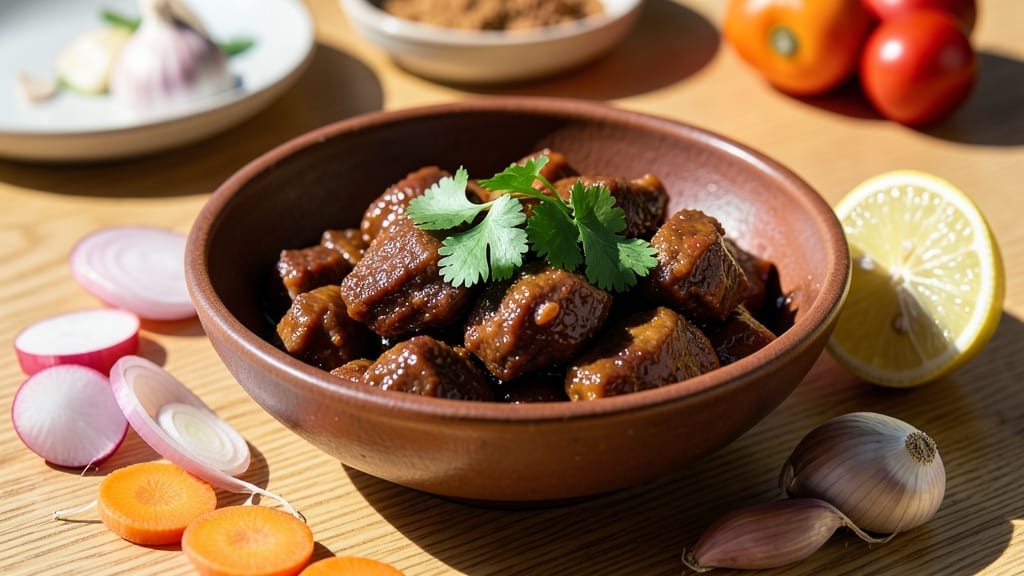
Transforming tough beef short ribs into tender, melt-in-your-mouth galbi jjim has never been faster—this Instant Pot adaptation delivers restaurant-quality results in just 45 minutes while preserving all the traditional flavors.
The secret lies in a precise marinade of soy, ginger, and sesame that tenderizes the meat before the pressure cooker works its magic, creating a dish that’s both authentic and effortless.
What sets this recipe apart is the balance of techniques: a quick marinade (no overnight soaking required) followed by high-pressure cooking that breaks down collagen without overcooking the ribs. The sauce reduces naturally during the process, developing depth of flavor that simmers for hours in traditional recipes.
For that final touch, soft-boiled eggs add richness and texture, just like in Korean home-style cooking.
By the time you’re done, you’ll have perfectly tender beef with a glossy, caramelized sauce that clings to every bite. The meat falls apart easily with a fork, and the aromas of soy, garlic, and ginger fill your kitchen—proof that you don’t need hours to create a dish this impressive.
This is galbi jjim that feels like a celebration, not a chore.
The best part? The Instant Pot handles all the timing and temperature control for you, leaving you free to prepare side dishes like steamed rice or quick-pickled vegetables. Let’s make this dish that’s equal parts comforting and impressive—your table will thank you.
Ingredients for galbi jjim recipe instant pot
These 14 ingredients transform tough ribs into melt-in-your-mouth galbi jjim—no overnight marinating required.
| Ingredient | Amount | Notes |
|---|---|---|
| Beef Short Ribs 🥩 | 2 lb | Bone-in, 1.5-inch thick slices |
| Soy Sauce 🥢 | ½ cup | Korean or Japanese preferred |
| Rice Wine 🍷 | ¼ cup | Or substitute with dry sherry |
| Sesame Oil 🫒 | 1 tbsp | Toasted sesame oil only |
| Fresh Ginger 🌿 | 2 tbsp | Grated, not powdered |
| Garlic Cloves 🧄 | 6 cloves | Minced, fresh preferred |
| Sugar 🍯 | 2 tbsp | Granulated, light brown preferred |
| Water 💧 | 1 cup | For Instant Pot cooking |
| Large Eggs 🥚 | 4 whole | Soft-boiled, for serving |
| Green Onions 🧅 | 4 whole | Thinly sliced, for garnish |
| Toasted Sesame Seeds 🌾 | 1 tbsp | For garnish |
| Diamond Crystal Kosher Salt 🧂 | 1 tsp | For seasoning |
| Black Pepper 🌶️ | ½ tsp | Freshly ground |
| Steamed White Rice 🍚 | 2 cups | For serving |
The beef is everything here. Look for beef short ribs with good marbling—the fat renders beautifully during cooking. Korean markets often carry pre-sliced galbi jjim cuts, but most grocery stores stock beef short ribs. If using bone-in, trim excess fat for cleaner presentation. For the marinade, Korean soy sauce adds depth over regular soy, but don’t stress if you only have Japanese. The ginger and garlic should be fresh—powdered versions won’t give that bright, zesty kick. I always double-check my sesame oil is toasted (not the cheap flavored kind from the regular aisle).
No rice wine? Dry sherry or mirin works in a pinch—just add a splash of water to balance the sweetness. Fresh ginger too fibrous? Powdered ginger at half the amount will work, but you’ll lose that fresh bite. For the sugar, light brown adds subtle caramel notes, but granulated is fine. The eggs should be soft-boiled (6 minutes in boiling water) for that creamy yolk. If you’re short on time, room-temperature eggs cook more evenly. The green onions are just for garnish—skip them if you’re serving this as a main course without sides.
This dish reheats beautifully—just warm the sauce and beef together for 5 minutes. Store in the fridge for up to 4 days with the sauce kept separate. For freezing, portion the beef and sauce together in airtight containers (they keep for 3 months). The rice can be steamed fresh or reheated with a splash of water. I always make extra sauce—it’s perfect for dipping rice or drizzling over noodles later.
Why You’ll Love This Recipe
- Instant Pot Magic: I swear, the pressure cooker does all the hard work—just sear the ribs, dump in the sauce (soy, rice wine, ginger), and walk away. No babysitting the stove, no waiting hours for tender meat.
- Umami Bomb: That combo of soy sauce and ginger? It’s like a flavor explosion in your mouth. The beef falls apart but stays juicy, and the sesame oil at the end adds this nutty, rich finish that makes it hard to stop eating.
- Leftovers That Don’t Suck: Between us, this dish actually improves the next day. The flavors meld even more, and reheating is a breeze—just a splash of water, 5 minutes, and you’ve got dinner. (Yes, even on a Tuesday night.)
- Budget-Friendly Luxury: Short ribs can feel fancy, but this recipe stretches them into multiple meals without breaking the bank. A few ribs, a little sauce, and you’ve got a restaurant-quality dish that won’t drain your wallet.
Step-by-step instructions for slow-cooked Korean beef short ribs
Here’s how to transform tough beef short ribs into melt-in-your-mouth tenderness using your Instant Pot.
Prepare the Beef and Marinade Base
Pat the 2 lb beef short ribs completely dry with paper towels. This step is crucial—any moisture left on the meat will prevent proper browning and flavor development later. Place the ribs in the Instant Pot and set them aside.
In a small bowl, whisk together the 0.5 cup soy sauce, 0.25 cup rice wine, 1 tbsp sesame oil, 2 tbsp freshly grated ginger, 6 minced garlic cloves, 2 tbsp sugar, 1 tsp diamond crystal kosher salt, and 0.5 tsp freshly ground black pepper. This marinade will infuse the ribs with deep umami flavor while tenderizing the meat. Pour the marinade evenly over the ribs in the Instant Pot, making sure each piece is well-coated.
Sear the Ribs for Maximum Flavor
Set your Instant Pot to “Sauté” mode and allow it to heat up. Add the 1 cup water to the pot and bring it to a gentle simmer. This creates steam that will help tenderize the meat during the searing process.
Working in batches if needed, carefully remove the ribs from the pot and sear them on all sides until they develop a deep golden-brown crust. This should take about 3-4 minutes per side. The browning creates the Maillard reaction, which develops those rich, caramelized flavors. Return the seared ribs to the pot after each batch.
Pressure Cook Until Fork-Tender
Once all ribs are seared, secure the lid on your Instant Pot and set it to “High Pressure” for 45 minutes. This cooking time is perfect for transforming tough beef short ribs into fork-tender slices. The high pressure creates an environment where the collagen in the meat breaks down rapidly, resulting in that signature melt-in-your-mouth texture.
During this time, prepare the 4 whole large eggs for serving by soft-boiling them (6 minutes in boiling water, then immediately transferring to ice water for 5 minutes). Also, thinly slice the 4 whole green onions and set them aside for garnish. The eggs will add a delicate contrast to the rich, savory ribs.
Finish with Sesame Oil and Garnishes
When the cooking time is complete, allow the pressure to release naturally for 10 minutes, then quick-release any remaining pressure. Carefully remove the lid and skim off any excess fat that has risen to the surface. The ribs should now be fork-tender and easily pull apart.
Return the ribs to the pot and stir in the 1 tbsp toasted sesame seeds. This final step adds a nutty aroma and beautiful visual contrast to the dish. The sesame seeds will toast slightly in the residual heat, releasing their aroma and enhancing the overall flavor profile. Garnish each serving with the sliced green onions for freshness and color.
Serve Over Steamed White Rice
Ladle the tender beef short ribs over the 2 cups steamed white rice, ensuring each serving gets an equal portion of both the meat and any accumulated cooking juices. The rice acts as a perfect vehicle for soaking up all the delicious marinade and tender meat.
Serve immediately with the soft-boiled eggs on the side. The contrast between the rich, savory beef and the delicate eggs creates a perfectly balanced meal. Each bite should deliver that promised tenderness with layers of umami flavor from the soy sauce and rice wine marinade.
Pro Tips For Making Galbi Jjim Recipe Instant Pot
- Sear Before Steaming: That quick 2-minute sear in the Instant Pot before adding liquid makes all the difference—crispy edges hold up better during pressure cooking, and the flavor jumps off the plate. I used to skip it, thinking it’d just cook faster, but the ribs stay tender without falling apart.
- Trim That Ginger: Fresh ginger is non-negotiable here, but don’t just chop it—grate it. The fine texture dissolves evenly, and you’ll need about 1 tablespoon (packed) for the right kick. I learned this the hard way when my galbi jjim tasted bland because the chunks stayed stubbornly intact.
- Don’t Overfill the Pot: Fill the Instant Pot only halfway with liquid—this recipe needs room to build pressure properly. Too much water dilutes the soy and rice wine, turning your rich galbi into a weak broth. Trust me, the ribs won’t dry out if you follow the 1:1 liquid-to-meat ratio strictly.
- Natural Release Only: Resist the urge to quick-release the pressure—let it sit for 10 full minutes after cooking. The ribs stay fork-tender, and the sauce thickens just enough to coat them properly. I was skeptical until I tried it; now I never rush this step.
Regional styles of this dish
Seoul-Style Galbi Jjim
This is the classic version you’ll find in Seoul’s samgyetang restaurants, where ribs are braised with a sweet-savory sauce until they’re practically falling apart. The key difference here is the addition of 1 tbsp gochujang (Korean chili paste) to the marinade, which adds subtle heat and depth.
I like to finish with a drizzle of sesame oil right before serving to enhance the umami. This version pairs beautifully with kimchi and steamed rice—the acidity cuts through the richness. 🌶️
Busan Coastal Twist
In Busan, where seafood dominates, galbi jjim often incorporates seafood stock> instead of water for cooking. For this version, replace the 1 cup water> with 1 cup seafood stock> and add 1 tbsp chopped scallions> to the marinade.
The briny notes complement the beef beautifully, and the dish takes on a lighter, more refreshing character. Serve with steamed clams> on the side for a true coastal experience.
Jeonju Hanok Village Adaptation
Jeonju, the heart of Korean cuisine, often serves galbi jjim with a thin layer of pear puree> in the sauce for natural sweetness. Add ½ cup blended ripe pears> to the marinade and reduce it slightly after pressure cooking.
The result is a sauce with a velvety texture and subtle floral notes. Garnish with toasted sesame seeds> and serve with jeonju bibimbap rice> for an authentic regional touch.
Modern Fusion Approach
For a contemporary twist, I like adding 1 tbsp miso paste> to the marinade and finishing with a sprinkle of furikake> (Japanese seasoning blend). This fusion version bridges Korean and Japanese flavors beautifully.
The miso adds earthy depth, while furikake brings a mix of seaweed, sesame, and nori flavors. Serve with udon noodles> instead of rice for a comforting, hearty meal. 🍜
Spicy Firehouse Style
Inspired by Korean firehouse cuisine>, this version cranks up the heat with 1 tbsp gochugaru> (Korean red pepper flakes) and 1 tbsp chopped green chili peppers> in the marinade.
The ribs develop a deep red hue and a fiery kick that pairs perfectly with cooling side dishes> like cucumber salad. For extra richness, top with a soft-boiled egg and drizzle with chili oil**> before serving.
Nutrition facts
Frequently asked questions
Can I use regular beef short ribs instead of Korean galbi cuts?
Regular beef short ribs work perfectly—just trim any large fat deposits for cleaner presentation. The key is using 1.5-inch thick slices to ensure even cooking. If your ribs are thinner, reduce pressure time to 30 minutes to avoid overcooking.
Why does my galbi jjim sauce turn watery after pressure cooking?
This happens when too much liquid is added or the pressure release isn’t controlled. Always use just 1 cup water and let the sauce reduce naturally during the 10-minute natural release. If needed, remove the lid and simmer on high heat for 2-3 minutes to thicken it.
Can I make this recipe without rice wine?
Yes! Substitute with dry sherry or mirin (use equal amounts). For a non-alcoholic option, try apple cider vinegar + 1 tsp sugar. The acidity helps tenderize the meat, though rice wine adds the most authentic depth.
How do I know when the beef is tender enough?
The ribs should easily pull apart with two forks when checked after 45 minutes of pressure cooking. If they’re still slightly firm, add 5 more minutes of pressure time. Never overcook—this makes the meat tough again. The sauce should coat the back of a spoon.
What’s the best way to reheat leftovers?
Reheat just the sauce and beef together on high heat for 3-4 minutes—never microwave. For extra tenderness, add 1 tbsp water to the pot. Leftovers keep for 4 days in the fridge or 3 months frozen. The rice reheats best steamed fresh.

- Crock Pot Round Steak Recipe: Slow-Sear Crust With Juicy Center - November 6, 2026
- Candied Sweet Potatoes Crock Pot Recipe: Caramelized Sweetness With Zero Effort - November 6, 2026
- Steak Recipe Crock Pot: Juicy, Caramelized Crust in 4 Hours - November 6, 2026