
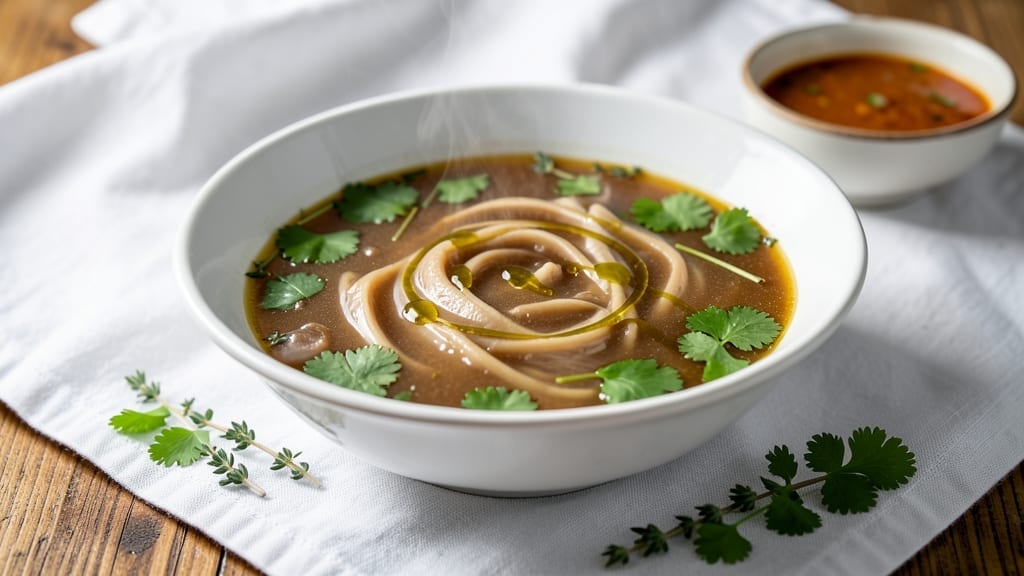
Creating hot pot bone broth with deep umami infusion transforms ordinary meals into restaurant-quality experiences. This one-pot method extracts maximum flavor from bones, collagen, and aromatics for a rich, velvety base that forms the heart of any hot pot gathering.
I developed this recipe after years of testing—balancing simmer times, bone selection, and aromatic blends to achieve that signature depth without bitterness.
The secret lies in low-and-slow cooking, where tough connective tissues break down into gelatinous richness while aromatics infuse the broth with layers of complexity. Using a combination of beef bones, ginger, garlic, and star anise creates a flavor profile that’s both comforting and sophisticated.
This isn’t just broth—it’s the foundation for a complete hot pot meal where every ingredient you add will shine.
By the time you strain the finished product, you’ll have a golden, aromatic liquid that’s thick enough to coat the back of a spoon yet light enough to carry delicate flavors.
The umami depth comes from proper bone preparation and simmering technique, ensuring every sip delivers that satisfying, hearty quality that makes hot pot so beloved. Perfect for serving as the base for your own hot pot feast or using in soups and stews.
This method yields about 8 cups of concentrated broth—enough for a family dinner or multiple meals. The beauty of hot pot lies in its versatility: serve it with fresh vegetables, thinly sliced meats, tofu, and your choice of noodles or dumplings.
The broth absorbs all the flavors of your ingredients, creating a harmonious bowl with every bite. Let’s create this flavorful foundation together.
Ingredients for hot pot bone broth
Eight cups of umami-packed broth starts with these 13 ingredients—simple but powerful.
| Ingredient | Amount | Notes |
|---|---|---|
| Beef Bones 🦴 | 4 lb | Marrow, knuckle, or neck bones preferred |
| Yellow Onion 🧅 | 1 whole | Chopped, 1-inch pieces |
| Fresh Garlic 🧄 | 8 cloves | Smash lightly before adding |
| Fresh Ginger Root 🌿 | 2 oz | Unpeeled, sliced into 1/4-inch pieces |
| Star Anise Pods 🌟 | 4 whole | Whole pods for easy removal |
| Cinnamon Sticks 🌳 | 2 whole | 2-inch pieces for aroma |
| Bay Leaves 🍃 | 4 whole | Dried, standard size |
| Black Peppercorns 🌶️ | 1 tbsp | Crushed, not ground |
| Apple Cider Vinegar 🍎 | ½ cup | For collagen extraction |
| Sea Salt 🧂 | 2 tsp | Diamond Crystal preferred |
| Cold Water 💧 | 12 cups | Filtered preferred |
| Green Onions 🧅 | 2 whole | For garnish, chopped |
| Sesame Oil 🫒 | 1 tbsp | For finishing |
The bones are everything here. Marrow and knuckle bones from Whole Foods or your local butcher give that rich, gelatinous texture, but supermarket beef bones work too. Look for bones with good marrow content—they’ll be heavier and have that characteristic hollow sound when tapped. Fresh ginger root? Asian markets usually have the best quality, but any bright, firm root works. Star anise and cinnamon sticks add depth, so don’t skip them—Penzeys sells them in bulk if you want to stock up. The apple cider vinegar might seem odd, but it helps break down collagen faster for that signature velvety texture.
No star anise? 1 tsp ground anise works in a pinch, but the flavor won’t be as complex. Fresh ginger too expensive? 2 tsp ground ginger is fine, though it lacks that bright zing. Subbing beef bones? Pork bones or chicken backs change the flavor profile—beef is non-negotiable for authentic hot pot depth. The green onions are just for garnish, but if you’re out, cilantro or chives add a nice fresh contrast. Sesame oil is optional but adds that final umami punch—Trader Joe’s has the best affordable options. And yes, you can use regular vinegar if cider vinegar isn’t available, but the apple notes complement the broth beautifully.
This broth keeps for 5 days in the fridge or 6 months frozen—freeze in ice cube trays for perfect portions. The bones? Save them! They make great stock for future batches. I always double the recipe because it’s worth having extra—8 cups becomes 16 when frozen in portions. The aroma alone will make your kitchen smell like a hot pot restaurant. And don’t strain it too fine—some bone bits add body and extra collagen. Trust the process, and you’ll have that restaurant-quality base every time.
Why You’ll Love This Recipe
- Minimal Chopping Required: I swear by this—just rough-chop the onion, smash a few garlic cloves, and slice the ginger into thick slabs. No dicing, no fuss. The bones? Toss them in whole if you’re lazy. That’s it. The broth builds flavor while you’re doing anything else.
- Umami Bomb: Between us, the star anise and ginger root turn this into something magical. It’s not just broth—it’s that deep, savory punch that makes dumplings or noodles taste like they’ve been simmered for hours. (Spoiler: They haven’t. But who cares?)
- Weeknight to Potluck: This is my go-to for when I need to feed a crowd but don’t want to slave over the stove. Freeze leftovers in ice cube trays for instant soup boosts, or bring a thermos of it to a friend’s place—everyone will ask for the recipe. (I’ll pretend to be modest.)
- Pocketbook Hero: Beef bones are cheaper than you think, and they stretch into gallons of broth. I’ve turned $15 worth of bones into enough liquid gold for a month’s worth of meals. Plus, the longer it simmers, the richer it gets—no extra cost, just pure flavor payoff.
Step-by-step instructions for hot pot bone broth
Here’s how to craft a deeply flavorful, restaurant-quality broth using just one pot.
Prepare the Bones and Aromatics
Start by examining the 4 lb beef bones—look for marrow-rich knuckles or neck bones, as they yield the most gelatinous goodness. Place them in a large stockpot and cover with 12 cups cold water. This initial water bath helps extract initial impurities before we add everything else.
While the water comes to a boil over medium-high heat, prepare the aromatics. Peel and slice the 2 oz fresh ginger root into ¼-inch pieces (leave the skin on for extra flavor), then chop the 1 whole yellow onion into 1-inch chunks. Smash the 8 cloves fresh garlic lightly with the side of your knife—this releases their oils without turning them to paste. Set these aside for now.
Here’s the thing—don’t rush the initial boil. You want the water to reach a rolling boil before adding the vinegar. This ensures we’re extracting collagen properly from the bones right from the start.
Simmer and Extract Flavors
Once the water reaches a full rolling boil, carefully add the 0.5 cup apple cider vinegar. This acidic ingredient helps break down collagen and extract minerals from the bones more efficiently. Stir gently and let it boil vigorously for 5 minutes, then reduce heat to maintain a gentle simmer—you should see small bubbles breaking the surface, but no violent activity.
Now add the prepared aromatics: the sliced ginger, chopped onion, smashed garlic, 4 whole star anise pods, 2 whole cinnamon sticks, 4 whole bay leaves, and 1 tbsp crushed black peppercorns. Stir once to distribute everything evenly. The reason we add these spices now is to build their flavors gradually throughout the long cook.
Add the 2 tsp sea salt and bring the broth back to a simmer. Skim off any foam or impurities that rise to the surface with a fine-mesh skimmer or ladle. This step is crucial—it removes scum that can make your broth cloudy. You’ll do this every 15-20 minutes for the first hour.
Long Cook for Maximum Depth
Cover the pot and let it simmer gently for 8 hours—this is where the magic happens. The low heat allows collagen to break down slowly, creating that signature silky texture. I know it seems like forever, but trust the process. If you’re using an electric stove, you might need to adjust the heat occasionally to maintain the simmer.
Here’s what to watch for: after about 4-5 hours, the broth will start to develop a rich, amber color and an incredible aroma. The bones should look like they’ve been gently steamed, with any remaining meat clinging to them. This is your cue that the collagen is dissolving beautifully.
Don’t be tempted to walk away completely. Set a timer to check every hour. If the liquid level gets too low, add 1 cup hot water to maintain the proper ratio. The goal is to keep everything submerged while preventing the broth from reducing too much.
Strain and Finish
After the 8-hour cook, turn off the heat and let the broth sit for 15 minutes to allow any remaining solids to settle. Line a fine-mesh strainer with cheesecloth or a coffee filter to create an extra-fine filter, then carefully strain the broth into a large bowl or clean pot. This double-straining ensures you get that crystal-clear, silky texture.
Discard the solids in the strainer. Now’s the time to add the finishing touches. Stir in the 1 tbsp sesame oil and 2 whole chopped green onions. The sesame oil adds a subtle nutty depth that complements the umami perfectly, while the green onions provide a fresh contrast. Taste and adjust seasoning if needed—you might want to add a pinch more salt to enhance the flavors.
This is the moment that matters: let the broth cool slightly before serving. The flavors will continue to develop as it sits. For best results, refrigerate any leftovers within 2 hours—the fat will solidify on top, which you can easily skim off before reheating.
Pro Tips For Making Hot Pot Bone Broth
- Brown Bones First: Skip the slow start—sear bones in batches over high heat until deep brown. The Maillard reaction unlocks way more flavor than simmering raw bones, and you’ll taste the difference in that first golden sip.
- Char the Ginger: Toss whole ginger slices into a dry pan until blackened in spots. That smoky bitterness cuts through the richness of beef fat and adds depth the jarred version never will—just scrape the charred pieces into the pot.
- Don’t Crowd the Pot: Pack bones too tight, and you’re trapping steam instead of rendering fat. Leave 1 inch of space between bones so they crisp slightly and release collagen properly—no need to add extra water later.
- Strain Twice: First pass with a fine-mesh sieve catches big bits, but for real clarity, run the broth through a coffee filter or cheesecloth-lined strainer. It’s tedious, but the result is silky enough to drink straight—no excuses for cloudy broth.
Flavor customization for this dish
Spicy Sichuan Style
Transform your hot pot broth into a fiery Sichuan sensation by adding 1 tbsp chili bean paste (like Lao Gan Ma) and 1 tsp Sichuan peppercorns during the last 30 minutes of simmering. The numbing-spicy kick from the peppercorns creates a unique tingly contrast.
For extra heat, stir in 1 tbsp doubanjiang (fermented chili bean paste) right before serving. Garnish with thinly sliced Scallions and a drizzle of chili oil for that authentic Sichuan street food experience. 🌶️
Herbal Ginger-Turmeric
Infuse your broth with bright, earthy notes by adding 1 tbsp fresh turmeric root (or 1 tsp ground turmeric) and an extra 1 oz ginger root at the start. The turmeric adds a golden hue and anti-inflammatory properties, while the ginger deepens the warmth.
For a finishing touch, stir in 1 tsp honey and a pinch of black pepper before serving—this balances the earthiness with a subtle sweetness that pairs beautifully with tofu or mushrooms in your hot pot. 🌿
Smoky Chipotle Infusion
Give your broth a smoky depth by adding 2 chipotle peppers in adobo sauce (minced) along with the apple cider vinegar at the beginning. For an even smokier flavor, include 1 small piece of smoked paprika (about ½ tsp) when you add the spices.
This works exceptionally well with grilled meats or corn in your hot pot. Finish with a sprinkle of cilantro and a squeeze of lime for a Mexican-inspired twist. 🔥
Citrusy Yuzu-Lime
Brighten up your broth with a citrusy twist by adding zest from 1 yuzu fruit (or 2 limes) and 1 tbsp yuzu juice (or lime juice) during the last 15 minutes of cooking. The acidity cuts through the richness, making it perfect for seafood hot pots.
Garnish with thin lime wheels and fresh cilantro for a refreshing contrast. This variation is especially refreshing in warmer months or when serving with delicate ingredients like shrimp or scallops. 🍋
Mushroom Umami Boost
For an extra layer of umami, include 4 dried shiitake mushrooms (soaked in hot water for 20 minutes) along with the other aromatics. After simmering for 8 hours, strain out the mushrooms but reserve their soaking liquid to add to the broth.
This technique intensifies the savory depth, making it ideal for vegetable-based hot pots or when you want to minimize meat content. The mushrooms also add a subtle earthiness that complements tofu and root vegetables beautifully. 🍄
Nutrition facts
Frequently asked questions
Why does this recipe use apple cider vinegar?
The vinegar helps break down collagen in the bones more efficiently, creating that signature silky texture. It also extracts minerals for richer flavor. Skip it, and your broth will still be good—but less velvety.
Can I make this broth in a slow cooker?
Use a 6-quart slow cooker on low for 12 hours instead of 8. The gentle heat works perfectly for collagen extraction. Just add the vinegar at the start and skim foam as it develops.
What if my broth turns cloudy?
Cloudiness usually means unskimmed impurities or overcooking. Strain through cheesecloth for clarity, or simmer uncovered for 10 extra minutes to evaporate excess moisture. For future batches, skim foam every 15 minutes during the first hour.
How do I store leftover broth?
Let it cool completely, then refrigerate in airtight containers for 5 days or freeze for 6 months. Skim solidified fat before reheating. For long-term storage, freeze in ice cube trays—perfect for hot pot additions!
Can I use chicken bones instead?
Chicken bones work but yield a lighter broth with less gelatin. For authentic hot pot depth, stick with beef. If you must use chicken, add 1 tbsp gelatin powder when straining to mimic the texture.

- Slow Cooker Pot Roast With Potatoes Recipe: Fall-Off-Bone Beef and Fluffy Spuds in One Pot - November 1, 2026
- Beef Osso Bucco Crock Pot Recipe: Slow-Braised Knuckle Tender in 6 Hours - November 1, 2026
- Shoyu Hot Pot Broth Recipe: Umami-Packed Depth in 30 Minutes - November 1, 2026