
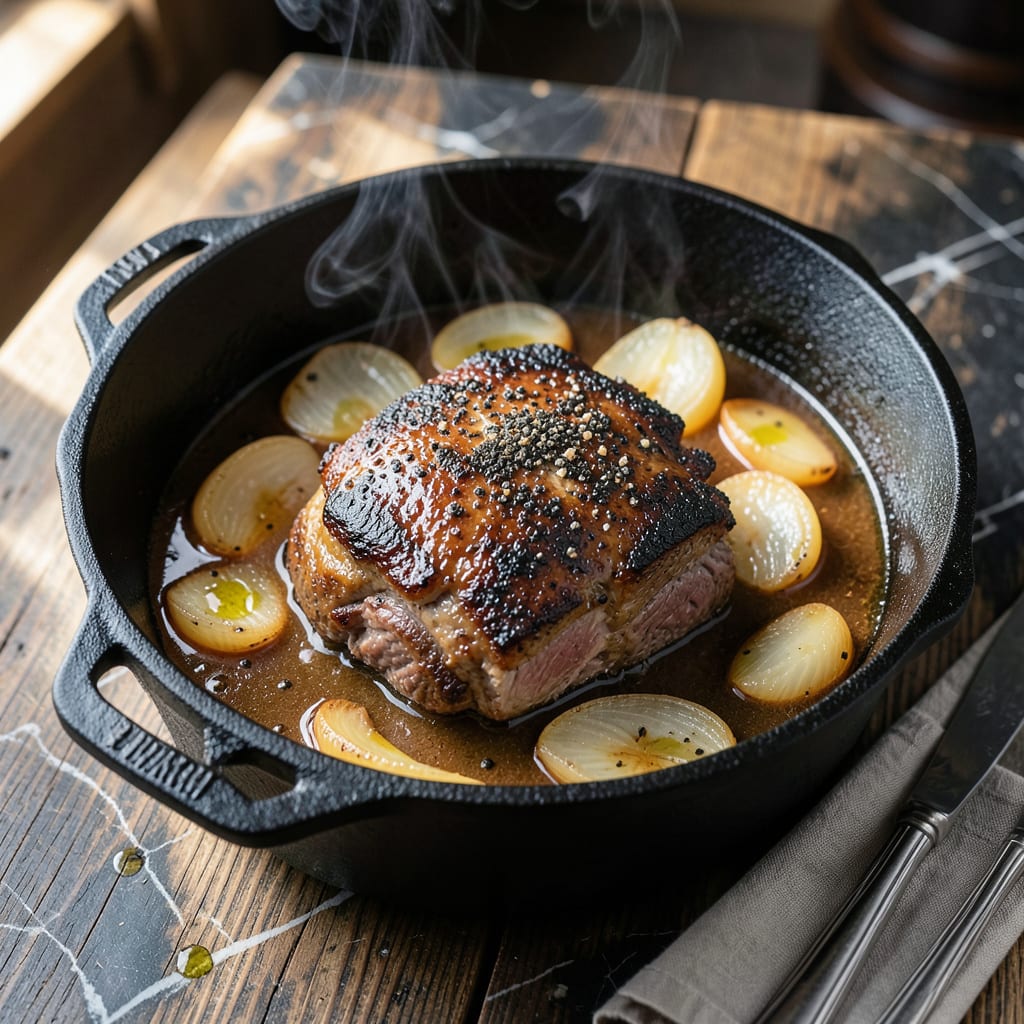
This slow-braised pot roast delivers melting tenderness that falls apart at the touch of a fork. The long cooking process transforms tough cuts into rich, flavorful meat that absorbs every spice and herb.
With simple ingredients and a low-and-slow method, this dish guarantees a tender result every time. Perfect for Sunday suppers or special occasions when you want restaurant-quality at home.
Ingredients for Hot Pot Roast
A few quality ingredients and time transform this into restaurant-worthy comfort food.
| Ingredient | Amount | Notes |
|---|---|---|
| Beef Chuck Roast 🥩 | 3 lb | Well-marbled, boneless preferred |
| Kosher Salt 🧂 | 2 tsp | Diamond Crystal preferred |
| Freshly Ground Black Pepper 🌶️ | 1 tsp | Coarse grind for texture |
| All-Purpose Flour 🌾 | ¼ cup | For dusting meat |
| Olive Oil 🫒 | 2 tbsp | Divided for searing and sauteing |
| Yellow Onions 🧅 | 2 whole | Large, diced into chunks |
| Carrots 🥕 | 3 whole | Peeled and cut into 3-inch pieces |
| Garlic Cloves 🧄 | 6 cloves | Smashed, peeled |
| Dried Thyme 🌿 | 1 tsp | Crushed between fingers |
| Dried Rosemary 🍃 | 1 tsp | Crushed to release oils |
| Bay Leaves 🌿 | 2 pieces | Dried, whole |
| Red Wine 🍷 | 2 cups | Dry, full-bodied variety |
| Beef Broth 🥣 | 2 cups | Low-sodium preferred |
| Tomato Paste 🍅 | 2 tbsp | For depth of flavor |
The beef is non-negotiable here. Chuck roast with visible marbling is ideal—it breaks down beautifully during the long braise. Costco or Whole Foods typically carry well-marbled cuts, but any reputable butcher will have what you need. Avoid lean cuts like sirloin; they’ll stay tough no matter how long you cook them. The flour for dusting should be all-purpose, nothing fancy.
No red wine? Substitute with additional beef broth and a splash of balsamic vinegar for acidity. Fresh herbs can replace dried at three times the amount, but dried work perfectly fine here. If you’re out of tomato paste, a tablespoon of ketchup in a pinch adds similar depth. The carrots and onions can be swapped for other root vegetables like parsnips or celery root.
This tastes even better the next day. Store leftovers in an airtight container in the fridge for up to 4 days, or freeze for 3 months. Reheat gently on the stove with a splash of broth to restore moisture.
Why You’ll Love This Recipe
- I’ll be real: a big cut of chuck gives multiple meals, and it tastes like I spent way more than I did.
- Set It & Forget It: I just sear the beef, toss in the seasonings, and let the pot do the work—no babysitting required.
- Rich Beefy Depth: That chuck roast soaks up the salt and pepper, turning into this melt-in-your-mouth, savory masterpiece.
- Feeds a Hungry Crowd: Between us, this is my go-to for Sunday dinners, birthdays, or even when the in-laws drop by unannounced.
Step-by-Step Instructions for Hot Pot Roast
Achieve fall-apart tenderness with this slow-braised method, tested for perfect results every time.
Step 1: Sear and Season the Beef Chuck Roast
Pat the 3 lb Beef Chuck Roast completely dry with paper towels. This ensures a proper sear rather than steaming. Season all sides aggressively with the 2 tsp Kosher Salt and 1 tsp Freshly Ground Black Pepper—the coarse grind will create a flavorful crust.
Dust the roast lightly with the 0.25 cup All-Purpose Flour, shaking off any excess. Heat 1 tbsp Olive Oil in a heavy Dutch oven over medium-high heat until shimmering. Sear the roast on all sides for 3-4 minutes per side until deeply browned. Remove and set aside.
Step 2: Sauté the Aromatics and Build the Base
In the same pot, add the remaining 1 tbsp Olive Oil. Add the 2 whole Yellow Onions (diced into chunks), 3 whole Carrots (cut into 3-inch pieces), and 6 cloves Garlic Cloves (smashed). Sauté for 5-6 minutes until the onions soften and begin to caramelize around the edges.
Stir in the 2 tbsp Tomato Paste and cook for 1-2 minutes until it darkens slightly—this deepens its flavor. Add the 1 tsp Dried Thyme and 1 tsp Dried Rosemary, crushing them between your fingers to release their oils, followed by the 2 pieces Bay Leaves.
Step 3: Deglaze and Braise to Perfection
Pour in the 2 cups Red Wine to deglaze the pot, scraping up all the browned bits from the bottom. Let it simmer for 3-4 minutes until reduced by about half. This step ensures no flavor is left behind and builds the foundation of your braising liquid.
Add the 2 cups Beef Broth and return the seared beef chuck roast to the pot, along with any accumulated juices. The liquid should come about halfway up the roast. Bring to a gentle simmer, then cover and transfer to a preheated 325°F oven.
Step 4: Slow-Cook Until Fork-Tender
Braise the roast for 3 to 3.5 hours, turning it once halfway through. The meat is done when it yields easily to a fork and pulls apart with minimal resistance. If the liquid reduces too much during cooking, add a splash of water or broth to maintain the level.
This low-and-slow method transforms the tough beef chuck roast into a meltingly tender centerpiece. The aromatics infuse the meat with rich, layered flavors, while the wine and broth create a deeply savory sauce.
Step 5: Rest and Serve
Carefully remove the roast from the pot and transfer it to a cutting board. Tent loosely with foil and let it rest for 15-20 minutes. This allows the juices to redistribute, ensuring every bite is moist and flavorful.
Skimming excess fat from the braising liquid and reducing it slightly on the stovetop creates a rich, velvety sauce. Slice the roast against the grain or pull it into chunks, then serve with the vegetables and sauce spooned over the top.
Pro Tips For Making Hot Pot Roast
- Sear It Hard: Crank the heat to medium-high and don’t move the beef chuck roast for at least 3-4 minutes per side—this builds a dark, flavorful crust that makes the pot roast taste deeper and richer.
- Pat It Dry: I learned this the hard way—blot the chuck roast with paper towels before seasoning, or the flour won’t stick and the sear will steam instead of brown.
- Don’t Crowd the Pot: Resist the urge to cram everything in at once; sear in batches if needed, or the temperature drops and the meat boils in its juices instead of searing.
- Use Freshly Ground Pepper: Pre-ground black pepper tastes flat—I switched to grinding it fresh and noticed a sharper, more aromatic kick in the finished roast.
Troubleshooting This Recipe
Tough Meat Fix
If your roast isn’t fork-tender after 3 hours, it likely needs more time. Return it to the oven and check every 30 minutes. The chuck roast’s connective tissue breaks down between 195-205°F internal temperature. I’ve found that the last 30 minutes often makes the biggest difference. 💡
Dry Braising Liquid
If the liquid reduces too much, add ½ cup hot beef broth or water. Always use hot liquid to avoid shocking the meat. For extra richness, stir in 2 tbsp butter at the end. This prevents the sauce from becoming too salty while adding velvety texture.
Sauce Too Thin
Remove the meat and vegetables, then simmer the sauce uncovered over medium heat for 10-15 minutes. For faster results, mix 1 tbsp cornstarch with 1 tbsp cold water and stir into the simmering sauce. This creates a glossy, restaurant-quality finish.
Bland Flavor
Taste before serving and adjust accordingly. Add 1 tsp salt at a time, or a splash of red wine vinegar for brightness. I always keep Worcestershire sauce on hand—1 tbsp adds incredible depth. Fresh herbs like thyme or parsley can also wake up the flavors.
Over-Salted Dish
If you’ve over-salted, add 1 peeled, quartered potato to the pot while simmering. The potato absorbs excess salt. Alternatively, stretch the sauce with more beef broth and a pinch of sugar to balance the flavors.
Vegetables Mushy
For firmer vegetables, add them during the last 1-1.5 hours of cooking instead of at the start. Carrots and onions hold their shape better when not overcooked. I often add potatoes in the final 45 minutes for perfect texture.
Nutrition Facts
Frequently Asked Questions
What’s the best cut for this dish?
Chuck roast is ideal due to its marbling and connective tissue. It breaks down perfectly during the 3-3.5 hour braise, creating that melt-in-your-mouth texture. Avoid lean cuts like sirloin.
Can I make this in a slow cooker?
Yes! Sear the meat first, then transfer everything to a slow cooker. Cook on low for 8-10 hours or high for 5-6 hours. The result will be just as tender.
How do I know when it’s done?
The roast is ready when it reaches 195-205°F internally and pulls apart easily with a fork. If in doubt, give it more time—it won’t overcook.
Can I use a different liquid?
Substitute beer or apple cider for the wine, or use all beef broth with 1 tbsp vinegar for acidity. Each option adds a unique flavor twist.

- 4C Bread Crumbs Meatballs Recipe: Crispy Crust and Juicy Centers - September 25, 2026
- 6 Oz Chocolate Chip Cookie Recipe: Perfectly Balanced Crispy Edges and Chewy Hearts - September 25, 2026
- 6-Inch Coffee Cake Recipe: Vanilla Bean Swirls and Buttery Streusel Topping - September 25, 2026