
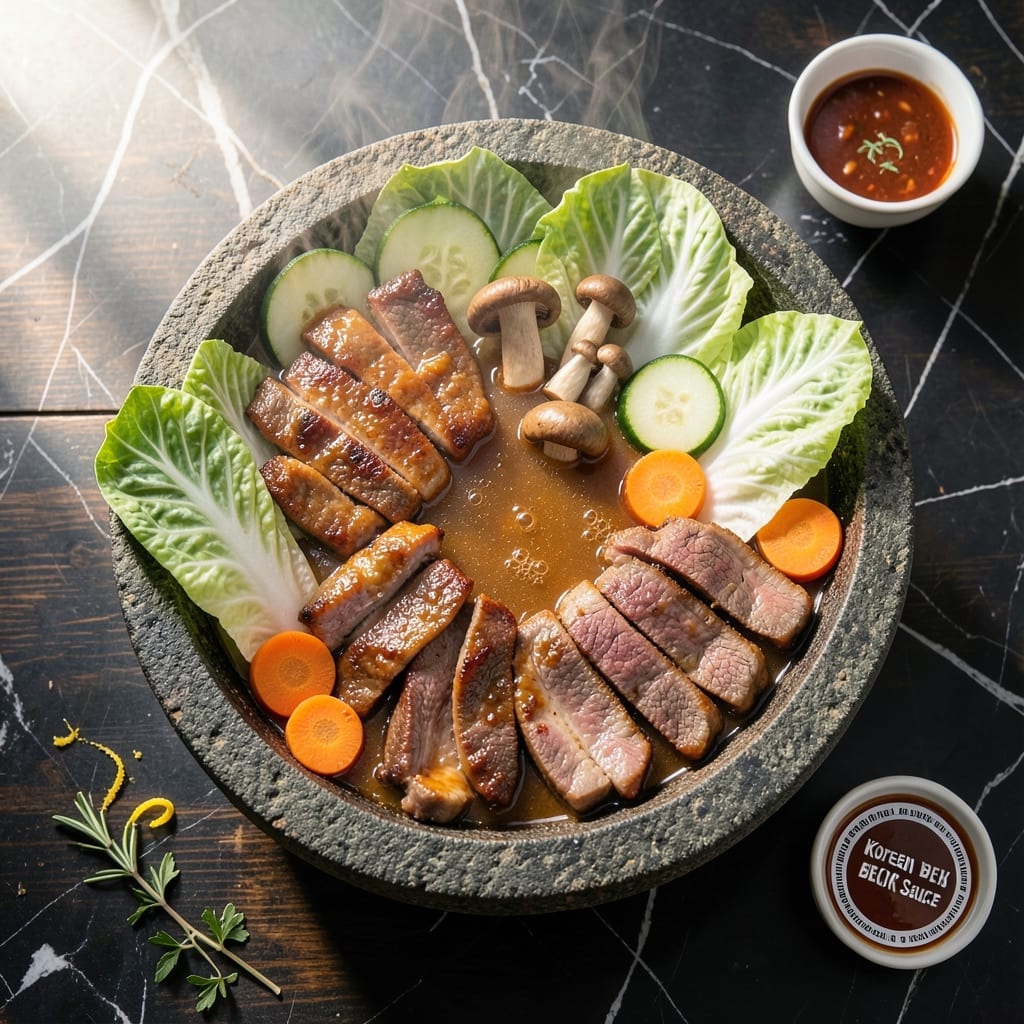
This Korean BBQ hot pot transforms dining into an interactive experience, bringing the sizzle of the grill directly to your table. The combination of marinated meats, fresh vegetables, and rich broths creates a meal that’s as fun to prepare as it is to eat.
The key lies in the balance of flavors—sweet, savory, and umami come together in every bite. Thinly sliced meats cook quickly in the simmering broth, while vegetables absorb the deep, aromatic seasonings. It’s a dish designed for sharing, with everyone customizing their bowl.
What makes this recipe special is its versatility. You can adjust the heat level, swap proteins, or add your favorite ingredients without losing the authentic Korean essence. The broth develops complexity as it simmers, infusing every element with bold taste.
Perfect for gatherings, this hot pot turns any meal into a celebration of flavor and connection.
Ingredients for Korean Bbq Hot Pot
Thin meats, fresh veggies, and bold broths bring this tabletop feast to life.
| Ingredient | Amount | Notes |
|---|---|---|
| Thinly Sliced Beef 🥩 | 1 ½ lb | Ribeye or sirloin recommended |
| Thinly Sliced Pork 🍖 | 1 lb | Pork shoulder or belly |
| Napa Cabbage 🥬 | 4 cups | Chopped into bite-sized pieces |
| Shiitake Mushrooms 🍄 | 1 cup | Fresh or rehydrated dried |
| Carrots 🥕 | 2 whole | Thinly sliced into rounds |
| Zucchini 🥒 | 2 whole | Sliced into thin strips |
| Green Onions 🧅 | 4 whole | Cut into 2-inch pieces |
| Korean BBQ Marinade 🫒 | 1 cup | Store-bought or homemade |
| Kelp Broth 🍲 | 6 cups | Or substitute with anchovy-free dashi |
| Garlic Cloves 🧄 | 6 cloves | Minced for broth |
| Ginger Root 🌿 | 1 whole | 1-inch piece, sliced |
| Soy Sauce 🫒 | ½ cup | Low-sodium preferred |
| Gochujang 🌶️ | 2 tbsp | Korean chili paste for heat |
| Sesame Oil 🫒 | 1 tbsp | Toasted for depth |
| Sesame Seeds 🌰 | 2 tbsp | Toasted for garnish |
The meat is the star here. Ribeye or sirloin slices melt in your mouth, while pork belly adds richness. Look for pre-sliced options at H Mart or your local Asian market—they often have it ready for hot pot. If cutting yourself, freeze the meat for 30 minutes first for paper-thin slices (worth the extra minute). The kelp broth is non-negotiable for that authentic base.
No gochujang? Sriracha plus a spoon of miso gets you close but lacks the fermented depth. Pork can be swapped for chicken or tofu—just keep the slices thin. The veggies are flexible: mushrooms, cabbage, spinach, whatever you like. Baby bok choy is my go-to when I want something quick (no chopping needed). For the broth, vegetable stock plus a splash of soy works in a pinch.
Broth can be prepped 1 day ahead—flavors deepen overnight. Leftovers keep 3-4 days in the fridge, but honestly, this disappears fast. Slice extra meat and veggies ahead, but don’t combine them with the broth until serving. Sesame seeds toast in 30 seconds—don’t walk away (ask me how I know).
Why You’ll Love This Recipe
- Minimal Chopping Required: The beef and pork come pre-sliced, and the veggies just need a quick trim. Honestly, it’s the least knife work I’ve ever done for a meal this satisfying.
- Umami Bomb: That first bite with the shiitake mushrooms soaking up the broth? Ridiculously good. The napa cabbage adds just the right sweetness to balance it.
- Feeds a Crowd: I’ve served this at dinner parties and casual weeknights alike. Between us, it’s the only dish my picky nephew and foodie friend both devour.
- Leftovers Level Up: The flavors deepen overnight, so lunch the next day tastes even better. I’ll be real: I sometimes make extra just for that.
Step-by-Step Instructions for Korean BBQ Hot Pot
This tabletop feast comes together quickly with smart prep and layered flavors.
Step 1: Marinate the Meats
Combine the 1.5 lb Thinly Sliced Beef and 1 lb Thinly Sliced Pork with the 1 cup Korean BBQ Marinade in a large bowl. I use my hands to massage the marinade into every slice, ensuring full coverage. Let it sit for 15-20 minutes at room temperature—this short marinating time is perfect for thin cuts.
The marinade will transform the meat, giving it that signature sweet-savory depth. Don’t skip this step, even if you’re eager to start cooking. The flavors penetrate quickly in thin slices, but that short rest makes all the difference.
Step 2: Prepare the Aromatic Broth
In a large pot, combine the 6 cups Kelp Broth, 6 cloves Garlic Cloves (minced), 1 whole Ginger Root (sliced), 0.5 cup Soy Sauce, 2 tbsp Gochujang, and 1 tbsp Sesame Oil. Bring to a gentle simmer over medium heat for 10 minutes to meld the flavors.
You’ll know it’s ready when the broth turns a rich amber color and the garlic and ginger release their fragrance. Taste and adjust the heat level with more gochujang if needed—this broth should be robust enough to stand up to all the ingredients you’ll add later.
Step 3: Prep the Vegetables and Tabletop Setup
While the broth simmers, arrange the 4 cups Napa Cabbage, 1 cup Shiitake Mushrooms, 2 whole Carrots (thinly sliced), 2 whole Zucchini (sliced into strips), and 4 whole Green Onions (cut into pieces) on a large platter. I like to keep them separate so everyone can customize their bowls.
Transfer the marinated meats to another platter, draining off excess marinade. Set up your portable burner at the table with the simmering broth in a shallow pot. The key is having everything prepped and within reach—this meal is all about the communal experience.
Step 4: Cook and Share at the Table
Let everyone add their choice of meats and vegetables to the simmering broth. The thinly sliced beef and pork will cook in 2-3 minutes, while the vegetables take 3-5 minutes to become tender-crisp. I always start with the meats first, then add the vegetables for the perfect texture.
Encourage your guests to stir the pot occasionally to distribute the flavors. The broth will become richer as the meats and vegetables release their juices. Finish each serving with a sprinkle of 2 tbsp Sesame Seeds for a nutty crunch and visual appeal.
Pro Tips For Making Korean Bbq Hot Pot
- Pre-slice everything: Thinly slice all your meats and veggies before heating the pot—I learned this the hard way after struggling with a knife while raw beef juices pooled everywhere.
- Par-cook the cabbage: Blanch the napa cabbage in boiling water for 2 minutes first, then shock it in ice water. It stays crisp and soaks up the broth better than raw leaves.
- Skip the overcrowding: Add meats in a single layer and don’t stir constantly—this keeps the broth clear and lets each slice cook evenly instead of steaming in a tangled mess.
- Use frozen carrots: Sounds weird, but it works: frozen pre-sliced carrots are already blanched, so they cook in seconds and save you the hassle of julienning.
Flavor Customization for This Recipe
Spice Level Adjustments
For a milder experience, reduce the gochujang to 1 tbsp or swap it for 1 tbsp gochugaru (Korean chili flakes). This gives warmth without intense heat. I often do this when cooking for kids or sensitive palates. 🌶️
Protein Swaps
Swap beef for thinly sliced chicken breast or add shrimp for seafood lovers. For vegetarians, extra-firm tofu or shitake mushrooms absorb the broth beautifully. Each protein brings a different texture to the hot pot.
Vegetable Variations
Add baby spinach or sweet potato noodles for extra heartiness. I love throwing in enoki mushrooms for their delicate crunch. The key is keeping everything thinly sliced for quick cooking in the broth.
Broth Flavor Boosters
Add 1 tbsp miso paste for umami depth or 1 sliced onion for sweetness. I often float a few dried anchovies in the broth for authentic Korean flavor. Remove them after 5 minutes of simmering.
Dipping Sauces
Offer ssamjang (spicy dipping sauce) or a simple mix of soy sauce, vinegar, and sesame oil. For a refreshing contrast, blend 1 tbsp gochujang with 2 tbsp honey and 1 tbsp rice vinegar. 💛
Garnish Ideas
Beyond sesame seeds, try thinly sliced jalapeños or cilantro leaves. A drizzle of chili oil adds both heat and aroma. I always keep extra green onions on hand for freshness.
Nutrition Facts
Frequently Asked Questions
What’s the best cut for thinly sliced meat?
Ribeye or sirloin work best for beef, while pork shoulder or belly are ideal for pork. Freeze for 30 minutes first for easier slicing. Asian markets often carry pre-sliced options.
Can I make this without a portable burner?
Yes! Use a slow cooker on low heat or an electric hot plate at the table. The key is maintaining a gentle simmer to cook ingredients evenly.
How do I adjust for kids?
Reduce gochujang to 1 tbsp or use mild gochugaru. Serve broth and veggies first, then add meat. Offer mild dipping sauces like soy with honey.
What’s the ideal cooking order?
Start with meats (2-3 minutes), then heartier veggies like carrots. Finish with quick-cooking greens. This prevents overcooking while building flavor.

- 4C Bread Crumbs Meatballs Recipe: Crispy Crust and Juicy Centers - September 25, 2026
- 6 Oz Chocolate Chip Cookie Recipe: Perfectly Balanced Crispy Edges and Chewy Hearts - September 25, 2026
- 6-Inch Coffee Cake Recipe: Vanilla Bean Swirls and Buttery Streusel Topping - September 25, 2026