
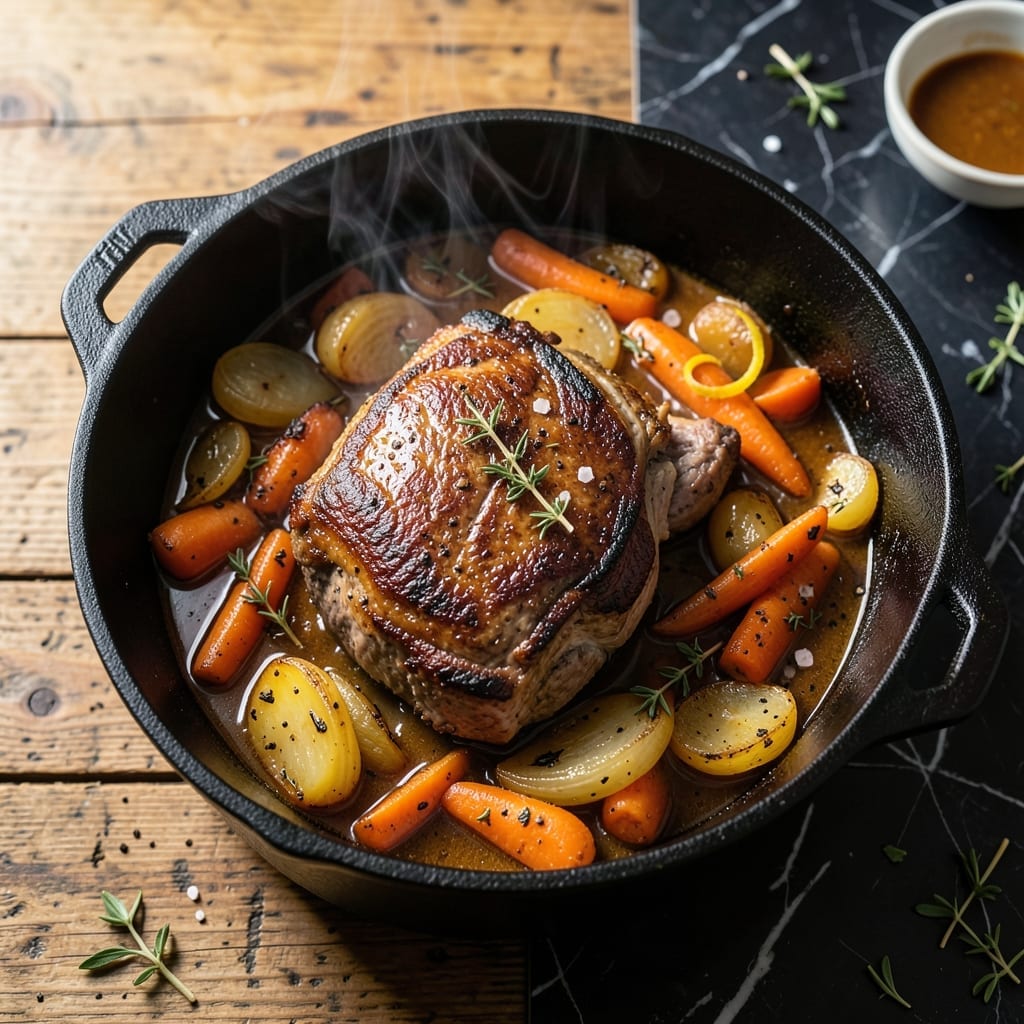
There’s a reason Dutch oven braising transforms tough cuts of beef into tender, fall-apart perfection. This method locks in moisture while building layers of deep, rich flavor that define a classic pot roast.
The secret lies in patience—low, steady heat allows the collagen in the meat to break down slowly, creating a melt-in-your-mouth texture. Aromatic vegetables and herbs infuse the braising liquid, turning it into a velvety, savory sauce.
What emerges after hours of gentle cooking is a dish that feels both rustic and refined. The beef becomes fork-tender, while the vegetables absorb the meaty essence of the braising liquid, creating a harmonious, hearty meal.
Serve it with mashed potatoes or crusty bread to soak up every drop of the rich, flavorful sauce. This is comfort food at its most satisfying.
Ingredients for Martha Stewart Braised Pot Roast
A few hearty ingredients and a Dutch oven create this melt-in-your-mouth classic.
| Ingredient | Amount | Notes |
|---|---|---|
| Chuck Roast 🥩 | 3 lb | Boneless, well-marbled |
| Kosher Salt 🧂 | 2 tsp | Divided for seasoning |
| Black Pepper 🌶️ | 1 tsp | Freshly ground preferred |
| Olive Oil 🫒 | 2 tbsp | For searing roast |
| Yellow Onions 🧅 | 2 whole | Large, quartered |
| Carrots 🥕 | 3 whole | Cut into chunks |
| Celery Stalks 🥬 | 3 whole | Cut into large pieces |
| Garlic Cloves 🧄 | 6 cloves | Smashed, peeled |
| Tomato Paste 🍅 | 2 tbsp | For depth of flavor |
| Dry Red Wine 🍷 | 1 ½ cups | Full-bodied like Cabernet |
| Beef Stock 🥩 | 2 cups | Low-sodium preferred |
| Fresh Thyme Sprigs 🌿 | 4 whole | Plus extra for garnish |
| Fresh Rosemary Sprigs 🌿 | 2 whole | Woody stems removed |
| Bay Leaves 🍃 | 2 whole | Dried is fine |
The beef is non-negotiable here. Chuck roast with good marbling (look for bright red meat with white fat streaks) is ideal—Costco or Whole Foods have reliable options. Avoid lean cuts like round or sirloin; they won’t break down properly. For the wine, any dry Cabernet Sauvignon works (no need for expensive stuff—just avoid cooking wines). Fresh herbs are worth it here; Trader Joe’s has affordable bundles.
No red wine? Beef broth plus 1 tbsp balsamic vinegar mimics the depth. Out of fresh herbs? Use half the amount of dried (1 tsp dried thyme, 1/2 tsp dried rosemary). Tomato paste can come from a can or those convenient squeeze tubes. The vegetables can be swapped—parsnips or turnips work alongside the carrots and celery.
Braised dishes taste even better the next day. Store in an airtight container for up to 4 days in the fridge or freeze for 3 months. Reheat gently on the stove with a splash of water to prevent drying out.
Why You’ll Love This Recipe
- Set It & Forget: Honestly, once the chuck roast is seared and the onions are in, the oven does all the work.
- Feeds the Whole Crew: I’ve served this for Sunday dinner and weeknight leftovers—always a hit.
- Stretches the Budget: A modest chuck roast and a couple of yellow onions turn into a meal that lasts for days.
Step-by-Step Instructions for Braised Pot Roast
Here’s the professional method I use for fall-apart tender meat with rich, deeply flavored sauce.
Step 1: Season and Sear the Chuck Roast
Pat the 3 lb chuck roast dry with paper towels, then season generously with 1 tsp black pepper and half the 2 tsp kosher salt on all sides. This step is crucial for developing a flavorful crust.
Heat the 2 tbsp olive oil in a Dutch oven over medium-high heat until shimmering. Add the roast and sear for 4-5 minutes per side until deeply browned. You’re looking for a rich, mahogany crust that will form the flavor base for the entire dish.
Transfer the roast to a plate and set aside. Don’t be tempted to skip this searing step—it adds incredible depth to the final sauce.
Step 2: Build the Aromatic Foundation
In the same Dutch oven, reduce heat to medium and add the 2 whole yellow onions, 3 whole carrots, and 3 whole celery stalks. Cook for 5-7 minutes until the vegetables begin to soften and brown slightly.
Add the 6 cloves garlic cloves and 2 tbsp tomato paste, stirring constantly for 1-2 minutes until the tomato paste darkens slightly. This step develops the paste’s natural sweetness and removes any raw flavor.
The mixture should be fragrant and starting to stick slightly to the bottom of the pot—this is perfect as those browned bits will dissolve into your braising liquid.
Step 3: Deglaze and Begin the Braise
Pour in the 1.5 cups dry red wine and scrape up all the browned bits from the bottom of the pot with a wooden spoon. Bring to a simmer and cook for 3-4 minutes until the liquid reduces by about half.
Return the seared roast to the pot along with any accumulated juices. Add the 2 cups beef stock, 4 whole fresh thyme sprigs, 2 whole fresh rosemary sprigs, and 2 whole bay leaves. The liquid should come about halfway up the roast.
Step 4: Slow Cook to Perfection
Bring the liquid to a gentle simmer, then reduce heat to low (or 300°F in the oven). Cover and cook for 2.5 to 3 hours, turning the roast every 45 minutes to ensure even cooking.
You’ll know it’s done when the meat shreds easily with a fork and the internal temperature reaches 195-200°F. The vegetables should be soft and the braising liquid reduced to a rich, flavorful sauce.
Skim any excess fat from the surface and adjust seasoning with the remaining 1 tsp kosher salt if needed. The sauce should be thick enough to coat the back of a spoon.
Pro Tips For Making Martha Stewart Braised Pot Roast
- Sear Hard: Get your pan screaming hot before adding the chuck roast—about 2 tablespoons of olive oil, then don’t touch the meat for 3-4 minutes per side. I learned this the hard way after my first few pot roasts came out gray instead of caramelized.
- Salt Generously: Use more kosher salt than feels natural on the chuck roast before searing—at least 1 teaspoon per pound. Sounds like a lot, but most of it stays on the surface where it builds flavor.
- Slice Onions Evenly: Cut your yellow onions into uniform ¼-inch slices so they melt down at the same rate. My grandmother swore by this, and she was right: uneven pieces turn to mush or stay raw.
- Deglaze Thoroughly: After browning, pour in a splash of liquid (water or broth) and scrape the pan hard—those brown bits are pure flavor. Skip this and your braise will taste flat.
Dietary Considerations for This Dish
Gluten-Free Adaptation
This recipe is naturally gluten-free as written, provided you use certified gluten-free beef stock. I recommend Pacific Foods or Imagine Foods brands for reliable options. Always check wine labels too—some contain trace gluten from processing.
Low-Carb Modifications
Reduce the carrots to 1 large and skip the onions entirely, replacing with 2 cups chopped mushrooms for similar umami depth. The meat and sauce remain rich and satisfying without the carbs. This version cuts net carbs by about 70%. 💪
Dairy-Free Considerations
There’s no dairy in the traditional recipe, but if you’re adding butter to the sauce (a common enrichment), use olive oil or vegan butter instead. I’ve found Miyoko’s brand works beautifully without altering the flavor profile.
Lower-Sodium Options
Use low-sodium beef stock and reduce added salt by half. Boost flavor with 1 tbsp apple cider vinegar and extra herbs instead. The wine and tomato paste will still provide plenty of depth.
Paleo Adjustments
Ensure your wine is sulfite-free and use ghee instead of olive oil for searing. Replace beef stock with bone broth for added nutritional benefits. These small tweaks keep the dish fully paleo-compliant. ✨
Vegetarian Alternative
Swap the beef for 3 lbs portobello mushrooms or jackfruit. Use vegetable stock instead of beef, and add 1 tbsp soy sauce for umami. The cooking time reduces to about 1.5 hours for mushrooms.
Nutrition Facts
Frequently Asked Questions
What’s the best cut for this dish?
Chuck roast is ideal for braising due to its marbling. Avoid lean cuts like sirloin—they won’t break down properly during the long cook time.
Can I use a slow cooker instead?
Yes! Sear the meat first, then cook on low for 8-10 hours or high for 5-6 hours. The Dutch oven method gives better browning, though.
How do I know when it’s done?
It should shred easily with a fork and reach an internal temperature of 195-200°F. The meat will be fork-tender.
Can I make it ahead?
Store in an airtight container for up to 4 days in the fridge. The flavors deepen overnight.

- 6 Oz Chocolate Chip Cookie Recipe: Perfectly Balanced Crispy Edges and Chewy Hearts - September 25, 2026
- 6-Inch Coffee Cake Recipe: Vanilla Bean Swirls and Buttery Streusel Topping - September 25, 2026
- 1 Hour Soup Recipe: Velvety Richness Without the Wait - September 25, 2026