
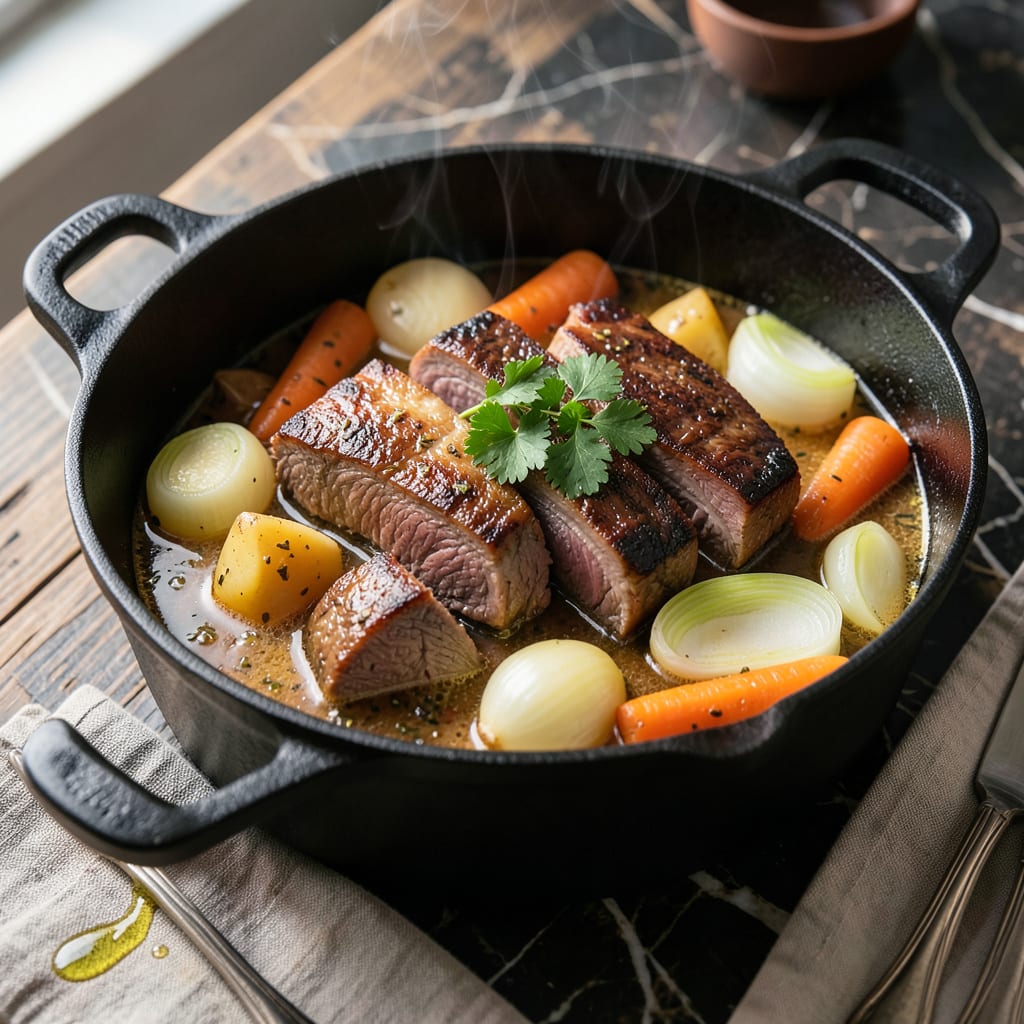
This timeless French dish brings rustic comfort to your kitchen with minimal effort. A single pot transforms simple ingredients into a hearty meal of tender beef, flavorful broth, and perfectly cooked vegetables.
Traditional techniques ensure rich, layered flavors that define this classic. The slow simmer coaxes maximum depth from each component, creating a meal that’s as nourishing as it is delicious.
Ingredients for Pot Au Feu
Simple, rustic ingredients transform into a comforting French classic with rich, layered flavors.
| Ingredient | Amount | Notes |
|---|---|---|
| Beef Chuck Roast 🥩 | 2 lb | Well-marbled, cut into large chunks |
| Beef Short Ribs 🥩 | 1 lb | Bone-in for depth of flavor |
| Yellow Onions 🧅 | 2 whole | Peeled and quartered |
| Carrots 🥕 | 4 whole | Peeled and cut into thick pieces |
| Turnips 🟠 | 2 whole | Peeled and cubed |
| Leeks 🌿 | 2 whole | Cleaned and sliced lengthwise |
| Celery Stalks 🥬 | 2 whole | Cut into large pieces |
| Garlic Cloves 🧄 | 6 cloves | Lightly crushed, peeled |
| Bouquet Garni 🌿 | 1 whole | Thyme, bay leaf, and parsley tied |
| Salt 🧂 | 1 tbsp | Kosher or sea salt |
| Black Peppercorns 🌶️ | 1 tsp | Whole for broth clarity |
| Water 💧 | 8 cups | Or enough to cover |
The beef is the foundation here. Chuck roast with visible marbling ensures tenderness after hours of simmering, while bone-in short ribs add unmatched depth. Source from Whole Foods or a trusted butcher for quality cuts. The vegetables should be fresh and firm—organic when possible—as they absorb the broth’s flavors during the long cook.
No beef short ribs? Oxtails or beef shank work as excellent substitutes. For the bouquet garni, dried herbs at one-third the amount can replace fresh. If turnips are unavailable, parsnips or rutabaga offer similar earthiness. Leeks can be replaced with extra onions, though the flavor profile will shift slightly.
This dish tastes even better the next day. Store leftovers in the fridge for up to 4 days or freeze the broth for 3 months. Skim off any fat before reheating to keep the flavors clean and bright.
Why You’ll Love This Recipe
- One Pot Wonder: I toss in the beef chuck, short ribs, and veggies, then let the oven do the work—hardly any cleanup.
- Rich, Deep Broth: The slow-cooked beef and onions create a stock so flavorful, I sip it straight from the pot.
- Feeds a Crowd: Between us, this is my go-to for Sunday dinner when the whole family’s over.
- Better Next Day: Honestly, the leftovers taste even more incredible—perfect for quick lunches all week.
Step-by-Step Instructions for Pot Au Feu
Master this traditional French technique for a dish that defines rustic elegance and hearty satisfaction.
Step 1: Prepare and Sear the Meats
Pat the 2 lb Beef Chuck Roast and 1 lb Beef Short Ribs dry with paper towels. Cut the chuck roast into large, uniform chunks—about 2-inch pieces—to ensure even cooking. Season both meats generously with a portion of the 1 tbsp Salt.
In a large, heavy-bottomed pot, sear the beef over medium-high heat until deeply browned on all sides, about 4-5 minutes per side. This step develops the fond, the caramelized bits at the bottom of the pot, which will later enrich the broth. Remove the meat and set aside temporarily.
Step 2: Build the Aromatic Base
In the same pot, add the 2 whole Yellow Onions, 4 whole Carrots, 2 whole Turnips, 2 whole Leeks, 2 whole Celery Stalks, and 6 cloves Garlic Cloves. Sauté for 5-7 minutes until the vegetables begin to soften and develop a slight caramelization.
The onions should turn translucent at the edges, and the leeks should release their sweet aroma. This process lays the foundation for the broth’s depth of flavor. Avoid browning the garlic, as it can turn bitter.
Step 3: Combine and Simmer the Broth
Return the seared meats to the pot. Add the 1 whole Bouquet Garni, remaining 1 tbsp Salt, 1 tsp Black Peppercorns, and 8 cups Water. The water should cover all the ingredients—if it doesn’t, add a bit more to ensure everything is submerged.
Bring the mixture to a gentle boil, then reduce the heat to low. Skim off any foam or impurities that rise to the surface during the first 10-15 minutes of simmering. Partially cover the pot and let it simmer for 3-4 hours until the meats are fork-tender and the broth is rich and flavorful.
Step 4: Strain and Serve
Once the meats are fully cooked, carefully remove them from the pot and set them aside. Strain the broth through a fine-mesh sieve into a clean pot, pressing gently on the vegetables to extract all their flavor. Discard the solids, but keep the meats warm.
To serve, slice the beef chuck roast and short ribs into thick pieces and arrange them on a platter. Ladle the hot, clarified broth over the meats. Traditionally, the vegetables are served separately as a first course, but they can also accompany the meats for a hearty, one-bowl meal.
Pro Tips For Making Pot Au Feu
- Skim the Foam: As the stock simmers, skim off the foam that rises to the top every 15-20 minutes for the first hour—it keeps the broth clear and clean-tasting.
- Parboil the Beef: I learned this the hard way—blanch the chuck roast and short ribs in boiling water for 5 minutes first to remove impurities before adding them to the pot.
- Cut Even Chunks: Keep your carrots, turnips, and onions in uniform 2-inch pieces so they cook at the same rate and look as good as they taste.
- Use a Bouquet Garni: Sounds fussy, but tying thyme, bay leaf, and parsley stems in cheesecloth makes them easy to remove later and infuses the broth beautifully.
Wine and Beer Pairings for This pot au feu
French Wine Classics
A medium-bodied Beaujolais from Morgon or Fleurie offers bright red fruit that complements the beef without overpowering the broth. I love how its subtle earthiness mirrors the dish’s rustic roots. Serve slightly chilled at 55-60°F. 🍷
Burgundy Pairing
A Pinot Noir from Côte de Beaune brings elegant red berry notes that harmonize with the slow-cooked meats. The wine’s acidity cuts through the richness beautifully. Look for bottles from Meursault or Pommard for authentic French character.
White Wine Option
For a lighter approach, a Chardonnay from Mâcon-Villages offers crisp apple and pear notes that complement the vegetables. Its mineral edge stands up to the savory broth. Serve at 50-55°F for optimal brightness.
Belgian Beer Match
A Saison like Saison Dupont with its peppery, citrusy profile contrasts wonderfully with the hearty beef. The effervescence cleanses your palate between bites. I recommend serving in a tulip glass at 45-50°F. 🍺
French Ale Alternative
A Bière de Garde, such as Jenlain, offers malty sweetness that balances the dish’s savory depth. Its copper color and caramel notes make it a visually appealing pairing. Serve at 45°F to highlight its complexity.
Non-Alcoholic Choice
Sparkling apple cider from Normandy provides the same palate-cleansing effervescence as beer or wine. Its natural sweetness contrasts nicely with the rich broth. Chill thoroughly before serving for best results.
Nutrition Facts
Frequently Asked Questions
What’s the best cut for this dish?
Use well-marbled beef chuck roast and bone-in short ribs for tender, flavorful results. The marbling keeps the meat moist during the 3-4 hour simmer.
Can I make this in a slow cooker?
Yes! Brown the meat first, then transfer everything to a slow cooker. Cook on low for 8-10 hours for the same rich flavors without stove monitoring.
Why serve vegetables separately?
Traditionally, the vegetables are served first as a light course. This preserves their texture and lets diners enjoy the clarified broth with the meat afterward.
How do I store leftovers?
Keep in the fridge for up to 4 days or freeze the broth for 3 months. Skim fat before reheating for the cleanest flavor.

- 4C Bread Crumbs Meatballs Recipe: Crispy Crust and Juicy Centers - September 25, 2026
- 6 Oz Chocolate Chip Cookie Recipe: Perfectly Balanced Crispy Edges and Chewy Hearts - September 25, 2026
- 6-Inch Coffee Cake Recipe: Vanilla Bean Swirls and Buttery Streusel Topping - September 25, 2026