
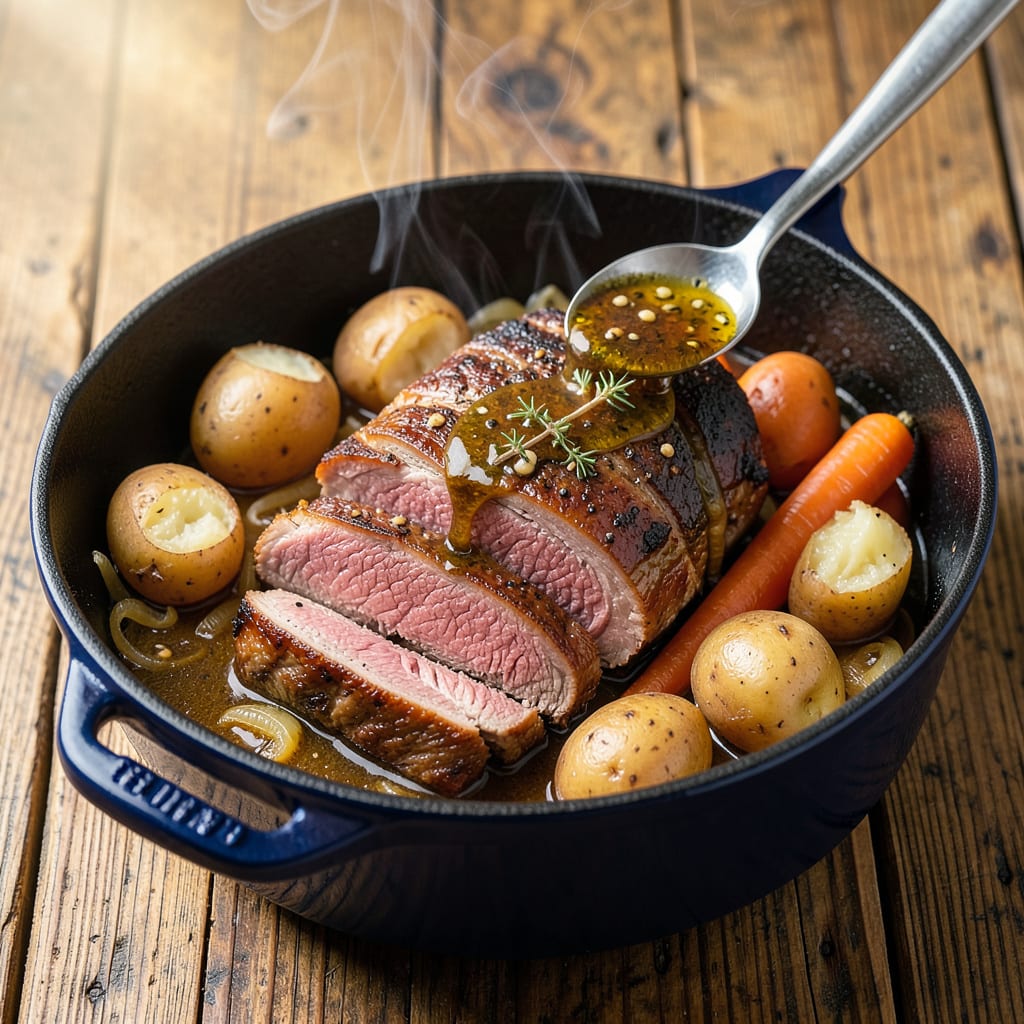
Bottom round makes the most underrated pot roast—lean yet rich, with fibers that slowly surrender to become fall-apart tender. This cut rewards patience with deep beefy flavor, especially when braised low and slow until the meat practically dissolves at the touch of a fork. The method is straightforward but precise: a hard sear for caramelized depth, followed by gentle heat that coaxes toughness into submission over 3–4 hours.
What emerges is more than comfort food—it’s a centerpiece dish where the beef becomes buttery-soft, surrounded by vegetables that have absorbed its essence. The sauce reduces to a glossy, concentrated gravy that clings to every bite. Serve it over mashed potatoes or with crusty bread to soak up the rich, aromatic juices. This is slow cooking at its most rewarding.
Ingredients for Pot Roast Recipe Bottom Round
This professional-grade ingredient list transforms bottom round into a melt-in-your-mouth masterpiece through precise technique and quality components.
| Ingredient | Amount | Notes |
|---|---|---|
| Bottom Round Roast 🥩 | 3 lb | Trimmed of excess fat |
| Kosher Salt 🧂 | 1 ½ tbsp | Diamond Crystal preferred |
| Freshly Ground Black Pepper 🌶️ | 1 tbsp | Coarse grind recommended |
| Extra-Virgin Olive Oil 🫒 | 2 tbsp | High smoke point variety |
| Yellow Onions 🧅 | 2 whole | Large, quartered |
| Garlic Cloves 🧄 | 6 cloves | Smashed, not minced |
| Carrots 🥕 | 4 whole | Peeled, cut into 3-inch chunks |
| Celery Stalks 🌿 | 3 whole | Cut into 3-inch pieces |
| Dry Red Wine 🍷 | 2 cups | Full-bodied variety |
| Low-Sodium Beef Broth 🥩 | 3 cups | Homemade preferred |
| Tomato Paste 🍅 | 2 tbsp | San Marzano preferred |
| Fresh Thyme Sprigs 🌿 | 4 whole | Tied with kitchen twine |
| Fresh Rosemary Sprigs 🌿 | 2 whole | Tied with kitchen twine |
| Bay Leaves 🌿 | 2 whole | Dried, whole leaves |
| Unsalted Butter 🧈 | 2 tbsp | European-style preferred |
The bottom round roast selection is critical for optimal results. Optimal quality requires USDA Choice grade with visible marbling—avoid Select grade, which lacks sufficient fat for prolonged braising. Whole Foods or Costco typically offer the best selection, though local butchers may provide custom cuts. The beef should be bright red with creamy fat streaks; any grayish discoloration indicates age. For the wine component, a Cabernet Sauvignon or Merlot provides the necessary tannic structure to balance the dish’s richness.
Substitutions must maintain the dish’s fundamental character. Replace red wine with equal parts beef broth plus 1 tbsp balsamic vinegar if alcohol is prohibited. Fresh herbs are non-negotiable for aromatic depth, though dried may be used at one-third the quantity in emergencies. For the tomato paste, San Marzano brands offer superior sweetness and acidity balance. The butter finish is essential for sauce emulsification; vegan butter alternatives will compromise texture but maintain flavor profile.
Storage considerations are paramount for both raw and cooked components. The uncooked roast maintains quality for 3-4 days refrigerated or 6-12 months vacuum-sealed and frozen. Prepared pot roast reheats exceptionally well, with flavors intensifying over 48 hours—store submerged in its braising liquid to prevent drying. The finished sauce separates when chilled; simply reheat gently while whisking to restore its velvety consistency. Portion leftovers into airtight containers for optimal freshness preservation.
Why You’ll Love This Recipe
- One-Pot Magic: I love that this bottom round roast goes from searing to slow cooking in the same pot. Just brown the meat, toss in the onions, and let the oven do the rest—no mountain of dishes afterward.
- Rich, Honest Flavor: That first bite where the crispy salt-pepper crust gives way to tender beef? Worth every minute. The onions caramelize into this sweet, savory jam that soaks into the meat—no fancy ingredients needed.
- My Sunday Supper: This feeds my family plus two hungry neighbors with zero stress. Leftovers? Even better—shredded for tacos, piled on toast, or just reheated with a splash of broth.
- Budget-Friendly Luxury: Here’s what sold me—a $15 cut of bottom round transforms into something that tastes like a $30 steakhouse meal. I’ll be real: it’s the only roast I make when I need to stretch dollars without sacrificing flavor.
Step-by-Step Instructions for Pot Roast With Bottom Round
This method transforms tough bottom round into fall-apart tender meat through careful seasoning and slow cooking.
Step 1: Season and Sear the Bottom Round Roast
Pat the 3 lb Bottom Round Roast completely dry with paper towels. This ensures proper browning rather than steaming. Season all sides aggressively with the 1.5 tbsp Kosher Salt and 1 tbsp Freshly Ground Black Pepper, pressing the seasoning into the meat so it adheres during searing.
Heat the 2 tbsp Extra-Virgin Olive Oil in a large Dutch oven over medium-high heat until shimmering but not smoking. Add the roast and sear for 4-5 minutes per side until a deep mahogany crust forms. The meat should release easily from the pan when properly seared—don’t force it. Transfer the roast to a plate and set aside.
Step 2: Develop the Aromatic Base
In the same Dutch oven, add the 2 whole Yellow Onions (quartered), 4 whole Carrots (cut into 3-inch chunks), and 3 whole Celery Stalks (cut into 3-inch pieces). Cook over medium heat for 8-10 minutes, stirring occasionally, until the vegetables develop caramelized edges and the onions become translucent.
Add the 6 cloves Garlic Cloves (smashed) and cook for 1 minute until fragrant. Stir in the 2 tbsp Tomato Paste and cook for 2 minutes, allowing it to darken slightly. This builds a flavor foundation through the Maillard reaction. Deglaze the pan with ½ cup of the 2 cups Dry Red Wine, scraping up all browned bits from the bottom.
Step 3: Build the Braising Liquid and Begin Cooking
Return the seared roast to the Dutch oven along with any accumulated juices. Add the remaining 1½ cups Dry Red Wine, the 3 cups Low-Sodium Beef Broth, 4 whole Fresh Thyme Sprigs, 2 whole Fresh Rosemary Sprigs, and 2 whole Bay Leaves. The liquid should come about halfway up the roast—add water if needed to reach this level.
Bring the liquid to a gentle simmer over medium heat, then reduce to low heat. Cover the Dutch oven and maintain a bare simmer—you should see occasional bubbles breaking the surface but no vigorous boiling. This gentle heat prevents the meat from toughening while allowing collagen to break down gradually.
Step 4: Slow Cook to Tenderness
Cook the roast covered for 3-3½ hours, turning the meat every 45 minutes to ensure even cooking. The roast is ready when it reaches an internal temperature of 195-200°F and a fork inserted into the thickest part twists easily with no resistance. The meat should pull apart with gentle pressure.
During the final 30 minutes of cooking, remove the lid to allow the braising liquid to reduce slightly. This concentrates flavors and creates a richer sauce. The vegetables should be completely tender and the liquid should have a deep, savory aroma with visible fat separation at the edges.
Step 5: Rest and Finish the Sauce
Transfer the roast to a cutting board and tent loosely with foil. Let it rest for 15 minutes while you finish the sauce. Skim excess fat from the surface of the braising liquid, then simmer over medium heat for 5-7 minutes until slightly thickened.
Remove the herb sprigs and bay leaves. Swirl in the 2 tbsp Unsalted Butter off heat until fully incorporated—this adds richness and gives the sauce a velvety texture. Taste and adjust seasoning if needed, though the initial salting should be sufficient. Slice the roast against the grain and serve with the reduced braising liquid spooned over the top.
Perfect Pairings for This pot roast recipe bottom round
Classic Mashed Potatoes
The rich, beefy sauce from this pot roast practically begs for creamy mashed potatoes to soak it up. I make mine with 2 lbs Yukon Gold potatoes, boiled until fork-tender, then mashed with ½ cup warm whole milk and 4 tbsp unsalted butter. A pinch of white pepper keeps the color pristine while adding subtle heat. 🥔
Crusty Bread Options
A warm, crusty loaf is essential for mopping up every last drop of that velvety sauce. My go-to is a sourdough baguette from a local bakery, toasted lightly with garlic butter. For heartier texture, try a rustic ciabatta—its open crumb structure soaks up sauce beautifully.
Roasted Root Vegetables
While the pot roast cooks, toss 1 lb baby carrots, 1 lb parsnips, and 1 lb baby potatoes with 2 tbsp olive oil, 1 tsp thyme, and ½ tsp salt. Roast at 400°F for 35-40 minutes until caramelized. Their sweetness balances the savory beef perfectly.
Red Wine Pairings
The same full-bodied red wine you cooked with makes an excellent pairing at the table. I love a Cabernet Sauvignon from Napa Valley—its bold tannins stand up to the rich beef. For something smoother, try a Syrah with its peppery notes that complement the rosemary in the dish. 🍷
Bright Salad Contrast
A crisp arugula salad with lemon vinaigrette cuts through the richness. Toss 4 cups baby arugula with 1 tbsp lemon juice, 3 tbsp olive oil, and shaved Parmesan. The peppery greens and citrus wake up your palate between bites of tender beef.
Craft Beer Alternative
For beer lovers, a malty amber ale or brown ale works wonderfully. The caramel notes in New Belgium Fat Tire or Sierra Nevada Pale Ale mirror the caramelized flavors in the pot roast. Avoid hoppy IPAs—they’ll clash with the dish’s richness. 🍺
Nutrition Facts
Frequently Asked Questions
Why use bottom round instead of chuck roast?
Bottom round is leaner than chuck but becomes incredibly tender when cooked properly. It requires precise slow cooking to break down its connective tissue, resulting in a cleaner beef flavor without excess fat. The key is maintaining a gentle simmer for 3-4 hours to achieve that perfect texture.
Can I make this in a slow cooker instead?
Sear the meat first for flavor, then transfer everything to your slow cooker. Cook on low for 8-10 hours or high for 5-6 hours until fork-tender. The texture will be slightly different but equally delicious.
What if my roast isn’t tender after cooking?
If the meat resists a fork after the recommended time, it needs more cooking. Return it to the oven at 275°F for another 30-60 minutes, checking every 15 minutes. Bottom round requires patience—it will eventually surrender to the gentle heat.
How do I store and reheat leftovers?
Store in an airtight container with its juices for up to 4 days. Reheat gently in a covered pot with a splash of broth over low heat for 15-20 minutes. The flavors actually improve overnight as the meat reabsorbs the juices.

- 8 Bean Soup Recipe Crock Pot: Hearty Vegetable Medley in One Pot - September 25, 2026
- 4C Bread Crumbs Meatballs Recipe: Crispy Crust and Juicy Centers - September 25, 2026
- 6 Oz Chocolate Chip Cookie Recipe: Perfectly Balanced Crispy Edges and Chewy Hearts - September 25, 2026