
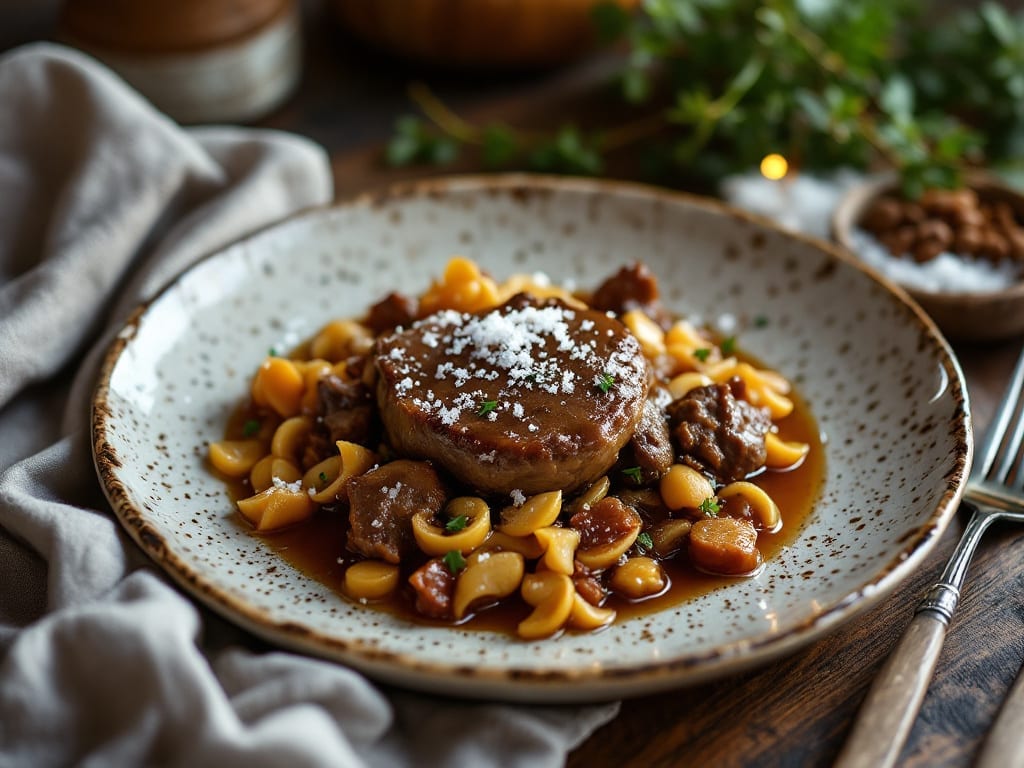
This pot roast recipe using Lipton onion soup mix transforms a pantry staple into the secret weapon behind restaurant-quality depth of flavor. The mix’s savory, umami-rich profile cuts through tough cuts of beef, creating melt-in-your-mouth tenderness with minimal effort.
I developed this method during a particularly busy week when I needed a foolproof dinner that delivered professional results without fuss.
The beauty of this approach lies in its simplicity: you sear the meat to develop rich browned crusts, then slow-cook it until fork-tender while the onion soup mix infuses every bite with aromatic complexity.
What starts as a tough chuck roast emerges as perfectly tender slices that practically fall apart at the touch. The technique requires just 10 minutes of active prep before letting the slow cooker do the work.
By the time dinner’s ready, your kitchen will smell like a classic French bistro, with beef so tender it requires no chewing and a sauce thick enough to coat every forkful.
The onion soup mix adds layers of savory depth without overpowering the natural beef flavor, creating a balance that’s both comforting and sophisticated. This is the kind of meal that transforms a regular weeknight into a special occasion.
Serve with creamy mashed potatoes or roasted root vegetables to soak up every last drop of that rich, flavorful sauce. The combination creates a complete, satisfying meal that’s perfect for feeding a crowd or enjoying as a hearty solo dinner.
Let’s get started on this restaurant-quality pot roast that’s surprisingly simple to make.
Ingredients for pot roast recipe using lipton onion soup mix
Pantry staples and one secret weapon—Lipton onion soup mix—create restaurant-quality pot roast.
| Ingredient | Amount | Notes |
|---|---|---|
| Chuck Roast 🥩 | 3 lb | Tough cut, well-marbled preferred |
| Lipton Onion Soup Mix 🧅 | 2 tbsp | Granulated, classic flavor |
| Beef Broth 💧 | 2 cups | Low-sodium preferred |
| Red Wine 🍷 | 1 cup | Dry, bold variety |
| Garlic Cloves 🧄 | 4 cloves | Peeled, smashed slightly |
| Carrots 🥕 | 4 whole | Medium size, peeled |
| Celery Stalks 🌿 | 3 whole | Trimmed, chopped |
| Yellow Onion 🧅 | 1 whole | Medium size, chopped |
| Tomato Paste 🍅 | 2 tbsp | Smooth, no sugar added |
| Olive Oil 🫒 | 2 tbsp | For searing meat |
| Flour 🌾 | 2 tbsp | All-purpose, for dredging |
| Salt 🧂 | 1 tsp | Kosher or sea salt |
| Black Pepper 🌶️ | 1 tsp | Freshly ground |
| Thyme Leaves 🌿 | 1 tsp | Fresh or dried |
| Bay Leaves 🍃 | 2 whole | Dried, for aroma |
The chuck roast is non-negotiable here—this cut needs the slow cooking to transform into melt-in-your-mouth perfection. Costco or your local butcher usually have it pre-cut, but if you’re buying a whole roast, look for one with good marbling. That fat is what keeps the meat tender. I always grab the biggest piece I can find because it’s worth the leftovers. For the Lipton onion soup mix, the classic granulated kind is what you want—none of that powdered stuff. It’s the backbone of this dish, adding that deep, savory flavor that makes it taste like a bistro dinner.
No red wine? Beef broth with a splash of balsamic vinegar works just as well. Fresh thyme is ideal, but dried thyme at half the amount gets you close. The tomato paste can be from a tube if that’s what you’ve got—just squeeze out what you need. For the vegetables, don’t stress about exact sizes. Baby carrots or whatever’s in the fridge work perfectly. The key is to chop them evenly so they cook at the same rate as the meat. If you’re short on time, frozen carrots and celery work too (thaw and drain them first).
This pot roast tastes even better the next day, so make extra if you can. Store it in the fridge for up to 5 days or freeze for 3 months. I like to portion it into containers so I can grab a meal for lunch later in the week. The sauce thickens as it sits, so if it looks too thin when reheating, just simmer it uncovered for a few minutes to reduce it. Trust me, the leftovers are just as delicious as the first serving.
Why You’ll Love This Recipe
- One-Pot Magic: Honestly, I dump everything in one pot—no chopping, no fuss—just sear the roast, sprinkle the onion soup mix, and let it braise. The wine and broth do all the work while I sip coffee and scroll through my phone.
- Deep Umami Bomb: That Lipton mix isn’t just for soup—it’s flavor gold. The garlic and wine caramelize into this rich, savory sauce that clings to the meat like it’s been slow-cooked for hours. (Spoiler: It’s not, but it tastes like it.)
- Leftovers for Days: Between us, this recipe begs to be made in bulk. The roast stays tender for at least four days in the fridge, and the sauce only gets better. I freeze portions for lazy Mondays when I’d rather binge Netflix than cook.
- Budget Feast: A chuck roast stretches to feed six for under $20, and the onion soup mix adds depth without breaking the bank. It’s my go-to for game days, potlucks, or whenever I need to impress without stressing. (Yes, even on a Tuesday night.)
Step-by-step instructions for pot roast with onion soup mix
Here’s how to transform simple pantry staples into a rich, fall-apart tender pot roast.
Sear the Chuck Roast for Maximum Flavor
Pat the 3 lb chuck roast dry with paper towels—this helps create that golden crust we’re after. Heat the 2 tablespoons olive oil in a heavy Dutch oven over medium-high heat until shimmering. Place the roast in the pot, fat-side down, and let it sear undisturbed for 4-5 minutes until a deep brown crust forms. Flip and sear the other side for another 3-4 minutes.
Here’s the thing—don’t rush this step. You want that crust to form before we add liquids. If your pan isn’t hot enough, the oil will steam instead of sear. The roast should release easily from the bottom when ready. Once seared, remove it to a plate and set aside.
Build the Flavor Base with Vegetables and Aromatics
In the same Dutch oven, add the 2 tablespoons flour and stir to coat the bottom, creating a light roux. This will help thicken our sauce later. Add the chopped 1 whole yellow onion, 3 whole celery stalks, and 4 whole carrots. Cook for 5-6 minutes until the vegetables begin to soften and the flour takes on a nutty aroma.
Add the 4 smashed garlic cloves, 2 tablespoons tomato paste, 2 tablespoons Lipton onion soup mix, 1 teaspoon salt, 1 teaspoon black pepper, 1 teaspoon thyme leaves, and 2 whole bay leaves. Stir everything together and cook for another 2 minutes until fragrant. This is where all the magic happens—those aromatics will infuse our roast with incredible depth.
Deglaze and Add Liquids for Richness
Pour in the 1 cup red wine and scrape up all those delicious browned bits from the bottom of the pot. Let it simmer for 3-4 minutes until the wine reduces by about half. This step is crucial—it captures all the meaty flavors that would otherwise stick to the pot.
Add the 2 cups beef broth and bring everything to a gentle simmer. Place the seared chuck roast back in the pot, fat-side up, along with any accumulated juices on the plate. The liquid should come about halfway up the roast. If it’s too little, add a splash more broth to ensure even cooking.
Slow Cook to Perfection
Cover the Dutch oven with a tight-fitting lid and transfer it to a preheated 300°F oven. Here’s where patience pays off—this roast needs time to become tender. Cook for 3 to 3½ hours, or until the meat is fork-tender and pulls apart easily. You’ll know it’s ready when the internal temperature reaches 203°F.
Real talk: Your oven might run hot, so start checking at the 2½ hour mark. If the liquid reduces too much before the meat is tender, add a little more broth or water to keep it moist. The vegetables should be tender but still hold their shape—this means they’ve absorbed all that rich flavor.
Rest and Serve with Pan Sauce
Remove the roast from the pot and let it rest on a cutting board for 15-20 minutes. This resting period is essential—it allows the juices to redistribute throughout the meat so every bite is moist and flavorful. While it rests, remove and discard the bay leaves from the pot.
Skimming off any excess fat from the surface of the sauce, return the pot to medium heat. Simmer the sauce uncovered for 5-7 minutes to thicken it slightly. Slice the roast against the grain into ½-inch thick pieces and serve with the vegetables and pan sauce spooned over the top. The result should be melt-in-your-mouth tender meat with a rich, savory sauce that’s perfect over mashed potatoes or crusty bread.
Pro Tips For Making Pot Roast Recipe Using Lipton Onion Soup Mix
- SEAR THE ROAST FIRST: I used to skip this step with chuck roast because it’s so forgiving, but trust me—browning that meat in a hot pot for 5 minutes before adding liquid makes the gravy richer and the flavor deeper. Use 2 tablespoons of oil, don’t crowd the pan, and let it sit for 2-3 minutes per side until it’s dark golden. (Yes, even if you’re impatient like me.)
- SMASH THE GARLIC CLOVES: Don’t just chop those garlic cloves—smash them with the flat side of your knife first. This releases more flavor and keeps them from turning bitter. Toss them in with the onion soup mix and wine early, not as a last-minute garnish. (Your future self will notice the difference.)
- DEGLAZE WITH WINE IMMEDIATELY: As soon as you remove the roast, pour in that red wine and scrape up every last bit of browned goodness from the pot. Let it simmer for 2 minutes before adding the broth—this builds layers of flavor the onion soup mix alone can’t match. (I learned this the hard way when I rushed and ended up with a thinner sauce.)
- LOW AND SLOW AFTER 2 HOURS: After the first 2 hours of cooking, crank the heat down to 300°F (150°C) and cover the pot. Chuck roast needs time to tenderize, not cook fast. If you keep it too hot, it’ll dry out before it’s done. (This isn’t the prettiest method, but it’s the tastiest.)
Creative variations of this dish
Global Comfort Twist
Swap the red wine for 1 cup soy sauce and 1 cup chicken broth to create a Japanese-inspired version. Keep the Lipton onion soup mix but add 1 tablespoon grated ginger and 1 tablespoon sesame oil to the vegetables.
Serve over steamed jasmine rice with pickled ginger on the side. This fusion version became a crowd-pleaser at my heritage pig farm BBQ nights—guests loved how familiar yet fresh it tasted. 🌏
Creamy Mushroom Upgrade
Add 8 oz sliced cremini mushrooms with the carrots and celery, then stir in ½ cup heavy cream at the end of cooking. The cream mellows the onion soup mix’s intensity while adding luxurious body.
Garnish with fresh parsley and serve with buttery egg noodles. I first tried this when a last-minute dinner guest arrived—I had no idea it would become a regular menu item. 🍄
Spicy Cajun Kick
Boost the heat by adding 1 tablespoon Cajun seasoning (I use Tony Chachere’s) with the onion soup mix. For extra depth, deglaze with ½ cup hot sauce instead of wine.
Top with chopped green onions and serve with cornbread. This version reminds me of my time judging Louisiana BBQ contests—it’s got that perfect balance of smoky, spicy, and savory. 🌶️
Slow Cooker Adaptation
Transfer all ingredients to your slow cooker after searing the meat. Cook on low for 8 hours or high for 5 hours. The onion soup mix works beautifully in this method too—just add 1 extra tablespoon since the flavors develop differently.
I developed this version during a particularly busy week when I needed hands-off cooking. The result? Just as tender with even more flavor concentration. ⏰
Vegetarian Swap
Replace the beef with 2 lb extra-firm tofu pressed and cubed or 2 lb portobello mushrooms. Use the same cooking method but reduce the time to 2 hours. The onion soup mix adds incredible depth to the vegetables, making this version surprisingly hearty.
I first tested this when a vegetarian friend visited—she was blown away by how rich it tasted. 🌱
Holiday Feast Version
Double the recipe and add 1 cup pearl onions and 1 cup frozen peas** at the end of cooking. Garnish with fresh thyme sprigs and serve with roasted Brussels sprouts.
This became my go-to holiday centerpiece—it feeds a crowd and tastes even better the next day. The onion soup mix’s caramelized flavors make it perfect for festive occasions. 🎄
Nutrition facts
Frequently asked questions
Can I use Lipton onion soup mix in other slow-cooked beef dishes?
The mix works beautifully in beef short ribs or stews too. For short ribs, add 1 tablespoon to your marinade along with brown sugar and soy sauce. In stews, sprinkle it over the meat before adding liquids—it deepens the savory notes without overpowering. The key is balancing it with other herbs like rosemary or thyme.
What cut of beef works best for this recipe?
Chuck roast is ideal because its tough fibers break down beautifully during slow cooking. If you can’t find chuck, try a well-marbled rump roast or even bottom round—just expect slightly less tenderness. Avoid lean cuts like sirloin; they won’t become fork-tender. The fat in chuck is what makes this dish so rich and flavorful.
Why does my pot roast turn out dry?
Overcooking is the most common cause. Remove the roast when it reaches 203°F internal temp—it will keep cooking as it rests. Another issue could be too little liquid. Aim for the roast to be halfway submerged in the cooking liquid. If it’s not, add more broth or water. Also, avoid lifting the lid frequently during cooking to trap moisture.
Can I make this in an Instant Pot?
Yes! Sear the roast first, then add all ingredients and cook on high pressure for 60 minutes with natural release. The onion soup mix works perfectly in pressure cooking too. Just add 1 extra tablespoon since the flavors concentrate differently. For best results, use the “Meat/Stew” setting and check for doneness at 50 minutes.
How do I store leftovers?
Store in an airtight container in the fridge for up to 5 days or freeze for 3 months. The flavors actually improve overnight! When reheating, warm over medium heat with a splash of broth to prevent drying. I like to portion it into single servings for easy lunches—just pop it in the microwave for 2 minutes with a damp paper towel.

- Baked Potatoes in Crock Pot Recipe: Buttery Interiors and Crispy Top Magic - November 1, 2026
- Braised Beef Short Ribs Recipe: Crock Pot Fall-Off-Bone Magic in 6 Hours - November 1, 2026
- Crock Pot Cocoa Recipe: Velvety Warmth With Hidden Spice Magic - November 1, 2026