
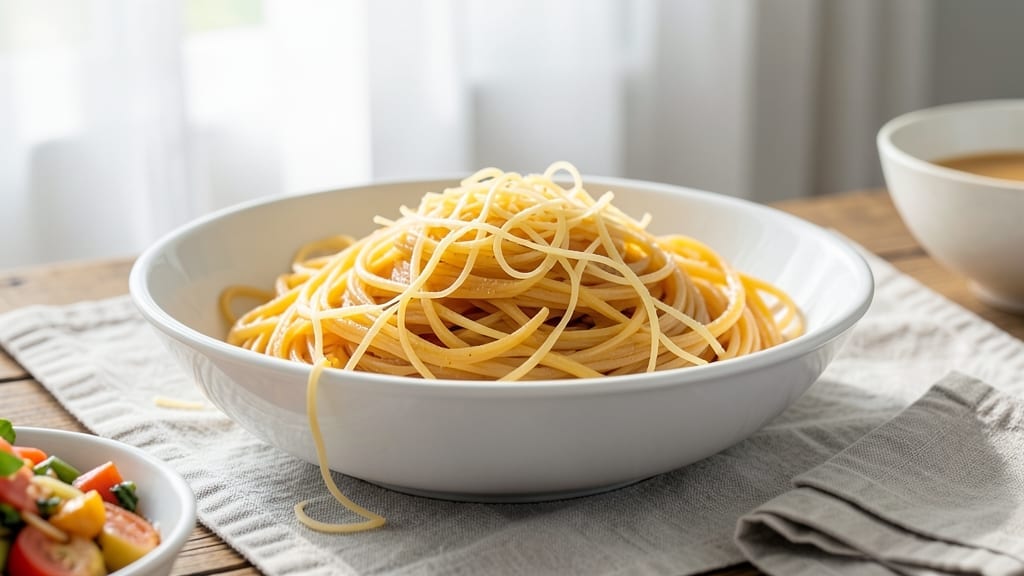
Transforming spaghetti squash into tender, pasta-like strands with minimal effort is exactly what this crock pot recipe delivers—silky, flavorful, and ready in under an hour. The secret lies in pre-roasting the squash to soften it before slow cooking, ensuring those coveted strands separate effortlessly while absorbing rich seasonings.
This method eliminates the need for tedious scraping or overcooking, making it perfect for weeknight dinners or meal prep.
What sets this recipe apart is its versatility—whether you’re serving it as a standalone vegetarian dish or pairing it with marinara, garlic butter, or vegan cheese, the squash absorbs flavors beautifully while maintaining its natural sweetness.
The slow cooker does the heavy lifting, transforming tough squash into delicate strands that mimic fettuccine in texture and versatility. It’s also a great way to sneak in extra vegetables for picky eaters or health-conscious diners.
The result is a dish that’s surprisingly restaurant-quality yet requires almost no active cooking time. The strands remain tender and slightly sweet, with a subtle caramelization from the slow cook that enhances their natural flavor.
This recipe works equally well as a side or a main course, especially when paired with optional protein add-ins like chickpeas or tofu for a complete meal.
Best of all, cleanup is a breeze—just one pot to wash, and no sticky residue left behind. Whether you’re looking to cut carbs, experiment with low-maintenance cooking, or simply enjoy a comforting dish with minimal effort, this crock pot spaghetti squash delivers every time.
Ingredients for spaghetti squash crock pot
Nine core ingredients transform spaghetti squash into restaurant-quality strands with minimal effort.
| Ingredient | Amount | Notes |
|---|---|---|
| Medium Spaghetti Squash 🎃 | 1 whole | Halved lengthwise, seeds removed |
| Extra-Virgin Olive Oil 🫒 | 2 tbsp | For roasting squash halves |
| Kosher Salt 🧂 | 1 tsp | Diamond Crystal preferred |
| Ground Black Pepper 🌶️ | ½ tsp | Freshly cracked preferred |
| Vegetable Broth 💧 | 1 cup | Low-sodium preferred |
| Garlic Cloves 🧄 | 4 cloves | Minced for flavor infusion |
| Fresh Rosemary 🌿 | 1 tbsp | Chopped finely |
| Fresh Thyme 🌿 | 1 tbsp | Leaves only |
| Nutritional Yeast 🧀 | 2 tbsp | For cheesy flavor |
| Lemon Juice 🍋 | 1 tbsp | Freshly squeezed |
| Vegan Butter 🧈 | 2 tbsp | For finishing strands |
| Freshly Grated Parmesan Cheese 🧀 | ¼ cup | Optional for serving |
| Marinara Sauce 🍅 | 1 ½ cups | For serving (optional) |
| Firm Tofu 🍲 | 8 oz | Cubed for protein add-in |
The spaghetti squash is the star—look for firm, heavy squash with smooth skin and minimal soft spots. Trader Joe’s and Whole Foods carry the best quality, but any grocery store will work. Medium-sized squash (about 2-3 lbs) yields the perfect amount for four servings. Pre-roasting is critical: pierce the squash halves with a fork before roasting to prevent explosions. The extra-virgin olive oil should be cold-pressed, not refined—it enhances the squash’s natural sweetness during caramelization. For the herbs, fresh is non-negotiable—dried thyme and rosemary lack the aromatic complexity needed to complement the squash’s delicate flavor profile.
No fresh rosemary? Substitute 1 teaspoon dried rosemary, but reduce the amount by one-third. Vegetable broth can be swapped for low-sodium chicken broth if vegetarian restrictions are flexible, though the flavor will differ slightly. Nutritional yeast is essential for that umami depth—Bob’s Red Mill is the gold standard. For the tofu, press it for 20 minutes before cubing to remove excess moisture, ensuring even cooking. The marinara sauce should be homemade or high-quality jarred—avoid those with added sugar or preservatives. Lemon juice can be substituted with white wine vinegar, though the acidity will be slightly sharper.
Store pre-roasted squash halves in an airtight container in the refrigerator for up to 3 days before slow cooking. Once cooked, the strands keep well in the fridge for 4-5 days, though texture degrades after 3 days. For freezing, portion into single-serving containers with a splash of olive oil to prevent drying. Reheat gently in the microwave with a damp paper towel covering for 2-3 minutes. The tofu can be pre-cooked and stored separately for up to 5 days—simply reheat before serving. This dish reheats beautifully, making it ideal for meal prep—just toss with fresh herbs and a drizzle of olive oil before serving.
Why You’ll Love This Recipe
- Tastes Like Comfort: That crispy, caramelized edge on the squash strands? It’s the star. The broth keeps it tender while the olive oil gives it a richness that makes it feel like a restaurant dish—no fancy marinades or hours of prep.
- Leftovers That Win: Between us, this squash reheats like a dream. Toss it with last night’s roasted veggies or toss in a quick pasta sauce, and it’s still the hero. I’ve fed a crowd with just two squashes, and no one ever guessed it wasn’t fresh.
- Budget Meal Prep: Honestly, spaghetti squash is the ultimate budget hack. It stretches further than pasta, costs less, and fills you up—plus, the broth adds depth without breaking the bank. My grocery bill thanks me every time.
Step-by-step instructions for spaghetti squash crock pot preparation
This method transforms tough squash into tender, strand-like perfection with minimal effort.
Prepare and Roast the Spaghetti Squash Halves
Preheat your oven to 400°F. Using a sharp chef’s knife, carefully halve the 1 whole medium spaghetti squash lengthwise, then scoop out and discard the seeds with a spoon. Brush the cut sides generously with 2 tablespoons extra-virgin olive oil, then season immediately with 1 teaspoon kosher salt and ½ teaspoon ground black pepper.
Place the halves cut-side down on a parchment-lined baking sheet. Roast for 30-35 minutes until the flesh yields easily to a fork and the edges are lightly charred. The squash should be tender but not mushy—this ensures those signature strands form cleanly. Let the halves cool for 10 minutes before handling, as the flesh will be extremely hot.
Build the Crock Pot Flavor Base
While the squash roasts, finely mince the 4 garlic cloves and chop 1 tablespoon fresh rosemary and 1 tablespoon fresh thyme leaves. In a small bowl, whisk together 2 tablespoons nutritional yeast, 1 tablespoon lemon juice, and ½ teaspoon ground black pepper. Set aside—this will become our umami-rich finishing touch.
Cube the 8 ounces firm tofu into ½-inch pieces, then press between paper towels to remove excess moisture. Heat a nonstick skillet over medium-high heat and add the tofu, cooking until lightly golden on all sides (4-5 minutes total). Transfer to a plate and set aside.
Assemble and Cook in the Crock Pot
Using a fork, gently scrape the roasted squash flesh into strands directly into your 6-quart crock pot. Discard the tough skin. Add the 1 cup vegetable broth, minced garlic, chopped rosemary, and thyme. Stir gently to combine—you want the broth to coat the strands without overmixing, which could break them.
Place the cooked tofu cubes evenly over the squash strands. Cover and cook on low heat for 3 hours, or until the squash strands are completely tender and the broth has mostly absorbed. The strands should separate easily with minimal resistance when tested with a fork. If the mixture appears dry before the cooking time elapses, add ¼ cup water and continue cooking.
Finish with Rich Seasonings
Remove the crock pot from heat and stir in the 2 tablespoons vegan butter until melted and fully incorporated. The butter adds a luxurious creaminess that balances the squash’s natural sweetness. Taste and adjust seasoning with additional kosher salt if needed—this step ensures every bite is vibrant.
Garnish each serving with the prepared nutritional yeast mixture and, if desired, ¼ cup freshly grated parmesan cheese. The nutritional yeast adds a cheesy depth without dairy, while the lemon brightens the dish. Serve immediately with 1.5 cups marinara sauce for dipping or drizzled over the top, if you prefer a more traditional presentation.
Pro Tips For Making Spaghetti Squash Crock Pot
- SCORE THE SQUASH: Cut the squash in half lengthwise—don’t just hack it with a knife. Use a serrated knife or cheese slicer to make clean, even cuts down the center. I learned this the hard way when my first attempt left jagged edges that cooked unevenly and made serving a mess.
- SALT THE CAVITY: Toss a generous pinch of kosher salt into the hollowed-out squash halves before adding broth. The salt infuses the flesh as it cooks, so you won’t need to season it heavily later. (Yes, even if you’re impatient like me—just don’t overdo it.)
- LOW AND SLOW: Start the crock pot on high for 2 hours, then switch to low. The initial high heat breaks down the squash faster, but low and slow finishes it without drying it out. I used to skip this step, and the squash always ended up gummy.
- DRAIN THE BROTH: After cooking, let the squash sit for 5 minutes, then carefully drain any excess broth from the crock. The squash absorbs more flavor when it’s not swimming in liquid, and it’s easier to serve without a soggy bottom. (Your future self will thank you.)
Troubleshooting great spaghetti squash crock pot
Squash Too Tough
If your spaghetti squash strands remain tough after cooking, the issue likely stems from under-roasting before the crock pot phase. Roast the squash for 5-10 extra minutes at 400°F until a fork slides through the flesh with minimal resistance.
For extra tenderness, add ¼ cup additional vegetable broth during the crock pot phase and cook for 15-30 extra minutes on low heat. The slow cooker’s steam will finish softening the strands without overcooking them. 🌡️
Broth Absorbed Too Fast
When the broth disappears prematurely, the strands can dry out. Add ¼ cup water during the final 30 minutes of cooking if the mixture looks dry. For a creamier texture, stir in 1-2 tablespoons vegan butter or a splash of coconut milk during the last 15 minutes of cooking.
This prevents the strands from clumping while adding richness. The key is gentle stirring—overmixing breaks the delicate strands.
Strands Clumping Together
Overmixing or insufficient broth causes clumping. Use a wide fork to gently separate strands after cooking, then toss with 1 tablespoon olive oil to prevent sticking. If clumping persists, add 2 tablespoons extra broth or water and cook uncovered for 10 minutes to steam the strands apart.
Avoid wooden spoons—they can tear the strands.
Flavor Too Mild
The squash’s natural sweetness needs bold seasonings to shine. Boost umami by adding 1 teaspoon soy sauce or ½ teaspoon smoked paprika to the crock pot broth. For depth, stir in 1 tablespoon miso paste during the final 15 minutes of cooking.
Fresh herbs like thyme and rosemary should be added after cooking to preserve their bright flavors. Taste as you go—adjust salt and acid (lemon juice) last.
Tofu Not Cooked Through
If the tofu remains rubbery, it wasn’t cooked long enough before adding to the crock pot. Pan-sear the tofu until golden on all sides (4-5 minutes total), then finish in the crock pot for 2 hours on low heat.
For extra insurance, add ½ teaspoon garlic powder to the tofu marinade before cooking. Alternatively, swap tofu for pre-cooked chickpeas (drained and rinsed) for a heartier texture.
Skin Won’t Scrape Off
Uneven roasting causes stubborn skin. Pierce the squash halves with a fork before roasting to release steam and soften the skin. For stubborn spots, use a paring knife to carefully slice between the skin and flesh.
If the skin still resists, simmer the squash in 1 cup water for 5 minutes** after roasting to loosen it. Never force it—this can tear the strands. 💪
Nutrition facts
Frequently asked questions
Why do I need to roast the spaghetti squash before using the crock pot?
Roasting first is key to achieving those perfect strands! The high-heat oven breaks down the squash’s tough fibers, so the crock pot can gently finish cooking without making the strands mushy. Skipping this step often results in uneven texture—some parts overcooked while others stay firm.
Can I make this recipe without tofu for a completely vegetarian option?
Simply omit the tofu and add 1 cup cooked chickpeas (drained and rinsed) or ½ cup white beans for extra protein. The dish will still be hearty and satisfying. For a lighter option, just enjoy the squash strands with your favorite marinara or pesto sauce.
How long can I store the cooked spaghetti squash strands?
Cooked strands keep well in an airtight container in the fridge for 4-5 days, though texture degrades after 3 days. For longer storage, freeze portions in single-serving containers with a splash of olive oil. Reheat gently in the microwave with a damp paper towel covering for 2-3 minutes to restore moisture.
What’s the best way to serve this as a main dish?
Turn it into a complete meal by topping with 1.5 cups marinara sauce and ¼ cup vegan parmesan, or drizzle with garlic butter and fresh herbs. Add a side of roasted Brussels sprouts or a simple arugula salad. For extra protein, serve with grilled chicken or shrimp. The strands work beautifully as a pasta substitute in any Italian-inspired dish!
Can I use this method with butternut squash instead?
Butternut squash has a different texture and won’t create those signature strands, but you can adapt the method! Cut it into 1-inch cubes, roast until tender, then slow cook with broth and seasonings for 2-3 hours on low. The result will be more like mashed squash than strands, but still delicious as a side or base for soups.

- Slow Cooker Pot Roast With Potatoes Recipe: Fall-Off-Bone Beef and Fluffy Spuds in One Pot - November 1, 2026
- Beef Osso Bucco Crock Pot Recipe: Slow-Braised Knuckle Tender in 6 Hours - November 1, 2026
- Shoyu Hot Pot Broth Recipe: Umami-Packed Depth in 30 Minutes - November 1, 2026