
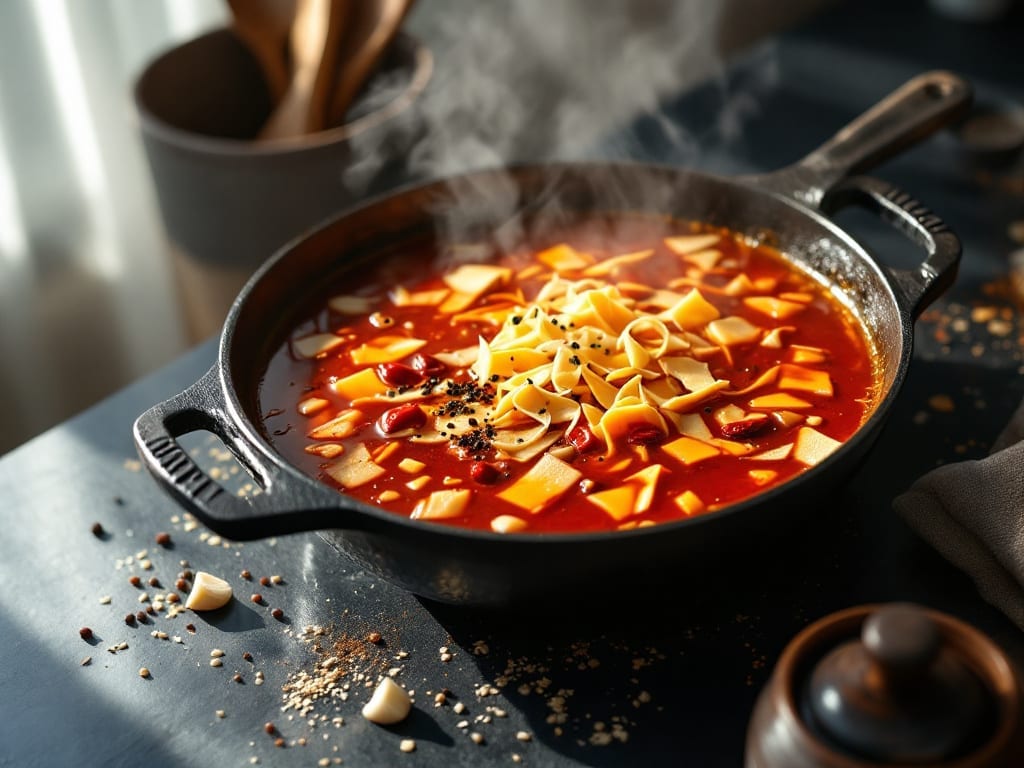
Creating a spicy miso hot pot broth transforms simple ingredients into a deeply flavorful base that works as both a comforting stew and an elevated dip. The balance of fermented miso, aromatic spices, and slow-simmered aromatics delivers layers of umami and heat that linger long after the last bite.
This broth builds complexity through precise seasoning—where the miso’s saltiness meets chili’s sharpness and ginger’s warmth—without relying on shortcuts.
The foundation lies in a 30-minute simmer that develops the broth’s depth while keeping preparation straightforward. You’ll start with white miso (for mildness) and red miso (for richness), then layer in fresh ginger, garlic, and chili flakes to create a harmonious spice profile.
Unlike store-bought versions, this recipe avoids artificial additives, ensuring every sip tastes like a carefully crafted umami bomb.
What makes this broth exceptional is its versatility—it serves as the heart of a hot pot filled with tofu, mushrooms, and seasonal vegetables, or as a dipping sauce for dumplings and spring rolls.
The high heat from the chili and ginger cuts through the miso’s saltiness, creating a perfect balance that’s both bold and approachable. Once you taste this version, homemade broth will replace takeout every time.
For those new to hot pot, this recipe includes foolproof techniques like skimming foam during simmering and adjusting saltiness at the end. Pair it with a simple side of steamed rice or fresh herbs to round out the meal.
Ready to elevate your table? Let’s build this broth step by step.
Ingredients for spicy miso hot pot broth
Miso, ginger, and chili create the umami-spiced core of this hot pot broth—simple yet deeply complex.
| Ingredient | Amount | Notes |
|---|---|---|
| White Miso Paste 🍶 | ½ cup | High-quality, fermented 7-8 years |
| Red Miso Paste 🍶 | ¼ cup | For depth and richness |
| Fresh Ginger Root 🌿 | 3 tbsp | Julienned, organic preferred |
| Garlic Cloves 🧄 | 6 cloves | Peeled, lightly crushed |
| Dried Red Chili Flakes 🌶️ | 1 tbsp | Adjust for desired heat |
| Sesame Oil 🫒 | 1 tbsp | Toasted, for aroma |
| Vegetable Stock 💧 | 4 cups | Low-sodium, homemade preferred |
| Dried Shiitake Mushrooms 🍄 | 2 whole | Rehydrated, sliced |
| Green Onion 🧅 | 1 whole | Thinly sliced, for garnish |
| Diamond Crystal Kosher Salt 🧂 | ½ tsp | For final seasoning |
| Extra-Virgin Olive Oil 🫒 | 1 tbsp | For finishing drizzle |
| Fresh Cilantro 🌿 | ¼ cup | Chopped, optional garnish |
| Rice Vinegar 🍶 | 1 tbsp | For brightness |
The miso pastes are the heart of this broth, so invest in high-quality Japanese miso from specialty stores like Miso Master or Whole Foods. White miso provides mild sweetness, while red miso adds fermented depth—both should be aged at least 7 years for optimal umami. Fresh ginger is non-negotiable; organic ginger root from Trader Joe’s or your local Asian market delivers the brightest flavor. For chili flakes, gochugaru (Korean red pepper flakes) adds a fruity heat that complements miso beautifully, but standard dried chili works too. Store miso pastes in airtight containers in the fridge once opened—they’ll keep for up to a year.
No fresh ginger? Powdered ginger at half the amount works in a pinch, though texture suffers. Substitute dried shiitake mushrooms with cremini mushrooms (use 1 cup sliced), but they won’t add the same earthy depth. For extra richness, add 1 tbsp of white miso paste if the broth tastes too sharp. The vegetable stock should be homemade if possible—Pacific Foods or Imagine brands are reliable store-bought options. If you’re making a large batch, double the miso and stock while halving the ginger and garlic to maintain balance. Always taste before serving; adjust saltiness with kosher salt or brightness with rice vinegar.
This broth peaks after 30 minutes of simmering but can be made ahead—it actually tastes better the next day as flavors meld. Store in the fridge for up to 5 days in an airtight container, or freeze for 3 months in ice cube trays for portion control. Reheat gently on the stove, skimming any foam that rises. For serving, drizzle with extra-virgin olive oil and garnish with fresh cilantro and green onions. The broth doubles as a dipping sauce for dumplings or a base for noodle soups—its versatility makes it a pantry staple worth repeating.
Why You’ll Love This Recipe
- Five-Ingredient Magic: I swear, this broth comes together with just a pot, a spoon, and 10 minutes of stirring. No chopping, no measuring cups—just dump the miso, add the ginger and garlic, and let the heat do the work.
- Umami Firecracker: That red miso and chili flakes combo? It’s the kind of flavor that makes you pause mid-sip. The white miso smooths it out just enough to keep you reaching for seconds—honestly, my partner now keeps a jar in his desk drawer for quick lunches.
- Weeknight to Party: Same broth, endless uses. Slurp it straight from the pot on a lazy Tuesday, or turn it into a full hot pot with tofu and veggies for guests. (Yes, even on a Tuesday night.)
- Broth That Pays Off: Make a big batch—it reheats like a dream and tastes better the next day. Plus, miso and ginger are dirt cheap, so you’re basically printing money in flavor. My freezer’s always stocked with this stuff.
Step-by-step instructions for spicy miso hot pot broth
A balanced blend of fermented depth and aromatic heat creates this umami-rich foundation.
Rehydrate and Prepare Aromatics
Place the 2 whole dried shiitake mushrooms in a heatproof bowl and cover with hot water from the kettle. Let them soak for 10 minutes until pliable and expanded. Drain, reserving the soaking liquid, then slice the mushrooms into ¼-inch thick pieces. In a separate bowl, combine the julienned 3 tablespoons fresh ginger root and the 6 peeled garlic cloves. Lightly crush the garlic with the flat side of your knife to release oils without pulverizing.
The mushrooms should absorb water and become tender but not mushy. This rehydration step prevents them from turning to mush in the broth. The ginger and garlic aromatics will form the flavor backbone of your broth, so proper preparation ensures maximum extraction during cooking.
Bloom the Miso Pastes and Chili
In a medium saucepan, combine the 0.5 cup white miso paste and 0.25 cup red miso paste with the 4 cups vegetable stock. Stir over low heat for 5 minutes until the pastes dissolve completely into the liquid. Add the 1 tablespoon dried red chili flakes and the sliced shiitake mushrooms, stirring gently to distribute. Increase heat to medium-low and simmer for 8 minutes, allowing the flavors to meld without scorching.
Here’s where the umami foundation takes shape. The low heat prevents the miso from burning while allowing its complex flavors to integrate fully. The chili flakes will infuse heat gradually rather than all at once, creating balanced warmth throughout the broth.
Incorporate Aromatics and Sesame Oil
Add the prepared ginger-garlic mixture to the simmering broth and cook for 3 minutes until fragrant. Remove from heat and stir in the 1 tablespoon sesame oil and 1 tablespoon rice vinegar. The sesame oil should bloom immediately with its toasted aroma, while the vinegar adds a bright contrast to the rich umami flavors.
This is the moment that matters: the sesame oil carries subtle nutty notes while the vinegar prevents the broth from becoming too heavy. The ginger and garlic will continue infusing flavor even as the broth cools, ensuring depth in every serving.
Finish with Salt and Oil Emulsion
Return the broth to low heat and stir in the 0.5 teaspoon diamond crystal kosher salt. Remove from heat once dissolved, then drizzle in the 1 tablespoon extra-virgin olive oil while whisking vigorously. The oil should emulsify into the broth, creating a silky finish. Garnish with the thinly sliced 1 whole green onion and chopped 0.25 cup fresh cilantro just before serving.
The final salt adjustment balances the miso’s inherent saltiness while the olive oil adds a luxurious mouthfeel. The fresh garnishes provide both visual contrast and a bright finish that cuts through the richness. This broth should be served immediately while the aromatics are at their peak.
Pro Tips For Making Spicy Miso Hot Pot Broth
- Bloom the Chili First: Toss those dried red chili flakes into a dry pan over medium heat for 30 seconds before adding liquid—just until they darken slightly and smell like a campfire. I learned this the hard way: skipping this step means your broth will taste like a mild warning instead of a proper kick.
- Grate Ginger Like It’s 1998: Use the largest holes on your grater for fresh ginger, then squeeze out the excess moisture with your hands. Wet ginger in broth turns to mush and clouds the flavor—like adding a damp sponge to your soup.
- Miso Last, Not First: Add the white and red miso pastes after the broth has simmered for 5 minutes, not at the start. Miso burns faster than you think, and you’ll end up with a bitter, grainy sludge instead of that rich, umami depth you’re after.
- Double-Check the Garlic: Peel and smash those garlic cloves flat with the side of your knife before adding them—no chopping, no mincing. Whole cloves release flavor slowly, but smashed ones? They infuse the broth like a secret agent. (Yes, even if you’re impatient like me.)
Make-ahead tips for this recipe
Broth Prep Ahead
This broth actually tastes better the next day as flavors meld—perfect for meal prep! After simmering, let it cool completely, then transfer to an airtight container (I use Le Creuset stoneware) and refrigerate for up to 5 days.
The miso continues fermenting, deepening its umami punch. For freezer storage, portion into ice cube trays—thaw cubes directly in hot pot water for instant flavor. 💫
Hot Pot Assembly
Prepare your hot pot setup the night before by arranging stone hot pot stones (or a heavy pot) on your stovetop. Keep vegetarian proteins (tofu, mushrooms, bok choy) prepped in separate bowls.
The broth reheats in 5 minutes on medium heat—just add 1-2 tablespoons water if needed to maintain consistency. This saves 30 minutes of last-minute prep on busy weeknights. 🔥
Broth Multiplier
Double the recipe for entertaining—this broth serves 8-10 and reheats beautifully. Store the extra in mason jars (they stack neatly in the fridge). Use half for hot pot and half as a dipping sauce for dumplings or spring rolls.
The ginger and garlic aromas intensify when reheated, making it even more aromatic. Label jars with dates to track freshness. ✨
Freezer-Friendly Tips
For long-term storage, freeze broth in 1-cup portions in silicone molds—they’re stackable and easy to pop out. Thaw overnight in the fridge, then reheat gently. Add 1 teaspoon of rice vinegar when reheating to revive brightness.
Avoid freezing with fresh garnishes—they’ll turn mushy. Instead, add cilantro and green onions fresh after reheating. ❄️
Garnish Prep
Chop all garnishes (cilantro, green onions) the day before and store in small airtight containers with a paper towel to absorb moisture. Keep them in the fridge for up to 3 days.
When ready to serve, simply sprinkle over reheated broth or hot pot ingredients. This saves 10 minutes of chopping during meal assembly. 🌿
Hot Pot Shortcuts
Buy pre-sliced shiitake mushrooms and pre-minced garlic from the Asian market to cut prep time in half. Use instant miso paste (like Miso Master’s quick-dissolve) if you’re short on time—it blends just as well.
For extra convenience, pre-mix the ginger-garlic paste in a small jar and store it in the fridge for up to 1 week. 💡
Nutrition facts
Frequently asked questions
Can I make this broth without fresh ginger?
Yes, but the flavor will differ slightly. Use 1.5 teaspoons of ground ginger or 1 teaspoon of ginger powder instead. For best results, toast the powder in a dry pan for 30 seconds to enhance its aroma before adding to the broth. Fresh ginger provides a brighter, more complex flavor, but powdered works in a pinch.
How do I adjust the spice level?
Start with the full 1 tablespoon of chili flakes for medium heat. For milder broth, reduce to ½ teaspoon or omit entirely. For extra spice, add ½ teaspoon of gochujang (Korean chili paste) or 1 teaspoon of sriracha after simmering. Always taste before serving to avoid overpowering the umami.
What are the best vegetarian proteins for this hot pot?
Silken tofu, firm tofu, king oyster mushrooms, or shiitake mushrooms work beautifully. For extra richness, try marinated tofu cubes or tempeh slices. Pre-cook proteins for 2-3 minutes in the hot pot to avoid sogginess. Vegetables like bok choy, napa cabbage, and daikon radish also pair perfectly with the broth.
Why did my broth turn bitter?
Bitter flavors usually come from over-simmering the miso or burning the aromatics. Keep heat at medium-low and never let the broth boil vigorously. If it tastes bitter, balance it with 1 teaspoon of rice vinegar or a drizzle of sesame oil. Fresh ginger and garlic should be added at the end of cooking, not at the beginning, to preserve their bright flavors.
Can I use this broth for other dishes besides hot pot?
Use it as a base for ramen or udon noodles, a dipping sauce for dumplings or spring rolls, or even a marinade for grilled tofu or vegetables. The spicy miso profile works well in stir-fries too—simmer it with your favorite veggies for 5 minutes to infuse flavor. Store extra broth in the fridge for up to 5 days or freeze for 3 months**.

- Crock Pot Round Steak Recipe: Slow-Sear Crust With Juicy Center - November 6, 2026
- Candied Sweet Potatoes Crock Pot Recipe: Caramelized Sweetness With Zero Effort - November 6, 2026
- Steak Recipe Crock Pot: Juicy, Caramelized Crust in 4 Hours - November 6, 2026