
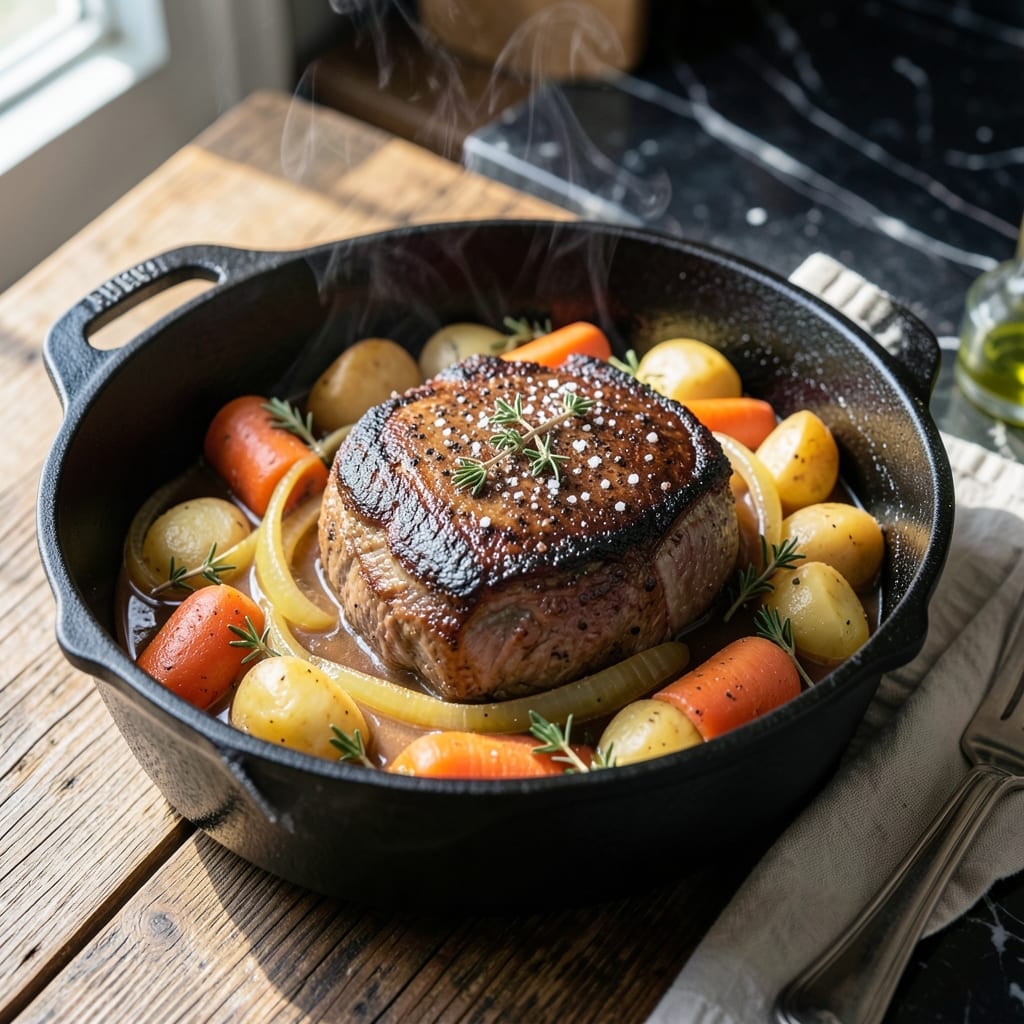
There’s nothing quite like a well-executed pot roast to transform a simple chuck roast into fork-tender perfection. This stovetop method delivers the same rich, comforting results as oven-braised versions without the wait.
The secret lies in proper browning and a slow, steady simmer. Searing the beef first builds deep, caramelized flavors that infuse every bite. Adding root vegetables halfway through ensures they cook to ideal tenderness without turning mushy.
By the end, you’ll have a hearty, self-contained meal with beef so tender it falls apart at the touch of a fork. The vegetables absorb the rich, savory broth, creating a dish that’s as satisfying as it is flavorful.
Perfect for Sunday suppers or cozy weeknight dinners. Here’s how to achieve this classic comfort meal with ease.
Ingredients for Stovetop Pot Roast Recipe with Vegetables
Transform humble chuck roast into tender perfection with these carefully selected ingredients for a classic stovetop meal.
| Ingredient | Amount | Notes |
|---|---|---|
| Chuck Roast 🥩 | 3 lb | Well-marbled, trimmed of excess fat |
| Kosher Salt 🧂 | 2 tsp | Diamond Crystal preferred for even seasoning |
| Freshly Ground Black Pepper 🌶️ | 1 tsp | Coarsely ground for texture |
| Olive Oil 🫒 | 2 tbsp | Divided for searing and sautéing |
| Yellow Onion 🧅 | 1 whole | Large, roughly chopped |
| Garlic Cloves 🧄 | 4 cloves | Smashed for robust flavor |
| Carrots 🥕 | 4 whole | Peeled, cut into 2-inch chunks |
| Yukon Gold Potatoes 🥔 | 1 ½ lb | Peeled, quartered for even cooking |
| Celery Stalks 🌿 | 3 whole | Cut into 2-inch pieces |
| Tomato Paste 🍅 | 2 tbsp | Double-concentrated for depth |
| Dry Red Wine 🍷 | 1 cup | Bold variety like Cabernet Sauvignon |
| Beef Stock 🥣 | 3 cups | Low-sodium preferred for control |
| Fresh Thyme Sprigs 🍃 | 3 whole | Tied with twine for easy removal |
| Fresh Rosemary Sprig 🌿 | 1 whole | Woody stem discarded after cooking |
| Bay Leaf 🌿 | 1 whole | Dried, for aromatic depth |
The chuck roast is non-negotiable here—look for well-marbled pieces at the butcher counter or Whole Foods. Marbling equals flavor and tenderness. Avoid lean cuts like sirloin; they’ll dry out. Most supermarkets carry pre-cut chuck roast in the beef section. For the beef stock, low-sodium versions allow you to control the salt level precisely, which is crucial for balancing the rich flavors.
No red wine? Substitute with an additional cup of beef stock plus 1 tbsp balsamic vinegar. Short on fresh herbs? Dried thyme and rosemary at one-third the amount work in a pinch, though fresh is ideal. Yukon Gold potatoes are preferred for their buttery texture, but russets hold up well too. If carrots are small, leave them whole for visual appeal.
This dish reheats beautifully—3-4 days in the fridge, 3 months frozen. Store in airtight containers with the cooking liquid to maintain moisture. The flavors deepen overnight, making leftovers even more delicious. Carve the beef against the grain just before serving for maximum tenderness.
Why You’ll Love This Recipe
- One Pan Meal: I love that I can sear the chuck roast and cook the onions all in the same pot—minimal cleanup.
- Deep, Rich Flavor: The olive oil and black pepper create a crust on the roast that’s packed with savory goodness.
- Weeknight Lifesaver: Honestly, it’s my go-to for busy evenings when I need something hearty and filling.
- Budget Stretch: A chuck roast feeds my family for days, and the leftovers taste even better.
Step-by-Step Instructions for Stovetop Pot Roast With Vegetables
This method transforms tough cuts into melt-in-your-mouth beef with richly flavored vegetables.
Step 1: Sear and Season the Chuck Roast
Pat the 3 lb chuck roast dry with paper towels. Season all sides generously with the 2 tsp kosher salt and 1 tsp freshly ground black pepper. This dry surface and aggressive seasoning create the foundation for deep flavor.
Heat 1 tbsp olive oil in a heavy Dutch oven over medium-high heat until shimmering. Sear the chuck roast for 4-5 minutes per side until a deep mahogany crust forms. Don’t move the meat until it naturally releases from the pot—this ensures proper browning and prevents steaming.
Step 2: Build the Aromatic Base
Remove the chuck roast and set aside. Add the remaining 1 tbsp olive oil to the pot, then add the roughly chopped yellow onion, 4 cloves garlic cloves, 4 whole carrots, 1.5 lb Yukon Gold potatoes, and 3 whole celery stalks. Sauté for 5-7 minutes until the onions begin to soften.
Push the vegetables to the sides, then add the 2 tbsp tomato paste to the center of the pot. Cook for 2 minutes, stirring constantly, until the tomato paste darkens slightly and develops a rich, brick-red color. This step intensifies its umami contribution to the dish.
Step 3: Deglaze and Braise
Pour in the 1 cup dry red wine, scraping the bottom of the pot to release all the browned bits. Let it simmer for 3-4 minutes until reduced by half. This deglazing step captures all the concentrated flavors from searing.
Return the chuck roast to the pot. Add the 3 cups beef stock, 3 whole fresh thyme sprigs, 1 whole fresh rosemary sprig, and 1 whole bay leaf. The liquid should come about halfway up the meat. Bring to a simmer, then reduce heat to low.
Step 4: Slow Cook to Fork-Tender Perfection
Cover the pot and maintain a gentle simmer. Cook for 2.5-3 hours, turning the chuck roast every 45 minutes to ensure even cooking. You’ll know it’s done when the meat yields easily to a fork and the internal temperature reaches 195-200°F.
The vegetables should be tender but not mushy. If the liquid reduces too much during cooking, add hot water ½ cup at a time to maintain the braising environment. This low-and-slow method transforms the collagen in the chuck roast into gelatin, creating that signature fork-tender texture.
Pro Tips For Making Stovetop Pot Roast Recipe With Vegetables
- Sear it Hard: I learned this the hard way—use high heat and don’t move the chuck roast for at least 3-4 minutes per side to get that deep brown crust. A pale sear means weak flavor.
- Season Aggressively: Kosher salt should look like a light snowfall on the roast before searing. Sounds like a lot, but pot roast needs bold seasoning to cut through the long cook.
- Don’t Crowd the Pot: After burning two onions to bits, I finally realized you need space between the meat and veggies so they brown instead of steam.
- Use a Splatter Screen: Sounds weird, but it works: a simple mesh screen over the pot saves you from grease burns while still letting moisture escape during the long simmer.
Wine and Beer Pairings for This stovetop pot roast recipe with vegetables
Bold Red Wines
A full-bodied Cabernet Sauvignon mirrors the wine used in cooking and stands up to the rich beef flavors. I prefer California Napa Valley options like Caymus or Robert Mondavi. The tannins soften beautifully when paired with the dish’s fatty richness. 🍷
Medium-Bodied Reds
For a slightly lighter option, try a Merlot from Washington State. Its plum and cherry notes complement the carrots and potatoes without overpowering. Chateau Ste. Michelle offers excellent value in this category.
Dark Beer Pairings
A robust stout or porter like Guinness or Founders Porter provides roasted malt flavors that echo the caramelized crust on the beef. The carbonation cuts through the richness, cleansing your palate between bites. 🍺
Crisp Lager Option
If you prefer lighter beers, a clean German pilsner such as Warsteiner works surprisingly well. Its subtle hop bitterness balances the dish’s savory depth without competing with the flavors.
Non-Alcoholic Choice
For a non-alcoholic pairing, try sparkling black cherry soda like Izze. The effervescence and fruit notes provide a refreshing contrast to the hearty meal. Serve well-chilled for best results.
Nutrition Facts
Frequently Asked Questions
Can I use a different cut of beef?
Chuck roast is ideal for its marbling, but brisket or round work too. Avoid lean cuts like sirloin as they dry out during braising. Stick to tough, well-marbled cuts for best results.
When should I add the vegetables?
Add root vegetables like carrots and potatoes after 1.5 hours of cooking. This prevents them from turning mushy while ensuring they absorb the rich flavors.
How do I know when it’s done?
The beef is ready when it reaches 195-200°F internally and shreds easily with a fork. If unsure, test a small piece—it should fall apart.
Can I make this in advance?
The flavors deepen overnight. Store in an airtight container with the cooking liquid for up to 4 days in the fridge.

- 6 Bean Chili Recipe: Hearty, Smoky Depth That Gets Richer Over Time - September 26, 2026
- 2 Gallon Red Sangria Recipe: Bold Spice and Fruit Fusion for Crowds - September 26, 2026
- 5 Star Apple Bread Recipe: Spiced Apple Swirl With Buttery Crust - September 26, 2026