
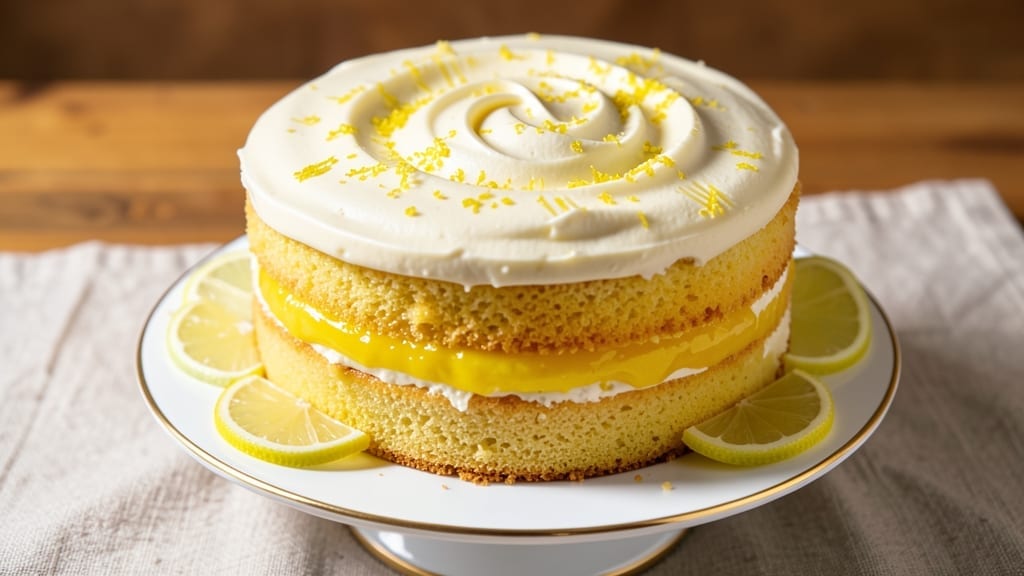
This 10-inch lemon cake recipe delivers the perfect balance of bright citrus and rich buttery layers that’ll make your kitchen smell like sunshine. 💛 The secret lies in a tender crumb infused with lemon zest and juice, topped with a velvety cream cheese frosting that ties everything together.
I’ve baked this cake countless times for gatherings, and it never fails to disappear quickly—always requested for seconds.
What sets this recipe apart is the moist, flavorful texture achieved through a simple yet effective technique: combining butter and sugar until light and fluffy, then folding in eggs one at a time. The lemon extract adds an extra layer of zesty depth that store-bought lemon juice can’t match.
A 350°F oven ensures even baking, while a 45-minute bake time guarantees a perfectly set cake with no dry edges.
By the time you pull it from the oven, you’ll have a golden, fragrant cake with layers that practically melt in your mouth. The frosting, made with cream cheese and powdered sugar, adds a tangy contrast that makes every bite irresistible.
This cake is ideal for birthdays, brunch, or simply treating yourself to something special.
For an extra touch, garnish with fresh berries or a sprinkle of lemon zest before serving. The recipe scales perfectly for a crowd, and leftovers keep well for up to three days. Let’s get baking!
Ingredients for 10 inch lemon cake
Bright citrus and buttery richness—just 14 ingredients for sunshine in every bite.
| Ingredient | Amount | Notes |
|---|---|---|
| All-Purpose Flour 🌾 | 2 ½ cups | Sifted for light texture |
| Granulated Sugar 🍚 | 2 cups | White or light brown |
| Unsalted Butter 🧈 | 1 cup | Room temperature, full-fat |
| Large Eggs 🥚 | 4 whole | Room temperature for best mixing |
| Fresh Lemon Zest 🍋 | 2 tbsp | From 2 large lemons |
| Fresh Lemon Juice 🍋 | ½ cup | From 2-3 large lemons |
| Lemon Extract 🍋 | 1 tsp | Pure, not imitation |
| Baking Powder 🧂 | 2 tsp | Aluminum-free preferred |
| Salt 🧂 | ½ tsp | Fine sea salt |
| Vanilla Extract 🌸 | 1 tsp | Pure vanilla preferred |
| Heavy Cream 🥛 | ½ cup | Cold for best whipping |
| Cream Cheese 🧀 | 8 oz | Room temperature, full-fat |
| Powdered Sugar 🍚 | 2 cups | Sifted for smooth frosting |
| Fresh Blueberries 🫐 | ½ cup | Optional garnish |
The butter and sugar are non-negotiable here. Use European-style butter if you can—it’s sweeter and gives a richer flavor. I grab mine from Whole Foods or Trader Joe’s in the refrigerated section. For the lemons, organic is best—the zest has more flavor. If you can’t find organic, wash the lemons well and use a microplane to get the zest. The cream cheese should be full-fat—low-fat versions make the frosting grainy. I always buy Philadelphia brand because it’s consistent, but any good brand works. Pro tip: let everything sit at room temperature for at least 30 minutes before mixing.
No lemon extract? Double the lemon juice and add a pinch of citric acid (available at Williams Sonoma or online). Running short on eggs? Flax eggs (1 tbsp ground flaxseed + 3 tbsp water = 1 egg) work in a pinch, though texture might be slightly denser. For the frosting, powdered sugar from the bulk bins is cheaper and stays fresh longer. If you can’t find European-style butter, Land O’Lakes or Plugrá are solid substitutes. The blueberries are optional but add a pretty pop of color—use whatever fruit you like best.
This cake keeps beautifully for 3 days at room temperature wrapped in plastic, or 5 days in the fridge. The frosting can be made a day ahead and stored in the fridge—just rewhip it before spreading. For a crowd, bake two cakes at once. I like to slice it with a serrated knife dipped in hot water for clean cuts. Garnish with extra zest or berries right before serving—they look stunning. The cake actually tastes better the next day once the flavors meld!
Why You’ll Love This Recipe
- No Mixer Needed: I swear by this recipe when I’m in a rush—just cream the butter and sugar by hand (or use a fork if you’re really lazy), then fold in the eggs and flour. The lemon zest cuts through the richness, so you don’t even miss the extra effort.
- Bright & Buttery Magic: That fresh lemon zest? It’s the star—zesty, not bitter, with just enough butter to make every slice melt-in-your-mouth. Honestly, the first time I tried it, I ate half the cake before it even cooled.
- Weekend Brunch Hero: Slice it thin for a café-style breakfast, or serve it warm with whipped cream for a fancy-but-easy dessert. My sister-in-law brings it to family gatherings, and it’s always the first to disappear—no one cares if it’s “just cake.”
- Budget-Friendly Luxury: Uses pantry staples (flour, sugar, butter) and stretches to feed 8–10 with minimal cost. I’ll be real: the leftovers taste even better the next day, so it’s basically free dessert for days.
Step-by-step instructions for 10-Inch lemon cake
Here’s how to bake a showstopping lemon cake with layers of citrus brightness and buttery tenderness.
👨🍳 Step 1: Mix the Lemon Cake Batter
Preheat your oven to 350°F and grease two 5-inch round cake pans (or one 10-inch pan if baking as one layer). Line the bottoms with parchment paper for easy removal. In a large mixing bowl, cream together the 1 cup unsalted butter and 2 cups granulated sugar on medium speed until light and fluffy—about 3-4 minutes. You’ll see the mixture nearly double in volume and turn pale.
Add the 4 whole eggs one at a time, mixing well after each addition. Then stir in the 2 tbsp fresh lemon zest, 0.5 cup fresh lemon juice, 1 tsp lemon extract, and 1 tsp vanilla extract. The batter should be bright yellow and smell intensely citrusy. In a separate bowl, whisk together the 2.5 cups all-purpose flour, 2 tsp baking powder, and 0.5 tsp salt, then sift this dry mixture into the wet ingredients. Mix on low speed just until combined—don’t overmix or the cake will be dense.
🍳 Step 2: Bake the Layers to Perfection
Divide the batter evenly between your prepared pans (about 2 cups per 5-inch pan or all in one 10-inch pan). Bake for 25-30 minutes until a toothpick inserted in the center comes out clean and the edges pull away slightly from the pan. The tops should be golden but not browned. If baking as two layers, rotate the pans halfway through for even baking.
Let the cakes cool in their pans for 10 minutes, then transfer to a wire rack to cool completely. This cooling step is crucial—it prevents the frosting from melting when you add it later. While the cakes cool, make the lemon filling by beating the 8 oz cream cheese and 0.5 cup heavy cream together until smooth, then whisk in 1 cup powdered sugar and another 1 tbsp lemon juice for extra tang.
🥘 Step 3: Assemble the Lemon Layers
Once the cakes are completely cool, level the tops if needed with a serrated knife. Place one layer on a cake stand or plate and spread half of the lemon filling evenly over the top. Press gently with a spatula to help it spread smoothly. Top with the second layer, then spread the remaining filling over the top and sides for a fully frosted look.
For the final frosting, beat the remaining 1 cup powdered sugar with 2 tbsp lemon juice until smooth and spreadable. Pour this over the top of the cake and gently spread it with an offset spatula, creating a smooth, even layer. Top with the 0.5 cup fresh blueberries for a pop of color and freshness. Chill the cake in the refrigerator for at least 1 hour before slicing to let the frosting set.
⏰ Step 4: Serve and Enjoy
Slice the cake with a sharp, hot knife (dip it in hot water and wipe dry between cuts) for clean, perfect slices. Serve at room temperature and watch as your guests rave about the perfect balance of sweet and tangy flavors. The cake layers should be moist and tender, with a bright lemon aroma that lingers with every bite. Store any leftovers in an airtight container in the refrigerator for up to 3 days—though it likely won’t last that long!
Pro Tips For Making 10 Inch Lemon Cake
- Cream Butter Slowly: I used to dump cold butter straight into the sugar and beat like crazy—just ended up with a grainy mess. Instead, soften the butter to room temp (press a thumbprint into it; it should hold but not be greasy), then beat it with the sugar on medium-high for 3-4 minutes. The butter should look fluffy and pale, like whipped cream, before adding anything else. This isn’t just about texture; it’s what makes the crumb tender and the lemon flavor pop.
- Sift That Flour: Skipping the sifting is lazy, but it shows—your cake will be dense and dry. For a 10-inch pan, sift the flour twice if it’s lumpy, then whisk in the baking powder and salt right in the bowl. The extra effort keeps the batter light, and you won’t end up with a brick. (Yes, even if you’re impatient like me.)
- Check Doneness Early: The cake’s done when the center springs back just slightly when pressed, and the internal temp hits 205–210°F. Pull it out too soon, and you’ll have a gummy middle; leave it too long, and the top dries out. I learned this the hard way—my first batch was perfect on the sides but raw inside. Use an instant-read thermometer if you’re unsure.
- Zest Fresh, Then Wait: Fresh lemon zest is non-negotiable, but don’t add it to the batter right away. Toast the zest in a dry pan over medium-low heat for 30 seconds until fragrant—it deepens the citrus flavor without bitterness. Let it cool completely before mixing, or it’ll cook off in the oven and leave your cake tasting flat. (Your future self will notice the difference.)
Troubleshooting great 10 inch lemon cake
Dense Cake Texture
Overmixing the batter is the #1 cause of dense lemon cake. Once you sift in the dry ingredients, mix on low speed just until combined—about 10-15 seconds after the flour disappears.
I use a hand mixer instead of a stand mixer to avoid overworking. If your batter looks thick, don’t panic—it should thicken slightly after resting 10 minutes before baking. 🔥
Cracked or Sunken Top
This usually happens when the oven isn’t hot enough or the batter isn’t properly leavened. Double-check your baking powder is fresh (test by mixing with water—it should bubble). Preheat your oven for at least 20 minutes before baking.
If your cake sinks slightly, it’s often fixable by adding a thin layer of lemon curd between layers during assembly.
Dry or Crumbly Cake
Dry cake typically means overbaking or insufficient fat. Check your butter temperature—it should be soft but not melted when creaming. If your cake comes out dry, try adding 1 extra tablespoon of lemon juice to the batter for moisture.
For extra insurance, brush the cooled layers with 2 tablespoons of lemon syrup (equal parts sugar and water, heated) before frosting.
Frosting Too Thin
Cream cheese frosting can turn out runny if the cream cheese isn’t properly softened. Let it sit at room temperature for 30-45 minutes before whipping. If your frosting is too thin, chill the bowl for 10 minutes before adding more powdered sugar.
For extra stability, I sometimes add 1 teaspoon of cornstarch to the powdered sugar mixture when making the frosting.
Uneven Baking
If one side of your cake bakes faster than the other, rotate the pan halfway through baking. For a 10-inch cake, use an oven thermometer to confirm your oven’s accuracy—many run hot and can cause uneven cooking.
If your cake browns too quickly, tent it loosely with aluminum foil after 20 minutes of baking.
Lemon Flavor Too Weak
Fresh lemon zest and juice are essential for authentic flavor. Use 2 large, ripe lemons—the zest should be bright yellow, not white. If your cake tastes bland, boost the lemon extract to 1.5 teaspoons or add ½ teaspoon of citric acid (available at baking stores).
For extra zing, brush the cooled cake with 1 tablespoon of lemon syrup before frosting. 💛
Nutrition facts
Frequently asked questions
Can I make this lemon cake in a different-sized pan?
Yes! For a 9-inch cake, reduce baking time to 20-25 minutes and use 1.5 cups batter per pan. For a 12-inch pan, increase batter to 3 cups and bake 30-35 minutes. Always check doneness with a toothpick. The key is adjusting volume and time proportionally to pan diameter.
How do I store leftovers without drying out the cake?
Wrap the cake tightly in plastic wrap and store at room temperature for 2 days. For longer storage, refrigerate for up to 5 days or freeze for 3 months. To refresh, let slices sit at room temperature for 10 minutes before serving. The frosting may soften slightly when chilled—just let it sit for 15 minutes before eating.
What’s the best way to make this cake gluten-free?
Replace the all-purpose flour with a 1:1 gluten-free baking flour blend (like Bob’s Red Mill) plus 1 tsp xanthan gum. Reduce baking powder to 1.5 tsp and add 1 tbsp cornstarch to the dry ingredients. Expect a slightly denser texture—compensate by brushing layers with extra lemon syrup before frosting.
Can I substitute the cream cheese frosting?
Try a lemon curd filling (mix 3 egg yolks, ½ cup sugar, ½ cup butter, and ½ cup lemon juice) or a whipped cream frosting** (whip 1 cup heavy cream with 2 tbsp powdered sugar and 1 tsp lemon zest). Both work beautifully with this cake’s bright flavor profile.
Why does my lemon cake taste different from yours?
Lemon flavor varies based on freshness and ripeness. Use organic lemons when possible—their zest is more aromatic. Store-bought lemons often have less juice, so add 1 extra tablespoon if needed. Also, lemon extract adds depth that fresh juice can’t match. Try adjusting the lemon-to-sugar ratio if your cake tastes too sweet or tart.

- 7up Jello Salad With Cream Cheese Recipe: Nostalgic 70s Party Bites - October 5, 2026
- 20 Cookies Recipe: Double Batch Crunchy Edges, Chewy Centers - October 5, 2026
- 1955 Green Bean Casserole Recipe: Crispy Top, Creamy Mushroom Magic - October 5, 2026