
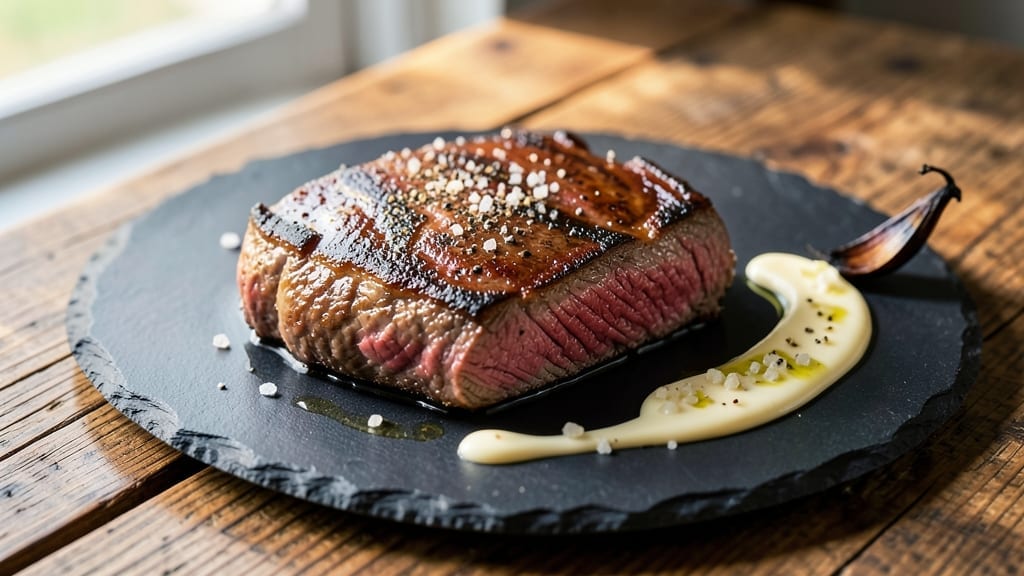
A 10 oz ribeye steak cooked to a juicy pink core is the ultimate steakhouse experience at home—no fancy restaurant needed. The reverse-sear method guarantees perfect results every time, with a caramelized crust outside and tender, melt-in-your-mouth meat inside.
This technique eliminates guesswork, ensuring your steak turns out restaurant-quality without overcooking.
The secret lies in low-and-slow cooking followed by a quick sear, which develops deep flavor and locks in moisture. You’ll need just a few simple ingredients: a high-quality ribeye, kosher salt, black pepper, and a reliable thermometer.
Optional but recommended additions include garlic butter for serving or a classic red wine reduction for extra richness.
By the end, you’ll have a steak with a deep mahogany crust, a buttery interior, and a flavor profile that’s impossible to resist. The reverse-sear method ensures even cooking, so every bite is perfectly tender. This recipe is designed for confidence—no more dry, overcooked steaks or uneven doneness.
Pair it with roasted garlic potatoes or a crisp green salad for a complete meal. The instructions are straightforward, and the results are unbeatable. Let’s get started on your perfect steak.
Ingredients for 10 oz ribeye steak
Just five core ingredients transform a simple steak into a showstopper—no fancy techniques needed.
| Ingredient | Amount | Notes |
|---|---|---|
| Ribeye Steak 🥩 | 10 oz | Bone-in preferred, USDA Choice grade |
| Kosher Salt 🧂 | 1 ½ tsp | Diamond Crystal preferred, coarse grain |
| Freshly Ground Black Pepper 🌶️ | ½ tsp | Freshly cracked for maximum flavor |
| Unsalted Butter 🧈 | 2 tbsp | Cold, cut into small cubes |
| Garlic Cloves 🧄 | 3 cloves | Fresh, peeled, minced |
| Extra-Virgin Olive Oil 🫒 | 1 tbsp | High-quality, fruity variety |
| Red Wine 🍷 | ½ cup | Bold, dry red like Cabernet Sauvignon |
| Vegetable Oil 🫒 | ½ cup | High smoke point for searing |
| Meat Thermometer 🌡️ | 1 whole | Instant-read preferred |
| Fresh Rosemary 🌿 | ¼ cup | Chopped, for finishing (optional) |
The ribeye is non-negotiable here—bone-in, USDA Choice grade is ideal, but Choice or Select works if that’s all you can find. Costco or local butcher shops often have the best cuts, but don’t overlook the steak counter at Whole Foods or Kroger. Look for good marbling—those white flecks of fat are what make ribeye melt-in-your-mouth tender. If your steak has a thick fat cap, trim it to about 1/4-inch for even cooking. The thermometer? Thermoworks or Taylor Precision are my go-tos—they’re worth the investment for steak night.
No kosher salt? Diamond Crystal is the gold standard, but any coarse sea salt works in a pinch. The butter should be cold and cubed—don’t let it soften before searing. Running out of red wine? Beef broth with a splash of balsamic works surprisingly well. Fresh rosemary is optional but adds that restaurant-quality touch—Trader Joe’s sells great bundles year-round. For the oil, avocado oil is my secret weapon (higher smoke point than olive oil), but vegetable oil is fine if that’s what you’ve got. Pro tip: Pat the steak dry with paper towels before seasoning—this ensures maximum crust development.
Prep the steak 30 minutes before cooking—let it sit at room temperature for even cooking. The reverse-sear method means your steak will stay juicy pink inside while developing that perfect crust. Store any leftover butter or wine reduction in an airtight container in the fridge for up to 5 days. The steak itself? Eat it immediately—it doesn’t reheat well, but if you must, warm it in a 200°F oven for 5-10 minutes. And save those rosemary stems—they make great aromatics for soups or stocks later!
Why You’ll Love This Recipe
- Two-Handed Cooking: I swear by this method—just salt, pepper, and a hot pan. No fancy gadgets, no chopping, no stress. The ribeye’s natural fat renders down while you press garlic into the butter, and suddenly, dinner’s ready.
- Butter-Basted Magic: That moment the butter pools on the steak, sizzling into crispy, golden edges? It’s like a flavor upgrade from “good” to “I’d eat this every night.” The garlic melts right into the butter, so every bite tastes like it’s been kissed by a chef.
- Weeknight to Date Night: Same recipe, totally different vibes. Throw it on for a lazy Tuesday with crusty bread, or dress it up with roasted potatoes and a glass of wine for a Friday night. The steak handles both without breaking a sweat.
Step-by-step instructions for reverse-seared ribeye steak
This method guarantees a perfectly pink center with a crispy crust—every time.
Season and Rest the Ribeye
Remove the ribeye from the refrigerator and pat it dry completely with paper towels. This drying step is crucial—it ensures maximum surface area for the seasoning to adhere and creates that coveted crust. Generously season both sides with the 1.5 teaspoons kosher salt and 0.5 teaspoon freshly ground black pepper, pressing the seasoning into the meat so it penetrates slightly. Let the steak sit at room temperature for 30 minutes—this allows for even cooking and prevents a cold center.
While the steak rests, preheat your oven to 250°F. The low-and-slow oven phase is what builds that juicy interior. I like to place a wire rack on a baking sheet to ensure proper airflow around the steak. Don’t skip this resting step—it’s the foundation of a perfect reverse sear.
Low-Temperature Oven Cook
Place the seasoned ribeye on the wire rack and transfer it to the preheated oven. Cook for 30-45 minutes, depending on your desired doneness. For a medium-rare result (which I recommend for ribeye), aim for an internal temperature of 115-120°F when measured with your meat thermometer. The steak should feel firm but still yield slightly to gentle pressure—this is the perfect texture for reverse-searing.
Check the temperature frequently after 25 minutes to avoid overcooking. The beauty of this method is that the steak cooks evenly without developing a crust in the oven, preserving all those precious juices. If you’re unsure, remember: medium-rare is the sweet spot for ribeye, where the fat remains tender and the meat stays juicy.
High-Heat Sear for Crust and Flavor
While the steak is still hot from the oven, heat 0.5 cup vegetable oil in a heavy skillet over medium-high heat until it shimmers but doesn’t smoke. Add the ribeye and sear for 2-3 minutes per side, pressing down gently with a pair of tongs during the first minute to ensure even contact with the pan. You’ll see the edges start to crisp—that’s your signal to flip.
For extra flavor, add the 2 tablespoons cold unsalted butter, 3 minced garlic cloves, and 0.25 cup chopped fresh rosemary to the pan during the last minute of searing. The butter will foam and bubble, basting the steak with rich, aromatic flavors. Remove the steak from the pan and let it rest for 5-10 minutes before serving—this resting period is non-negotiable for juicy perfection.
Finish with Red Wine (Optional but Recommended)
Return the skillet to the stovetop and pour in the 0.5 cup red wine, scraping up any browned bits from the bottom of the pan. Let it simmer for 2-3 minutes until reduced by half, creating a glossy, flavorful sauce. Drizzle this sauce over the sliced steak just before serving—it adds a touch of elegance and depth of flavor that complements the rich, beefy notes of the ribeye.
Slice the steak against the grain into ½-inch thick pieces and serve immediately. The result should be a juicy pink center with a crispy, caramelized crust that locks in all those delicious juices. Pair it with a simple side of roasted vegetables or a fresh salad to let the steak shine.
Pro Tips For Making 10 Oz Ribeye Steak
- Preheat Pan Like Your Steak’s Life Depends on It: Cast iron or stainless steel—crank the heat to medium-high for 5 minutes before adding oil. I used to rush this, and my steaks would steam instead of sear, leaving me with a sad, greasy mess instead of a crusty masterpiece.
- Salt the Steak an Hour Early: Generously coat both sides with kosher salt (about 1 teaspoon) and let it sit uncovered on a wire rack. This isn’t just for flavor—it helps the crust form better and keeps the meat juicy. (Yes, even if you’re impatient like me.)
- Sear Edge-Down First: Start with the fat cap facing down, then flip to the meat side once it’s rendered enough to lift easily. This traps flavor and renders fat away from the steak, so you’re not swimming in grease when you add garlic. After burning three batches, I finally figured this out.
- Butter the Pan After Searing: Once the steak’s halfway done, add 2 tablespoons of cold unsalted butter and 2 smashed garlic cloves. Let it foam and brown for 30 seconds—this bastes the steak with rich, garlicky goodness. (Your future self will thank you.)
Creative variations of these flavors
Global Spice Twists
Transform your ribeye into a global showstopper with these easy adaptations. For Korean-inspired bulgogi, marinate the steak in 2 tbsp soy sauce, 1 tbsp brown sugar, 1 tbsp sesame oil, and 1 tsp grated ginger for 2 hours before cooking.
The caramelized crust becomes even more complex with these flavors. 🌶️
For a Mediterranean vibe, swap the garlic butter for lemon-herb compound butter—mix 2 tbsp softened butter with 1 tbsp lemon zest, 1 tsp dried oregano, and ½ tsp red pepper flakes. Finish with a sprinkle of crumbled feta for a bright, tangy contrast.
Smoky Grill Adaptations
Take your reverse-seared ribeye to the grill by swapping the oven phase for indirect heat. Set up your grill for 225°F indirect heat and cook the steak for 20-30 minutes, flipping occasionally.
Then, move it to direct heat for a 2-minute sear on each side. The smoky char adds depth without compromising tenderness.
For a Texas-style twist, add ½ cup chopped onion and 2 tbsp chopped jalapeño to the searing pan. The onions caramelize beautifully, creating a sweet-savory sauce that pairs perfectly with the steak. Serve with pickled red onions for a tangy crunch.
Dietary-Friendly Swaps
For a low-carb version, replace the red wine reduction with a garlic-herb oil—simmer ¼ cup olive oil, 3 minced garlic cloves, and 1 sprig rosemary for 3 minutes.
Drizzle over the steak for a lighter but equally flavorful finish. This keeps the dish rich without the alcohol.
If you’re watching sodium, reduce the kosher salt to 1 tsp and boost flavor with 1 tsp smoked paprika and ½ tsp onion powder before searing. The spices add depth without overpowering the natural beef flavor.
Seasonal Flavor Boosters
In summer, add grilled stone fruits like peaches or plums to the plate. The natural sweetness cuts through the richness of the steak, creating a perfect balance. Toss sliced fruit with 1 tbsp balsamic glaze and a pinch of salt for extra flair. 🍑
For winter, swap the rosemary for fresh thyme and add a red wine and shallot reduction. Sauté 1 shallot in the same pan after searing, then deglaze with ½ cup red wine and reduce by half. The earthy notes complement the steak beautifully during colder months.
Nutrition facts
Frequently asked questions
Why does the reverse-sear method work better for ribeye?
The reverse-sear method prevents overcooking the center while building a perfect crust. Ribeye’s fat content makes it prone to drying out at high heat, but the low-and-slow oven phase keeps it juicy while the final sear creates that coveted caramelized exterior. This two-step process ensures a juicy pink core with a crispy crust—exactly what makes ribeye special.
Can I cook a 10 oz ribeye without a meat thermometer?
You can estimate doneness with the finger test: press the steak gently. If it feels like firm tofu, it’s rare. Medium-rare should feel like the base of your thumb, and medium like the fleshy part. For ribeye, aim for medium-rare (about 130°F) to preserve tenderness. A thermometer ensures precision, but practice helps you develop a feel for it.
How do I fix an overcooked ribeye?
If your steak is overcooked, slice it thinly against the grain and serve immediately with a rich sauce like the red wine reduction or garlic butter. The sauce adds moisture and flavor, masking dryness. For extra help, place the sliced steak in a warm pan with 1 tbsp butter and 2 tbsp beef broth for 1-2 minutes to rehydrate slightly.
Should I trim the fat from my ribeye?
Leave the fat cap intact—it adds flavor and helps keep the steak moist during cooking. Trim only the outer edges if they look discolored or excessively thick. The fat renders beautifully during searing, creating flavorful drippings. For a 10 oz ribeye, a ¼-inch fat cap is ideal for even cooking and maximum flavor.
What’s the best way to reheat leftover ribeye?
Ribeye doesn’t reheat well, but if needed, slice it thinly and warm in a 200°F oven for 5-10 minutes with a splash of beef broth. For a quick fix, pan-sear slices in 1 tbsp butter over medium heat for 1-2 minutes per side. Avoid microwaving—it makes the meat tough. Store leftovers in an airtight container for up to 3 days.

- 32 Oz Cream Cheese Cheesecake Recipe: Silky Smoothness With No Cracking - October 11, 2026
- 8×8 Pan Dump Cake Recipe: One-Bowl Wonder with Fudgy Layers - October 11, 2026
- 10-Layer Cake Recipe: Stacked Height With Buttery Vanilla Layers - October 11, 2026