
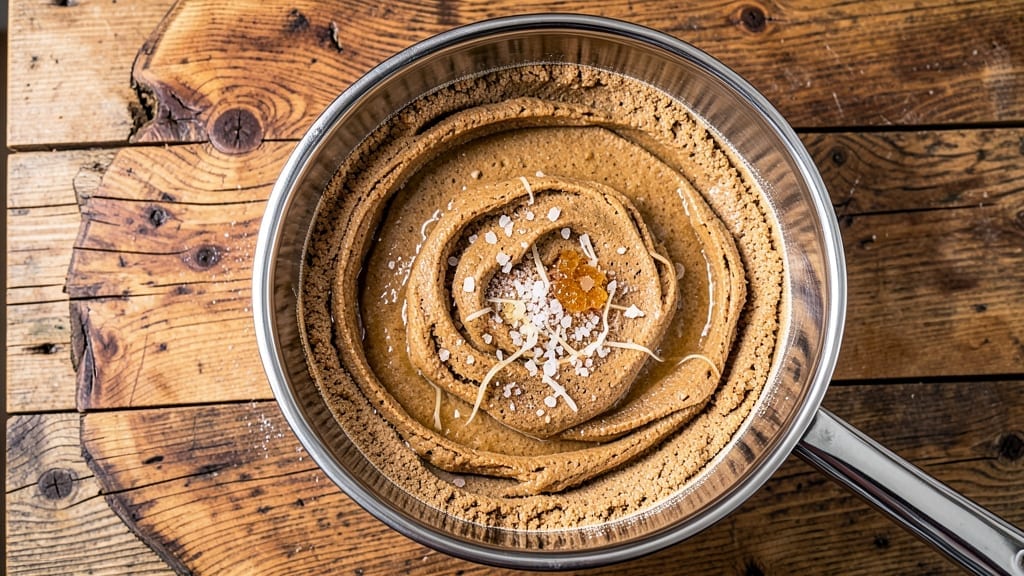
Baking 100 whole wheat French bread loaves with an artisan crust and nutty depth requires precision—but the results are worth every effort. This recipe transforms whole wheat flour into light, airy loaves with crisp exteriors and tender interiors, perfect for large gatherings or restaurant-quality service.
The secret lies in proper hydration, slow fermentation, and baking at high temperatures to achieve that signature French bread texture.
Whole wheat flour demands extra care, so we adjust hydration slightly and incorporate vital wheat gluten to mimic the elasticity of all-purpose flour. Kneading becomes more labor-intensive, but the payoff is a dough that develops gluten strands strong enough to hold the loaves’ signature oven spring.
Proofing time is extended to allow flavors to mature, and steam is used during baking to create that coveted crisp crust while keeping the crumb soft.
What you’ll achieve is a batch of 100 perfect French-style loaves—each with a golden, crackling crust and an interior that’s light yet substantial. The nutty depth from the whole wheat flour adds complexity, making these loaves far more interesting than standard white bread.
This recipe scales beautifully for bulk production while maintaining the same quality you’d expect from an artisanal bakery.
Whether you’re preparing for a large event or stocking a bakery, this method ensures consistent results every time. The key is patience—allowing the dough to develop fully and baking with precision. Once mastered, you’ll never buy store-bought French bread again. Let’s get started on creating these impressive loaves.
Ingredients for 100 whole wheat french bread
Precision ingredients for 100 artisanal whole wheat French loaves with crisp crusts and tender crumb.
| Ingredient | Amount | Notes |
|---|---|---|
| Whole Wheat Flour 🌾 | 100 lb | High-protein, bread flour preferred |
| Vital Wheat Gluten 🌾 | 10 lb | For improved elasticity and structure |
| Instant Yeast 🍞 | 2 tbsp | Active dry yeast, not rapid-rise |
| Granulated Sugar 🍚 | 2 cups | For yeast activation and browning |
| Salt 🧂 | 2 tbsp | Diamond Crystal kosher salt preferred |
| Water 💧 | 90 cups | Lukewarm, 90-95°F for hydration |
| Olive Oil 🫒 | 2 cups | Extra-virgin for flavor and crust |
| Honey 🍯 | ½ cup | For dough softness and sweetness |
| Baking Sheets 📦 | 20 whole | Half-sheet pans, parchment lined |
| Cornmeal 🌽 | 2 cups | For dusting and crust texture |
| Ice Cubes ❄️ | 1 cup | For cooling dough before shaping |
| Steam Pan 🔥 | 1 whole | For oven steam during baking |
The whole wheat flour is the foundation, but King Arthur or Bob’s Red Mill brands are non-negotiable—they handle hydration better than generic store brands. Vital wheat gluten is your secret weapon here; without it, the loaves risk being dense. Bob’s Red Mill vital wheat gluten is my go-to, but any quality brand works. Instant yeast is preferable to active dry since we’re mixing everything at once—no waiting for yeast to proof separately. For the olive oil, California Olive Ranch or Colavita deliver that fruity depth that translates into a better crust. Honey? Local raw honey adds subtle floral notes that store-bought can’t match, but any brand works in a pinch.
No instant yeast? Active dry yeast at half the time (so 4 tbsp total) works, but you’ll need to dissolve it in warm water first. Running short on olive oil? Vegetable oil or melted butter (unsalted) are fine, though the crust won’t be as flavorful. Substituting whole wheat flour? White whole wheat flour gives a lighter crumb, but regular whole wheat delivers that robust nutty flavor. For the baking sheets, Wilton half-sheet pans are my standard—they conduct heat evenly. If you’re baking this many loaves, consider two ovens—spreading the load ensures even baking. The cornmeal isn’t just for dusting; it adds a subtle crunch to the crust that’s worth the extra step.
Dough keeps best in the fridge for 24 hours before shaping—this actually improves flavor. For longer storage, freeze shaped loaves (unbaked) on parchment for up to 3 months**. Thaw overnight in the fridge before baking. The steam pan? Fill it with water and place on the oven rack during the first 15 minutes of baking—this creates that signature French bread crust. Baked loaves stay fresh for 3-4 days at room temperature if wrapped in a clean kitchen towel. For freezing, slice and toast straight from frozen—no thawing needed.
Why You’ll Love This Recipe
- Five-Ingredient Magic: I swear, this dough comes together in one bowl—no kneading, no fuss. The vital wheat gluten gives it that classic French bread chew without the headache of handling sticky whole wheat.
- Nutty, Toasty Crunch: That whole wheat flour? It adds a deep, toasty flavor you won’t find in white bread. The sugar and yeast work together to create a crust so crispy it’ll make you want to eat it straight from the oven.
- Bread for Everything: Sandwiches, croutons, garlic bread—this loaf handles it all. Between us, I’ve even used it for bread pudding. It’s the one loaf that never lets me down.
- Budget-Friendly Staple: A single batch stretches for days—freeze half for lazy mornings. Honestly, I’ve made this so often that I’ve forgotten what store-bought bread even tastes like.
Step-by-step instructions for 100 whole wheat French bread
Here’s how to transform these ingredients into golden, nutty French bread with an artisan crust.
Mix the Dough with Precision
In a large mixing bowl, combine the 100 lb whole wheat flour and 10 lb vital wheat gluten. This combination gives you the structure and elasticity needed for that classic French bread texture. Add the 2 tbsp instant yeast, 2 cups granulated sugar, and 2 tbsp salt, mixing until evenly distributed.
Next, create a well in the center and pour in 1 cup of the 90 cups water along with the 2 cups olive oil and 0.5 cup honey. Gradually mix the liquids into the dry ingredients using a dough hook attachment on low speed. You’ll notice the dough will be quite sticky at first—that’s normal with whole wheat flour. Continue mixing for 5-7 minutes until the dough begins to pull away from the sides of the bowl and forms a shaggy mass.
Real talk: This dough is different from regular bread dough. It’s denser and stickier, so don’t be tempted to add extra flour. The whole wheat flour absorbs moisture differently, and we want that nutty depth in our final bread.
Hydrate and Knead the Dough
Add the remaining 89 cups water gradually while mixing on low speed. The dough should come together into a cohesive, slightly tacky ball. Increase the mixer speed to medium and knead for 8-10 minutes until the dough is smooth and elastic. You’ll know it’s ready when it passes the windowpane test—stretch a small piece between your fingers and it should be translucent with just a few tiny holes.
If the dough feels too sticky to handle, wet your hands with water and continue kneading. The gluten development during this step is crucial for that classic French bread texture. Don’t rush this process—proper kneading gives you that beautiful open crumb structure we’re after.
First Rise with Controlled Conditions
Lightly oil a large mixing bowl and transfer the dough to it. Cover the bowl with a damp kitchen towel and let it rise in a warm place for 1.5 to 2 hours. The dough should nearly double in size and feel light when pressed gently with one finger. I like to place the bowl on top of my oven with the light on for consistent warmth.
Here’s where temperature matters: If your kitchen is cold, the dough will rise more slowly. You’re looking for the dough to increase by about 50-75% in volume. It should also feel slightly springy when you press it gently—this indicates proper fermentation.
Shape and Second Rise with Precision
Turn the risen dough onto a surface lightly dusted with 1 cup of the 2 cups cornmeal. Divide the dough into 100 equal portions (about 1 lb each) and shape each into a classic French baguette shape. To do this, roll each portion into a long log, tap the ends to flatten slightly, then roll again to create that signature tapered shape.
Place the shaped baguettes on the 20 parchment-lined baking sheets, leaving about 2 inches between each loaf. Cover them loosely with a clean kitchen towel and let them rise for another 45-60 minutes until they’ve puffed up noticeably. You’ll see small air bubbles forming on the surface—this is your sign that they’re ready for the oven.
Bake with Steam for Crispy Crust
Preheat your oven to 425°F with the steam pan placed on the lower rack. This creates the perfect environment for that crispy crust we’re after. Once the oven reaches temperature, quickly place the baking sheets on the middle rack. Immediately pour 1 cup ice cubes into the steam pan to create a burst of steam when you close the oven door.
Bake the baguettes for 20-25 minutes until they’re deep golden brown with a crisp exterior. The internal temperature should reach 190-195°F when measured with an instant-read thermometer. You’ll know they’re done when you tap the bottom and hear a hollow sound—this indicates proper baking.
For that authentic French touch, I like to spray the hot bread with a fine mist of water right after removing from the oven. This creates a beautiful sheen on the crust. Let the bread cool on a wire rack for 15-20 minutes before serving to allow the crust to set properly while keeping the interior moist.
Pro Tips For Making 100 Whole Wheat French Bread
- Sift the Gluten First: Mix that vital wheat gluten with your whole wheat flour before adding liquids—it dissolves like a nightmare otherwise. I learned this the hard way after kneading a dough that felt like wet cement. Just toss both in a bowl and whisk it in like you’re making pancake batter.
- Don’t Rush the Autolyse: Let the dough rest 20 minutes after mixing water and flour before adding yeast/sugar. This step hydrates the whole wheat properly, making kneading easier and the final texture lighter. (Yes, even if you’re impatient like me—I know, I know.)
- Proof in a Warm Spot: Skip the oven for proofing—just toss a damp towel over the bowl and set it near your fridge’s light or a sunny windowsill. Whole wheat dough rises slower, so give it 1.5–2 hours until it’s almost doubled. Overproofing turns your baguettes into dense bricks.
- Score Deep and Sharp: Use a razor blade (or a very sharp knife) and cut through the dough, not just the crust. Whole wheat’s tougher, so deeper slashes let steam escape properly and give you that classic French bread crack. Angle it like you’re opening a present—45 degrees, clean lines.
Regional styles of this 100 whole wheat french bread
Parisian Baguette
In Paris, the classic baguette is king, and this whole wheat version pays homage with its signature long, tapered shape. The French focus on high hydration and long fermentation—up to 24 hours—to develop deep flavor.
For authenticity, shape each loaf into a 22-inch—long baguette with a slight taper at both ends. Brush the crust with melted butter—about 1 tbsp per loaf—after baking for that iconic golden sheen. 🥖
New York Style
New York bakeries take French bread and make it heartier, with a denser crumb and thicker crust. For this adaptation, reduce the vital wheat gluten to 8 lb—instead of 10 lb—to create a slightly heavier texture.
Shape loaves into 12-inch—long boules with a rounded top, and bake on perforated baking sheets—for that signature “ear” crust. Add 1 tsp garlic powder—to the dough for extra depth, a nod to NYC’s love of garlic bread.
Italian Ciabatta
Italian bakers transform French bread into ciabatta with its signature open crumb and airy texture. Replace 10 lb of the whole wheat flour—with 10 lb bread flour—to improve elasticity. Shape the dough into 8-inch—long ovals with dimples pressed into the top.
Use a baguette pan—or line baking sheets with parchment and dimple with a fork. Bake at 400°F—instead of 425°F—to prevent over-browning while creating that signature holey interior.
German Sauerbraten Bread
German-style Sauerbraten bread incorporates fermented flavors for a tangy twist. Add 1 cup sauerkraut juice—to the dough during mixing for that distinctive sour note. Shape loaves into 6-inch—round boules with a slightly flattened top.
Brush the crust with buttermilk—after baking for extra moisture. This version pairs perfectly with hearty German stews or sausages.
Southern Style
In the American South, French bread gets a sweet, buttery twist. Add ½ cup brown sugar—to the dough for subtle sweetness, and brush the crust with melted butter mixed with 1 tbsp honey—after baking.
Shape loaves into 10-inch—long ovals with a slightly pointed top. Serve warm with butter or jam for a Southern breakfast favorite. 🍯
Artisan Sourdough Fusion
For a modern twist, replace 1 cup of the water—with 1 cup active sourdough starter—for natural leavening. Shape loaves into 14-inch—long baguettes with a rustic, irregular shape.
Bake at 450°F—for an extra-crisp crust. This fusion delivers the tang of sourdough with the classic French bread structure, perfect for gourmet sandwiches.
Nutrition facts
Frequently asked questions
Why does whole wheat French bread need vital wheat gluten?
Whole wheat flour lacks the elastic gluten proteins found in refined flour, which makes the dough dense. The 10 lb vital wheat gluten in this recipe mimics the structure of white flour, giving your loaves that signature French bread oven spring and airy crumb. Without it, your bread will be heavy and crumbly rather than light and crisp.
Can I make this recipe with all-purpose flour instead?
You can substitute 50 lb of the whole wheat flour with all-purpose flour for a lighter texture, but you’ll lose the nutty depth and nutritional benefits. For best results, stick with whole wheat—if you’re concerned about density, increase the vital wheat gluten to 12 lb and extend kneading to 12 minutes for better gluten development.
How do I fix dough that’s too sticky to handle?
Whole wheat dough is naturally tacky! Wet your hands with water (not flour) and keep working—adding extra flour will make your crust tough. For shaping, use a dough scraper or turn the dough onto a surface dusted with 1 cup cornmeal. If it’s still too sticky, chill the dough for 20 minutes before shaping to firm it up.
What’s the best way to store 100 loaves?
Cool completely, then wrap each loaf individually in parchment paper followed by a clean kitchen towel. Store at room temperature for 3-4 days or freeze for up to 3 months. For freezing, wrap tightly in plastic wrap first to prevent freezer burn. To reheat, warm in a 350°F oven for 5-10 minutes until crispy again.
Why did my crust turn out pale instead of golden?
Pale crusts usually mean insufficient steam or oven heat. Preheat your oven for at least 45 minutes and use the steam pan method exactly as described. For extra browning, brush the crust with melted butter or an egg wash before baking. Also check your oven thermometer—many home ovens run 25°F hotter than set.

- Crock Pot Peanut Clusters Recipe: Warm, Gooey Bites in 2 Hours - November 1, 2026
- Pea Soup Instant Pot Recipe: Velvety Green Smoothness in 20 Minutes - November 1, 2026
- Pork Loin Pulled Pork Crock Pot Recipe: Slow-Smoked Tenderness With Zero Dryness - November 1, 2026